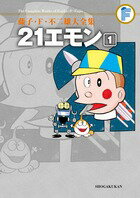
21 Emon Review: The Hotel Heir Who Wanted the Stars, Not the Front Desk
by Fujiko F. Fujio
Read the first volume. If it doesn't hook you, put it down. It'll hook you.
Buy 21 Emon on Amazon →*Affiliate link — I earn a small commission at no extra cost to you.
When I was a kid, I thought the worst thing in the world was being stuck where you are. Same town, same routine, same desk. I'd read Doraemon under the covers and wish a door to anywhere would open in my room. So when I finally read 21 Emon — Fujiko F. Fujio's earlier, weirder sci-fi comedy — I felt seen in a way I didn't expect. Here's a boy who lives in a future where aliens check into hotels and space travel is normal, and all he wants is to leave. He wants to be a space pilot. Instead he's the 21st heir to a 400-year-old family inn, stuck behind the front desk, polishing the same lobby his ancestors polished.
I read it slowly, on purpose. It's only four volumes, and once you know it's the seed that grew into Doraemon, every page feels like watching a master figure out what he was really good at.
Quick Take
- Fujiko F. Fujio's sci-fi comedy — a 22nd-century Tokyo where aliens are tourists, anchored to a family hotel that's been running for 400 years
- 21 Emon dreams of being a space pilot, but the universe keeps arriving as guests and chores instead of adventure
- 4 volumes, complete; All Ages — gentle, warm, and funny, with nothing concerning
Who Is This Manga For?
- Fans of Doraemon who want to see Fujiko F. Fujio's warmth applied to space, robots, and a hotel
- Readers interested in vintage sci-fi comedy from the late 1960s, before the genre's Japanese conventions settled
- Anyone who likes the "the dream is right in front of you" tension more than straightforward adventure
- Readers curious about Fujiko F. Fujio's range beyond Doraemon and Perman
Story Overview
The world of 21 Emon is the future — aliens travel to Earth as tourists, space ports are everywhere, and the solar system is open for business. In Tokyo City sits Tsuzureya (つづれ屋), a hotel that has been run by the Emon family for over 400 years. The current heir-in-waiting is 21 Emon, the 21st generation of the line: a hot-blooded, stubborn boy who would much rather be flying among the stars than checking guests in and out.
The engine of the series is that conflict — Emon's dream of becoming a space pilot pulling against his attachment to the family business and the duty handed down to him. He saves tips toward a trip into space, gets pulled back into running the hotel, and gets dragged through one comedic disaster after another. The guests are aliens of every shape; the staff is a robot and an alien who cause as many problems as they solve.
It's episodic by design — Fujiko F. Fujio later said he flipped his usual idea: instead of dropping the extraordinary into the ordinary (a robot cat in a normal kid's room), he set the story in the extraordinary — the future, space — and then mined the ordinary feelings that survive there. A boy who feels trapped, a family that wants him to take over, a girl he can't quite talk to. In the TV anime's finale, a grown-up Emon and Luna are married and running a space hotel together, telling their son 22 Emon about their adventures — the dream of space and the duty of the inn finally reconciled rather than chosen between.
Characters
21 Emon — The 21st heir to Tsuzureya. He's earnest, quick to anger, and torn down the middle: he genuinely loves the old hotel, but his real dream is to pilot a ship into deep space. He hoards tips toward that trip, and his frustration is the comedy and the heart of the series at once.
Gonsuke (ゴンスケ) — A former potato-digging robot who's been taken in as a bellboy. He is obsessed with one thing: growing sweet potatoes. He'll plant a potato field in a hotel guest room if you let him, speaks in a thick rural dialect, and — despite being a robot — is the most expressive, emotionally volatile character on the page. He is the breakout star and, by reputation, the reason a lot of people remember the series at all.
Monga (モンガー) — An "absolute creature" born on the planet Sasayama. He can teleport by shouting his own name, survives vacuum, absolute zero, and searing heat, and tags every sentence with a cute "-moa." He's devoted to Emon and is, ironically, exactly the kind of genuine alien contact Emon claims to want — and takes completely for granted.
Luna (ルナ) — The level-headed daughter of the president of the rival hotel Galaxy. She quietly carries a soft spot for Emon, and the anime's ending pairs them as a married couple running a space hotel.
Art Style
Fujiko F. Fujio's line here is pure late-'60s charm: round, friendly character designs, alien tourists rendered with the same playful invention as Doraemon's gadgets, and a future Tokyo that feels imaginative without ever feeling cold. The hotel itself grounds everything — for all the spaceships and aliens, the emotional center is a warm, slightly shabby family inn.
What I Love About It
I love Gonsuke. Not as a sidekick — as the soul of the book.
He's supposed to be a simple potato-digging machine, a tool. But Fujiko F. Fujio gives him a dream — to grow sweet potatoes — and then takes him completely seriously about it, which is both the funniest and most quietly moving choice in the whole series. There's a stretch where Gonsuke saves up his own tips, rents a leaky room in the hotel, and becomes a paying guest just so he can keep farming potatoes. Suddenly the robot bellboy is a customer, demanding feasts and lording it over everyone, while the hotel's money troubles flip the power balance so far that 20 Emon (the father figure running the place) has to come begging him for a loan. A potato robot, holding the family hostage. It's absurd and it's perfect.
What gets me is that under the slapstick, Fujiko F. Fujio is doing the thing he'd later perfect in Doraemon: he treats a "lesser" character's small dream as if it matters as much as anyone's. That's the warmth people mean when they talk about him. He doesn't laugh at Gonsuke's potatoes. He laughs with the absurd dignity of caring that much about something silly.
Memorable Scene ⚠️ Spoiler Warning
The scene that sticks with me is the end of Gonsuke's potato saga — the "I'll grow potatoes even if it kills me" (死ンデモイモヲ作ルダゾ) episode.
Having become an insufferable paying guest, Gonsuke decides he wants to eat "human food" like a real person. The problem: he's a robot with no tongue, no sense of taste — so he dumps an enormous amount of salt on his meal to feel anything. The salt rusts him from the inside, and his body seizes up and stops moving. After he's repaired and wakes back up, the potato dream is over for him, and he delivers the line the series is remembered for: "My dream is gone… like a fleeting rainbow. If I can't dig potatoes, there's no point in living."
It's played for comedy — a rusted-solid potato robot mourning sweet potatoes in broken dialect — but the phrasing is real poetry, and that's the joke and the tenderness in one breath. A throwaway robot grieving like a tragic hero over a vegetable. I laughed, and then I sat there a second longer than I expected to. That's the Fujiko F. Fujio move: he sneaks the ache in right under the gag.
Pros & Cons
Pros
- Gonsuke alone is worth the read — a genuinely iconic comic creation
- The "flipped" premise (ordinary feelings inside an extraordinary setting) is clever and ahead of its time
- Warm Fujiko F. Fujio charm on every page
- Short and complete at 4 volumes
Cons
- No licensed English edition
- The episodic structure doesn't build toward big dramatic payoffs
- Emotionally lighter than Doraemon
- The late-'60s sci-fi look shows its age
The pacing is gentle and episodic — that's either a flaw or a feature depending on you.
Is 21 Emon Worth Reading?
For Fujiko F. Fujio fans, yes — this is where you watch him discover the formula Doraemon would perfect, and Gonsuke is one of his best comic creations full stop. For a general reader, Doraemon is the smoother entry point. But as a short, warm, inventive sci-fi comedy with a potato-obsessed robot at its heart, 21 Emon absolutely stands on its own.
Similar Manga
| Title | Its Approach | How 21 Emon Differs |
|---|---|---|
| Doraemon | Future robot cat brings gadgets into an ordinary boy's room | Ordinary feelings set inside an extraordinary future of space and aliens |
| Space Brothers | An adult chasing the astronaut dream with total commitment | A boy already surrounded by space who feels trapped behind a hotel desk |
| Cyborg 009 | Serious 1960s sci-fi action with cyborg heroes | Same era, but gentle domestic comedy instead of action drama |
Official English Translation Status
21 Emon has no official licensed English translation. The most accessible way to read it legitimately is the Japanese print or digital edition.
Where to Buy
No English release yet. That just means you find it before everyone else does.
If you read Japanese, the original is available in print and digital editions:
This post contains affiliate links. If you purchase through these links, I may earn a small commission at no extra cost to you. As an Amazon Associate, I earn from qualifying purchases.
*Affiliate link — I earn a small commission at no extra cost to you.
More Manga You Might Like
Sci-Fi
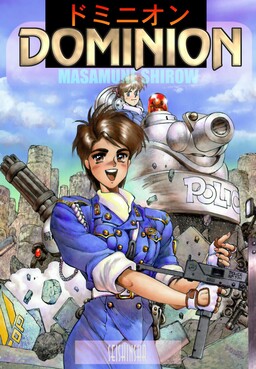
Dominion Tank Police
Yu's review of Dominion Tank Police — in a future city where crime requires a Tank Police division, officer Leona Ozaki is assigned to the unit and falls deeply in love with her miniature tank Bonaparte; Masamune Shirow's comedic sci-fi action, lighter than Ghost in the Shell but with the same worldbuilding attention.
Sci-Fi / Drama
Galaxy Express 999
Galaxy Express 999 follows Tetsuro Hoshino, a young boy who boards the legendary space train 999 toward a planet where he can receive a free mechanical body — accompanied by the mysterious Maetel — and encounters, on each planet the train stops at, a different meditation on what it means to be human and whether eternity is worth what it costs.

Sci-Fi / Drama
Hyakuoku no Hiru to Senoku no Yoru
Hyakuoku no Hiru to Senoku no Yoru is Moto Hagio's manga adaptation of Ryu Mitsuse's celebrated science fiction novel — following the collapse of civilizations across billions of years, centered on figures from different historical periods who are drawn toward a single question: what is the nature of creation, and who is responsible for it?
Sci-Fi
Gin no Sankaku
Gin no Sankaku follows characters trapped across multiple timelines by a silver triangle that connects them — a complex, demanding sci-fi work by Moto Hagio that uses time loop mechanics to explore the weight of memory and the impossible arithmetic of rescue and loss.
Sci-Fi
Toward the Terra
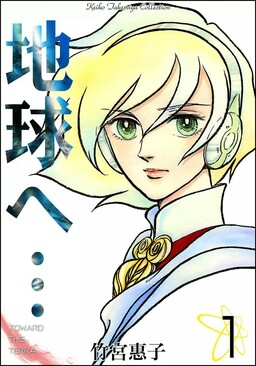
A review of Keiko Takemiya's Toward the Terra (地球へ…) — 3 volumes in Monthly Manga Shōnen from 1977. A landmark of 1970s science fiction manga about psychic humans (Mu) persecuted by an AI-controlled society on their long journey back to a forbidden Earth. Vertical's English edition is complete.
Sci-Fi / Political
Sanctuary
Yu's review of Sanctuary — two survivors of the Cambodian killing fields make a pact to change Japan from the inside: one through legitimate politics, one through the yakuza; a politically serious manga by the creators of Crying Freeman and Mai the Psychic Girl about power, ambition, and what it costs to change a corrupt system.
Written by
Yu
Manga Enthusiast from Japan
I grew up in Japan and manga literally saved me during a tough time in elementary school. My English isn't perfect, but my love for manga is real — and I want to share it with you.