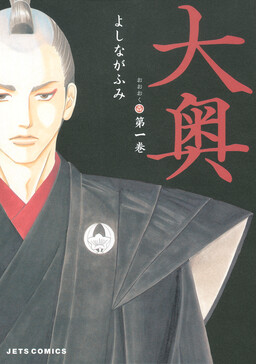
Ōoku: The Inner Chambers Review: A Plague Kills Most Men and Japan's History Rewrites Itself
by Fumi Yoshinaga
Read the first volume. If it doesn't hook you, put it down. It'll hook you.
Buy Ōoku: The Inner Chambers on Amazon →*Affiliate link — I earn a small commission at no extra cost to you.
Quick Take
- One of the most formally ambitious alternate-history manga in English — the premise (most men died, women took power) is used not for fantasy wish-fulfillment but as a serious historical thought experiment about how Edo Japan would have adapted
- Winner of the Tezuka Osamu Cultural Prize (Grand Prize) and the Sense of Gender Award; internationally recognized as a work of literary significance
- 19 volumes complete; Fumi Yoshinaga's masterwork
Who Is This Manga For?
- Readers who want historical manga that takes the political and social systems seriously
- Anyone interested in alternate history as a rigorous genre rather than adventure backdrop
- Fans of literary manga with mature, psychologically complex characters
- Readers who want complete manga with exceptional production quality
Content Warnings & Age Rating
Age Rating: M (Mature) Content Warnings: Sexual content (mature, not gratuitous); political violence; mature themes around power, manipulation, and mortality; gender roles are inverted and examined seriously; some disturbing historical content
The M rating is appropriate. This is a serious adult work.
Yu's Rating
| Category | Score |
|---|---|
| Story Depth | ★★★★★ |
| Art Style | ★★★★★ |
| Character Development | ★★★★★ |
| Accessibility for Non-Japanese Readers | ★★★★☆ |
| Reread Value | ★★★★★ |
Story Overview
In the early Edo period, a mysterious plague called the Redface Pox spreads through Japan, killing young men at an extraordinary rate. Over several generations, the male population drops to roughly one-quarter of the female population. Society adapts: women take on labor, political positions, and leadership. The Shogunate is now female. The Ōoku — the Inner Chambers of Edo Castle, historically the women's quarters — becomes the domain of men: beautiful, carefully selected, educated, kept for the Shogun's companionship.
The manga follows multiple narrative threads across the Edo period, showing how different Shoguns and their Inner Chambers navigate power, succession, medicine, and the ongoing search for a cure to the plague. Historical events are revisited with this single premise change, showing how the same human ambitions, loyalties, and failures produce different outcomes through different structures.
Characters
The manga has no single protagonist — it follows different central figures across the Edo period, creating an epic historical scope. Each arc's central characters are developed with the full complexity that the series' scope allows.
The Shoguns — female versions of historical male figures — are portrayed with genuine political intelligence and psychological depth. The men of the Inner Chambers — from naive newcomers to experienced political survivors — create one of manga's most unusual ensemble casts.
Art Style
Fumi Yoshinaga's art is precise and historically detailed. Court dress, architecture, and period aesthetics are rendered with research and visual elegance. Character designs are distinctive across a large historical cast, and expressions carry the weight of psychological complexity the narrative demands.
The period-appropriate formal language (rendered in English in a deliberate archaic register that mirrors the Japanese original's use of classical language) adds to the historical texture.
Cultural Context
The manga engages directly with actual Edo period history — the historical Shoguns, political events, and social structures are recognizable and researched, with the single premise change applied rigorously. Japanese readers familiar with Edo history find the alternate readings revealing; Western readers new to the period will learn the actual history through the alternate version.
The medical subplot — the search for the plague's cause and cure — follows the actual history of Japanese rangaku (Dutch learning) and Western medicine's introduction to Japan.
What I Love About It
The series takes its premise seriously as intellectual history. The question is not "what if women were in charge?" as fantasy but "if this specific structural change had occurred, how would these specific historical dynamics have changed?" The answers are specific, detailed, and often surprising.
And the human stories — the people navigating these structures, loving within them, dying because of them — are moving in ways that have nothing to do with the alternate history frame.
What English-Speaking Fans Say
Western readers describe Ōoku as one of the most important manga published in English — consistently mentioned in discussions of literary manga alongside Nausicaä, Vagabond, and Monster. The alternate history rigor surprises readers expecting lighter gender-swap fantasy.
Memorable Scene ⚠️ Spoiler Warning
The medical arc — where the quest to understand the Redface Pox leads to the introduction of Western scientific method into Edo Japan, filtered through the female-dominated academic structures that alternate Japan has developed — is the series' most intellectually complex narrative. It is also genuinely moving as a story about what people sacrifice for knowledge.
Similar Manga
- Vagabond — Historical manga with literary ambition, different period
- Vinland Saga — Historical epic with serious thematic ambition
- Requiem of the Rose King — Historical dark fantasy with literary source
- Rose of Versailles — Historical shoujo with gender and power themes
Reading Order / Where to Start
Volume 1 — The premise is established in the first arc. The series covers different time periods in each arc; they connect but each is comprehensible alone.
Official English Translation Status
VIZ Media Signature published all 19 volumes. Complete and available.
Pros & Cons
Pros
- The historical rigor is exceptional — one of the most seriously executed alternate histories in manga
- Art quality is consistently high across 19 volumes
- Character depth befitting the literary ambition
- Won multiple major awards
Cons
- M-rated content throughout
- Historical knowledge enhances the reading but the series works without it
- The archaic language register takes adjustment
Format Comparison
| Format | Notes |
|---|---|
| Individual Volumes | VIZ Signature; complete |
| Digital | Available |
Where to Buy
Read the first volume. If it doesn't hook you, put it down. It'll hook you.
This post contains affiliate links. If you purchase through these links, I may earn a small commission at no extra cost to you. As an Amazon Associate, I earn from qualifying purchases.
*Affiliate link — I earn a small commission at no extra cost to you.
More Manga You Might Like
Sci-Fi / Political
Sanctuary
Yu's review of Sanctuary — two survivors of the Cambodian killing fields make a pact to change Japan from the inside: one through legitimate politics, one through the yakuza; a politically serious manga by the creators of Crying Freeman and Mai the Psychic Girl about power, ambition, and what it costs to change a corrupt system.
Sci-Fi / Historical
Phoenix
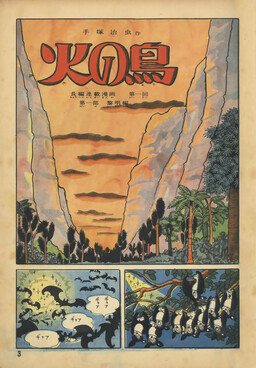
Yu's review of Phoenix — Tezuka Osamu's incomplete masterwork — a series of stories set throughout Japanese and universal history, connected by the Phoenix, a bird whose blood grants immortality; the Phoenix appears in each arc but cannot be caught; the arcs range from ancient Japan to the far future and examine what it means to be human across all of time.
Sci-Fi / Horror
DOMU: A Child's Dream
Yu's review of DOMU — Over several years, residents of the Tsutsumi housing complex have been dying or going mad at an inexplicable rate; a detective investigating the deaths suspects something supernatural; an old man with psychic abilities has been killing residents for entertainment; when a young girl moves into the complex with her own abilities, a confrontation becomes inevitable.
Sci-Fi / Drama
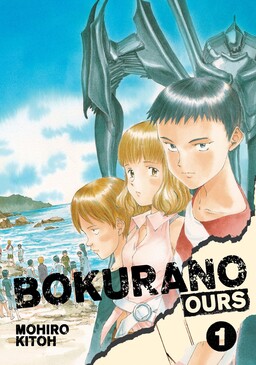
Bokurano
Yu's review of Bokurano by Mohiro Kitoh — fifteen children sign a contract to pilot a giant robot called Zearth, only to learn each victory costs the pilot's life, and that every battle won erases another Earth.
Sci-Fi / Action
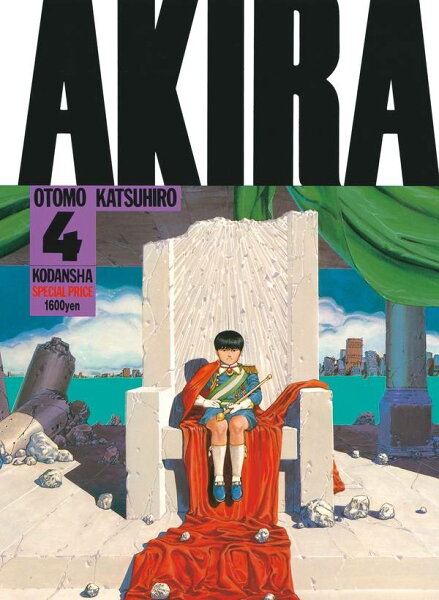
Akira
Yu's review of Akira — Katsuhiro Otomo's six-volume monster, serialized 1982–1990. Set in 2019 Neo-Tokyo, a teenage biker tries to save the best friend who suddenly has the power to end the world. The manga that dragged Japanese comics onto the world stage.
Sci-Fi
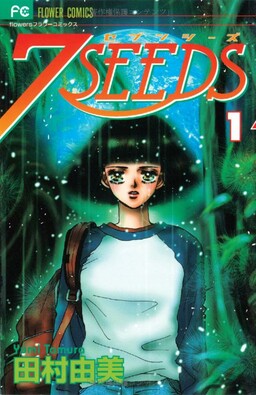
7SEEDS
Yu's review of 7SEEDS — after a meteor wipes out civilization, young people cryogenically frozen by a secret government project wake up in a transformed Japan with no instructions. Yumi Tamura's 35-volume survival epic about ordinary, frightened people who were never asked if they wanted to save the human race.
Written by
Yu
Manga Enthusiast from Japan
I grew up in Japan and manga literally saved me during a tough time in elementary school. My English isn't perfect, but my love for manga is real — and I want to share it with you.
Disclosure: This post contains affiliate links. As an Amazon Associate, I earn from qualifying purchases at no extra cost to you.