Sanctuary Review: Two Men Who Survived the Killing Fields Plan to Change Japan
by Sho Fumimura (Story) / Ryoichi Ikegami (Art)
Read the first volume. If it doesn't hook you, put it down. It'll hook you.
Buy Sanctuary on Amazon →*Affiliate link — I earn a small commission at no extra cost to you.
Quick Take
- The political manga that treats Japanese institutional corruption with the seriousness of literary fiction — two men work in parallel to reform a country that doesn't want to be reformed, one through the Diet, one through organized crime
- Ryoichi Ikegami's art is among the finest in manga history: photorealistic, detailed, and capable of depicting both violence and seduction without losing dignity
- 9 volumes complete; a 1990s manga that has aged into a definitive work of political fiction
Who Is This Manga For?
- Readers who want manga that treats political systems with genuine analytical depth
- Adults who want crime/political manga with serious ambition and exceptional art
- Fans of Ikegami's other work (Crying Freeman, Mai the Psychic Girl) who haven't read Sanctuary
- Readers who want complete manga with a satisfying, ambition-resolving conclusion
Content Warnings & Age Rating
Age Rating: M (Mature) Content Warnings: Political violence; sexual content (significant); yakuza activities; mature themes throughout; adult content appropriate for the rating
The M rating is accurate and necessary. This is an adult manga.
Yu's Rating
| Category | Score |
|---|---|
| Story Depth | ★★★★★ |
| Art Style | ★★★★★ |
| Character Development | ★★★★★ |
| Accessibility for Non-Japanese Readers | ★★★★☆ |
| Reread Value | ★★★★★ |
Story Overview
Asami Chiaki and Hojo Akira survived the Cambodian killing fields as children during the Khmer Rouge regime. Having seen what happens when a society completely fails, they return to Japan with a plan: change it before it collapses under its own corruption.
Asami enters legitimate politics, working within the LDP's factional system, playing the compromises and betrayals of institutional advancement while accumulating enough trust and obligation to eventually reform the system from inside it. Hojo enters the yakuza, rising through organized crime with the same intelligence and ruthlessness, accumulating the power and resources that political reform will eventually need.
Their pact: whichever of their approaches produces results will be the right one. They will meet again when one of them has enough power to matter.
The series follows both paths simultaneously — political maneuvering, organized crime hierarchies, and the personal costs of choosing a strategy over everything else.
Characters
Asami Chiaki — The political strategist, whose ability to navigate the LDP's internal systems makes him compelling even when his compromises are uncomfortable. His relationships with mentors, rivals, and women are each studies in instrumental calculation that are somehow also genuine.
Hojo Akira — The yakuza path, executed with the same intelligence as Asami's but through different instruments. His rise through criminal hierarchies is depicted with procedural accuracy and genuine character development.
Art Style
Ryoichi Ikegami's art is one of manga's peaks. The photorealistic character rendering, the architectural detail of political offices and yakuza establishments, and the precise depiction of violence and intimacy are all executed at a level that has influenced Japanese comics for decades. Every page is a considered visual composition.
Cultural Context
Sanctuary engages directly with the LDP's factional system as it operated in the early 1990s — the patronage networks, the political funding, the relationships between legitimate politics and organized crime that characterized the period. Western readers will find the political structures unfamiliar but the power dynamics universally recognizable.
The Cambodian origin — two survivors of one of the 20th century's great atrocities applying that experience to reform a country that has never been destroyed — gives the characters' ambition historical weight.
What I Love About It
The series refuses to make either approach obviously correct. Both paths require things from their practitioners that are genuinely costly. Asami's political compromises erode something real. Hojo's criminal methods produce real harm. The pact doesn't resolve which is better — it holds them together while they each pursue the answer.
What English-Speaking Fans Say
Western readers consistently describe Sanctuary as one of the most intelligent political manga they have encountered — serious, adult, and willing to stay in the complexity of institutional change rather than simplifying it. Ikegami's art is universally praised as among the best ever published.
Memorable Scene ⚠️ Spoiler Warning
The moment when Asami's political strategy requires him to destroy someone who helped him — and he does it, completely, and lives with it — is the series' clearest statement of what the plan costs. It is not presented as triumphant. It is presented as what was necessary.
Similar Manga
- Vagabond — Serious adult manga with ambition, different subject
- Monster — Thriller with psychological depth, similar seriousness
- Pluto — Serious adult manga, different genre
- 20th Century Boys — Political conspiracy with historical scope
Reading Order / Where to Start
Volume 1 — The premise and the two protagonists are established in the first arc. The parallel structure is established immediately.
Official English Translation Status
VIZ Media published all 9 volumes. Complete; older publication, available in secondary market and digitally.
Pros & Cons
Pros
- Political analysis is genuinely sophisticated
- Ikegami's art is among the best in manga history
- Character development across both protagonists is exceptional
- Complete 9-volume run
Cons
- M-rated content throughout (sexual content is significant)
- Japanese political system knowledge enhances the reading
- Older publication; physical copies require secondary market
Format Comparison
| Format | Notes |
|---|---|
| Individual Volumes | VIZ Media; complete, secondary market |
| Digital | Available |
Where to Buy
Read the first volume. If it doesn't hook you, put it down. It'll hook you.
This post contains affiliate links. If you purchase through these links, I may earn a small commission at no extra cost to you. As an Amazon Associate, I earn from qualifying purchases.
*Affiliate link — I earn a small commission at no extra cost to you.
More Manga You Might Like
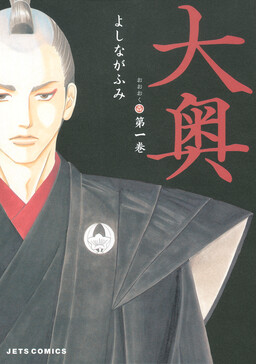
Sci-Fi / Historical
Ōoku: The Inner Chambers
Yu's review of Ōoku: The Inner Chambers — an alternate Japan where a mysterious plague killed 75% of men over a century, women rose to political power, and the Shogunate is run by women while men are rare and precious; a historical alternate-universe manga that examines power, gender, and what history would look like if it went differently.
Sci-Fi / Horror
DOMU: A Child's Dream
Yu's review of DOMU — Over several years, residents of the Tsutsumi housing complex have been dying or going mad at an inexplicable rate; a detective investigating the deaths suspects something supernatural; an old man with psychic abilities has been killing residents for entertainment; when a young girl moves into the complex with her own abilities, a confrontation becomes inevitable.
Sci-Fi / Action
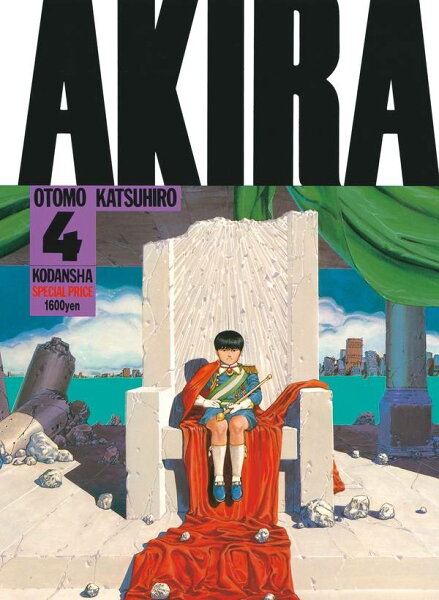
Akira
Yu's review of Akira — Katsuhiro Otomo's six-volume monster, serialized 1982–1990. Set in 2019 Neo-Tokyo, a teenage biker tries to save the best friend who suddenly has the power to end the world. The manga that dragged Japanese comics onto the world stage.

Sci-Fi / Drama
Galaxy Express 999
Galaxy Express 999 follows Tetsuro Hoshino, a young boy who boards the legendary space train 999 toward a planet where he can receive a free mechanical body — accompanied by the mysterious Maetel — and encounters, on each planet the train stops at, a different meditation on what it means to be human and whether eternity is worth what it costs.

Sci-Fi / Drama
Hyakuoku no Hiru to Senoku no Yoru
Hyakuoku no Hiru to Senoku no Yoru is Moto Hagio's manga adaptation of Ryu Mitsuse's celebrated science fiction novel — following the collapse of civilizations across billions of years, centered on figures from different historical periods who are drawn toward a single question: what is the nature of creation, and who is responsible for it?
Sci-Fi
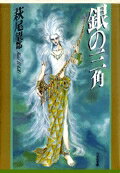
Gin no Sankaku
Gin no Sankaku follows characters trapped across multiple timelines by a silver triangle that connects them — a complex, demanding sci-fi work by Moto Hagio that uses time loop mechanics to explore the weight of memory and the impossible arithmetic of rescue and loss.
Written by
Yu
Manga Enthusiast from Japan
I grew up in Japan and manga literally saved me during a tough time in elementary school. My English isn't perfect, but my love for manga is real — and I want to share it with you.
Disclosure: This post contains affiliate links. As an Amazon Associate, I earn from qualifying purchases at no extra cost to you.