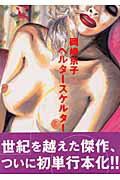
Helter Skelter Review: Kyoko Okazaki's Final Manga, About a Supermodel Who Was Built and Is Coming Apart
by Kyoko Okazaki
Read the first volume. If it doesn't hook you, put it down. It'll hook you.
Buy Helter Skelter on Amazon →*Affiliate link — I earn a small commission at no extra cost to you.
I read Helter Skelter for the first time on the Vertical English edition that came out in 2013, the year I finished university. I read it again last year. The book has not lost any of its capacity to ruin me. If anything, it gets crueler the older I get.
I'm Yu. Helter Skelter is a manga I do not lend out, because the people I've lent it to have not all forgiven me.
Quick Take
- Kyoko Okazaki's Helter Skelter (ヘルタースケルター) ran in Feel Young magazine from 1995 to 1996. Shodensha collected it as a single volume in 2003. Vertical Inc published the English edition in 2013.
- Liliko, Japan's biggest supermodel, is entirely the product of plastic surgery, and the surgery is starting to fail. The book is the slow collapse.
- Rated M (Mature) — explicit sex, drug use, on-page self-mutilation, body horror, and one of the most psychologically harrowing manga to come out of Japan in the 1990s.
Story Overview
Liliko Hirukoma is the most photographed woman in Japan. Her face is on every magazine, her body is in every ad, and her career is at its peak. Every part of her — her bones, her skin, her teeth, the shape of her eyes — was reconstructed at a single illegal clinic, with techniques whose long-term effects nobody knew yet.
The book opens with the side effects beginning to surface. Faint bruising. Patches of skin that don't heal. Dark spots that have to be covered with more and more makeup. Liliko's manager Hada handles the cover-up. Her young assistant Hanako absorbs the abuse. The clinic where Liliko was made is now under investigation by a prosecutor, Asada, who has been tracking the deaths of other young women who went through the same procedures.
Then Kozue Yoshikawa enters the modeling industry. Sixteen, naturally beautiful, untouched by surgery. The producers and clients begin to drift. Liliko, whose career is the only thing she has ever had, begins to come apart in proportion to the new model's rise.
The book ends with one of the most photographed images in Japanese manga: Liliko, in front of a crowd of cameras, gouging out her own eye. The epilogue, set years later, finds her performing in an underground venue, unrecognizable.
Characters
Liliko Hirukoma — The protagonist, and a character so completely realized that you can read her cruelty without losing sympathy for her. Okazaki refuses both "she is a monster" and "she is a victim"; she is a person who was built to be looked at and is being consumed by what looking at her does.
Hada — Liliko's manager. Older, hard, cynical in the way only people who have managed beautiful women in the Tokyo fashion industry can be. The maternal weight she carries for Liliko is one of the book's quietest threads.
Hanako — Liliko's assistant, a young woman destroyed slowly by proximity to her. The book's clearest portrait of what celebrities do to the people in their orbit.
Kozue Yoshikawa — The "real" beauty who replaces Liliko in the industry's gaze. Okazaki resists making her either virtuous or naïve; she is just younger, and the system grinds the older model out for her without thinking.
Asada — The prosecutor investigating the illegal clinic. The book's outsider perspective, and the only character with a stable interior. His investigation is the spine the chaos hangs on.
What I Love About It
What I love about Helter Skelter is what it does in the last twenty pages.
For most of the volume the book reads as a fashion-industry horror — a specific, vicious story about an artificially constructed woman. The final act could easily double down on that. Okazaki instead does something stranger: she lets Liliko choose her end. The eye scene isn't a breakdown. It's a performance. Liliko, finally, takes back authorship of the body that was made for other people to consume. The act is horrifying. The agency is real.
The epilogue closes the book with Liliko alive and working, in a venue where the only people who recognize her are the audience who pays specifically for what she now is. It is the closest thing to a triumphant ending that this material could honestly support. Okazaki refuses both the tragic-collapse ending and the redemption ending. Liliko gets to keep being Liliko, on her own terms, at a cost the book never apologizes for.
I have read very few endings that earn the word defiant this completely.
Memorable Scene ⚠️ Spoiler Warning
The eye scene. Liliko, mid-press conference, surrounded by cameras and people screaming her name, calmly raises a finger and removes her own eye in front of the entire Japanese press corps.
Okazaki draws it across multiple panels, mostly silent. The cameras keep flashing. Liliko's expression doesn't change. The audience around her is stunned — the people who built her as an icon finally seeing what they actually wanted from her.
I have not seen another manga sequence that does this much with a single act. Helter Skelter won the Tezuka Osamu Cultural Prize Grand Prize in 2004 and an excellence award at the Japan Media Arts Festival the same year; this is the image that earned it.
Pros & Cons
Pros:
- One volume, complete, English-licensed by Vertical — a single-sitting read that will affect you for weeks.
- One of the most acclaimed josei works of its generation; Tezuka Osamu Cultural Prize Grand Prize 2004, Japan Media Arts Festival excellence award 2004.
- Okazaki's art and dialogue rhythm are some of the most distinctive in 1990s manga.
Cons:
- Content warnings are not decorative. Self-mutilation, explicit sex, drug use, sustained psychological cruelty.
- Vertical's English edition has gone in and out of print; current availability fluctuates.
- The book is short. There is no relief; the volume ends and you sit with it.
Is Helter Skelter Worth Reading?
Yes — if you can stand the content. It is one of the most important josei manga of the post-1990 period and one of the great works of media criticism from inside a media industry. Skip only if explicit body horror around plastic surgery and self-mutilation is something you cannot read at all right now.
Who Is This Manga For?
- Perfect Blue fans (Satoshi Kon's film overlaps with Okazaki's preoccupations) who want the manga version of that mood.
- Readers of Kyoko Okazaki's Pink or River's Edge who haven't reached her final work yet.
- Anyone interested in josei manga as serious art.
- Readers who want fashion-industry-set fiction that takes the industry seriously.
Official English Translation Status
Vertical Inc published Helter Skelter in English in 2013. The single English volume is the complete work; it has been in and out of print intermittently. Used copies and digital editions are reliably available.
Where to Buy
The Vertical English volume is the only English edition. Used copies are widely available; digital releases through major storefronts have also appeared.
Browse Helter Skelter on Amazon →
This post contains affiliate links. If you purchase through these links, I may earn a small commission at no extra cost to you. As an Amazon Associate, I earn from qualifying purchases.
*Affiliate link — I earn a small commission at no extra cost to you.
Reading Guides
More Manga You Might Like
Horror
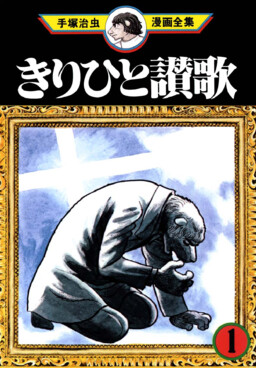
Ode to Kirihito
Yu's review of Ode to Kirihito — Dr. Osanai Kirihito investigates Monmow disease, a mysterious illness that transforms its victims into dog-like creatures; the medical establishment suppresses his findings; Osamu Tezuka's 1970 medical horror manga about a doctor reduced to subhuman status while searching for a scientific truth powerful people want hidden.

Horror
MW
Yu's review of MW — Yuki Michio is a beautiful, charming, amoral man who survived exposure to a chemical weapon as a child; the event destroyed his conscience; he works toward mass destruction while maintaining the appearance of a successful society member; a priest who loves him tries to hold him back; Osamu Tezuka's 1976 thriller about a man without conscience.

Horror / Mystery
Higurashi: When They Cry
Yu's review of Higurashi: When They Cry — Keiichi Maebara moves to the small village of Hinamizawa and befriends a group of girls; every June, during the annual Watanagashi Festival, someone dies and someone disappears; the story resets and repeats from different perspectives, each time revealing more of what is actually happening.
Horror / Psychological
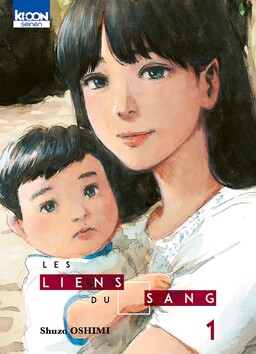
Blood on the Tracks
Yu's review of Blood on the Tracks (Chi no Wadachi) by Shuzo Oshimi — Seiichi Osabe is an ordinary middle schooler whose devoted mother Seiko pushes his cousin off a cliff during a mountain hike, and the boy becomes the only witness. A 17-volume slow-burn study of maternal possessiveness as horror.
Horror
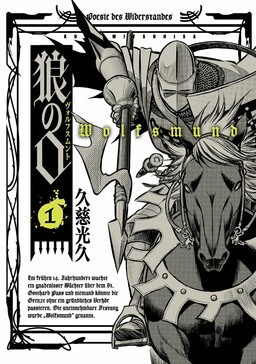
Wolfsmund
Yu's review of Wolfsmund — in 14th century Switzerland, the mountain pass called Wolfsmund (Wolf's Maw) is controlled by the bailiff Wolfram; every episode follows those who attempt to cross the pass, and Wolfram's inhuman ability to detect deception and his willingness to use any method to stop them.
Horror / Mystery
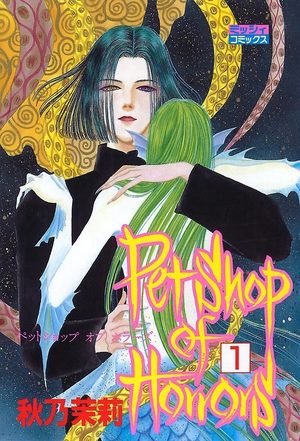
Pet Shop of Horrors
Yu's review of Pet Shop of Horrors — Count D runs a mysterious pet shop in Los Angeles's Chinatown that sells exotic animals; each purchase comes with a contract containing three conditions, and Detective Leon Orcot investigates the deaths that follow customers who break those conditions.
Written by
Yu
Manga Enthusiast from Japan
I grew up in Japan and manga literally saved me during a tough time in elementary school. My English isn't perfect, but my love for manga is real — and I want to share it with you.
Disclosure: This post contains affiliate links. As an Amazon Associate, I earn from qualifying purchases at no extra cost to you.