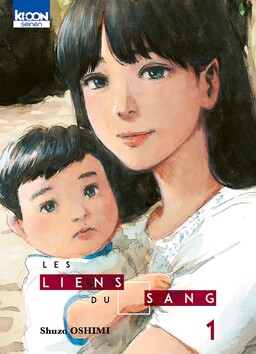
Blood on the Tracks Review: The Horror Is That Her Love Is Real
by Shuzo Oshimi
Read the first volume. If it doesn't hook you, put it down. It'll hook you.
Buy Blood on the Tracks on Amazon →*Affiliate link — I earn a small commission at no extra cost to you.
I grew up afraid of disappointing my mother. Not afraid of her — afraid for her. When you're a lonely kid with no friends, your parent becomes your whole world, and you learn to read their moods like weather. I read Blood on the Tracks in two sittings and had to put it down twice because it found a nerve I didn't know was still exposed. This isn't a manga about a monster. It's about a love so total that there's no room left inside it for you to be a separate person. That's the part that scared me.
Shuzo Oshimi wrote and drew it, and he's the same artist behind The Flowers of Evil and Happiness. But this is his cruelest, quietest book. Nothing here jumps out at you. It just slowly closes the door.
Quick Take
- Oshimi's masterwork — a 17-volume psychological horror about a mother whose devotion curdles into something that nearly kills, told almost entirely through her son's fracturing perception
- The horror works because Seiko isn't a secret villain; her love for Seiichi is real, and that's exactly what makes it unsurvivable
- M (Mature) — attempted murder of a child, sustained psychological abuse, and trauma rendered with clinical calm. The warnings are not decorative.
Content Warnings & Age Rating
Age Rating: M (Mature)
Content Warnings: Attempted murder of a child, child psychological abuse, and trauma depicted with disturbing restraint. A pivotal act of violence on a cliff drives the entire series; its aftermath includes a brain-damaged victim, a child coerced into covering for a crime, and a mother-son dynamic that grows more suffocating with each volume.
This is a genuinely difficult manga. Read it when you're in a steady place.
Story Overview
Seiichi Osabe is an unremarkable second-year middle school student. His mother, Seiko, is warm, youthful, and endlessly attentive. On the surface they have a close, gentle relationship — but Seiko's care is excessive in a way the early chapters let you feel before they let you name it.
The turn comes during a summer mountain hike with relatives. Seiichi's cousin, Shigeru Mitsuishi, fools around near a cliff edge, loses his balance, and starts to fall. Seiko reaches out and catches him. Then — in the next breath, with no warning — she pushes him off the edge herself. Shigeru survives but is left with severe brain damage and memory loss. Seiichi is the only witness.
What follows isn't a thriller about whether they get caught. Seiichi lies to the police to protect his mother, and the secret begins eating him from the inside. He develops a stutter; he can't get words out. Seiko, meanwhile, grows more emotionally fragile and more dependent on him, until the line between mother and son dissolves entirely. The remaining volumes trace, with agonizing patience, Seiichi's lifelong struggle to become a person his mother's love left no space for.
Characters
Seiichi Osabe — The protagonist, and the lens for the entire series. His defining trait early on is passivity: a boy trained to receive devotion rather than to act. After the cliff, his speech literally breaks down into a stutter, an externalization of a self that can no longer say what it sees. His arc spans decades — the slow, costly work of separating his own mind from his mother's.
Seiko Osabe — Oshimi's greatest achievement here. She is not a mask hiding a killer. Her love for Seiichi is genuine, and that is the horror: it's possessive to a degree that cannot coexist with him being his own person. After the incident she unravels, leaning on her son for the emotional stability she can no longer hold herself. She is terrifying and pitiable in the same panel.
Shigeru Mitsuishi — Seiichi's cousin, the boy on the cliff. He's the wound the whole story radiates from — left disabled with memory loss, a living reminder of what Seiko did and what Seiichi helped hide.
Yuiko Fukiishi — Seiichi's classmate, who confesses to him by letter and becomes the first person he can begin to be honest with. She functions as the small outside light — a glimpse of an ordinary adolescence, and of a self that exists apart from Seiko.
Art Style
Oshimi draws the ordinary world with deliberate plainness — flat domestic rooms, blank suburban light — and that flatness is the trap. When psychological pressure spikes, faces distort. Seiko's especially: her features stretch and warp into something that registers as wrong before you can explain why. He'll hold on a single expression across multiple silent panels until it becomes unbearable. The distortion isn't decoration; it's Seiichi's perception breaking down on the page, and because the baseline is so calm, every warp lands like a blow.
What I Love About It
The cliff scene is built on a single, monstrous beat: Seiko catches Shigeru first. For one panel she's the mother saving a child. And then she pushes. Oshimi puts the salvation and the murder side by side, in sequence, so you can't separate the loving hands from the killing ones — they're the same hands. That's the whole thesis of the book compressed into two motions. I keep coming back to it.
What I love most is that Oshimi refuses to let Seiichi's clarity rescue him. As the series goes on and he finally starts to see his mother as she actually is, those moments aren't framed as liberation. They're framed as losses. The devotion he was raised inside was a prison, but it was also the only home he had, and watching it crumble doesn't free him so much as leave him standing in the rubble. Oshimi draws perception itself as something that can wound you. I've never read a horror manga that understood that as precisely.
Memorable Scene ⚠️ Spoiler Warning
The final chapter has stayed with me more than the violence did. Seiichi is an old man now. His mother is long gone. We follow him through a completely uneventful day — he wakes in his room, drinks tea, walks to the library to borrow a book, reads on a park bench, eats a convenience-store rice ball because he got hungry. On the way home he looks up at the sky and murmurs that it's beautiful. He tries to picture his mother's face in that moment, and finds he can barely recall it — it's gone blurry with time.
After seventeen volumes of suffocation, the ending is just a quiet old man who can finally look at the sky without fear. Seiko's grip on him was so total that healing doesn't arrive as catharsis; it arrives as forgetting, as the simple ability to be hungry and buy a snack and notice the weather. The horror earned its peace by letting it cost almost everything. That restraint wrecked me more than any scream could have.
What English-Speaking Fans Say
English readers consistently rank Blood on the Tracks among the most disturbing manga they've finished, and among the most rewarding — the craft is acknowledged as exceptional even by people who found it painful to read. A common refrain is that the slow burn is the point: the dread accumulates volume by volume rather than detonating. The series also won a major prize at the Angoulême International Comics Festival, and it's frequently cited as Oshimi's finest work.
Pros & Cons
Pros
- One of the most accomplished psychological horror manga available in English, start to finish
- Seiko is among the most complex antagonists in the medium — frightening and sympathetic at once
- The art uses distortion with real purpose, never as a gimmick
- A complete 17-volume arc with an earned, devastating, quietly hopeful ending
Cons
- The content is genuinely hard: child endangerment and sustained abuse rendered with calm precision
- It is deliberately, sometimes punishingly slow — tension builds across volumes, not pages
- The slow burn is either a flaw or the entire point, depending on the reader you are
Is Blood on the Tracks Worth Reading?
Yes — if you want horror that works on your nerves instead of your startle reflex, and you're willing to sit in discomfort for the payoff. It's Oshimi at his peak: a complete, masterfully drawn study of love as a prison, ending on a fragile, hard-won quiet. Skip it only if slow pacing or themes of child abuse are dealbreakers for you.
Similar Manga
| Title | Its Approach | How Blood on the Tracks Differs |
|---|---|---|
| The Flowers of Evil | Oshimi's earlier adolescent psychological spiral | Trades teenage transgression for the deeper, lifelong horror of a parent's love |
| Happiness | Oshimi's slow-burn supernatural horror | Stays entirely human — the monster is a mother, not a vampire |
| Oyasumi Punpun | Family damage filtered through warped perception | Narrower and more relentless, fixed on a single mother-son bond |
Where to Buy
Read the first volume. If it doesn't hook you, put it down. It'll hook you.
The English edition is published by Vertical (Kodansha USA), complete in all 17 volumes.
This post contains affiliate links. If you purchase through these links, I may earn a small commission at no extra cost to you. As an Amazon Associate, I earn from qualifying purchases.
*Affiliate link — I earn a small commission at no extra cost to you.
Reading Guides
More Manga You Might Like

Horror
MW
Yu's review of MW — Yuki Michio is a beautiful, charming, amoral man who survived exposure to a chemical weapon as a child; the event destroyed his conscience; he works toward mass destruction while maintaining the appearance of a successful society member; a priest who loves him tries to hold him back; Osamu Tezuka's 1976 thriller about a man without conscience.
Horror / Mystery
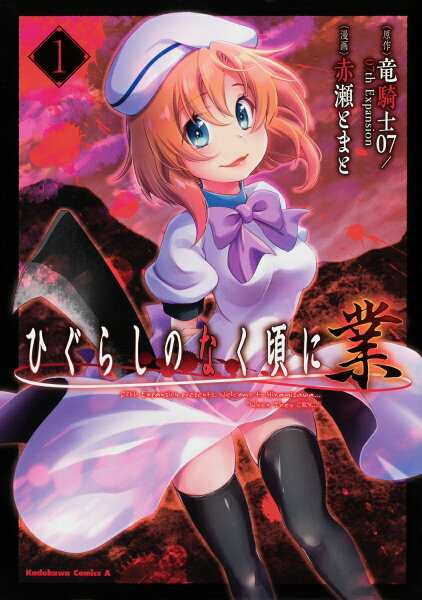
Higurashi When They Cry
Yu's review of Higurashi When They Cry — Keiichi Maebara moves to the rural village of Hinamizawa and discovers that every year, during the village festival, someone dies and someone disappears; the story resets across multiple arcs, each showing different versions of the same events as Keiichi and his friends try to understand and survive what the village is doing to them.
Horror
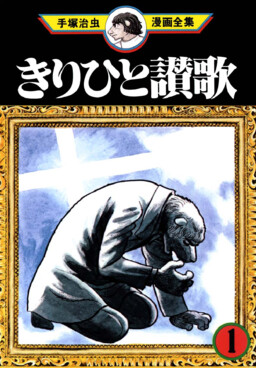
Ode to Kirihito
Yu's review of Ode to Kirihito — Dr. Osanai Kirihito investigates Monmow disease, a mysterious illness that transforms its victims into dog-like creatures; the medical establishment suppresses his findings; Osamu Tezuka's 1970 medical horror manga about a doctor reduced to subhuman status while searching for a scientific truth powerful people want hidden.
Horror / Literary
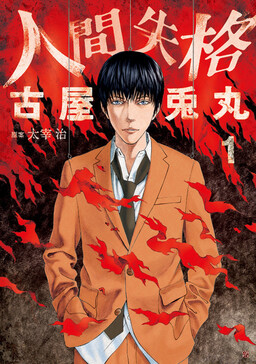
No Longer Human
Yu's review of No Longer Human manga adaptation — Usamaru Furuya adapts Osamu Dazai's 1948 autobiographical novel into a contemporary setting; the protagonist Yozo Oba is a young man who cannot believe himself to be a human being in the same sense as the people around him; the manga follows his descent through addiction, relationships, and the inability to exist in the world.
Horror / Psychological Thriller
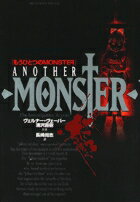
Monster
Yu's review of Monster — a brilliant surgeon saves a boy's life over a hospital director's, ruins his career, and ten years later discovers the boy he saved has become a serial killer who is now hunting him.
Horror / Slice of Life
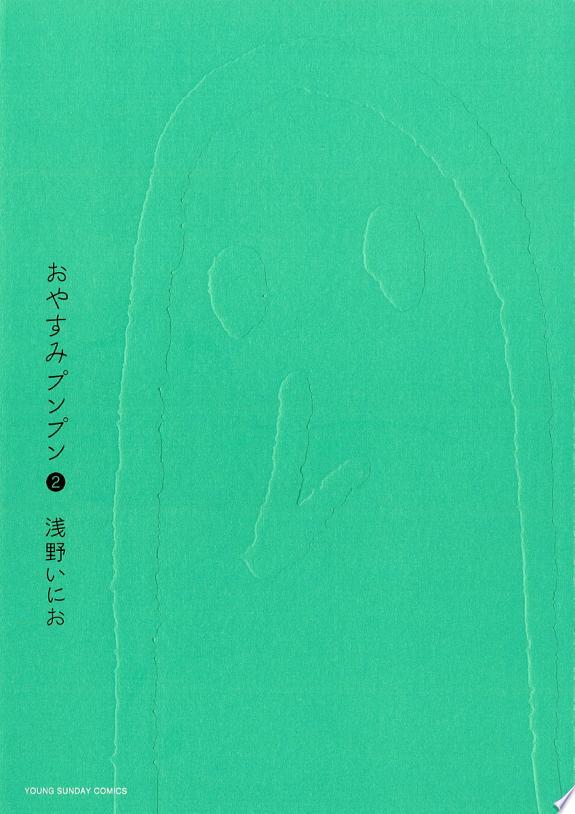
Goodnight Punpun
Yu's review of Goodnight Punpun — the manga where Punpun is drawn as a small bird in a world of realistic humans, following him from childhood to adulthood as trauma accumulates and the world refuses to be better than it is.
Written by
Yu
Manga Enthusiast from Japan
I grew up in Japan and manga literally saved me during a tough time in elementary school. My English isn't perfect, but my love for manga is real — and I want to share it with you.
Disclosure: This post contains affiliate links. As an Amazon Associate, I earn from qualifying purchases at no extra cost to you.