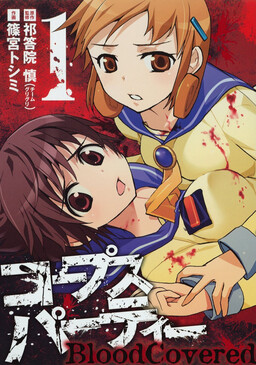
Corpse Party: Blood Covered Review: A Paper-Doll Charm That Drops Nine Kids Into a School That Eats the Living
by Makoto Kedouin / Toshimi Shinomiya
Read the first volume. If it doesn't hook you, put it down. It'll hook you.
Buy Corpse Party: Blood Covered on Amazon →*Affiliate link — I earn a small commission at no extra cost to you.
I read horror manga the way some people watch scary movies — late, alone, with the volume of my own breathing turned up too loud. But Corpse Party did something to me that most horror doesn't. It made me cry before it made me scared.
I went in expecting gore. The game it's based on has a reputation, and I braced for shock value. What I wasn't ready for was how much I'd come to care about a group of ordinary kids tearing a paper doll in half on a stormy night, joking about a silly friendship charm, completely unaware they were signing their own death warrants. By the time the floor opened under them, I already knew their names. That's the cruelty of this manga. It introduces you to people, lets you like them, and then drops them somewhere they cannot all come back from.
Quick Take
- The horror manga adaptation of the cult visual novel — written by Makoto Kedouin, drawn by Toshimi Shinomiya — turns a school haunting into something that earns its dread instead of just chasing it
- The haunting has rules: child spirits, a curse anchored to one girl's grief, a school that folds the living into separate pocket dimensions so they can hear each other and never reach each other
- 10 volumes in Japan, collected into 5 volumes in the complete Yen Press English edition; rated M (16+), and the rating is honest — this is not sanitized horror
Story Overview
On a rainy night after a school festival, the students of Class 2-9 at Kisaragi Academy stay late telling ghost stories. Before their friend Mayu transfers away, the class rep Ayumi suggests they perform "Sachiko Ever After" — a charm where everyone holds a paper doll, makes a wish to stay friends, and tears it into pieces, one fragment per person. Do it right, and you're bound together forever.
They do it wrong. The floor gives out. When the shaking stops, the students — and their teacher — wake scattered across Heavenly Host Elementary School: a building that was demolished decades ago but still exists, folded into a closed dimensional space anchored to that spot of land. Worse, the charm split them across separate layers of that same school. Two kids can be standing in the "same" hallway and exist in different worlds, unable to touch, sometimes able to hear.
Heavenly Host is not empty. The spirits of three murdered children stalk the corridors, and behind them is Sachiko Shinozaki — a little girl in a red dress who replays her own death over and over and forces the living to feed the cycle. The middle of the series is survival horror: finding each other, finding the corpses of past victims, finding the scattered fragments of what actually happened here. The back half turns inward, toward the question of why a child became this, and whether grief this old can be answered instead of just survived.
Characters
Satoshi Mochida — The protagonist, and pointedly not a hero. He's a timid, easily-frightened boy whose entire arc is choosing to keep moving anyway because his little sister Yuka and his friends are somewhere in this place. His care for the people around him, under conditions designed to strip care away, is the spine the whole story hangs on.
Naomi Nakashima — Satoshi's childhood friend, and the character who carries the series' heaviest emotional weight. After a petty argument splits her from her best friend Seiko, the school's "Darkening" — a madness that the building forces onto the living — turns her into the instrument of the series' most devastating loss. Her arc is guilt: living with what happened while she wasn't herself, and clawing back toward the truth of how Seiko actually felt about her.
Seiko Shinohara — Naomi's best friend, bright and teasing, the warmth the early chapters run on. That warmth is exactly why her fate lands the way it does.
Sachiko Shinozaki — The girl at the center of the haunting. Introduced as a pure malevolent force, she's slowly revealed to be a victim herself — a murdered child whose rage built the entire prison. The series' real movement is the gap between the monster you meet in volume one and the small, ruined child you understand by the end.
What I Love About It
The dimensional separation. It's the cleverest idea in the book and also the saddest. Because the broken charm scattered everyone across different layers of the same building, characters end up close enough to hear a voice through a wall and never close enough to reach the person it belongs to. Shinomiya draws this as physical architecture — the same classroom, the same stained hallway, repeated across worlds that don't quite line up — so the horror isn't only "something is chasing me," it's "the people I love are dying somewhere I can't go, and I'm shouting into a wall."
What gets me is how this turns isolation into the actual monster. A jump scare frightens you for a panel. But the slow realization that you can do everything right and still not be in the same world as the person you're trying to save — that sat in my chest for days. The school doesn't just want to kill these kids. It wants them to die alone, within earshot of help. I've read a lot of horror that's louder than Corpse Party. I've read very little that's lonelier.
Memorable Scene ⚠️ Spoiler Warning
Seiko's death is the scene I can't unsee. After a stupid, throwaway argument, Naomi and Seiko separate — and the school's Darkening takes Naomi while she's not looking. When she comes back to herself, she finds Seiko hanging from a noose in the bathroom. She scrambles for something to stand her on, to lift her up, to undo it — and she's too late. The manga doesn't flinch from the body's humiliation in death; it lets the moment be ugly and small and real instead of operatic.
But the part that actually broke me comes after, when Naomi learns the truth: that in her last moments Seiko bore her no grudge at all. The fight meant nothing. The forgiveness was already there, "no hard feelings," waiting on the other side of a wall Naomi couldn't reach in time. Horror is supposed to make you afraid of dying. This made me afraid of the small unsaid things — the apology you assume you'll have time to give. That's a heavier thing to carry out of a haunted-school manga than I expected.
The other gut-punch is the reveal of Sachiko herself. On her birthday, the little girl in the red dress climbed the stairs to see her mother, Yoshie, who worked at the school — and witnessed the principal, Yanagihori, push Yoshie down the stairs and break her neck after assaulting her. Then Sachiko was killed too. Everything in Heavenly Host — every dead child, every trapped student — grows out of that one staircase. The monster was a daughter who watched her mother murdered and never stopped screaming. By the time the manga lets you see it, the scariest thing in the school has become the most heartbreaking.
Content Warnings & Age Rating
Age Rating: M (Mature) — Yen Press lists it for readers 16 and up, and that's the floor, not a suggestion. Content Warnings: Graphic death and body horror, the on-page deaths of child characters, attempted sexual assault in Sachiko's backstory, and psychological breakdown throughout. Characters you have grown attached to die badly, and the manga does not soften it.
This is horror that takes its content seriously and does not look away. If detailed depictions of children dying are a hard line for you, this is not your book — and that's a completely reasonable line to have.
Cultural Context
Corpse Party started as a doujin PC-98 game in 1996 and grew into a long-running survival-horror franchise, with the PSP remake "Blood Covered" becoming the definitive version of the original story. Kedouin and Shinomiya's manga adapts that remake's narrative. It sits squarely inside the J-horror tradition — the vengeful child ghost, the cursed location that won't let go, the murder that poisons the ground for decades — the same vein as Ju-On and the urban-legend school hauntings every Japanese kid grows up half-believing. The "Sachiko Ever After" charm reads like exactly the kind of paper-doll ritual you'd dare a classmate to try and then lie awake regretting.
Art Style
Shinomiya's linework carries the dread. The body horror is explicit but never feels like it's grinning at you — it's grim, not gleeful. The strongest visual choice is the contrast between the kids' clean, ordinary character designs and the rotted, water-stained, impossibly repeating architecture of Heavenly Host. Faces do a lot of the work too: the specific texture of each character's fear, the slack wrongness of the Darkening creeping into someone's eyes. It's craft in service of feeling, not shock for its own sake.
What English-Speaking Fans Say
Western readers consistently frame Corpse Party as horror that made them cry before it made them flinch — the affection built up in the early chapters is exactly what makes the deaths hurt. Seiko's death and the gradual unveiling of Sachiko's origin are the two moments fans return to as the emotional core, the reason the series is remembered as more than a gore delivery system.
Pros & Cons
Pros
- The character investment built before the horror starts makes the deaths genuinely land
- The dimensional-separation premise turns isolation itself into the antagonist
- Sachiko's backstory transforms the villain into the most tragic figure in the book
- Complete in English — 5 Yen Press volumes, full resolution, no dangling hook
Cons
- The content warnings are real; the child-death material is a hard wall for many readers
- The cast is large and scattered, and keeping every thread straight takes attention
- If you came from the game expecting beat-for-beat fidelity, the manga makes its own choices
- Horror this bleak and this sad won't work for everyone — for some readers the heaviness is the point, for others it's simply too much
Is Corpse Party: Blood Covered Worth Reading?
If you want horror with stakes you actually feel — kids you like, a haunting with real rules, and a monster whose origin is sadder than anything it does — yes, this is one of the most affecting horror manga available in English. If graphic child death is something you can't read past, skip it without guilt; this book is not trying to be for everyone.
Similar Manga
| Title | Its Approach | How Corpse Party Differs |
|---|---|---|
| Higurashi: When They Cry | Rural village horror built on looping death cycles and child characters | Corpse Party fixes its loop to a single haunted location and one child's grief, not a whole village's spiral |
| Another | School horror with a death curse and slow-burn character investment | Corpse Party is far more graphic and grounds its curse in a concrete, traceable murder rather than an unexplained jinx |
| Shiki | Community horror trading on rural isolation and creeping dread | Corpse Party compresses that isolation into a single building that physically separates the living from each other |
Official English Translation Status
Yen Press published the complete series in English in 5 volumes, each collecting roughly twice the chapters of the original 10-volume Japanese run. All volumes are available in paperback and digital.
Where to Buy
Read the first volume. If it doesn't hook you, put it down. It'll hook you.
This post contains affiliate links. If you purchase through these links, I may earn a small commission at no extra cost to you. As an Amazon Associate, I earn from qualifying purchases.
*Affiliate link — I earn a small commission at no extra cost to you.
Reading Guides
More Manga You Might Like
Horror / Comedy
Voynich Hotel
Yu's review of Voynich Hotel — Taizou Kuzuki, a man with a shady past, arrives at a remote island hotel staffed by witch maids and surrounded by assassins, ghosts, and other supernatural complications; Douman Seiman's dark comedy-horror is compact, strange, and genuinely funny in ways that shouldn't work.
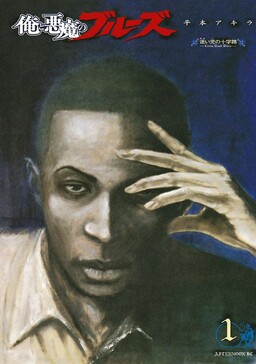
Horror / Historical
Me & The Devil Blues
Yu's review of Me & The Devil Blues — Robert Johnson, the legendary blues musician, makes a deal at the crossroads and suddenly can play the blues like nobody alive; the manga follows his rise alongside RJ, a friend trying to understand what Johnson has become; a horror manga set in the 1930s American South that takes its historical setting seriously.
Horror
Yu's review of Mail — private detective Reiji Akiba carries a gun loaded with special bullets and a job: send the dead to where they belong; each story is a ghost encounter, a backstory, and a resolution that may or may not be comforting; procedural ghost horror with a quiet protagonist.
Horror / Fantasy
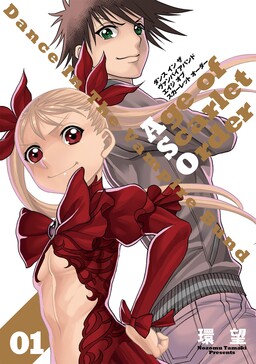
Dance in the Vampire Bund
Yu's review of Dance in the Vampire Bund — Mina Tepes, the centuries-old queen of all vampires in the body of a child, reveals vampires to the world and buys the Bund, a sovereign island in Tokyo Bay; werewolf Akira Kaburagi, bound to her by a childhood oath, protects her through the political and violent fallout. A 14-volume political vampire epic complete in English from Seven Seas — and a series whose loli fanservice you have to know about going in.
Horror / Mystery
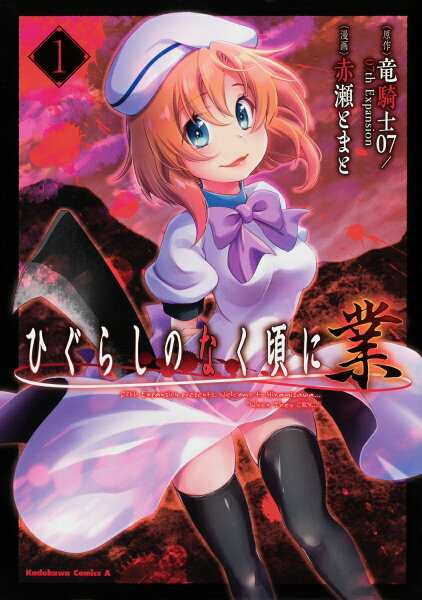
Higurashi When They Cry
Yu's review of Higurashi When They Cry — Keiichi Maebara moves to the rural village of Hinamizawa and discovers that every year, during the village festival, someone dies and someone disappears; the story resets across multiple arcs, each showing different versions of the same events as Keiichi and his friends try to understand and survive what the village is doing to them.
Horror / Mystery
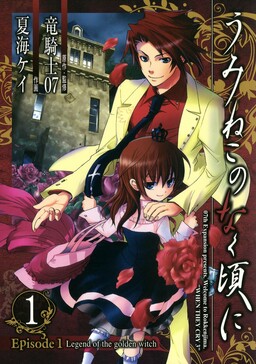
Umineko: When They Cry
On the private island of Rokkenjima in 1986, the Ushiromiya family gathers for an annual meeting. A typhoon traps them. The murders begin. Then they repeat. A golden witch named Beatrice claims responsibility — and the manga spends 53 volumes across 8 Episodes arguing about whether magic exists. Adapted from Ryukishi07's visual novel.
Written by
Yu
Manga Enthusiast from Japan
I grew up in Japan and manga literally saved me during a tough time in elementary school. My English isn't perfect, but my love for manga is real — and I want to share it with you.
Disclosure: This post contains affiliate links. As an Amazon Associate, I earn from qualifying purchases at no extra cost to you.