Mail Review: A Detective Exorcises Ghosts by Sending Them Where They Need to Go
by Housui Yamazaki
Read the first volume. If it doesn't hook you, put it down. It'll hook you.
Buy Mail on Amazon →*Affiliate link — I earn a small commission at no extra cost to you.
Quick Take
- Procedural ghost horror — each chapter is a case, a ghost with a specific reason for haunting, and an exorcism via a bullet that sends spirits to their destination
- Yamazaki's approach is more melancholy than frightening; the ghosts in Mail are usually people who have unfinished business, and Reiji's job is as much about understanding that business as ending it
- 3 volumes complete; a quiet, effective horror anthology with unusually sympathetic treatment of its ghosts
Who Is This Manga For?
- Readers who want ghost horror with emotional weight rather than pure scare
- Anyone who prefers horror manga where the supernatural is treated with procedural seriousness
- Fans of anthology horror where each story has a complete emotional arc
- Readers who want horror that ends with something closer to resolution than pure terror
Content Warnings & Age Rating
Age Rating: M (Mature) Content Warnings: Ghost horror and disturbing imagery; death including backstory deaths that are sometimes violent; the horror is consistent but not gratuitously extreme
The M rating is accurate.
Yu's Rating
| Category | Score |
|---|---|
| Story Depth | ★★★★☆ |
| Art Style | ★★★★☆ |
| Character Development | ★★★☆☆ |
| Accessibility for Non-Japanese Readers | ★★★★★ |
| Reread Value | ★★★★☆ |
Story Overview
Reiji Akiba is a private detective who handles cases that conventional investigation cannot. The cases are ghosts — spirits that have not moved on, that are haunting specific people or places for reasons that require understanding before they can be resolved. Reiji carries a gun loaded with special bullets capable of sending spirits to their destination.
Each story follows a structure: a haunting, an investigation into the ghost's backstory, and a confrontation. The resolution via bullet is less violent than it sounds — it is more an act of acknowledgment, of telling the ghost that it has been seen, that the story of how it came to be here is known, before it is sent to wherever the dead go.
Characters
Reiji Akiba — His quality is the specific quietness of a professional who deals with the dead regularly and has developed a respectful relationship with what he handles. He is not a dramatic ghost hunter; he is a practitioner.
Art Style
Yamazaki's art handles the ghost designs with a realism that makes them more disturbing than stylized monsters — the ghosts in Mail look like what people look like when they are wrong in the specific way that death makes things wrong. The everyday settings are rendered with the same specificity, which increases the horror's intrusion effect.
Cultural Context
Mail operates within Japanese ghost culture's specific tradition — the onryō, the yurei, the dead who cannot rest because of unresolved emotional business. The procedural format is an interesting innovation on this tradition, treating ghost exorcism as a job rather than a crisis. This is consistent with certain strands of Japanese horror fiction that approach the supernatural professionally.
What I Love About It
The stories where Reiji understands the ghost's business before the ghost can articulate it — and what the ghost's reaction to being understood produces — are Mail's most emotionally effective moments. The horror is often the recognition that the ghost was right to stay, that its grievance was real.
What English-Speaking Fans Say
Western readers describe Mail as unusually sympathetic ghost horror — the ghosts are not simply threats but people with incomplete stories. The procedural structure is consistently cited as effective for anthology pacing. Yamazaki is noted as a horror artist worth seeking out beyond this series.
Memorable Scene ⚠️ Spoiler Warning
The story involving a ghost that haunts a specific ordinary place for a reason that is only understandable from the ghost's perspective — and what Reiji's investigation reveals about how ordinary life produces the conditions for haunting — is Mail's most emotionally complete single chapter.
Similar Manga
- Kurosagi Corpse Delivery Service — Yamazaki's other major horror work
- Mushishi — Procedural supernatural with similar quiet register
- Natsume's Book of Friends — Gentler supernatural procedural
- Ghost Hunt — Supernatural investigation anthology
Reading Order / Where to Start
Volume 1 — the introduction of Reiji and the establishment of the series' procedural structure.
Official English Translation Status
Dark Horse published all 3 volumes. Complete and available.
Pros & Cons
Pros
- The procedural structure delivers complete emotional arcs per story
- Unusually sympathetic treatment of ghosts as people rather than threats
- Reiji is an interesting horror protagonist
- Three volumes is the right length
Cons
- Less viscerally scary than pure horror anthology
- The resolution structure becomes predictable
- Reiji's character is deliberately understated
Format Comparison
| Format | Notes |
|---|---|
| Individual Volumes | Dark Horse; complete |
| Digital | Available |
Where to Buy
Read the first volume. If it doesn't hook you, put it down. It'll hook you.
This post contains affiliate links. If you purchase through these links, I may earn a small commission at no extra cost to you. As an Amazon Associate, I earn from qualifying purchases.
*Affiliate link — I earn a small commission at no extra cost to you.
Reading Guides
More Manga You Might Like
Horror / Comedy
Voynich Hotel
Yu's review of Voynich Hotel — Taizou Kuzuki, a man with a shady past, arrives at a remote island hotel staffed by witch maids and surrounded by assassins, ghosts, and other supernatural complications; Douman Seiman's dark comedy-horror is compact, strange, and genuinely funny in ways that shouldn't work.

Horror / Sci-Fi
Vampire Hunter D
Yu's review of Vampire Hunter D — set 12,000 years in the future in a world where vampires ruled humanity and have since fallen; D is a half-human half-vampire dhampir who hunts his own father's kind; stoic, nearly invincible, and accompanied by a parasitic demon in his hand, he is one of horror manga's most iconic loners.
Horror
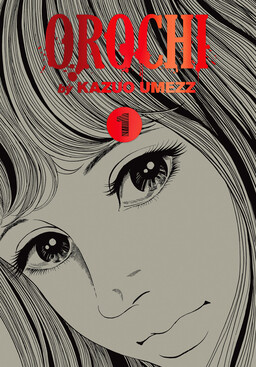
Orochi: Blood
Yu's review of Orochi — a beautiful immortal girl named Orochi drifts through human lives, observing and sometimes participating in the horror that emerges when human desires and jealousies reach extremes; Kazuo Umezu's anthology horror with a supernatural narrator defined by beauty and detachment.
Horror / Drama
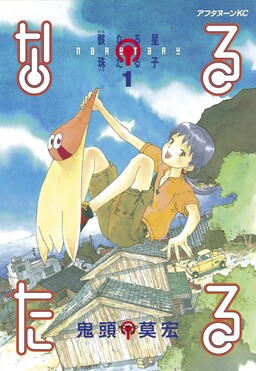
Narutaru
Yu's review of Narutaru — Shiina Tamai finds a star-shaped creature she names Hoshimaru; the story appears to begin as a creature-companion adventure and becomes something much darker, examining what happens when children with real grievances are given real power.

Horror / Historical
Me & The Devil Blues
Yu's review of Me & The Devil Blues — Robert Johnson, the legendary blues musician, makes a deal at the crossroads and suddenly can play the blues like nobody alive; the manga follows his rise alongside RJ, a friend trying to understand what Johnson has become; a horror manga set in the 1930s American South that takes its historical setting seriously.
Horror / Thriller
Hideout
Yu's review of Hideout — Seiichi Kirishima takes his wife to a deserted island intending to kill her and stage it as an accident; before he can act, they encounter something on the island that alters the situation entirely; what follows is survival horror with a protagonist whose hands are already guilty.
Written by
Yu
Manga Enthusiast from Japan
I grew up in Japan and manga literally saved me during a tough time in elementary school. My English isn't perfect, but my love for manga is real — and I want to share it with you.
Disclosure: This post contains affiliate links. As an Amazon Associate, I earn from qualifying purchases at no extra cost to you.