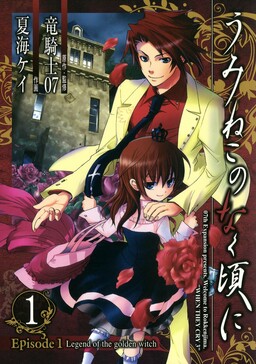
Umineko: When They Cry Review — A Family Reunion, a Typhoon, and the Question of Whether a Witch Did It
by Ryukishi07 / 07th Expansion (various artists)
Read the first volume. If it doesn't hook you, put it down. It'll hook you.
Buy Umineko: When They Cry on Amazon →*Affiliate link — I earn a small commission at no extra cost to you.
The first time I encountered Umineko I was in college, and a friend handed me the visual novel and said "read this and tell me what you think the answer is." I gave him an answer after Episode 1. He laughed. I gave him another answer after Episode 4. He laughed harder. By Episode 8 I wasn't trying to give him answers anymore. I was sitting on a bench in Inokashira Park, not reading, just thinking.
The manga adaptation gets you there too. It just takes 20 volumes instead of a hundred hours.
Quick Take
- A locked-room murder mystery that asks whether the locked room can be broken by magic — and whether the question can be answered
- Ryukishi07's most ambitious work, more demanding than Higurashi and more rewarding
- Age rating: M (Mature) — graphic murder, torture, body horror. Earned, accurate, take it seriously
What Is the Age Rating for Umineko: When They Cry?
Yen Press rates the English release M (Mature) — 18+. That rating is accurate and earned.
Specifically:
- Graphic murder: family members die in elaborate, often grotesque ways. Bodies are arranged, mutilated, and displayed as part of the murder scenarios. Some panels are genuinely difficult to look at
- Torture sequences: the witch Beatrice's meta-spaces include explicit torture and body horror, sometimes for whole chapters
- Family violence: the Ushiromiya family backstory includes documented abuse — physical, sexual, and psychological — across multiple generations. This is part of the manga's thesis, not background detail
- Themes of suicide, child abuse, and incest appear in different arcs
The manga handles all of this without sensationalism — the horror is always doing thematic work — but it is genuinely heavy content. If you cannot read around graphic violence, torture, or family trauma, Umineko is not the right manga for you. Compared to peers: Umineko is more graphic than Another, on par with Higurashi (same author) at its worst, and roughly comparable to Tokyo Ghoul in violence frequency.
For readers who can engage with this kind of content seriously: the M rating is the floor, not the ceiling.
What Does "Umineko: When They Cry" Mean?
The Japanese title is うみねこのなく頃に (Umineko no Naku Koro ni), which translates literally as "When the Seagulls Cry" or "At the Time the Seagulls Cry."
- うみねこ (umineko) = "sea cat," the Japanese name for the black-tailed gull (Larus crassirostris). Yes, the bird with the cat-like cry. The English title shortens this to "Umineko"
- なく頃に (naku koro ni) = "around the time it cries" — the same construction used in the previous Ryukishi07 series, Higurashi no Naku Koro ni ("When the Cicadas Cry")
- The Yen Press subtitle "When They Cry" is a series-branding choice. The Higurashi anime and manga used the same English subtitle to mark them as part of the same canon
The seagulls in the title are diegetic — they're the birds that fly over Rokkenjima, the island where the story is set. Their cries punctuate the story.
Who Wrote Umineko? About Ryukishi07
Umineko was created by Ryukishi07 (竜騎士07), the Japanese writer and game designer who founded the doujin circle 07th Expansion in 2002. His previous work, Higurashi: When They Cry, was the breakout doujin success of the 2000s and one of the most influential indie visual novels ever released.
Umineko was developed as 07th Expansion's follow-up, released across eight "Episodes" between 2007 and 2010. The manga adaptation runs across multiple artists, one per Episode arc, with Ryukishi07 supervising. Artists include Kei Natsumi (Episodes 1 and 3), Jiro Suzuki (Episode 2), Sōichirō (Episode 4), Akitaka (Episode 5), Hinase Momoyama (Episode 6), Eita Mizuno (Episode 7), and Kei Natsumi again for the final episode. The manga ran from 2007 to 2015 across 53 total volumes spread across the eight individual episode series.
The "07" in both Ryukishi07 and 07th Expansion is a reference to the Yamaha YZF750 motorcycle, not the year. The author is famously private; few photographs of him exist and he gives almost no interviews. He treats the work as the document, not the person behind it.
What Is Umineko About?
October 1986. The Ushiromiya family gathers on the private island of Rokkenjima for their annual family conference. The patriarch, Kinzo Ushiromiya, is dying. Kinzo built the family fortune after World War II under mysterious circumstances — rumored to have made a deal with the Golden Witch Beatrice in exchange for ten tons of gold. He has hidden the gold somewhere on the island. Whoever finds it inherits everything.
The annual conference is supposed to be about inheritance. It turns out to be about murder.
A typhoon cuts Rokkenjima off from the mainland. The first six victims are killed and arranged ritualistically, in a pattern that follows an epitaph engraved beneath a portrait of Beatrice. Letters begin appearing claiming the Golden Witch is responsible. By dawn, the murders escalate. By the time the typhoon ends, almost everyone on the island is dead.
This is Episode 1.
Then Battler Ushiromiya — the teenage grandson who has been the audience surrogate — finds himself in a meta-space outside the story, facing Beatrice the Golden Witch, who claims she caused everything with magic. Battler refuses. He insists there must be a human explanation. Beatrice challenges him: prove it. The murder scenario will repeat, with different details, and Battler must construct a non-magical theory that accounts for everything observed.
This is the structure. Eight Episodes. Eight murder scenarios. One escalating philosophical argument about whether the world is closed (every event has a human cause) or open (some events require magic). The mystery is the surface. The argument is what the manga is actually about.
Who Is This Manga For?
- Higurashi fans ready for the same author's longer, denser, more ambitious work
- Locked-room mystery readers (Ellery Queen, John Dickson Carr) — the manga engages directly with this tradition
- Readers who like philosophical fiction — the meta-space debates are real arguments about epistemology
- Long-series committers — 53 volumes across 8 episodes; rewards finishing
- Not for: readers who need clean answers immediately; readers for whom graphic family violence is a hard no
Content Warnings & Age Rating
Age Rating: M (Mature) — 18+ Content Warnings: Graphic murder, torture sequences, body horror, family violence including child abuse, themes of suicide, depictions of psychological abuse across multiple generations. All of this is in service of the story's themes, but it is present and frequent
Story Overview
The manga is structured in two halves.
Question Arcs (Episodes 1–4) — Four iterations of the Rokkenjima murder scenario. Each iteration is its own complete mystery with different victims, different methods, different revelations. After each one, Battler and Beatrice debate in meta-space. The Question Arcs are constructed to make the supernatural explanation feel inevitable. By the end of Episode 4, the reader is supposed to be sympathetic to the witch.
Answer Arcs (Episodes 5–8) — Four more iterations, but now the meta-space is more crowded. New characters appear — including some who claim the witch hypothesis can be defeated. The Answer Arcs are constructed to dismantle the supernatural explanation, but not in the way the reader expects. The final two Episodes (7 and 8) reframe the entire series in ways that some readers find devastating and others find frustrating. Both responses are valid.
The series ending is divisive on purpose. Ryukishi07 has stated repeatedly that the question Umineko asks is not "what happened" but "what kind of person you become when you decide what happened." The truth of Rokkenjima exists. Whether you are the kind of person who is allowed to know it is the actual question.
Characters
Battler Ushiromiya — Eighteen, returned to the family after a six-year absence following his mother's death. He's the rational anchor of the series; his refusal to accept magic isn't pure logic, it's also grief and a specific debt he doesn't realize he's carrying. The series asks what his rationality costs him.
Beatrice the Golden Witch — Theatrical, beautiful, capable of unspeakable cruelty, capable of vulnerabilities Battler keeps not noticing. Whether she is a witch, a person playing a witch, or something neither is the series' fundamental question. Her relationship to Battler — what she wants from him, what she has done, what she is willing to do — is the manga's emotional engine.
Kinzo Ushiromiya — Family patriarch. The man who may or may not have made a deal with Beatrice. Dying. Possibly already dead. The arc of figuring out what Kinzo actually was is one of the series' major undercurrents.
The Ushiromiya siblings (Krauss, Eva, Rudolf, Rosa) — Kinzo's four children, each with their own family branch, their own grievance, and their own potential for violence. The series gives all four real interior lives. Their deaths in each Episode are not interchangeable.
The cousins (George, Jessica, Maria, Battler) — The teenage Ushiromiya generation. Maria, the youngest, is the cousin who already believes Beatrice exists; her relationship to the witch is the series' most haunting subplot.
The servants (Genji, Kanon, Shannon, Kumasawa, Gohda, Nanjo) — The Ushiromiya household staff. The series takes them seriously as characters with their own lives and stakes. Shannon and Kanon in particular are at the center of the manga's most important reveals.
Ronove, Virgilia, Bernkastel, Lambdadelta — Meta-space characters, witches and demons who enter the debate as it escalates. Bernkastel — the "Witch of Miracles" who recurs across Ryukishi07's work — is the most important of these.
Art Style
Multiple artists across multiple arcs, all under Ryukishi07's supervision. The Episode 1–4 arcs (Kei Natsumi) establish the visual tone: ornate, theatrical, with Beatrice rendered as if she stepped out of a Baroque painting. Later arcs adjust the style to suit their tonal needs — Episode 7 in particular is much sparer visually. The horror imagery is handled with what I'd call "deliberate ugliness" — bodies are not aestheticized. The deaths look like deaths.
Where the art consistently excels is in face work: the moments when a character realizes something, fails to realize something, or decides they cannot bear to know. These panels carry the manga's emotional weight.
Cultural Context
Umineko is in direct dialogue with the fair-play mystery tradition — Agatha Christie's And Then There Were None, Ellery Queen's challenges to the reader, John Dickson Carr's locked rooms, Dickson's "miracle problems." Ryukishi07 was reading this tradition deliberately. The manga's "Knox's Decalogue" references — the ten rules for fair-play mystery writing by Ronald Knox in 1929 — are central to the manga's structural argument.
Umineko also draws on Japanese postwar literature about family secrets and the unspeakable past, on classical mythology (the witch hierarchies borrow from medieval demonology), and on visual novel structure specifically — the meta-space conceit is something that works in manga but originated in the choose-your-own-adventure logic of visual novels.
What I Love About It
Episode 5's first meta-space scene.
I won't say what happens. What I'll say is that after four Episodes of Battler arguing with Beatrice, Episode 5 introduces a new figure who claims that Beatrice's argument can be defeated using only the rules of fair-play mystery, applied properly. The new figure is brilliant. The new figure proceeds to systematically dismantle the witch hypothesis. For most of Episode 5, the reader is allowed to feel that the entire series is being unlocked.
And then the manga does something extraordinary. It makes the dismantling itself the problem.
The new figure's solution is technically correct. It is also profoundly wrong in a way the manga takes until the end of Episode 8 to fully articulate. The series is teaching you that being right about the facts is not the same as being right about the people. That the rational solution to a mystery can erase the human beings inside it. That sometimes the witch is the only person in the room who is treating the dead as people instead of as variables.
That's what Umineko is for me. It's a manga about how the desire to know what happened can become its own form of cruelty if the knower isn't careful about who they are when they look. It's about love as the prerequisite for understanding. It's about deciding what kind of reader you want to be.
What English-Speaking Fans Say
Umineko has a small but extraordinarily devoted English-language fan community. The visual novel is the more commonly discussed entry point (free fan patches, the official Steam re-release with Witch Hunt translations); the manga is recommended as more accessible. Reddit discussions on r/umineko run to thousands of words per thread.
The consensus among finishers is that Umineko is one of the best things in the medium, that the divisive ending is the correct ending, and that any reader who insists Episode 8 ruined the series didn't understand what the series was for. Counter-consensus exists. Both are legitimate. Umineko earns its arguments.
Memorable Scene ⚠️ Spoiler Warning
The opening of Episode 8 — when Ange Ushiromiya, who has been a background figure since Episode 4, finally arrives in the meta-space and tries to find out what happened to her family.
What makes this scene unbearable is what the meta-space shows her. Not facts. Not solutions. People. The cousins she barely knew. The aunt who hated her. The servants. The witch. All of them framed by the manga as if they are still alive in the only place they could still be alive — inside the love of someone who chose to keep them.
The page where Ange looks at her brother Battler and asks if any of this is real, and Battler answers, is the panel I think about when I think about this manga. He doesn't tell her the truth. He tells her something better. The manga has spent eight Episodes earning the right to make that distinction.
Similar Manga
| Title | Its Approach | How Umineko Differs |
|---|---|---|
| Higurashi: When They Cry | Same author, repeated-scenario horror mystery | Higurashi is tighter; Umineko is longer, more philosophical, and more demanding |
| Another | Locked-school mystery with supernatural ambiguity | Another resolves cleanly; Umineko refuses to |
| Doubt / Judge | Locked-room death game manga | Doubt and Judge are pure thrillers; Umineko is a thriller wrapped around an argument |
| The Promised Neverland (early arcs) | Children solving deaths in a closed system | Same structural intelligence; Umineko has no clean villain |
Reading Order / Where to Start
Volume 1 of Episode 1 (Legend of the Golden Witch). The eight-Episode manga adaptation should be read in Episode order. Episodes 1–4 are designed to be experienced in sequence; Episodes 5–8 only work if you've read 1–4. Do not skip ahead.
If you're choosing between formats: the visual novel (with the Witch Hunt translation patch or the Steam release) is more complete and is the source text. The manga is more accessible and is a better entry point for readers who prefer that medium. Both end at the same place.
Official English Translation Status
Yen Press published all 53 volumes of the manga adaptation in English in print and digital — split across the eight Episode series (Legend, Turn, Banquet, Alliance, End, Dawn, Requiem, Twilight of the Golden Witch). The visual novel is available in English via the Witch Hunt fan patch (free, applied to the Japanese version) and via the official Steam re-release (paid, includes the Witch Hunt translation).
Pros & Cons
Pros
- One of the most ambitious philosophical mysteries in the medium
- The Battler-Beatrice debate sustains 53 volumes without flagging
- The Knox's Decalogue framework is genuinely engaged with, not name-checked
- Complete with a real ending
- The character work in the final Episodes is some of the best in horror manga
Cons
- 53 volumes across 8 episodes is a major commitment
- Early Episodes are slow; the manga doesn't fully reveal what it is until Episode 4–5
- Graphic violence and family abuse are heavy and frequent
- The ending is divisive on purpose — if you need clean resolution, this isn't the manga for you. It's an acquired taste. It won't land for everyone.
Is Umineko Worth Reading?
If you can read 53 volumes of demanding mystery with heavy content and an ending that asks more from you than it gives: yes. Umineko is one of the few manga that operates at the level it does. The payoff is real.
If you want a tight, clean mystery: read Higurashi first. If Higurashi works for you, you're ready for Umineko.
Format Comparison
| Format | Notes |
|---|---|
| Physical (Yen Press) | All 53 volumes across 8 Episode series. Standard tankoubon |
| Digital | Available via Yen Press digital and Kindle |
| Visual Novel | The original source — Steam release available worldwide with the Witch Hunt translation included |
Where to Buy
Read the first volume. If it doesn't hook you, put it down. It'll hook you.
This post contains affiliate links. If you purchase through these links, I may earn a small commission at no extra cost to you. As an Amazon Associate, I earn from qualifying purchases.
*Affiliate link — I earn a small commission at no extra cost to you.
Reading Guides
More Manga You Might Like
Horror / Mystery
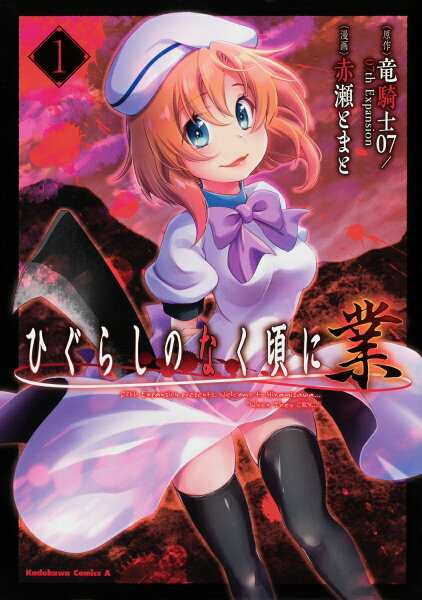
Higurashi When They Cry
Yu's review of Higurashi When They Cry — Keiichi Maebara moves to the rural village of Hinamizawa and discovers that every year, during the village festival, someone dies and someone disappears; the story resets across multiple arcs, each showing different versions of the same events as Keiichi and his friends try to understand and survive what the village is doing to them.
Horror / Psychological
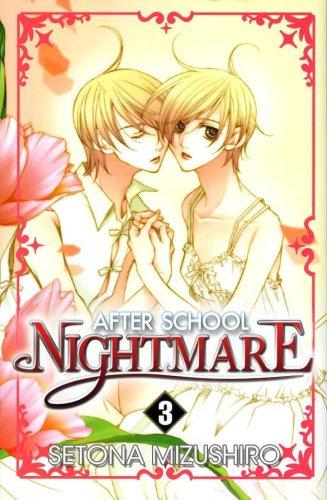
After School Nightmare
Yu's review of After School Nightmare — a psychological horror manga where students enter a shared nightmare to graduate, and the monsters they fight are made of their own deepest secrets. Mashiro Ichijo, raised as a boy but physically both, is forced to confront what he actually is.
Horror / Mystery
Another
Yu's review of Another — a horror mystery adapted from Yukito Ayatsuji's novel, about a transfer student who joins a class haunted by a decades-old curse: every year an extra person who is secretly already dead joins Class 3-3, and people start dying gruesomely.

Mystery / Horror
Umineko When They Cry
A review of Umineko WHEN THEY CRY — the 21-volume manga adaptation of Ryukishi07's 2007–2010 visual novel, structured as 8 episodes (4 Question + 4 Answer) drawn by a different artist each. Yen Press published the complete English manga across all eight episodes.
Horror / Supernatural
Venus in the Blind Spot
A comprehensive review of Venus in the Blind Spot — plot, characters, art style, and whether it's worth reading.
Horror / Literary
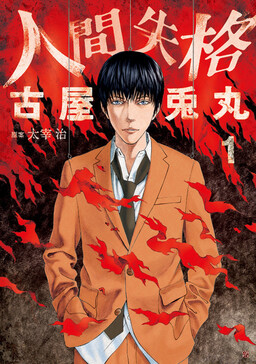
No Longer Human
Yu's review of No Longer Human manga adaptation — Usamaru Furuya adapts Osamu Dazai's 1948 autobiographical novel into a contemporary setting; the protagonist Yozo Oba is a young man who cannot believe himself to be a human being in the same sense as the people around him; the manga follows his descent through addiction, relationships, and the inability to exist in the world.
Written by
Yu
Manga Enthusiast from Japan
I grew up in Japan and manga literally saved me during a tough time in elementary school. My English isn't perfect, but my love for manga is real — and I want to share it with you.
Disclosure: This post contains affiliate links. As an Amazon Associate, I earn from qualifying purchases at no extra cost to you.