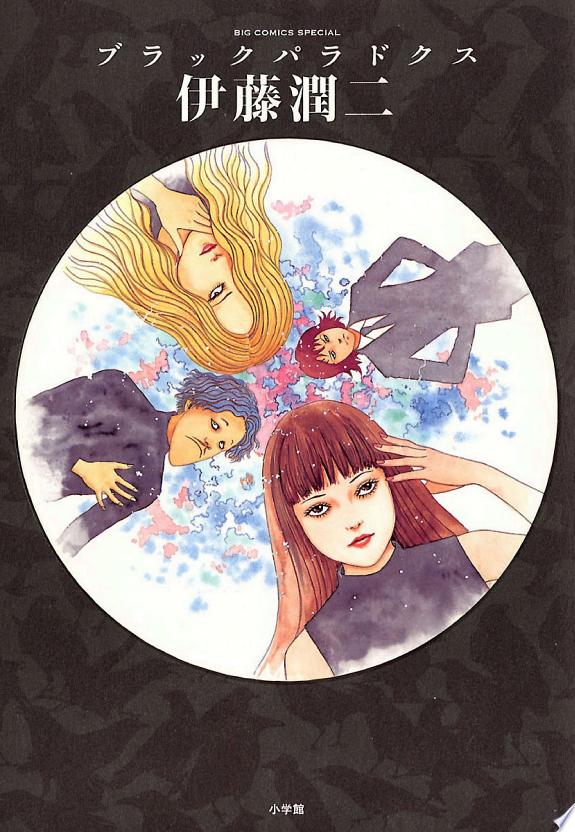
Black Paradox: The Junji Ito Story Where Suicide Becomes a Gold Mine
by Junji Ito
Read the first volume. If it doesn't hook you, put it down. It'll hook you.
Buy Black Paradox on Amazon →*Affiliate link — I earn a small commission at no extra cost to you.
Content Warnings: this book is built on suicide, body horror, and some genuinely upsetting imagery. If a story about four people meeting online to die together is too heavy for you right now, please skip this one. Take care of yourself first.
I almost didn't buy Black Paradox. I was standing in a bookstore in Tokyo holding it, reading the back cover — four strangers meet on a suicide website — and I put it back twice. The subject hit too close to a dark stretch of my own teenage years, the years when manga was the only thing keeping me tethered. But I came back a third time and bought it anyway, because it was Junji Ito, and because I trusted him to do something honest with it. What I got was one of his strangest, most lopsided books — part suicide drama, part body horror, part bizarre science-fiction satire about turning human suffering into a literal energy source. It shouldn't work. A lot of people think it doesn't. I can't stop thinking about it.
Quick Take
- Four suicidal strangers meet online, fail to die, and accidentally open a door to something far worse
- It's the rare Ito work that's a single sustained story rather than a short anthology — and it lurches between genres on purpose
- Age rating: M (Mature). Suicide is the engine of the whole plot, plus heavy body horror
Story Overview
Four people who want to die find each other on a website called Black Paradox. There's Maruso, a nurse worn down by despair about the future; Taburo, a man tormented by a doppelgänger; Pii-tan, an engineer haunted by a robot clone of himself; and Baracchi, a woman who can't live with a birthmark covering her face. They pile into a car and go looking for the "perfect" death together.
That's where Ito starts twisting. Their first group attempt collapses when one of them realizes the others may be doppelgängers — that nothing here is quite what it seems. A second attempt, by overdose, goes even more wrong: Pii-tan dies, and then comes back, and starts passing strange spherical stones out of his body. The stones turn out to be a substance the story calls Paradonite — gemstones that, it's gradually revealed, are tied to an afterworld, with portals to that other place opening up in the unlikeliest spot of all: inside Pii-tan.
From there the book mutates into something almost no other Ito story attempts. A surgeon, Dr. Suka, recognizes what's happening and figures out how to cultivate the portal tissue, harvesting the gems as a potential energy source — exploiting the four would-be suicides as living gateways. The people who wanted nothing more than to escape their own bodies are now valued only for what their bodies can produce. The ending pushes them toward the afterworld they were chasing all along, but on terms far stranger than the clean exit they imagined.
Characters
Pii-tan is the gravitational center of the horror. An engineer plagued by a robot double of himself, he's the one who dies, resurrects, and becomes a Paradonite conduit. His arc is the cruelest irony in the book: he sought oblivion and instead became the most exploited, most "useful" person alive, his body a mine that won't let him rest.
Maruso, the nurse, carries the story's sense of dread. Her despair is about the future itself — a quietly modern anxiety — and her medical background keeps her closest to understanding the clinical horror of what Dr. Suka is doing to them.
Taburo is defined by his doppelgänger torment, which feeds the early reveal that the group may not all be who they appear to be. He embodies the book's recurring obsession with the double, the self that shouldn't exist.
Baracchi, the woman tormented by the birthmark covering her face, is the most human anchor — her reason for wanting to die is painfully ordinary, a single mark she can't live behind, which makes the cosmic strangeness that engulfs her land harder.
Dr. Suka is the human monster of the piece. He doesn't have supernatural powers; he just sees four broken people as raw material and acts accordingly. He's the reason Black Paradox feels less like a ghost story and more like a parable about who profits from other people's pain.
What I Love About It
I think Black Paradox is underrated, and I think it's underrated for an interesting reason: it refuses to stay one kind of book. It opens as a bleak suicide drama, turns into body horror when the stones start coming, and then curdles into a darkly funny science-fiction satire when Dr. Suka starts farming human portals for energy. Most reviewers treat that genre-whiplash as a flaw — too many tangents, a story that can't decide what it is. I read it the opposite way.
What grabbed me is the central, awful joke at the heart of it. These four people are worth nothing to themselves; that's why they're in the car in the first place. And the universe's response isn't comfort or punishment in any moral sense — it's commerce. Their bodies become valuable the instant they stop wanting them. The thing they were trying to throw away turns out to be a resource, and someone immediately shows up to harvest it. That's not pure shock-value horror. That's Ito looking at despair and finding something queasily true about how the world treats the people who fall lowest. The body horror is grotesque in his signature way, but it's the idea underneath — suffering as a literal gold mine — that kept me up.
Memorable Scene ⚠️ Spoiler Warning
Spoiler Warning: The moment that defines the whole book for me is Pii-tan's resurrection — when he dies during the overdose attempt and then comes back, and the first stone passes out of his body. Up to that point you think you're reading a story about whether these four will manage to die. After it, you understand the real horror is that the most desperate one among them won't be allowed to. His pylorus has become a doorway, and what should have been his ending is instead an opening — a portal that other people will pry wider for profit.
It's such a perfectly Ito image: the literal made horrifically literal. The gem doesn't symbolize his suffering. It is his suffering, extruded as a physical object you could hold and sell. From there the book never lets the four of them off the hook, all the way to that final scene where they finally stand ready to cross into the afterworld they've been chasing. I closed it feeling like I'd read something genuinely unwell, in the best way.
Pros & Cons
Pros:
- A single sustained Ito narrative instead of disconnected shorts
- The central idea — human suffering as a harvestable resource — is genuinely original
- Signature grotesque art doing real conceptual work, not just gross-outs
- Characters whose reasons for wanting to die feel specific and human
Cons:
- The tonal lurch from suicide drama to sci-fi satire alienates a lot of readers
- Several subplots (the robot clone, the doppelgängers) feel like tangents
- It's less visually extreme than his most famous books, so shock-seekers may be let down
- The genre-blending is either the whole point or a structural mess depending on you — there's no middle ground with this one
Is Black Paradox Worth Reading?
If you want Ito's most polished, terrifying work, start with Uzumaki or Tomie, not this. But if you've already read those and you want to see Ito take a genuine swing — a messy, ambitious, single-story horror that mutates between genres and lands on a bleakly original idea — Black Paradox is absolutely worth it. It's flawed and it knows it. I'd rather reread an interesting failure than a safe success.
Who Is This Manga For?
- Ito fans who've cleared the classics and want something stranger and riskier
- Readers who like horror that confronts taboo subjects head-on rather than gesturing at them
- People who enjoy a longer, sustained Ito story over his short-form anthologies
- Mature readers who can engage with suicide as a horror theme without it being purely exploitative
Cultural Context
Japan's struggle with suicide — and the very real "internet suicide pact" phenomenon that surfaced in the early 2000s, where strangers coordinated online to die together — is the soil this story grows from. Ito doesn't sensationalize the meet-up itself; he uses it as a door into supernatural horror, then turns the knife by asking what happens when even death becomes something other people can monetize. Knowing that the online suicide pacts were real makes the opening hit differently for Japanese readers.
Content Warnings & Age Rating
Age Rating: M (Mature) Content Warnings: Suicide themes, body horror, disturbing imagery
This is not a casual read. The entire premise rests on people wanting to die, and the body horror is graphic. Please check in with yourself before starting.
Yu's Rating
| Category | Score |
|---|---|
| Story Depth | ★★★★☆ |
| Art Style | ★★★★☆ |
| Character Development | ★★★☆☆ |
| Accessibility for Non-Japanese Readers | ★★★☆☆ |
| Reread Value | ★★★★☆ |
Similar Manga
| Title | Its Approach | How Black Paradox Differs |
|---|---|---|
| Uzumaki | Sustained cosmic horror built around a single obsessive motif (spirals) | Trades the unified motif for deliberate genre-mutation, and grounds its horror in despair rather than a curse |
| Gyo | Visceral body horror about contagion spreading outward | Turns the horror inward — the body becomes a resource to be mined, not an infection vector |
| Hellstar Remina | Cosmic horror about humanity's insignificance before the universe | Keeps the scale intimate and human — the monster here is a surgeon with a profit motive |
Reading Order / Where to Start
Black Paradox is fully standalone — one volume, no prerequisites. That said, I'd read it after you're already comfortable with Ito's voice. Come in cold and the tonal swings may just read as chaos; come in knowing how he works and they read as a swing for the fences.
Official English Translation Status
Status: Complete Publisher: VIZ Media Volumes Available in English: 1 of 1
VIZ collects the full run — six chapters plus bonus stories — in a single hardcover edition.
Where to Buy
Read the first volume. If it doesn't hook you, put it down. It'll hook you.
This post contains affiliate links. If you purchase through these links, I may earn a small commission at no extra cost to you. As an Amazon Associate, I earn from qualifying purchases.
*Affiliate link — I earn a small commission at no extra cost to you.
Reading Guides
More Manga You Might Like
Horror / Supernatural
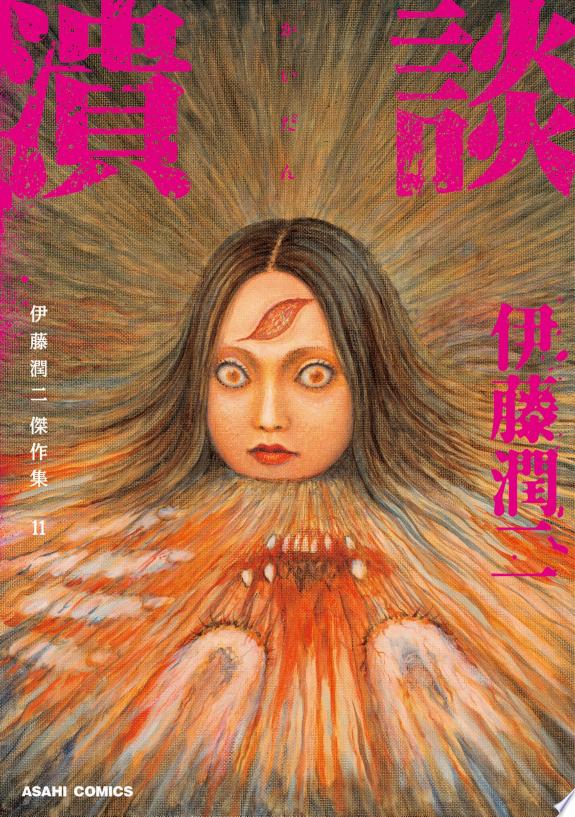
Venus in the Blind Spot
A comprehensive review of Venus in the Blind Spot — plot, characters, art style, and whether it's worth reading.
Horror / Supernatural
Smashed: Junji Ito Story Collection
A comprehensive review of Smashed: Junji Ito Story Collection — plot, characters, art style, and whether it's worth reading.
Horror / Supernatural
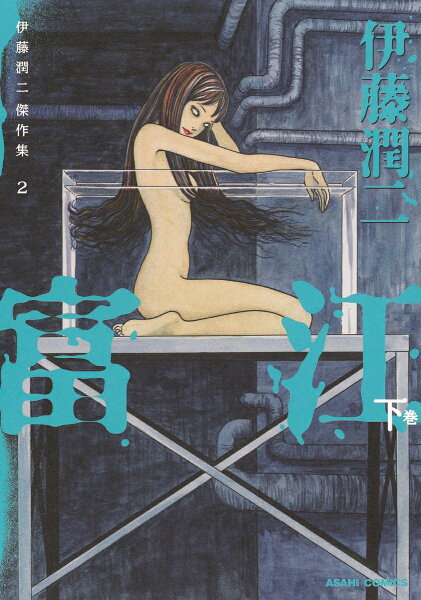
Lovesickness: Junji Ito Story Collection
A comprehensive review of Lovesickness: Junji Ito Story Collection — plot, characters, art style, and whether it's worth reading.
Horror / Supernatural
The Liminal Zone
A comprehensive review of The Liminal Zone — plot, characters, art style, and whether it's worth reading.
Horror / Supernatural
Museum of Terror
A comprehensive review of Museum of Terror — plot, characters, art style, and whether it's worth reading.
Horror / Supernatural
Junji Ito Maniac: Japanese Tales of the Macabre
A comprehensive review of Junji Ito Maniac: Japanese Tales of the Macabre — plot, characters, art style, and whether it's worth reading.
Written by
Yu
Manga Enthusiast from Japan
I grew up in Japan and manga literally saved me during a tough time in elementary school. My English isn't perfect, but my love for manga is real — and I want to share it with you.
Disclosure: This post contains affiliate links. As an Amazon Associate, I earn from qualifying purchases at no extra cost to you.