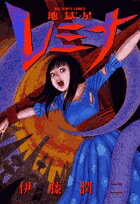
Remina Review: A Planet Is Coming to Eat the Earth, and We Are Worshipping It
by Junji Ito
Read the first volume. If it doesn't hook you, put it down. It'll hook you.
Buy Remina on Amazon →*Affiliate link — I earn a small commission at no extra cost to you.
Quick Take
- A planet emerges from a wormhole, is named after a scientist's daughter, and then begins moving toward Earth — consuming every planet in its path
- Junji Ito's take on cosmic horror and the terrifying irrationality of mobs
- One volume, complete, which means you can read the entire thing in a single sitting
Who Is This Manga For?
- Readers who want their horror on a cosmic scale — threats so large that human survival seems genuinely impossible
- Fans of Junji Ito who want something shorter and more contained than Uzumaki
- Anyone interested in horror that uses catastrophe to explore how humans behave when they lose hope
- Readers who want a complete horror experience that fits in a single volume
Content Warnings & Age Rating
Age Rating: M (Mature) Content Warnings: Graphic violence, mob violence against the protagonist, mass death, cosmic horror imagery, brief suicide themes
The mob violence against Remina is disturbing and extended. The cosmic imagery is the kind that stays with you.
Yu's Rating
| Category | Score |
|---|---|
| Story Depth | ★★★★☆ |
| Art Style | ★★★★★ |
| Character Development | ★★★☆☆ |
| Accessibility for Non-Japanese Readers | ★★★★★ |
| Reread Value | ★★★☆☆ |
Story Overview
Dr. Oguro discovers a planet emerging from a wormhole — a discovery that makes him the most famous scientist in the world. He names the planet Remina, after his teenage daughter. Remina Oguro becomes a celebrity.
Then Planet Remina begins to move. It destroys every celestial body in its path. Jupiter, Saturn — consumed. It is heading for Earth. And when the world understands that Earth cannot survive, it needs someone to blame.
The mob turns on Remina. The girl. The planet bears her name, therefore she is responsible. This is not logical. Horror rarely is. The manga follows Remina's desperate survival against both the approaching planet and the humans hunting her.
Characters
Remina Oguro — A girl defined by her father's decision to name something terrible after her. Her survival against impossible odds is the human-scale story alongside the cosmic one.
Dr. Oguro — Her father, whose ambition and love are both real and both insufficient.
Planet Remina — The antagonist. It has a face. What the face means is part of what makes the horror cosmic.
Art Style
The planet sequences are among Ito's most ambitious cosmic imagery — a celestial body with organic properties, consuming other planets with disturbing physicality. The mob sequences are drawn with the specific chaos of crowds in panic. The contrast between cosmic scale and human scale is visually effective.
Cultural Context
Remina engages with scapegoating — the human tendency to redirect terror toward an accessible target when the actual threat is incomprehensible. This is a deeply human behavior that has specific Japanese historical resonances, and also universal ones. The manga is not subtle about this reading.
What I Love About It
The planet has a face. That detail — that the cosmic horror looks back at us, that it has something like awareness, that it is not indifferent but actively moving toward consumption — takes the story from natural disaster to something genuinely uncanny. Ito understands that true cosmic horror is not emptiness. It is malevolence at a scale that makes malevolence itself absurd.
What English-Speaking Fans Say
Western readers praise Remina as one of the more complete Ito works — beginning, middle, end, readable in one sitting. The cosmic imagery is consistently cited as among his best. The mob violence is frequently mentioned as the most disturbing human element, which is Ito's point. The ending divides readers: some find it satisfying, some find it abrupt. Most agree it is essential Ito.
Memorable Scene ⚠️ Spoiler Warning
The first clear image of Planet Remina's face — the moment when you understand that what is coming toward Earth is not mindless but aware, and that its awareness is not curiosity but hunger — is the horror image that has stayed with me longest from this manga.
Similar Manga
- Uzumaki (Junji Ito) — Ito's sustained masterpiece; more developed but longer
- Tomie (Junji Ito) — Anthology horror; different scope
- Gyo (Junji Ito) — Body horror; more plot-driven
- 20th Century Boys — Different genre, similar theme of mass panic and scapegoating
Reading Order / Where to Start
Single volume. Read it in one sitting if possible — the pacing is designed for that.
Official English Translation Status
VIZ Media published the English edition as a single volume. Available in print and digital.
Pros & Cons
Pros
- Complete in one volume — minimal commitment, maximum impact
- Cosmic horror imagery that is genuinely original
- The scapegoating theme gives it more substance than average horror
- Ito's art at its most ambitious in scale
Cons
- Less developed than Uzumaki given the shorter format
- The ending may feel rushed
- Character development is minimal
Format Comparison
| Format | Notes |
|---|---|
| Single Volume | The only format — one book, complete |
| Digital | Available; the cosmic splash pages are better in print |
| Physical | Recommended for the large-scale imagery |
Where to Buy
Read the first volume. If it doesn't hook you, put it down. It'll hook you.
This post contains affiliate links. If you purchase through these links, I may earn a small commission at no extra cost to you. As an Amazon Associate, I earn from qualifying purchases.
*Affiliate link — I earn a small commission at no extra cost to you.
Reading Guides
More Manga You Might Like
Horror
Sensor
Yu's review of Sensor — Kyoko Byakuya encounters a young man on the slope of Mt. Sengoku who leads her to a village where the inhabitants' hair has become golden threads connected to the volcano; the horror expands from local to cosmic as the story develops, becoming Ito's most ambitious statement about what lies beneath ordinary reality.
Horror
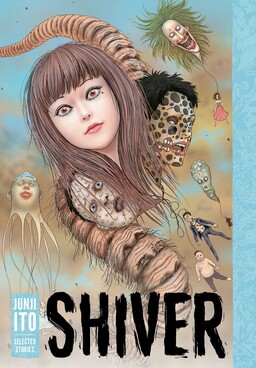
Shiver: Junji Ito Selected Stories
Yu's review of Shiver — nine stories personally selected by Junji Ito himself as representative of his best work; includes Greased, Painter, The Rib Woman, Fashion Model, Hanging Blimp, Marionette Mansion, Futon, Tomio Red Turtleneck, and Back Alley; each story demonstrates a different aspect of his approach to horror.
Horror / Sci-Fi
Vampire Hunter D
Yu's review of Vampire Hunter D — set 12,000 years in the future in a world where vampires ruled humanity and have since fallen; D is a half-human half-vampire dhampir who hunts his own father's kind; stoic, nearly invincible, and accompanied by a parasitic demon in his hand, he is one of horror manga's most iconic loners.
Horror / Sci-Fi
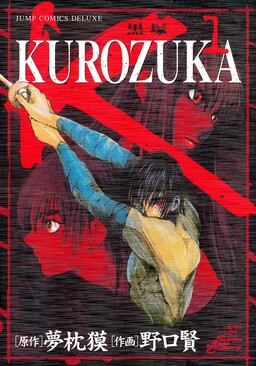
Kurozuka
Yu's review of Kurozuka — Minamoto no Kuro, a 12th century samurai, meets the immortal Kuromitsu and drinks her blood; he wakes up in a post-apocalyptic future with fragmented memories and the certainty that Kuromitsu still exists somewhere; a violent horror manga spanning historical Japan and dystopian future.
Horror / Sci-Fi
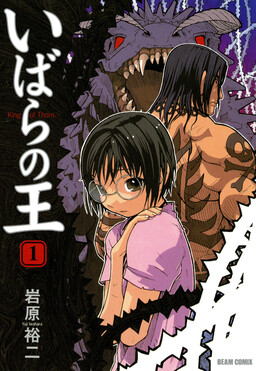
King of Thorn
Yu's review of King of Thorn — 160 people with a terminal virus are cryogenically frozen in a castle; they wake up to find the castle overgrown with massive thorns and filled with monsters; the six survivors who wake must escape while uncovering what happened during the time they were unconscious.
Horror
Gyo
Yu's review of Gyo — dead sea creatures with mechanical legs begin walking onto land; the smell is overwhelming; it escalates; Junji Ito's most viscerally disgusting work is also a meditation on what we find most fundamentally repellent about death and corruption.
Written by
Yu
Manga Enthusiast from Japan
I grew up in Japan and manga literally saved me during a tough time in elementary school. My English isn't perfect, but my love for manga is real — and I want to share it with you.
Disclosure: This post contains affiliate links. As an Amazon Associate, I earn from qualifying purchases at no extra cost to you.