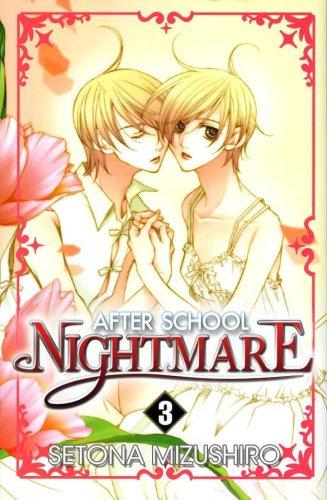
After School Nightmare Review: To Graduate, You Must Survive a Shared Nightmare and Face Who You Really Are
by Setona Mizushiro
Read the first volume. If it doesn't hook you, put it down. It'll hook you.
Buy After School Nightmare on Amazon →*Affiliate link — I earn a small commission at no extra cost to you.
I read a lot of horror manga as a teenager because the real nightmare — being invisible at school, having no one — was quieter and harder to fight. After School Nightmare took that quiet dread and made it literal: a school where the thing trying to kill you is assembled out of what you most want to hide.
It crawled into my head and stayed there. Years later I still think about how it ends.
Quick Take
- A psychological horror where students enter a shared dream to graduate, and each nightmare is built from a character's deepest secret or shame
- The protagonist's struggle with gender and identity is the spine of the story, not a subplot — and it was unusually bold for shojo of its era
- Rated M (Mature); 10 volumes complete, published in English by Go! Comi
Who Is This Manga For?
- Fans of psychological and surreal horror where the monster is internal
- Readers interested in gender identity and self-acceptance handled with genuine weight
- Anyone who appreciates morally complex characters and an ending that refuses easy comfort
- Readers who liked the dream-logic dread of Perfect Blue or Madoka Magica
Content Warnings & Age Rating
Age Rating: M (Mature) Content Warnings: Psychological horror; gender identity and bodily dysphoria as central themes; violence in the dream sequences; sexual content; disturbing imagery built from characters' traumas
The M rating is accurate. The horror is psychological and sometimes sexual, and the themes are heavy throughout.
Story Overview
Mashiro Ichijo attends an elite academy as a model student and a boy — but his body is physically both male and female, a fact he has hidden his whole life. When he is invited to a special class held in the school's infirmary, he learns its terrible rule: it convenes inside a shared dream, and to graduate, students must enter that dream world together and confront it.
In the nightmare, each student's deepest insecurity, trauma, or shame manifests as a monstrous form. The student who collects the "key" hidden in the dream graduates — and is granted one wish. But the dream is not safe: injuries sustained there carry into waking life, and the longer Mashiro participates, the more the boundary between dream and reality erodes.
The series braids two threads: the escalating danger of the dream class, and Mashiro's relationships with Sou Mizuhashi, a manipulative male student, and Kureha Fujishima, a traumatized female student who is drawn to the "boy" Mashiro presents as. Both relationships force Mashiro to confront not just who others want him to be, but what he wants — a question the dream keeps weaponizing against him. The ending recontextualizes the entire premise in a way that divides readers and rewards rereading.
Characters
Mashiro Ichijo — A protagonist whose central conflict is identity itself. Raised and presenting as a boy, physically both, he is desperate to be seen as male — and the dream class keeps confronting him with the parts of himself that won't fit that frame. His arc is not about choosing a label; it is about whether he can accept what he actually is rather than what is least frightening.
Sou Mizuhashi — A male student whose attraction to Mashiro is bound up with his own trauma and his refusal to see Mashiro as anything but what he needs him to be. His relationship with Mashiro is possessive and unsettling, and the series is honest about the damage in it.
Kureha Fujishima — A female student carrying trauma from sexual violence, who is drawn to Mashiro precisely because she believes he is a boy who is "safe." Her arc collides with Mashiro's deception in ways that hurt both of them.
The dream class — The other students, each with a nightmare-form built from a private wound, function as a rotating cast of the academy's hidden traumas. The dream makes the invisible visible.
What I Love About It
The premise refuses to let horror be external. Most horror gives you a monster to run from. After School Nightmare gives you a monster assembled out of the thing you most want no one to know, and then makes you fight it in front of your classmates. Mizushiro understood that the scariest thing about adolescence is exposure — that being truly seen, when you have built your whole self around not being seen, is its own kind of terror.
That Mashiro's secret is his body, and that the dream keeps forcing the question of what he is, makes the horror inseparable from the identity theme. The series doesn't use gender as a twist. It uses it as the wound the whole nightmare is built around.
Memorable Scene ⚠️ Spoiler Warning
The ending. Without spoiling the mechanism, the final volume reframes the nature of the dream class and what graduation actually means, and it does so in a way that retroactively changes how you read Mashiro's entire struggle. The first time, it landed like a gut-punch. The second time, knowing where it goes, the early volumes read completely differently — every scene about who Mashiro "really is" is doing double work. It is the kind of ending that some readers find devastating and others find cruel, and both reactions are legitimate.
Pros & Cons
Pros
- The dream-as-internal-monster premise is executed with real psychological depth
- Mashiro's identity arc was groundbreaking for shojo and still hits hard
- Mizushiro's art contrasts elegant character designs with grotesque dream forms to strong effect
- The ending rewards rereading
Cons
- The relationships are deliberately uncomfortable — neither romance is "healthy"
- The dream-logic plotting can be confusing on a first read
- The ending divides readers; it is more unsettling than cathartic — that's either the point or a dealbreaker depending on you
Is After School Nightmare Worth Reading?
Yes — if you want horror where the monster is made of identity and shame rather than gore, and you can handle an ending designed to disturb rather than reassure. It is one of the most distinctive shojo horror works ever published.
Where to Buy
Read the first volume. If it doesn't hook you, put it down. It'll hook you.
This post contains affiliate links. If you purchase through these links, I may earn a small commission at no extra cost to you. As an Amazon Associate, I earn from qualifying purchases.
*Affiliate link — I earn a small commission at no extra cost to you.
Reading Guides
More Manga You Might Like
Horror / Mystery
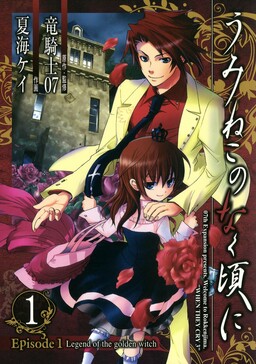
Umineko: When They Cry
On the private island of Rokkenjima in 1986, the Ushiromiya family gathers for an annual meeting. A typhoon traps them. The murders begin. Then they repeat. A golden witch named Beatrice claims responsibility — and the manga spends 53 volumes across 8 Episodes arguing about whether magic exists. Adapted from Ryukishi07's visual novel.
Horror / Mystery
Another
Yu's review of Another — a horror mystery adapted from Yukito Ayatsuji's novel, about a transfer student who joins a class haunted by a decades-old curse: every year an extra person who is secretly already dead joins Class 3-3, and people start dying gruesomely.
Horror / Mystery
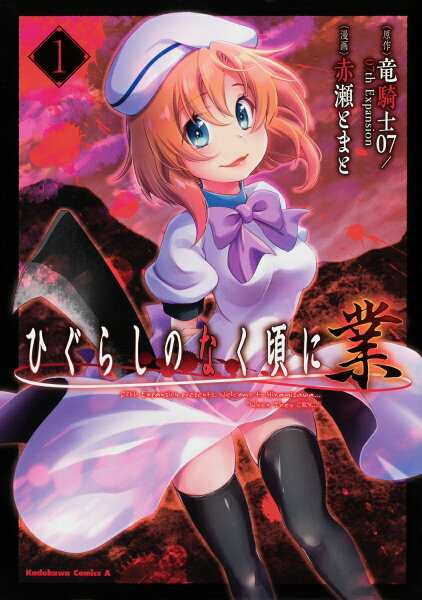
Higurashi When They Cry
Yu's review of Higurashi When They Cry — Keiichi Maebara moves to the rural village of Hinamizawa and discovers that every year, during the village festival, someone dies and someone disappears; the story resets across multiple arcs, each showing different versions of the same events as Keiichi and his friends try to understand and survive what the village is doing to them.
Horror / Supernatural
Venus in the Blind Spot
A comprehensive review of Venus in the Blind Spot — plot, characters, art style, and whether it's worth reading.
Horror / Drama
Golden Gold
Golden Gold follows Reiko, a teenage girl on a remote island who finds a small god of fortune — and discovers that luck granted by a supernatural force does not come without cost, and that the cost is paid by those around you.
Horror
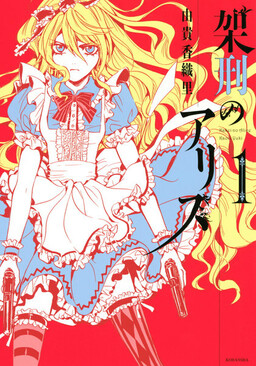
Alice in Murderland
Yu's review of Alice in Murderland — Kaori Yuki's gothic horror where the nine adopted children of the wealthy Kuonji family are ordered to murder each other in a tea-party death game, and the meek heroine Stella hides a killer alter ego called Bloody Alice.
Written by
Yu
Manga Enthusiast from Japan
I grew up in Japan and manga literally saved me during a tough time in elementary school. My English isn't perfect, but my love for manga is real — and I want to share it with you.
Disclosure: This post contains affiliate links. As an Amazon Associate, I earn from qualifying purchases at no extra cost to you.