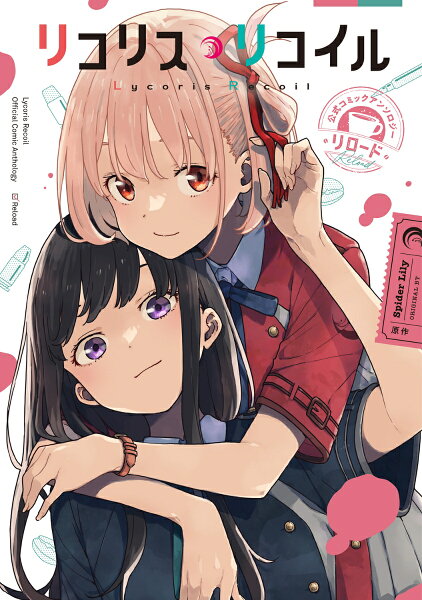
Lycoris Recoil Manga Review — Two Girls, a Café, a Bunch of Guns, and a Heart That Was Never Going to Last Forever
by Spider Lily / Asaura (original) / Yasunori Bizen (manga)
Read the first volume. If it doesn't hook you, put it down. It'll hook you.
Buy Lycoris Recoil on Amazon →*Affiliate link — I earn a small commission at no extra cost to you.
I watched Lycoris Recoil in summer 2022 along with most of anime Twitter. It was the show. I remember finishing the last episode at 2am, sitting on the floor of my apartment, completely undone by a 25-minute cartoon about a girl who runs a café and shoots people.
The manga adaptation came later. It hits the same notes a little softer. Both are worth your time.
Quick Take
- Three-volume manga adaptation of the 2022 anime cultural phenomenon
- Chisato and Takina remain one of the best action duos in modern anime/manga
- Age rating: T (Teen) — gun violence is frequent but stylized; one heavy mortality theme
What Is the Age Rating for Lycoris Recoil?
Yen Press rates the English manga T (Teen) — 13+. The rating is accurate.
What's in the manga:
- Gun violence: frequent, stylized. Chisato fights with non-lethal rubber bullets; other characters use real ammunition. Most shootouts are kinetic action rather than gore. Some blood, restrained.
- Themes of mortality: Chisato is living with a custom-built artificial heart with a limited remaining lifespan. This is treated seriously but not graphically.
- Yuri / queer subtext: The relationship between Chisato and Takina is romantically coded throughout, though never explicitly stated as a romance. Affectionate physical contact, emotional intimacy, "I will fight the world for you" energy. No explicit sexual content.
- Children as state agents: The Lycoris organization conscripts teenage girls (and some younger) as government assassins. This premise has obvious ethical weight; the manga engages with it more in the later volumes.
For most teen readers (13+): completely appropriate. For sensitive parents: the gun violence is more frequent than typical "teen" classification, but the manga's tone keeps it from feeling gratuitous.
Is Lycoris Recoil Yuri?
This is one of the most-searched questions about the series. The honest answer is: it depends on how you define the term.
- Officially: Lycoris Recoil is not marketed as yuri. The Dengeki Daioh g serialization placement and the Kadokawa/Aniplex anime production both avoid the explicit yuri label.
- In the work itself: Chisato and Takina's relationship is the emotional center of every arc. They live together. They sleep in the same room. They are physically affectionate. They make decisions about their entire lives based on whether the other one will be in those lives. They are not depicted as having other romantic interests. When the question of their relationship is raised by other characters, the manga is coy rather than denying.
- In fan reception: The series is treated as yuri by essentially all English-speaking fans. The shipping is uncontested. The fan content is unambiguously romantic.
If you are looking for yuri: Lycoris Recoil delivers the experience of yuri without the official label. The intimacy is real. The text-not-subtext is open to interpretation.
If you are avoiding yuri: there is no on-page kiss, no explicit declaration. The "best friends" reading is technically available.
Most readers in either category come away satisfied that the manga is what they wanted it to be. That's by design.
What Is Lycoris Recoil About?
Tokyo, present day, slightly elevated from reality. Public peace is maintained by Direct Attack (DA) — a hidden government agency staffed by young women called Lycoris, named after the red spider lily, the flower associated with death in Japanese culture. Lycoris are recruited as children, trained as assassins, and deployed against threats the public never learns about. The official story: Tokyo is safe. The actual story: Tokyo is safe because there are teenagers shooting people in alleys you don't visit.
Chisato Nishikigi is the legendary Lycoris. She holds DA's all-time skill rating. She is also the agency's biggest internal problem: she refuses to kill. She uses rubber bullets. She subdues, disarms, and walks away. She has saved more lives than any Lycoris in the program's history while taking none of them. DA tolerates her because her results are inarguable; DA distrusts her because her philosophy threatens the organization's foundation.
Takina Inoue is a different kind of elite — by-the-book, top of her class, focused. She is reassigned to support Chisato after an insubordinate decision during a hostage mission (she fired a weapon in a populated area to save her teammates; DA does not approve of initiative).
They work together out of a coffee shop called LycoReco — Café Lycoris Recoil — a small, charming establishment in Tokyo's Kurumeyama neighborhood that serves as DA's civilian-facing front operation. The café has regular customers. The café has good coffee. The café also has armaments hidden in its walls. Most days, both halves of the operation coexist without incident.
Across 3 manga volumes (adapting the 13-episode anime plus some adaptation-specific material), the story tracks:
- Chisato and Takina's relationship developing from professional friction to total mutual commitment
- The cases they handle through and around LycoReco
- The series antagonist (revealed gradually) and his specific relationship to Chisato's history
- The artificial heart Chisato has been living with since childhood — a one-of-a-kind prosthetic that has a remaining operational lifespan she has been told is limited
- The question of what Chisato will choose to do with the time she has
The manga ends complete in 3 volumes. The anime ended in one season. Both are available; both work.
Manga vs Anime: Which Should You Read/Watch?
The anime came first. Lycoris Recoil's original work is the 2022 13-episode anime by A-1 Pictures, written by Asaura (light novel author, original creator) and Yasunori Yamada (screenwriter). The anime was the cultural anime event of summer 2022 in Japan and Anglophone fan communities.
The manga adaptation by Imigimuru runs 3 volumes and covers approximately the anime's full storyline with some additional scenes and slightly different pacing.
For new viewers/readers:
- Watch the anime first. It's the primary work and the medium it was designed for. The action sequences are animated with significant care; the comedic timing benefits from voice acting; the soundtrack is part of the experience.
- Read the manga after if you want to revisit the story in a different medium or want some additional scenes.
For manga-only readers: the manga works on its own. It will not have the same impact as the anime but delivers the core story.
A spin-off light novel (Lycoris Recoil: Ordinary Days) provides additional pre-series material. An anime sequel was announced but no release date has been confirmed.
Who Is This Manga For?
- Anime watchers who want more time with the characters
- Yuri-curious readers who appreciate ambiguity-as-feature
- Action manga readers who also want warmth between gunfights
- Found-family fiction readers — the LycoReco café crew is one of the better found families in recent anime/manga
- Cute girls + serious violence readers (Girls und Panzer, Madoka Magica audience)
Content Warnings & Age Rating
Age Rating: T (Teen) — 13+ Content Warnings: Frequent gun violence (Chisato non-lethal; antagonists not); themes of mortality and limited lifespan; child / teen state agents (the Lycoris program); some emotionally heavy scenes around Chisato's medical situation; yuri subtext (depending on definition)
Story Overview
Volume 1 — Setup. Chisato and Takina's pairing. Introduction to LycoReco café and its staff. First cases. The dynamic establishes: Chisato as the sun, Takina as the precision tool, the rest of the café as adopted family. Underlying tension introduced: Takina wants to return to her elite unit; Chisato has no apparent ambition beyond running the café.
Volume 2 — The main antagonist enters. Majima — a charismatic, philosophically dangerous figure who knows things about Chisato's past she doesn't. His agenda is not robbery or domination but something more specific to Tokyo's social order. The relationship between Chisato and Takina deepens. The first revelations about Chisato's artificial heart and Lycoris history begin to land.
Volume 3 — Climax. Majima's plan unfolds. Chisato's situation becomes a question Takina has to choose how to answer. The endgame is action-driven but emotionally resolved around the choice each of them makes about the other's life. The ending is satisfying within the volume's limits — the anime/manga ends without a sequel but with all immediate threads addressed.
Characters
Chisato Nishikigi — The protagonist whose specific combination of traits makes the series work. Supremely competent. Unfailingly cheerful. Philosophically committed to non-violence despite being trained as an assassin. Privately living with the knowledge that her body has a use-by date. The combination of public sunshine and private mortality is one of the most carefully constructed character contrasts in recent anime/manga. Chisato is fun to watch. Chisato is also operating with stakes most other characters in any anime do not have.
Takina Inoue — The deuteragonist. Cool, focused, slightly judgmental, occasionally socially clueless. Her arc is the manga's character growth engine: she learns, gradually, to value the people in front of her over the abstract mission. By the end of volume 3, Takina has become someone Chisato has changed. The transmission of values from Chisato to Takina is the manga's emotional thesis.
Mizuki Nakahara — Adult woman who works at LycoReco as the "Adult." Provides logistical support and the only character who can credibly call Chisato out. Functions as the de facto mother figure.
Kurumi / "Walnut" — Pre-teen hacker living at LycoReco. Provides tech support and reaction-shot comedy.
Mr. Yoshimatsu — DA's director and Chisato's adoptive guardian. His relationship with Chisato — what he did when he found her as a child, what he has done since, what he has not told her — is part of the manga's emotional backbone.
Majima Shinji — The antagonist. Charismatic, terrifyingly capable, philosophically coherent. His vision for what Tokyo should be is the manga's political argument given a body. He is not a generic villain.
Art Style
Imigimuru's adaptation art is polished and clean. Action sequences are kinetic without being chaotic; the manga can communicate the location of every gun, every cover position, every line of sight clearly. Character expressions are the manga's other major strength — Chisato's signature wink, Takina's controlled face slowly opening, the various reaction shots from the café cast are all rendered with care.
The café setting is drawn with affection. LycoReco's interior is consistent across volumes and feels like a real place a reader could visit.
The action choreography is faithful to the anime's. Manga readers who watched the anime will recognize specific gunfight beats and pose choices. New manga readers may not realize how much the choreography was already worked out in the source.
Cultural Context
Lycoris Recoil belongs to a specific Japanese anime tradition: cute girls performing serious violence (Magical Girl Madoka Magica, Girls und Panzer, Princess Principal, Akuma no Riddle). What distinguishes Lycoris Recoil within that tradition is the warmth of its primary relationship and the seriousness of its mortality material. Many "cute girls doing violent things" anime treat the violence and the cuteness as parallel registers. Lycoris Recoil makes them speak to each other.
The red spider lily — higanbana (彼岸花) or lycoris — is associated in Japanese culture with death, the afterlife, and the boundary between the living and the dead. The Lycoris organization's name is doing thematic work. The girls who carry the flower's name are flowers of the other shore.
The Tokyo setting is rendered with real specificity. The Kurumeyama neighborhood — fictional, but composited from real Tokyo locations — became a pilgrimage destination for fans after the anime aired.
What I Love About It
The conversation between Chisato and Takina in the middle of volume 2.
I won't spoil the specifics. Somewhere in volume 2, after the case-of-the-week structure has been broken by the introduction of Majima, Chisato and Takina sit somewhere — a rooftop in the anime, slightly different in the manga — and Chisato tells Takina something she has not told most people in her life. About her heart. About the lifespan. About what she has decided to do with the years she has.
What makes the scene work is what Chisato is not asking for. She isn't asking Takina to save her. She isn't asking Takina to grieve in advance. She isn't asking for the conversation to change anything. She is telling Takina because she has decided, somewhere across the previous volume and a half, that Takina is someone who should know.
Takina's response is one of the cleanest character moments in the series. She doesn't say anything dramatic. She does something specific. The series has been earning the moment for the entire run.
That's the thing I love about Lycoris Recoil. Underneath the gun choreography and the café comedy, it is a story about deciding to let someone matter to you when you know matter has a cost. Chisato has decided. Takina decides. The series is the record of two people choosing each other inside a structure that doesn't give them very much time.
What English-Speaking Fans Say
Lycoris Recoil was the dominant anime conversation of summer 2022 and remained one of the most-discussed shows of the year. The English-speaking fan base is large and active. Chisato is widely considered one of the best anime protagonists of the early 2020s. The Chisato-Takina relationship generates enormous fan creative output.
The manga adaptation has a smaller English audience than the anime but is generally well-regarded. Most fans consider the anime the canonical experience and the manga a worthy supplement.
The official "sequel" status — anime sequel announced, no release date — is the source of ongoing fan frustration. The original work feels complete in itself, but more time with these characters is wanted.
Memorable Scene ⚠️ Spoiler Warning
The final action sequence of the series.
Without spoiling specifics: the climax brings Majima's plan to its peak and Chisato and Takina into a coordinated action set piece against him. The manga renders the sequence with care; the anime version is more elaborately animated, but the manga gets the moves right.
What makes the scene matter is what happens between the action beats. Chisato makes a choice. Takina makes a choice. The choices speak to each other across the firefight. Both characters end the sequence having decided something about their own lives that the other one is bearing witness to.
The final panels of the manga (and the final shots of the anime) commit to a specific tonal landing — neither tragic nor falsely happy. The series has been honest about Chisato's situation throughout. The ending continues that honesty without being cruel to the audience.
Similar Manga
| Title | Its Approach | How Lycoris Recoil Differs |
|---|---|---|
| Gunslinger Girl | Young female assassins, much darker | Gunslinger Girl is bleak; Lycoris Recoil keeps warmth at its center |
| A Certain Scientific Railgun | Female action leads in urban Japan | Railgun is sci-fi-superhero; Lycoris is grounded-spy |
| Princess Principal | Spy duo, period setting | Same intimacy structure, different historical frame |
| Girls und Panzer | Cute girls + serious military | Less warm, more military-procedural; Lycoris has more emotional weight |
Reading Order / Where to Start
For new readers: watch the anime first (13 episodes, single cour, available on Crunchyroll and others). The anime is the primary work. Read the manga afterward if you want to revisit the story.
If you're committed to manga-first: volume 1. The three volumes form a complete arc.
Official English Translation Status
Yen Press published all 3 volumes of the manga in English in print and digital. Complete. The anime adaptation (A-1 Pictures, 13 episodes, 2022) is available on Crunchyroll and other streaming services with English subtitles and dubs.
Pros & Cons
Pros
- Chisato is an extraordinary protagonist
- Chisato-Takina dynamic is among the best action-duo relationships in recent anime/manga
- The mortality theme is handled with care
- Complete in 3 volumes — full arc in a compact reading
- Yuri-curious readers and yuri-avoiders both find what they want
Cons
- The anime is the primary work; the manga is a strong but secondary experience
- Only 3 volumes — leaves you wanting more
- The "ambiguous yuri" framing frustrates readers who want explicit canon
- The cute-girls-with-guns subgenre is an acquired taste. It won't land for everyone.
Is Lycoris Recoil Worth Reading?
For anime fans: yes, as a supplement. For new readers who haven't watched: watch the anime first, then come back. The story works in either order, but the anime is the more impactful version.
Format Comparison
| Format | Notes |
|---|---|
| Anime (A-1 Pictures, 2022) | 13 episodes; primary work; on Crunchyroll and other services |
| Manga (Yen Press) | 3 volumes complete in English |
| Light Novel | "Lycoris Recoil: Ordinary Days" pre-series material; not all in English yet |
| Sequel | Anime sequel announced; no release date confirmed |
Where to Buy
Read the first volume. If it doesn't hook you, put it down. It'll hook you.
This post contains affiliate links. If you purchase through these links, I may earn a small commission at no extra cost to you. As an Amazon Associate, I earn from qualifying purchases.
*Affiliate link — I earn a small commission at no extra cost to you.
More Manga You Might Like
Action / Drama
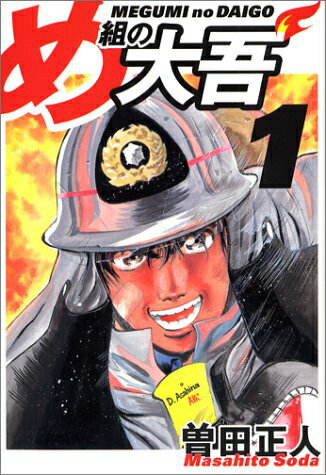
Daigo of Fire Company M
Daigo of Fire Company M follows Daigo Asahina, an extraordinary new firefighter who joins Company M — and the question of what drives a young man of exceptional ability to choose the most dangerous possible job.
Action
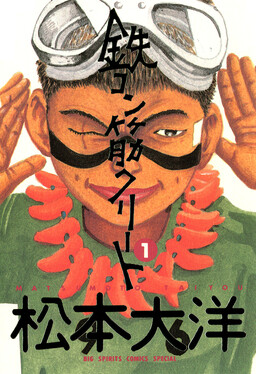
Tekkon Kinkreet
Yu's review of Tekkon Kinkreet — Black and White are two orphaned street kids who rule Treasure Town from the rooftops; when organized crime moves in to develop the city, Black and White must fight to keep what they consider theirs; a visually revolutionary manga about the psychic cost of violence and the specific love between two people who only have each other.
Action / Drama
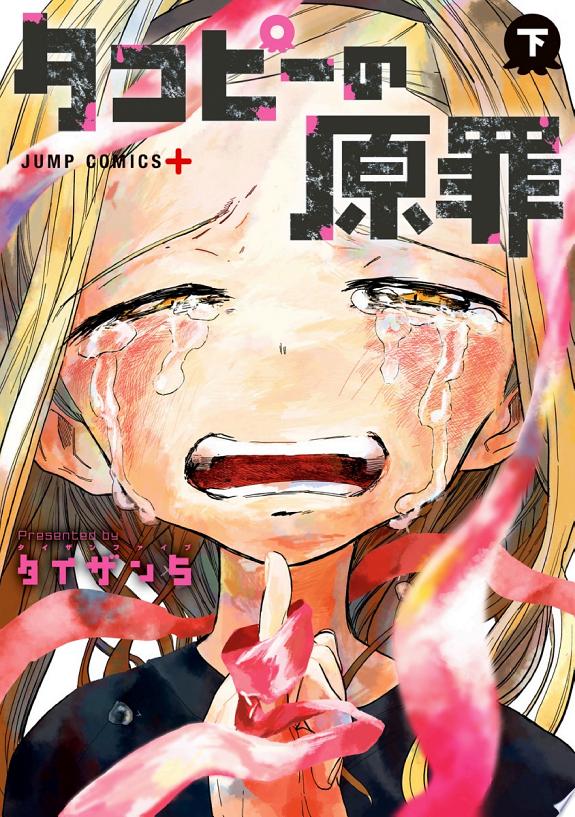
Takopi's Original Sin
Yu's review of Takopi's Original Sin — Takopi is an alien from Happy Planet sent to spread happiness on Earth; he meets Shizuka, a girl who is being bullied and whose home life is deeply troubled; the series uses Takopi's happiness abilities to examine what happiness means when suffering is real.
Action / Drama
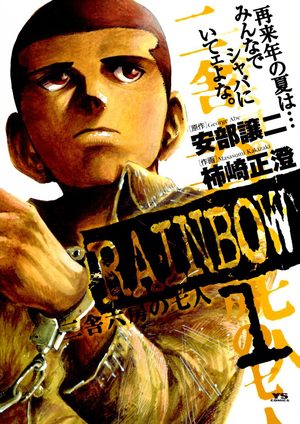
Rainbow: Nisha Rokubō no Shichinin
Yu's review of Rainbow — six juvenile delinquents are sent to a brutal reformatory in 1955 Japan and placed in Cell 6, where they bond with their cellmate Rokurouta Sakuragi, a former boxer who teaches them what it means to survive with dignity.

Action / Drama
Oshi no Ko
Yu's review of Oshi no Ko — a doctor reincarnates as the son of the idol he worshipped, retaining his adult memories; he enters the entertainment industry to find his mother's killer while his twin sister becomes an idol herself.

Action / Drama
Beastars
Yu's review of Beastars — In a society of anthropomorphic animals where carnivores and herbivores live side by side, Legoshi is a gray wolf who is afraid of what he is. After a classmate is killed and eaten, he is pulled toward Haru, a tiny dwarf rabbit, and has to decide what kind of animal he wants to become.
Written by
Yu
Manga Enthusiast from Japan
I grew up in Japan and manga literally saved me during a tough time in elementary school. My English isn't perfect, but my love for manga is real — and I want to share it with you.
Disclosure: This post contains affiliate links. As an Amazon Associate, I earn from qualifying purchases at no extra cost to you.