
Beastars Review: A Wolf Who Is Terrified of His Own Teeth
by Paru Itagaki
Read the first volume. If it doesn't hook you, put it down. It'll hook you.
Buy Beastars on Amazon →*Affiliate link — I earn a small commission at no extra cost to you.
I picked up Beastars expecting a weird animal story, something fun and strange. I did not expect to feel seen by a gray wolf. When I was a kid, I learned to make myself small. I am not a big person, but I learned to lower my voice, to apologize before anyone even got upset, to act like I took up less space than I do, because I was scared that the real me would scare people away. So when I met Legoshi — a huge wolf who hunches over and works backstage and eats only vegetables because he is terrified of what his own body could do — I felt something tighten in my chest. This is a comic about anthropomorphic animals at a boarding school. It is also one of the most honest things I have read about living afraid of yourself.
Quick Take
- Paru Itagaki uses a world of talking animals to dig into desire, instinct, prejudice, and the cost of pretending you are not what you are
- Legoshi is one of the gentlest and most genuinely dangerous protagonists I know, and the series never lets him pretend those two things are separate
- Rated M (Mature): a classmate is killed and eaten on page, carnivore bloodlust is shown as visceral, and there is some sexual content in later volumes — not for younger readers
Story Overview
Cherryton Academy is a boarding school where carnivores and herbivores study, eat, and live side by side. The whole society runs on one rule above all others: a carnivore must never eat another animal. That rule is what holds the peace together, and it is also a lid pressed down on something that never really goes away.
In the opening pages that lid comes off. Tem, an alpaca in the drama club, is killed and devoured on school grounds at night. Nobody knows who did it. What unsettled me most early on was how quickly everyone goes back to normal — rehearsals continue, classes continue — like this horror is just the background noise of their world.
Legoshi is a gray wolf in that same drama club, working as a stagehand because his size frightens people even when he means no harm. The turning point comes one night when he catches the scent of Haru, a dwarf rabbit and one of the smallest students at the school, and his instincts take over before his mind can stop them. From there the series spreads outward: Legoshi's pull toward Haru, the question of who killed Tem, a black market underworld where carnivores secretly buy meat, and a doctor named Gohin who treats carnivores fighting their own bloodlust. By the end the murder is solved, the cost of solving it is paid in flesh, and Legoshi has to figure out what it means to live honestly inside a system built on hiding.
Characters
Legoshi — A gray wolf who has decided to be gentle, and who has to re-decide it every single day against his own body. He is not weak. He is enormous and strong and could kill almost anyone in his school. His whole arc is learning that suppressing what he is does not make him good, and that he has to understand his instincts instead of just being ashamed of them. He ends up training under Gohin in the black market underworld to get a grip on himself.
Haru — A dwarf rabbit who refuses to be pitied. The whole school treats her as fragile prey, and she answers that by living exactly how she wants and not flinching. She is not just a love interest or a victim of Legoshi's instincts. She knows clearly what she is to the animals around her, she makes her own choices, and the series treats those choices as real.
Louis — A red deer, the star of the drama club, proud and sharp and built to lead. He carries a hidden truth about where he comes from, and his path takes him out of the school and into the criminal underworld where he ends up running a crime group. His pride and his self-loathing drive some of the most painful turns in the book.
What I Love About It
The scene that locked this series into me is the night Legoshi first encounters Haru. He is alone near the school at night, he catches the scent of a rabbit, and his body simply moves. He lunges. He pins this tiny animal and is a breath away from killing her, claws already in her arm, before another club member shows up and the spell breaks. He lets go. And then he has to live with the fact that he, the gentle one, the careful one, the one who eats only vegetables, almost ate a classmate without deciding to.
What wrecked me about it is that the story does not let him off the hook by calling it an accident, and it does not turn him into a monster either. It holds both at once. He is horrified, and the horror is the proof that he is not a monster — but the lunge happened, and that is the proof that the danger is real and inside him forever. That is exactly the fear I carried as a kid, just dialed up to fangs: the terror that the version of me I keep hidden would hurt the people I care about if it ever got loose. Watching Legoshi carry that and keep choosing gentleness anyway, knowing the instinct never disappears, is the most honest thing I have read about trying to be good when goodness does not come automatically. It is why I trust this comic completely.
Memorable Scene ⚠️ Spoiler Warning
The murder is eventually pinned on Riz, a brown bear who had been Tem's close friend in the drama club. Riz had stopped taking the medication that suppressed his strength and instincts. On the night of the blood-red moon he confessed this to Tem, Tem panicked and ran, and that flight triggered Riz's prey drive — he chased him down and ate him, then told himself it was an act of love between equals.
The part I can't shake is the confrontation that follows. Legoshi fights Riz, and Legoshi is losing — a bear simply outclasses him. Then Louis appears, and instead of running he offers Legoshi his own leg, telling him to eat it so he will have the strength to win. Legoshi eats the leg of his friend. It is grotesque and it is the most tender thing in the whole series at the same time, because for once a carnivore eats herbivore flesh and it is not violence — it is a gift, freely given, between two people who finally trust each other. And it costs them: afterward Louis lives with a prosthetic, and Legoshi is now legally registered as a predator who has eaten a herbivore, with everything that label takes from him. Itagaki makes you feel the love and the price in the same panel, and I still think about it.
Pros & Cons
Pros
- One of the most psychologically honest manga I have ever read, hiding inside a wild animal premise
- Legoshi is an unforgettable protagonist — gentle and dangerous without contradiction
- The world's rules are consistent and meaningful, not just set dressing
- Complete in 22 volumes with a real, earned ending
Cons
- The M rating is accurate; the on-page killing and later sexual content are not for younger readers
- The pacing in the middle volumes sometimes slows while it sits with ideas
- The premise is genuinely strange, and if "earnest psychological drama starring talking animals" makes you roll your eyes, this won't work for everyone
Is Beastars Worth Reading?
Yes. If you can get past the strangeness of the premise, you get one of the most thoughtful and emotionally honest manga of its era — a complete story about a gentle creature learning to live with his own teeth. Just know it earns its M rating, and the middle stretch asks for patience.
Where to Buy
Read the first volume. If it doesn't hook you, put it down. It'll hook you.
This post contains affiliate links. If you purchase through these links, I may earn a small commission at no extra cost to you. As an Amazon Associate, I earn from qualifying purchases.
*Affiliate link — I earn a small commission at no extra cost to you.
More Manga You Might Like

Action / Drama
Gunslinger Girl
Yu's review of Gunslinger Girl — the Social Welfare Agency of Italy rescues girls from terminal illness or traumatic situations and gives them cybernetic bodies and psychological conditioning; each girl is paired with a handler and used for government counter-terrorism work; the series examines what this costs them.
Action / Crime
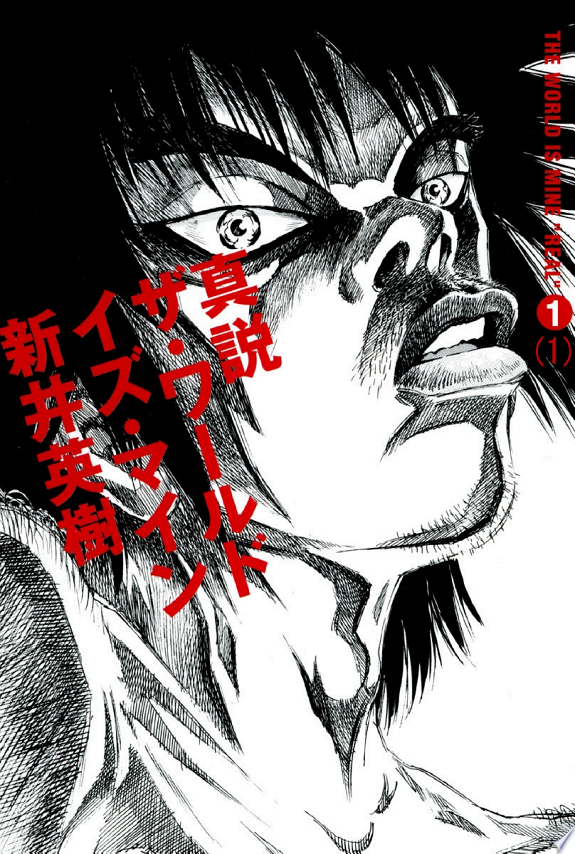
The World Is Mine
The World Is Mine follows two criminal partners — the unpredictable Mon and the calculating Toshi — on a violent crime spree across Japan, alongside a separate thread about a mysterious monster emerging in the wilderness.

Action / Comedy
The Fable
Yu's review of The Fable — Akira (codename 'The Fable') is considered the deadliest assassin in Japan; his boss orders him to take a year off and live as an ordinary person without killing anyone; the comedy of an extraordinarily dangerous man trying and mostly succeeding at being normal while the criminal world swirls around him.
Action
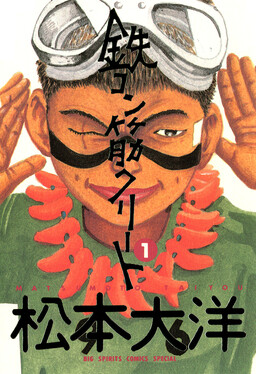
Tekkon Kinkreet
Yu's review of Tekkon Kinkreet — Black and White are two orphaned street kids who rule Treasure Town from the rooftops; when organized crime moves in to develop the city, Black and White must fight to keep what they consider theirs; a visually revolutionary manga about the psychic cost of violence and the specific love between two people who only have each other.
Action / Drama
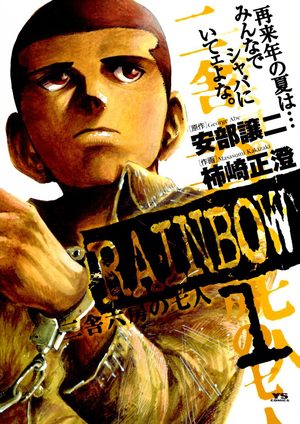
Rainbow: Nisha Rokubō no Shichinin
Yu's review of Rainbow — six juvenile delinquents are sent to a brutal reformatory in 1955 Japan and placed in Cell 6, where they bond with their cellmate Rokurouta Sakuragi, a former boxer who teaches them what it means to survive with dignity.

Action / Drama
Oshi no Ko
Yu's review of Oshi no Ko — a doctor reincarnates as the son of the idol he worshipped, retaining his adult memories; he enters the entertainment industry to find his mother's killer while his twin sister becomes an idol herself.
Written by
Yu
Manga Enthusiast from Japan
I grew up in Japan and manga literally saved me during a tough time in elementary school. My English isn't perfect, but my love for manga is real — and I want to share it with you.
Disclosure: This post contains affiliate links. As an Amazon Associate, I earn from qualifying purchases at no extra cost to you.