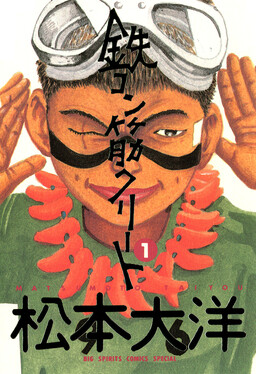
Tekkon Kinkreet Review: Two Street Kids Claim Ownership of Treasure Town Against Everyone Who Wants to Take It
by Taiyo Matsumoto
Read the first volume. If it doesn't hook you, put it down. It'll hook you.
Buy Tekkon Kinkreet on Amazon →*Affiliate link — I earn a small commission at no extra cost to you.
Quick Take
- One of the most visually revolutionary manga in English — Matsumoto's art style redefined what manga pages could look like
- The Black and White relationship is the series' emotional center: the only thing that holds either of them together
- Single omnibus volume; among the essential manga in any language
Who Is This Manga For?
- Readers who want action manga with genuine literary ambition
- Anyone interested in seeing what manga can do visually
- Fans of crime drama with psychological depth
- Readers who want complete, self-contained manga at the highest level
Content Warnings & Age Rating
Age Rating: M (Mature) Content Warnings: Street violence; organized crime violence; childhood trauma depicted seriously; psychological deterioration; mature content throughout
M rating — adult readers; the violence and psychological content are serious.
Yu's Rating
| Category | Score |
|---|---|
| Story Depth | ★★★★★ |
| Art Style | ★★★★★ |
| Character Development | ★★★★★ |
| Accessibility for Non-Japanese Readers | ★★★★☆ |
| Reread Value | ★★★★★ |
Story Overview
Treasure Town is a fictionalized urban Japan — dense, layered, alive. Black and White are its self-appointed rulers: two orphaned kids who have been living on rooftops and in the margins of the city so long they've made it theirs.
When the Yakuza-affiliated corporation Snake moves in to redevelop Treasure Town, they bring enforcers powerful enough to challenge Black. Black is violence itself — he is small and has no fixed address and can fight anyone. White is everything else — warmth, innocence, the emotional anchor that keeps Black from disappearing entirely into violence.
The series follows the conflict with Snake alongside the internal conflict: what does Black lose of himself each time he fights, and who is White without Black's protection?
Characters
Black — A protagonist whose capacity for violence is both his survival tool and his psychological destruction; the manga tracks what using it costs him.
White — A character whose apparent simplicity conceals the series' emotional complexity; his innocence is not naivety but a choice, sustained against everything that should have ended it.
Art Style
Matsumoto's art in Tekkon Kinkreet is unlike anything else — kinetic, expressive, with a visual language that uses the manga page as a complete space rather than a sequence of panels. The city is drawn as a living organism.
Cultural Context
Tekkon Kinkreet (the title is a Japanese phonetic rendering of "reinforced concrete" with the syllables inverted) ran in Big Spirits Comics. The city design draws on specific real locations in Japan while creating a fictional space that feels more real than documentation.
What I Love About It
The visual language for interiority. When Black is losing himself to violence, Matsumoto shows this visually — the page becomes what his mind has become. This is what manga can do that prose cannot, and Matsumoto uses it at the level of mastery.
What English-Speaking Fans Say
Western readers describe Tekkon Kinkreet as one of the greatest manga ever created — specifically noted for the visual innovation being matched by emotional depth, for the Black and White relationship being among the most affecting in manga, and for the city of Treasure Town feeling more real than most fictional settings. Consistently cited as essential reading regardless of genre preference.
Memorable Scene ⚠️ Spoiler Warning
The sequence where Black's psychic deterioration is depicted visually — where what we see on the page is what his mind has become — is among the most technically accomplished single sequences in manga.
Similar Manga
- Sunny — Matsumoto's other essential work; different register, same quality
- Domu — Otomo's similar city-violence-with-child-protagonists
- Akira — Urban destruction at similar visual scale
- Goodnight Punpun — Psychological deterioration rendered visually
Reading Order / Where to Start
Single omnibus — complete and standalone.
Official English Translation Status
Viz Media published the English omnibus. Single volume, complete.
Pros & Cons
Pros
- Visually revolutionary
- Black and White relationship is exceptional
- City of Treasure Town feels alive
- Complete in single omnibus
Cons
- M-rated violence and psychological content throughout
- Matsumoto's visual style requires engagement
- Single volume density can be challenging
Format Comparison
| Format | Notes |
|---|---|
| Single Omnibus | Viz Media; complete |
| Digital | Available |
Where to Buy
Read the first volume. If it doesn't hook you, put it down. It'll hook you.
This post contains affiliate links. If you purchase through these links, I may earn a small commission at no extra cost to you. As an Amazon Associate, I earn from qualifying purchases.
*Affiliate link — I earn a small commission at no extra cost to you.
More Manga You Might Like
Action
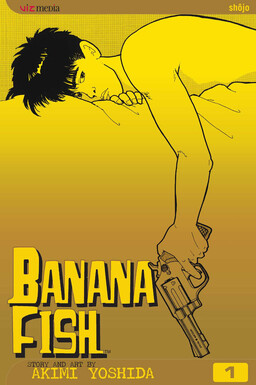
Banana Fish
Yu's review of Banana Fish — Ash Lynx is a seventeen-year-old gang boss in 1980s New York whose life collides with Eiji Okumura, a gentle Japanese photographer's assistant, when a dying man whispers the words 'Banana Fish.' Akimi Yoshida's 19-volume crime epic about a mind-control drug, the men who own the streets, and the one connection that almost saved a boy built only to kill.
Action / Crime
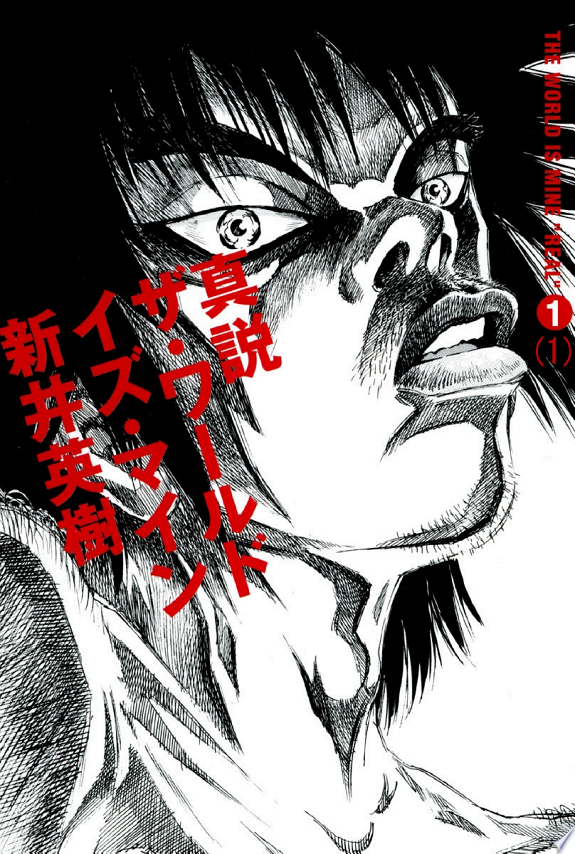
The World Is Mine
The World Is Mine follows two criminal partners — the unpredictable Mon and the calculating Toshi — on a violent crime spree across Japan, alongside a separate thread about a mysterious monster emerging in the wilderness.
Action / Romance
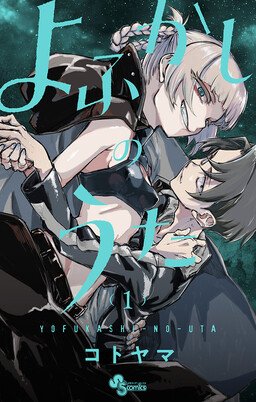
Call of the Night
Yu's review of Call of the Night — Ko Yamori cannot sleep; unable to feel anything during the day, he starts sneaking out at night and discovers that he actually belongs in the night; when he meets Nazuna, a vampire who drinks blood from sleeping humans, he asks her to turn him into a vampire — but the only way to become one is to fall in love.
Action / Drama
Beastars
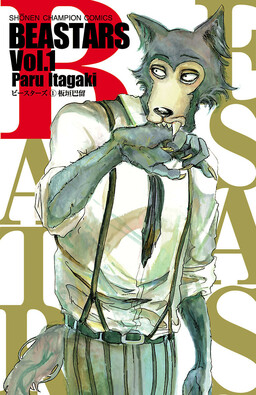
Yu's review of Beastars — In a society of anthropomorphic animals where carnivores and herbivores live side by side, Legoshi is a gray wolf who is afraid of what he is. After a classmate is killed and eaten, he is pulled toward Haru, a tiny dwarf rabbit, and has to decide what kind of animal he wants to become.
Action / Sci-Fi
Zetman
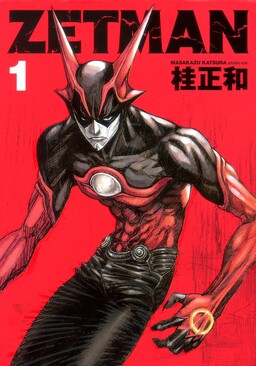
Yu's review of Zetman — Jin Kanzaki is a boy who can transform into ZET, a living weapon created by a corporation's experiment; his story is intertwined with Kouga Amagi, heir to a company that creates its own superhero armor — two different ideas of what a hero means, in conflict and occasional partnership.
Action
Wild Adapter
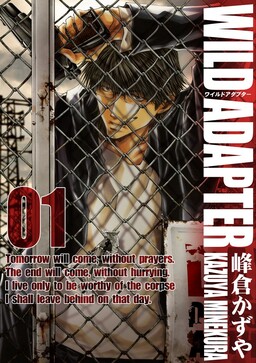
Yu's review of Wild Adapter — Makoto Kubota is a Yakuza boy genius who gets drawn into investigating Wild Adapter, a drug that turns users into monsters; he finds Tokito, a boy with no memory and a monster's hand, and takes him home; Kazuya Minekura's crime manga about an unlikely pair and the mystery of a transforming drug.
Written by
Yu
Manga Enthusiast from Japan
I grew up in Japan and manga literally saved me during a tough time in elementary school. My English isn't perfect, but my love for manga is real — and I want to share it with you.
Disclosure: This post contains affiliate links. As an Amazon Associate, I earn from qualifying purchases at no extra cost to you.