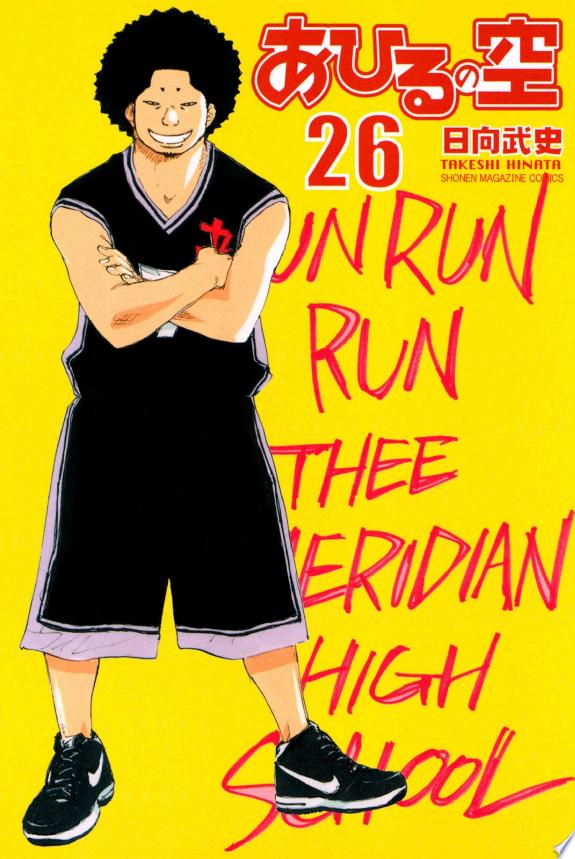
Ahiru no Sora Review
by Takeshi Hinata
Read the first volume. If it doesn't hook you, put it down. It'll hook you.
Buy Ahiru no Sora on Amazon →*Affiliate link — I earn a small commission at no extra cost to you.
I am not a tall person. In Japan I'm average at best, and when I was in school the gym was a place I learned to disappear in — last picked, hands always seeming too small for the ball. So when I read about a 149cm boy walking into a high school basketball club like he belonged there, something in my chest tightened. Sora Kurumatani is shorter than most of the girls in his class. He should not, by the logic of the sport, matter on a court at all.
That's the whole reason Ahiru no Sora got under my skin. It refuses to let his size be a cute obstacle he magically overcomes. It stays a problem for fifty volumes. And the boy keeps showing up anyway, because he made a promise to his mother — and because basketball is the only language he has left for loving her.
Quick Take
- A 149cm boy joins a high school basketball club run entirely by delinquents who don't actually play — and tries to make them care
- One of the most emotionally honest sports manga I've read, where being small never stops being a real disadvantage
- Age rating: T (Teen) — delinquency, school fights, and the death of a parent, but nothing graphic
Story Overview
Sora Kurumatani is 149cm and obsessed with basketball, a love handed down by his mother, Yuka — a former women's national team player now hospitalized with a terminal illness. Sora enters Kuzuryu High School ("Kuzu High," literally "trash high") chasing a promise he made to her: to win his first high school tournament.
The problem is the basketball club. It's been hollowed out into a hangout for delinquents — the Hanazono twins and their crowd — who joined to skip class, not to play. On his first day Sora makes them a bet: if he can get past four of them and score, they have to actually play basketball with him. That single one-on-four challenge is the spark that drags a dead club back to life.
From there the series follows the team's grind upward — prefectural qualifiers, the Inter-High dream, and clashes with stronger, deeper, taller schools. But the engine underneath it all is grief. During the team's first real Inter-High game against Shinjo Higashi-Wa, Yuka's condition collapses. Sora leaves the gym to reach her, and she dies shortly after he gets there. The promise that started everything becomes something he now has to carry alone.
The manga ran in Weekly Shonen Magazine from 2004 and reached 51 volumes before going on a long hiatus in 2019, mid-final-arc — so be warned, the published story does not reach a clean finish line.
Characters
Sora Kurumatani — The 149cm point guard. He can't dunk, can't muscle past anyone, can't win on physical gifts. His whole game is built on speed, a one-handed three-point shot, and refusing to accept that small means useless. His arc is the arc of a son learning to play for himself rather than only for his mother's memory.
Momoharu Hanazono — The pompadoured captain-by-default and one of the delinquents Sora first challenges. A natural athlete with monstrous jumping and rebounding but no shooting touch, he's spent years pretending not to care. Sora's stubbornness relights something in him. The day he cuts off his long pompadour — after a fire in the clubroom forces him to own his failures — is the visual marker of him finally taking the team seriously.
Chiaki Hanazono — Momoharu's twin brother, a gifted passer and floor general whose own shooting is weak. Where Momoharu is raw force, Chiaki is vision. His mid-series moment of jumping into a practice game against Shinmaruko to rescue a demoralized team and carving it open with his passing is one of the early "this club is real now" beats.
Yuka Kurumatani — Sora's mother. A former national-team player who taught him everything about the game before illness ended her career and, eventually, her life. She is the reason the promise exists and the reason the story has weight. Her death is not a flashback — it happens on the page, mid-tournament, and reshapes the protagonist.
What I Love About It
Sora's height is the masterstroke, and what I love is that Hinata never cheats it. There's no growth spurt, no secret technique that makes 149cm irrelevant. He gets out-rebounded. He gets switched onto bigger guards and has to fight for every inch. The manga makes you feel, physically, what it costs him to belong on that floor — and that cost is exactly why his small victories land. When he declares he'll become the strongest smallest player, it doesn't read as a slogan. It reads as the only door left open to him.
The other thing I love is how the delinquents are written. They aren't comic-relief thugs who get reformed in a chapter. Each one quit on something — the sport, themselves, the idea that effort is worth the embarrassment of failing. Watching a kid who decided caring was for suckers slowly catch himself sprinting back on defense, almost against his will, is the real drama here. The basketball is the surface. The actual subject is people deciding to try again.
Memorable Scene ⚠️ Spoiler Warning
Spoiler Warning: This covers Yuka's death.
The scene that won't leave me is small and quiet, and it comes after the loudest thing in the early series. During the Inter-High game against Shinjo Higashi-Wa, word reaches Sora that his mother is failing. He gets to her bedside, and in her last moments he manages to tell her thank you — and then he cries. Not the explosive shonen scream you'd expect. Just a boy thanking the person who gave him the one thing that ever made him feel real.
What broke me is what comes next. After she's gone, Sora trades his mother's hand-me-down basketball shoes for a new pair. It's such a simple panel, but the meaning is enormous: he's saying he'll walk on his own feet from here, that the promise is now his and not a leash to her memory. Most sports manga would have used her death to power a revenge rampage. This one uses it to make a kid grow up. That restraint is why I trust this manga completely.
Pros & Cons
Pros:
- Sora's size stays a genuine limitation — no cheap power-ups
- The delinquents-rediscovering-the-game arc is genuinely moving
- Yuka's death is handled with real restraint and emotional honesty
- Hinata draws basketball with real technical understanding of movement and positioning
Cons:
- It went on hiatus at 51 volumes mid-final-arc, so there's no published ending
- No official English release exists, in print or digital
- The early pacing is slow — it's a slow burn, which is either a flaw or the whole point depending on your patience
Is Ahiru no Sora Worth Reading?
If you want a basketball manga that respects both the sport and the reader's intelligence — one where a small kid's wins are earned inch by inch and grief is allowed to be quiet — yes, absolutely. Just go in knowing the published run is unfinished and currently Japanese-only.
Official English Translation Status
Status: Unlicensed. As of now there is no official English edition of Ahiru no Sora — neither the individual chapters nor the collected volumes have been released in English, in print or digitally. The 51 Japanese volumes are the only legitimate way to read it.
Similar Manga
| Title | Its Approach | How Ahiru no Sora Differs |
|---|---|---|
| Slam Dunk | A delinquent falls into basketball for a girl and discovers he loves it | Ahiru no Sora starts from love of the game and makes size, not attitude, the real obstacle |
| Kuroko's Basketball | Stylized, near-superhuman "Generation of Miracles" showdowns | Ahiru no Sora keeps the physics grounded — no one transcends being short |
| Haikyu!! | An undersized volleyball player overcomes height through speed and teamwork | Ahiru no Sora is heavier and sadder, anchored by a dying parent rather than pure youthful drive |
Where to Buy
No English release yet. That just means you find it before everyone else does. If you read Japanese, the 51-volume run is on Amazon Japan.
Search Ahiru no Sora on Amazon Japan →
This post contains affiliate links. If you purchase through these links, I may earn a small commission at no extra cost to you. As an Amazon Associate, I earn from qualifying purchases.
*Affiliate link — I earn a small commission at no extra cost to you.
More Manga You Might Like
Sports
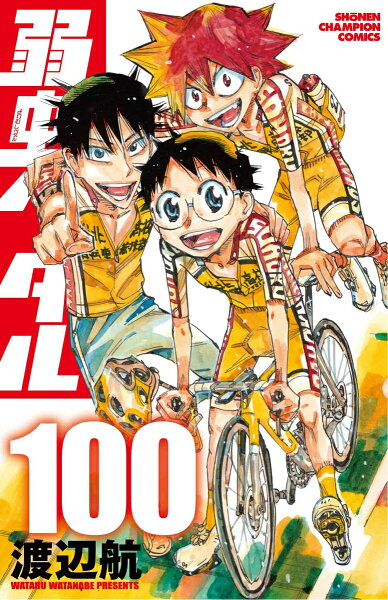
Yowamushi Pedal
Yu's review of Yowamushi Pedal — an anime otaku who rides his mama-chari to Akihabara every week is discovered by competitive cyclists who realize he has elite climbing ability without knowing it.
Sports / Drama
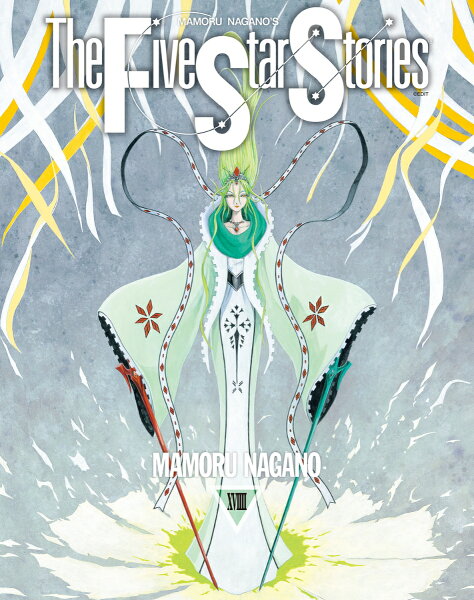
Five
Five is Daisuke Nishikawa's basketball manga from Weekly Shonen Champion — a more subdued, character-driven approach to high school basketball than Slam Dunk's spectacle, with a five-player team whose dynamics were the actual subject.
Sports / Drama
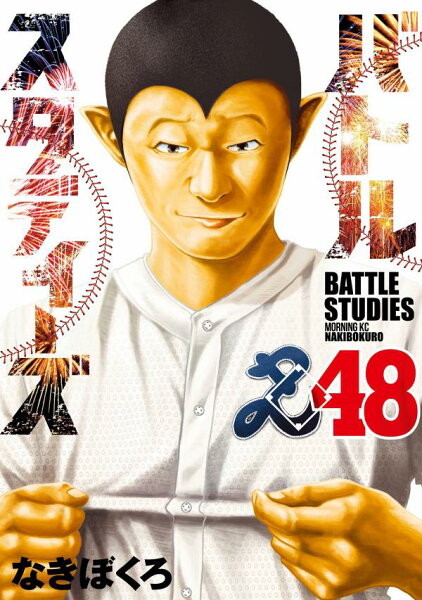
Battle Studies
A review of Battle Studies, Nakibokuro's brutally honest baseball manga set at DL Gakuen, a powerhouse high school modeled on the author's real years inside PL Gakuen's notorious baseball dorm.
Sports / Drama
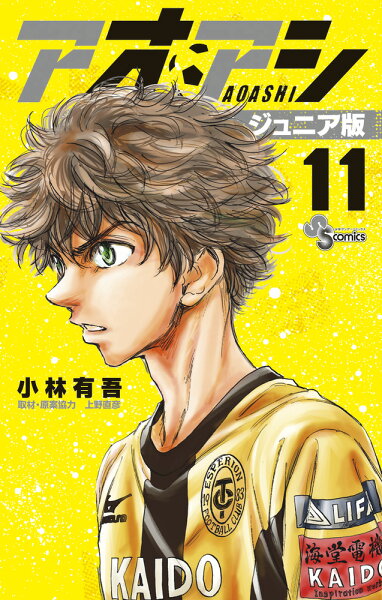
Aoashi
A review of Yuugo Kobayashi's Aoashi — ongoing in Weekly Big Comic Spirits. Ashito Aoi, a rough soccer talent from rural Ehime, is scouted into Tokyo's FC Tokyo youth academy. The series is about learning what modern soccer actually is — through a boy who sees the entire field and has to be taught how to use what he sees. Titan Comics' English edition is ongoing.
Sports / Drama
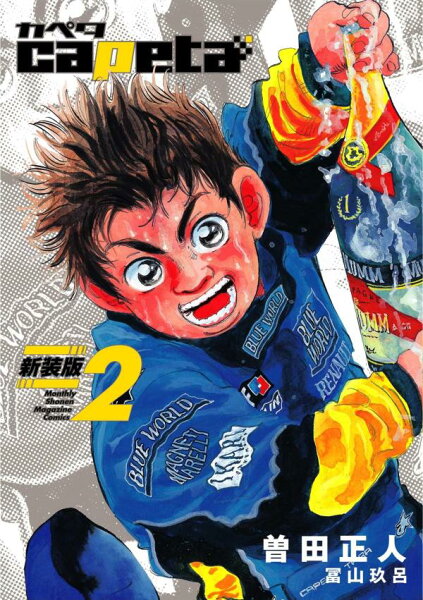
Capeta
A review of Capeta, Masahito Soda's 32-volume motorsports manga about a poor boy whose road-paving father builds him a kart from scrap, and the lifelong rivalry that pushes him from karting toward Formula racing.

Sports / Drama
Gaku: Minna no Yama
Gaku: Minna no Yama follows Habu Gaku, a volunteer mountain rescue worker in the Japanese Alps, and the climbers he saves — or tries to save — as he demonstrates the specific combination of skill, knowledge, and relentless positivity that his work requires.
Written by
Yu
Manga Enthusiast from Japan
I grew up in Japan and manga literally saved me during a tough time in elementary school. My English isn't perfect, but my love for manga is real — and I want to share it with you.
Disclosure: This post contains affiliate links. As an Amazon Associate, I earn from qualifying purchases at no extra cost to you.