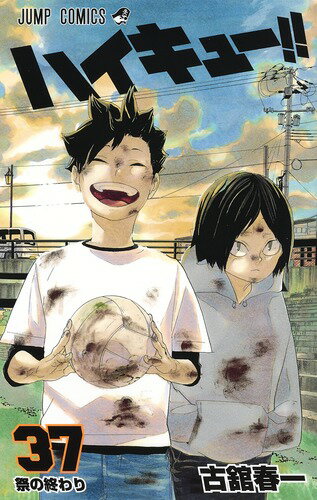
Haikyu!! Review — The Forty-Five-Volume Volleyball Manga That Treats Every Player on Every Team Like a Person
by Haruichi Furudate
Read the first volume. If it doesn't hook you, put it down. It'll hook you.
Buy Haikyu!! on Amazon →*Affiliate link — I earn a small commission at no extra cost to you.
I was small in middle school. Not just below average — actually small. The kids who were going to be tall were already six inches taller than me, and the kids who were going to stay small had already worked out coping strategies. I had neither. I just stood there.
I started reading Haikyu!! the year I was finally giving up the idea that I might still grow. The manga had nothing to do with my actual situation — I was not going to play volleyball, I was not going to suddenly become a star, my high school did not have a fallen powerhouse to revive — but the central image of the series, of a small kid who refuses to let his height be the answer to the question of what he is allowed to want, landed on me in a way I'm still grateful for.
Quick Take
- A 45-volume sports manga that takes volleyball more seriously than almost any sports manga in any sport, and uses it as the engine for one of the most carefully constructed ensemble character pieces in shonen
- Hinata Shoyo (short, jumps high, refuses to be told no) and Kageyama Tobio (genius setter, broken at communicating with people) are the central pair, but the manga's defining trick is that it cares equally about every player on every team
- Age rating: T (Teen) — clean throughout. No violence beyond sports contact, no sexual content, no language harder than mild. Safe for all ages while written for adults
Who Is This Manga For?
- Sports manga readers who want the genre's best modern example
- Readers who don't know volleyball — Furudate teaches it through play, no rules glossary required
- Long-series committers — 45 volumes that reward reading every one
- Anyone in their twenties or older who can still feel something about teenagers trying their hardest
- Fans of ensemble character work — the rival teams are not obstacles, they are entire other series running in parallel
Content Warnings & Age Rating
Age Rating: T (Teen) — 13+ Content Warnings: Mild language; minor sports injuries (twisted ankles, finger sprains); intense competitive emotion (characters cry, panic, fail publicly); some emotionally heavy material around individual ambition and what it costs
The T rating is generous. Haikyu!! is one of the cleanest long-running shonen manga. The intensity is emotional, not graphic.
Story Overview
Hinata Shoyo is in his last year of middle school in Miyagi Prefecture. His school has no volleyball team in any meaningful sense — Hinata himself is the volleyball club, and his one tournament match is a humiliating loss to a team led by Kageyama Tobio, a setter so technically gifted his teammates call him the "King of the Court" — not as praise, but as resentment of a player who demands precision they cannot meet.
Hinata enrolls at Karasuno High, a fallen volleyball powerhouse — once nationally ranked, now an afterthought, the school nicknamed "the wingless crows" by rivals. On the first day of practice, Hinata discovers that his new teammate is Kageyama. The two of them spend the entire first arc trying to figure out how to be on the same team.
The major arcs across 45 volumes:
Volumes 1–3 — Foundation. Karasuno's roster: Hinata, Kageyama, third-year captain Sawamura Daichi, libero Nishinoya Yuu, ace Azumane Asahi (recovering from a defeat that broke his confidence), setter Sugawara Koushi (graceful starter being displaced by Kageyama's talent), and tall-but-uninterested first-year blocker Tsukishima Kei with his quiet best friend Yamaguchi Tadashi. The pieces of the team are assembled.
Volumes 4–6 — Aoba Johsai (the Inter-High preliminaries). Karasuno's first major opponent: Oikawa Tooru, the genius setter who chose hard work over natural talent, and whose petty rivalry with Kageyama is the manga's first deep character study. Aoba Johsai wins.
Volumes 7–11 — The Tokyo training camp and Nekoma. Karasuno travels to Tokyo for a training arc with Nekoma High, the team Karasuno has been "fated to play" for decades — a long-running unfinished rivalry the older generation never resolved. The Nekoma captain Kuroo Tetsurou and the disengaged-genius setter Kenma Kozume become two of the manga's most beloved characters. Their match with Karasuno — the "Battle at the Trash Heap" — pays off in the National Tournament.
Volumes 12–18 — Spring High preliminaries. Karasuno makes another run at Nationals. Aoba Johsai again. Date Tech (the "Iron Wall" school of three-meter blockers, ace Aone Takanobu). Shiratorizawa, the prefectural champion led by Ushijima Wakatoshi — a left-handed ace who has been told by everyone that he is the best in the prefecture and believes them.
Volumes 19–25 — The Shiratorizawa match. Karasuno vs Shiratorizawa, five sets, the prefectural final. This arc is where Tsukishima — who has spent twenty volumes as the kid who refuses to commit to volleyball because committing is embarrassing — becomes one of the manga's most affecting characters. He blocks Ushijima. The series stops.
Volumes 26–33 — Nationals: Inarizaki. Karasuno reaches the national tournament. Their second-round opponent is Inarizaki High, the powerhouse from Hyogo Prefecture led by the Miya twins (setter Atsumu, wing-spiker Osamu) and captain Kita Shinsuke, whose work ethic the series presents as a moral position rather than a personality trait. The Inarizaki match is the most acclaimed single arc in Haikyu!!'s 45-volume run. Aran Ojiro, Suna Rintarou, the entire Inarizaki roster — each one developed enough to be unforgettable.
Volumes 34–38 — Nationals: Nekoma, Kamomedai, the conclusion of high school. The Battle at the Trash Heap actually happens. Karasuno's national tournament ends in a way that earns its full forty volumes of buildup.
Volumes 39–45 — The timeskip. Furudate does something almost no other shonen sports manga has done. He fast-forwards. We see Hinata in Brazil playing beach volleyball for two years. We see Kageyama in the Schweiden Adlers. We see Tsukishima, Yamaguchi, and the others as adults. The final volumes are a match between the MSBY Black Jackals (Hinata, Bokuto, Atsumu, Sakusa) and the Schweiden Adlers (Kageyama, Ushijima, Hoshiumi) — the rivalries of high school continued into professional careers. The manga ends having shown you what happens to people who keep doing the thing they loved.
Characters
Hinata Shoyo — The series' engine. His combination of physical limitations and refusal to accept those limitations is what the manga is built on. What makes Hinata work as a protagonist is that Furudate doesn't make him magical. He's not actually that good, technically, for most of the series. What he has is a body that can absorb training faster than anyone else, a vertical jump that the manga keeps reminding you is freakish, and an absolute refusal to stop playing.
Kageyama Tobio — The setter who has the technical skill of a professional and the social skills of a person who has been alone with the technical skill for too long. His relationship with Hinata is the manga's most important. They are not friends in the conventional sense. They are two people who have chosen to need each other to play the sport they love, and they spend forty-five volumes figuring out what that actually means.
Tsukishima Kei — Tall, sarcastic, deliberately uncommitted. His arc — the one where he stops being too cool to care, which the manga earns across years of story time — is the single best arc in Haikyu!!. The Shiratorizawa match is his graduation from "I'm doing this to humor my brother" to "I am a person who chose this."
Sugawara Koushi — The third-year setter who is technically being benched in favor of Kageyama. The manga refuses to make Sugawara bitter. His decency about not being the starter is one of the manga's quietest decisions, and it informs everything else about Karasuno.
Nishinoya Yuu — The libero. Loud, fearless, the team's emotional engine. His response to setbacks — to roar and keep going — is the version of teenager Furudate clearly believes most in.
Oikawa Tooru — The Aoba Johsai setter. Genius-adjacent — not as naturally gifted as Kageyama, but he has spent his life closing the gap with work. His relationship to his own talent is the series' most painful subplot. The manga gives him the volumes he needs to become a person rather than a foil.
Kuroo Tetsurou and Kenma Kozume — Nekoma's captain and setter. The childhood-friends-who-stayed-friends dynamic the manga uses for them is the warmest version of the team-relationship the manga explores. Kenma's later arc as a professional gamer and then a Black Jackals owner is one of the timeskip's best surprises.
The Miya twins (Atsumu and Osamu) — Inarizaki's defining duo. Atsumu is the setter who eventually plays professionally with Hinata. Osamu chooses to quit volleyball after high school and open an onigiri restaurant — a choice the manga treats with the same seriousness as the players who stay in the sport.
Ushijima Wakatoshi — Shiratorizawa's left-handed ace. The series' most physically dominant single player in the high school arc. The manga's quiet trick is that Ushijima is not a villain. He is a person who has been told he is the best and believes it, and what happens when someone smaller and more strategic finally outsmarts him is the manga's clearest argument that talent is not enough.
Art Style
Haruichi Furudate's art is built for sports. Volleyball is a chaotic three-dimensional sport — players moving in all directions, ball trajectories crossing the net at angles that need to be readable in a single panel — and Furudate's compositional sense for what to show and what to imply is what makes the matches readable.
The character designs are functional and distinct. Every player on every team is visually identifiable even when they're all in similar uniforms. Tsukishima's glasses, Kuroo's hair, Bokuto's owl eyes, Aone's eyebrowless intensity, the Miya twins' bleached/dyed hair — each design is a specific personality drawn into a body type.
Where Furudate's art rises to genuine artistry is the spike sequences. The "kowai" panel of a spike being read by the blocker, the slow-motion freeze of a perfect set, the chaos of a pancake save — these are some of the cleanest sports art in manga.
Cultural Context
Haikyu!! ran in Weekly Shonen Jump from February 2012 to July 2020. Over its eight-and-a-half-year run, it became one of the magazine's flagship titles, alongside My Hero Academia and Demon Slayer. It won the 61st Shogakukan Manga Award (shonen category) in 2016.
The series is set in real Japanese geography — Miyagi Prefecture (Karasuno's home), Tokyo (Nekoma's territory), Hyogo (Inarizaki). The Spring High and Inter-High tournaments are real Japanese high school tournaments. The fallen-powerhouse narrative is a recognizable Japanese cultural pattern: institutions that were once strong, that the older generation grieves for, that the younger generation has the chance to revive.
The series also engages seriously with what comes after high school — the timeskip arc shows the V.League (Japan's professional volleyball league), beach volleyball in Brazil, and the choice to leave the sport (Osamu's onigiri shop). Most sports manga end at the climactic high school match. Haikyu!! is one of the few that keeps going.
What I Love About It
The single panel of Tsukishima's hand after the block.
The match is Karasuno vs Shiratorizawa, prefectural finals, fifth set. Ushijima Wakatoshi has been spiking effectively unstoppable balls for nineteen volumes. Tsukishima Kei — the first-year blocker who has spent twenty volumes coasting through practice on the explicit logic that committing fully to volleyball would be cringe — has been watching, thinking, taking notes. He has constructed, with help from Karasuno's coach, a specific blocking pattern to use against Ushijima.
He executes it. The ball stops at the net. The crowd is silent.
What Furudate draws then is what makes Haikyu!! Haikyu!!. He doesn't draw Tsukishima celebrating. He draws Tsukishima's hand. The hand that has been doing the absolute minimum for twenty volumes. The hand that just blocked the best spiker in the prefecture. Tsukishima is looking at it. There is a single panel of his face. He smiles for the first time in the series.
I was twenty-something when I read this scene and I sat with the book closed in my lap for several minutes. The series had spent twenty volumes building the architecture of a kid who had decided, very deliberately, not to care about anything because caring is embarrassing — and then in one block, with one panel, it showed that kid choosing the other thing.
That's what Haikyu!! is. Forty-five volumes of people making the slow, embarrassing, repeated decision to care about something, and the manga refusing to let the decision happen quickly. Tsukishima's block lands because it has been earned. Hinata's spike at nationals lands because it has been earned. Kageyama setting to anyone other than Hinata lands because it has been earned. Furudate does not give you any moment for free.
What English-Speaking Fans Say
Haikyu!! has one of the largest and most positive English-language fan communities of any modern shonen. The 2020 series finale was discussed across Reddit, Twitter, and dedicated forums as one of the best sports manga endings of all time — particularly the timeskip arc's MSBY Black Jackals vs Schweiden Adlers final, which extends the high-school rivalries into adult professional careers.
The Inarizaki arc (volumes 26–33) is the most-discussed individual arc in English fandom. The Miya twins, Kita's "Yake ni Sundoita" speech, Suna's blank-eyed defense, and Aran Ojiro's quiet competence are all cited as examples of Furudate's exceptional secondary-character writing.
The most common comparison is to Slam Dunk (Inoue) — another sports manga that defined its genre. Haikyu!! is generally credited as the modern descendant of that tradition.
Memorable Scene ⚠️ Spoiler Warning
The Miya twin spike formation in the Inarizaki match.
Volumes 26 through 33 cover Karasuno's second-round national tournament match against Inarizaki — the top-seeded high school in Hyogo Prefecture. The Miya twins, Atsumu and Osamu, are the team's central pair: Atsumu, the setter, has the technical precision Kageyama has plus several years of playing with the same wing-spiker; Osamu, the wing-spiker, has been playing with his twin since they were small.
The sequence Furudate draws — Atsumu setting to Osamu, the ball appearing to come from impossible angles, the synchronization of two players who have been one team for their entire lives — is the manga's clearest articulation of what it means to play in absolute trust with someone else. The Karasuno blockers, who have been working on their own trust pair (Hinata and Kageyama), watch the Miya twins do at a higher level the thing they themselves are trying to do.
What makes this arc the manga's best is what Kita Shinsuke says when Inarizaki loses. He is the captain, third-year, the player who has spent his life building Inarizaki into what it is. The team has just been eliminated from his last national tournament. Furudate draws him saying, calmly, that the work he did was the work he did regardless of the result — that the discipline of training every day, of building the team, of carrying the orange-and-black jersey, was its own reward, win or lose.
That speech is the manga's moral spine in one paragraph. Haikyu!! is not a manga about winning. It is a manga about choosing to do something seriously and what that choice does to the person who makes it. Kita loses and walks off the court a person who knows what he did was worth doing. Karasuno wins and has to keep playing.
I think about Kita's speech a lot.
Similar Manga
| Title | Its Approach | How Haikyu!! Differs |
|---|---|---|
| Slam Dunk (Inoue) | The 1990s basketball manga that defined the genre | Slam Dunk is shorter and more individual-hero-focused; Haikyu!! is longer, more ensemble, post-timeskip aware |
| Kuroko's Basketball | Stylized sports manga with superhuman abilities | Kuroko is fantastical; Haikyu!! is realistic-volleyball with carefully calibrated talent |
| Ao Ashi | Soccer manga with serious tactical depth | Ao Ashi is more individually-focused; Haikyu!! has more team-as-character writing |
| Blue Lock | Soccer with darker, more individualist tone | Blue Lock is ego-vs-team; Haikyu!! is team-as-ego-vehicle |
Reading Order / Where to Start
Volume 1. The 45 volumes are continuous — each arc builds character relationships that pay off in the next.
The 3-in-1 omnibus editions VIZ released later in the run are an excellent value option for collectors — 15 omnibus volumes vs 45 single volumes.
Official English Translation Status
VIZ Media published all 45 volumes in English between 2016 and 2024. The series is complete in both single-volume and 3-in-1 omnibus formats. Digital editions are available on VIZ's platform and Shonen Jump app subscriptions.
Pros & Cons
Pros
- One of the best sports manga ever made — every match is genuinely tense
- The rival team characterization is extraordinary — you care about both sides
- The timeskip arc (volumes 39–45) is one of shonen's most satisfying endings
- Pure to read — emotionally energizing rather than draining
- Complete in 45 volumes with proper resolution
Cons
- 45 volumes is a significant commitment
- The middle arcs (volumes 14–18) slow before Shiratorizawa
- If volleyball as a sport actively bores you, the immersive technique pages may feel like work
- The post-timeskip arc divides some readers who wanted to stay in high school. The choice to grow up is part of the manga's argument; it won't land for everyone.
Is Haikyu!! Worth Reading?
Yes. If you have any tolerance for sports manga at all, Haikyu!! is one of the best things in the medium. The Tsukishima block, the Inarizaki match, Kita's speech, the Black Jackals vs Adlers finals — these are the moments shonen sports manga aspires to.
Format Comparison
| Format | Notes |
|---|---|
| Single Volumes (VIZ) | 45 individual tankoubon; standard format |
| 3-in-1 Omnibus (VIZ) | 15 omnibus volumes; best value for new collectors |
| Digital | All 45 vols available via VIZ digital and Shonen Jump app |
| Anime (Production I.G) | 4 seasons (85 episodes, 2014–2020) + Final movies through 2027 — covers approximately volumes 1–34 |
Where to Buy
Read the first volume. If it doesn't hook you, put it down. It'll hook you.
This post contains affiliate links. If you purchase through these links, I may earn a small commission at no extra cost to you. As an Amazon Associate, I earn from qualifying purchases.
*Affiliate link — I earn a small commission at no extra cost to you.
More Manga You Might Like
Sports
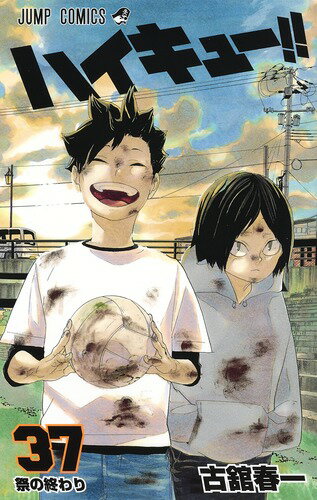
Haikyuu!!
Haikyuu!! follows Hinata Shoyo, a volleyball-obsessed boy who is short for the sport, and his journey from disastrous first tournament through the complete arc of high school volleyball with the Karasuno High team — one of the most celebrated sports manga of its generation.
Sports / Comedy
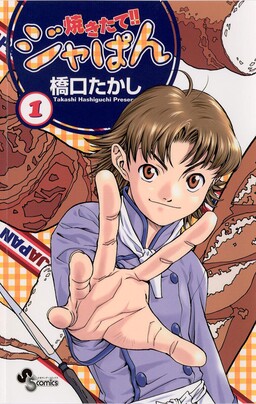
Yakitate!! Japan
Yu's review of Yakitate!! Japan — Kazuma Azuma has supernatural hands warm enough to activate yeast perfectly, and his dream is to create a national bread for Japan; the series applies shonen battle manga structure to competitive bread-baking with completely committed absurdist comedy.
Sports / Comedy
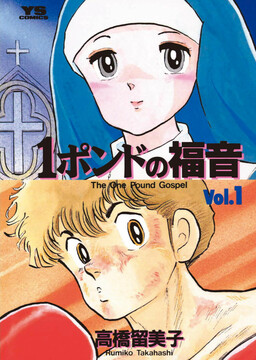
One Pound Gospel
Yu's review of One Pound Gospel — Kōsaku Hatanaka is a genuinely talented featherweight boxer with one catastrophic flaw: he can't stop eating, constantly missing weight for his fights; Sister Angela, a young nun, becomes his most unlikely source of encouragement; Rumiko Takahashi's compact boxing comedy with a warm central relationship.
Sports
Hungry Heart Wild Striker
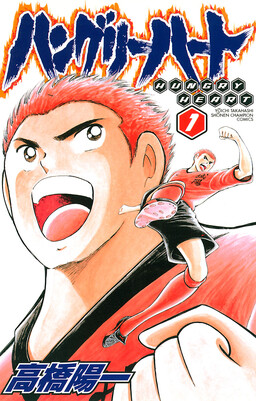
Yu's review of Hungry Heart Wild Striker — Kyōsuke Kanou is a soccer prodigy who quit the sport because of his older brother's overwhelming talent; when he joins a struggling team and meets a dedicated coach, he rediscovers his hunger for the game; a return to pure soccer manga from the Captain Tsubasa creator.
Sports
Cross Manage
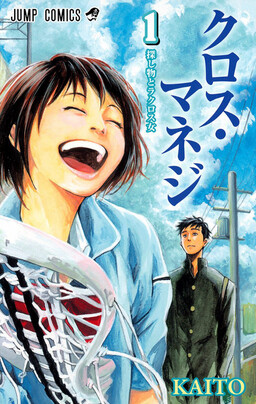
Yu's review of Cross Manage by KAITO — Sakurai is a burned-out former soccer prodigy with a leg injury who gets dragged into managing his school's girls lacrosse team by the relentless Misora Toyoguchi. A short, warm Weekly Shonen Jump sports manga about finding your place when you can no longer be the star.
Sports / Drama
All Out!!
Yu's review of All Out!! — Gion Kenji is 159cm and furious about it; Iwashimizu Sumiaki is 190cm and terrified of his own strength. They both join Jinko High School's struggling rugby club and learn that rugby is the one sport that has a place for exactly who they are.
Written by
Yu
Manga Enthusiast from Japan
I grew up in Japan and manga literally saved me during a tough time in elementary school. My English isn't perfect, but my love for manga is real — and I want to share it with you.
Disclosure: This post contains affiliate links. As an Amazon Associate, I earn from qualifying purchases at no extra cost to you.