Ima Koi: Now I'm in Love — The Shoujo That Starts Where Others End
by Ayuko Hatta
Read the first volume. If it doesn't hook you, put it down. It'll hook you.
Buy Ima Koi: Now I'm in Love on Amazon →*Affiliate link — I earn a small commission at no extra cost to you.
I have a confession about confessions: in shoujo manga, they usually bore me. I grew up loving the loud, world-saving stuff — Naruto, One Piece — and when I first started reading romance manga as an adult, I kept hitting the same wall. A hundred pages of "does he like me, does he not," and then the story ends the second they finally hold hands. I always wanted to flip the page and ask, okay, but now what? That's the exact question Ima Koi: Now I'm in Love answers, and it's why this little nine-volume series stuck with me far more than I expected.
Ayuko Hatta — who later got famous in the West for A Sign of Affection — wrote this one earlier, and you can feel her working out an idea she clearly cares about: the part of love nobody draws is the part after you've started.
Quick Take
- A shy girl confesses on impulse, the cool guy says yes — and that's page one, not the finale
- The whole point is the after: two awkward teenagers slowly learning how to actually be a couple
- Sweet, low-drama, contemporary shoujo — rated T (Teen), with one brief train-groping scene early on
Story Overview
Satomi Mizusawa is a first-year high schooler who has spent her whole life being too shy to confess to anyone — and she's still quietly haunted by a crush she let slip away without ever saying a word. She makes herself a vow: next time, she won't choke. Then one day on the train she gets groped by a stranger, and a boy steps in and rescues her. He goes to her school. His name is Kazuma Yagyu.
So she chases that vow down. She seeks him out to thank him — and instead of the princely savior she half-expected, she finds someone kind of cold and dismissive who doesn't really know what to do with her. Flustered, she blurts out that she likes him anyway. To her own shock, he says yes. He'll date her. She seems interesting.
That's the inciting incident — and the relationship starts immediately. From there the series isn't "will they get together," it's the slow, often clumsy work of two inexperienced people figuring out how to be a we. Misread signals, awkward silences, the terror of a first kiss, her overprotective older brother nearly having a heart attack about all of it. Across nine volumes it stays grounded and small-scale on purpose — no love triangles parachuted in, no melodrama. The drama is just the ordinary friction of building something real.
Characters
Satomi Mizusawa is the emotional spine. Her arc is the move from someone defined by the things she was too scared to say, to someone who learns to actually speak — to ask for what she wants and to trust that the answer won't destroy her. She voices the series' whole thesis at one point: she doesn't put much weight on beginnings — what matters to her is what happens after something has started. That line is basically the manifesto of the book.
Kazuma Yagyu is, refreshingly, not a fantasy boyfriend. He's a little blunt, a little awkward, and he fumbles at reading the room — when Satomi shows up wanting connection, he doesn't always get it right. What I appreciated most is that the manga never frames him as a broken man Satomi has to fix. He's just a real, slightly stiff teenage boy learning the same things she is, at the same pace.
Nimo is Satomi's best friend since middle school, and her tell-it-like-it-is bluntness is where most of the comedy lives — she's the reality check who keeps the romance from floating off into syrup.
Saichi, Satomi's older brother, supplies the other comic engine: his sheer overprotective shock that his little sister is suddenly dating someone is a recurring delight, and pays off in one of my favorite scenes in the whole series.
What I Love About It
The scene that sold me is small and domestic. Satomi and Yagyu have a misunderstanding hanging between them, and they finally hash it out in a kitchen — just talking, clearing the air, the kind of unglamorous conversation that real couples actually have. And right as it resolves, Saichi (the brother) turns his back for a second, and Yagyu sneaks in a surprise kiss.
I love this beat because it's doing two things at once. The conversation is the adult part of the relationship — the communication, the repair, the choosing to understand each other instead of sulking. And the stolen kiss the instant the chaperone looks away is the teenager part — still giddy, still sneaking around a disapproving older brother. Hatta lets both exist in the same panel, and that's the whole tone of the series in miniature: mature about feelings, goofy about being sixteen. Most shoujo gives you one or the other. This gives you both at once, and it's the thing I think about whenever I recommend it.
Memorable Scene ⚠️ Spoiler Warning
Spoiler Warning for early volumes.
The moment that defines the series for me is when Satomi first goes to thank Yagyu after the train rescue — and the fantasy collapses. She's built him up as this gallant prince, and the real Yagyu is standoffish and a bit cold, clearly not sure why this girl is in front of him. A lesser shoujo would have made him secretly perfect underneath. Instead, Satomi confesses anyway, into that awkwardness, and he agrees to date her not because of fate or destiny but because she "seems interesting."
It's such an unromantic reason — and that's exactly why it works. It tells you immediately that this book isn't selling you a dream boy. It's two ordinary, awkward people deciding to find out what happens next together. Every sweet moment afterward feels earned because of how un-magical that first yes was.
Pros & Cons
Pros:
- Starts the relationship on page one and spends nine volumes on the part most shoujo skips
- Yagyu is a believable, flawed boy — not a fantasy prince Satomi has to fix
- Nimo and brother Saichi give it real comedic texture
- Complete, self-contained, low-commitment at nine volumes
Cons:
- The romance is gentle and the stakes stay small — if you read shoujo for big dramatic angst, this will feel sleepy
- Satomi's shyness and self-doubt can read as repetitive over a long sitting
- The pacing is deliberately quiet — that's either the appeal or the dealbreaker, depending entirely on what you want from a love story.
Is Ima Koi: Now I'm in Love Worth Reading?
Yes — if you've ever closed a shoujo manga feeling cheated that it ended the moment the couple got together. Ima Koi is a warm, low-drama, beautifully ordinary story about two awkward teens learning the actual work of being a couple. It won't satisfy readers chasing high melodrama, but as a complete nine-volume answer to "okay, but what happens after the confession?", it's quietly one of the most satisfying romances I've read.
Similar Manga
| Title | Its Approach | How Ima Koi Differs |
|---|---|---|
| My Love Story!! | Pairs up its leads early and mines warm comedy from the established couple | Ima Koi is quieter and more grounded, with no gag-manga exaggeration |
| Ao Haru Ride | Builds a slow, angsty reunion romance heavy on unresolved feelings | Ima Koi skips the longing entirely and starts after the "yes" |
| A Sign of Affection | Hatta's later hit — a tender first romance with a deaf heroine | Ima Koi is her earlier, lighter take on the same "learning to be a couple" theme |
Official English Translation Status
Status: Complete Publisher: VIZ Media Volumes Available in English: 9 of 9 (final volume released March 2024)
Where to Buy
Read the first volume. If it doesn't hook you, put it down. It'll hook you.
This post contains affiliate links. If you purchase through these links, I may earn a small commission at no extra cost to you. As an Amazon Associate, I earn from qualifying purchases.
*Affiliate link — I earn a small commission at no extra cost to you.
More Manga You Might Like

Slice of Life / Romance
Tsurezure Children
Yu's review of Tsurezure Children — a romantic anthology following multiple high school couples in short-form episodes; each chapter follows a different couple in a different stage of confession or early relationship; a warm comedy anthology about the specific awkwardness of telling someone you love them.

Slice of Life / Romance
Gal Gohan
A comprehensive review of Gal Gohan — plot, characters, art style, fanservice, and whether it's worth reading.

Slice of Life / Romance
Wotakoi: Love Is Hard for Otaku
Yu's review of Wotakoi — Narumi hides her fujoshi hobby at every job she has ever had; at her new job she discovers her childhood friend Hirotaka is there, and he knows all her secrets; they start dating, and navigate being adult otaku in a relationship together.

Slice of Life / Romance
Teasing Master Takagi-san
Yu's review of Teasing Master Takagi-san — Takagi teases her desk neighbor Nishikata every single day; he keeps making plans to get back at her; she always wins; the series is about two middle school students who are clearly in love with each other before either of them knows how to say it.
Slice of Life / Romance
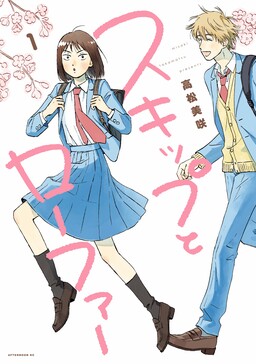
Skip and Loafer
A comprehensive review of Skip and Loafer — plot, characters, art style, and whether it's worth reading.

Slice of Life
Ristorante Paradiso
Yu's review of Ristorante Paradiso — Nicoletta travels from her hometown to Rome to confront her mother, who left her as a child; her mother's husband doesn't know she exists; the restaurant Casetta dell'Orso, staffed entirely by older bespectacled gentlemen, becomes the setting for Nicoletta's unexpected new life.
Written by
Yu
Manga Enthusiast from Japan
I grew up in Japan and manga literally saved me during a tough time in elementary school. My English isn't perfect, but my love for manga is real — and I want to share it with you.
Disclosure: This post contains affiliate links. As an Amazon Associate, I earn from qualifying purchases at no extra cost to you.