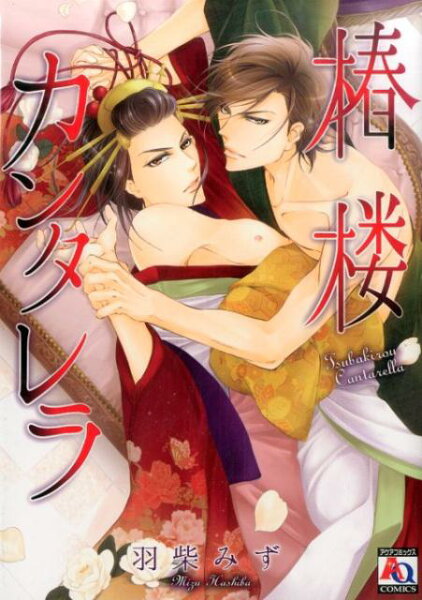
Cantarella Review: The Boy His Own Father Sold to Hell
by You Higuri
Read the first volume. If it doesn't hook you, put it down. It'll hook you.
Buy Cantarella on Amazon →*Affiliate link — I earn a small commission at no extra cost to you.
I read a lot of shonen as a kid, the kind of stories where the hero is loved by everyone and just has to try hard enough. Cantarella was almost the opposite of that, and I think that is why it stuck to me. I picked up the first Go! Comi volume in my twenties at a used bookshop, mostly because the cover was so beautiful I could not put it down. I expected a pretty historical romance. What I got was a story about a child whose own father sold his soul to a demon before he could even speak — and I sat there reading it far later into the night than I meant to.
It is not a comfortable manga. But there is a strange tenderness running under all the darkness, and that contrast is what I keep coming back to.
Quick Take
- A dark historical fantasy reimagining of Cesare Borgia, drawn with You Higuri's gorgeous Renaissance detail.
- The real engine of the story is the bond between cursed Cesare and the assassin Chiaro, who was first sent to kill him.
- Rated M (Mature) — this one has violence, sexual content, incest themes, and a generally heavy tone, not a story for younger readers.
Story Overview
Cantarella opens before Cesare is even born. His father, Cardinal Rodrigo Borgia, makes a bargain with a demon: in exchange for the power that will one day make him Pope Alexander VI, he promises his firstborn son's soul to the dark. Cesare's biological mother senses the curse on the infant and tries to kill him — and dies in the attempt. The cursed child is handed off to Vannozza, a widow raising her own children, including the daughter Lucrezia and the favored son Juan.
So Cesare grows up shadowed. Demons trail him, his father cannot look at him as anything but a living reminder of his own sin, and the boy despairs that no one will ever love him. The turning point comes through Chiaro, a thief and assassin who is originally sent to kill Cesare and instead becomes the one person who can hold the demons inside him at bay. Their bond becomes the spine of the whole series.
From there the story follows Cesare's rise through the brutal politics of Renaissance Italy — papal scheming, war, his rivalry with his brother Juan, and Lucrezia being pushed into political marriages. Cesare leans harder and harder on the dark powers in his blood, drifting between the human warmth Chiaro offers and the monster his father made him. The Japanese series ran 12 volumes and reached its conclusion; the English edition, sadly, only made it to volume 10.
Characters
Cesare Borgia — The heart of it. He is not a brooding-handsome tragic hero; he is genuinely cursed, and the manga shows him as both a charming, even playful young man and something that is slowly becoming inhuman. Reviewers describe his arc bluntly: from an adorable little boy he hardens into "a true demon." Watching that slide happen, and watching the parts of him that resist it, is the whole experience.
Chiaro (Michelotto) — An assassin who is sent to kill Cesare early on and instead becomes his most trusted companion and protector. He is the cheerful, warm presence Cesare shows his real self to, and the one character described as able to "drive Cesare's demons away." His loyalty is constantly in question — does he want to save Cesare, or eliminate a rival? — which keeps their relationship tense rather than sweet.
Lucrezia — Raised alongside Cesare as his sister, and one of the only two people he is gentle with. She begins innocent and gets steadily pulled into the family's political machinery, pushed into a marriage Cesare himself arranges using his influence over her. A romantic triangle forms between Cesare, Lucrezia, and Chiaro that, as one reviewer put it, does not work out well for anyone.
Rodrigo Borgia / Pope Alexander VI — The father who started it all by trading his son's soul for the throne. He cannot see Cesare as a son, only as the proof of his own damnation, and that cold rejection is the wound the entire story grows out of.
What I Love About It
The thing I love most is how Higuri handles the relationship between Cesare and Chiaro, and the place it starts from. Chiaro is sent to murder Cesare. That is the beginning of the most important bond in the entire series — an assassin's blade aimed at a cursed boy. And instead of the usual enemies-to-allies shortcut, the manga lets that history sit underneath everything. Even at their warmest, you never fully forget that Chiaro first came to him as death.
What got me is that Cesare only ever shows his real self — the playful, cheerful, almost boyish side — to Chiaro and to Lucrezia. Everyone else gets the cold Borgia heir or the demon. So when those quiet moments with Chiaro happen, they land hard, because you know they are the only times this character is allowed to be a person instead of a weapon. I am someone who grew up feeling like an outsider, and the idea of one single person who can quiet the worst thing inside you, even if you can never fully trust them, hit me in a place I did not expect a Renaissance period drama to reach. The ambiguity is the point: I love that the manga never lets me be sure whether Chiaro is salvation or just another knife.
Memorable Scene ⚠️ Spoiler Warning
The scene that stayed with me is the very first murder Cesare commits. The early volumes build him as a child drowning in loneliness, tormented by demonic auras he can see and hear, convinced no one loves him — and then he is forced to kill for the first time. It is not framed as a triumphant power-up the way violence so often is in the manga I grew up on. It is the moment the curse stops being something done to him and becomes something he does.
What makes it stick is the contrast with everything around it. Higuri draws this beautiful, lush Renaissance world, all detailed costumes and architecture, and then drops this small damned boy into the middle of it taking a life. The art is gorgeous; the act is ugly. That gap is the whole manga in one moment — the prettiness never softens what is actually happening, it just makes it sadder.
Pros & Cons
Pros:
- You Higuri's art is genuinely stunning — researched Renaissance costumes and architecture, expressive faces that tell you what characters feel before they speak.
- A real tragic arc for Cesare, not just surface angst — he changes, and the change costs something.
- The Cesare–Chiaro relationship has actual tension and ambiguity instead of an easy romance.
Cons:
- The English release is incomplete and out of print — Go! Comi folded after volume 10, so volumes 11 and 12 never came out in English.
- The early volumes lean heavily melodramatic and angsty, with a lot of young Cesare despairing that no one loves him.
- It uses some heavy content — including incest themes and the threat of sexual violence — and that, plus the unfinished English run, means Cantarella won't work for everyone.
Is Cantarella Worth Reading?
If you want beautiful art, a genuinely tragic central character, and a dark, ambiguous central relationship, yes — Cantarella is worth it, and it is unlike most romance or historical manga in English. Just go in knowing two things: the tone is heavy and the English edition stops at volume 10, so you will not get the full ending unless you can read Japanese. For me the art and the Cesare–Chiaro bond made it more than worth the incomplete run.
Where to Buy
Read the first volume. If it doesn't hook you, put it down. It'll hook you. (Just know the English run only goes to volume 10 — you'll likely be hunting used copies.)
This post contains affiliate links. If you purchase through these links, I may earn a small commission at no extra cost to you. As an Amazon Associate, I earn from qualifying purchases.
*Affiliate link — I earn a small commission at no extra cost to you.
More Manga You Might Like
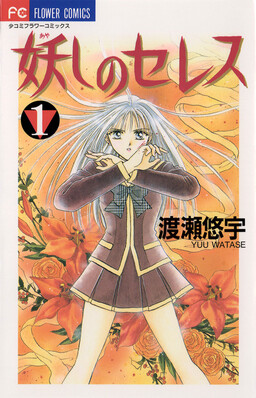
Romance / Fantasy
Ceres: Celestial Legend
Yu's review of Ceres: Celestial Legend — on her 16th birthday Aya Mikage learns she is the reincarnation of the celestial maiden Ceres, and that her own family tests and kills its children to stop Ceres's revenge. Yuu Watase's darkest, most adult shojo.
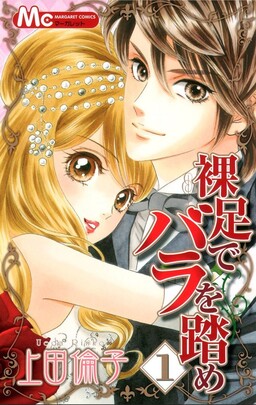
Romance / Drama
Stepping on Roses
Yu's review of Stepping on Roses — set in Meiji-era Japan, Sumi is a poor girl burdened with her brother's debts and siblings to care for; she agrees to marry a wealthy man, Soichiro Ashida, in a loveless contract marriage for the money; the marriage predictably becomes complicated.
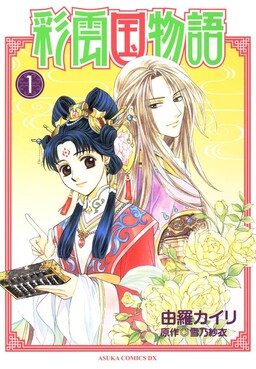
Romance
The Story of Saiunkoku
Yu's review of The Story of Saiunkoku — Shuurei Hong is a noblewoman in a historical Chinese-inspired kingdom who wants to become a government official, but women are barred from the civil service; the Emperor Ryuuki asks her to teach him responsibility; Sai Yukino's historical fantasy about a woman who refuses to be excluded from the world she's qualified for.

Romance / Fantasy
Night of the Beasts
Yu's review of Night of the Beasts — a girl carries a family curse that transforms anyone who falls in love with her into a murderous beast.
Romance / Fantasy
Bibliophile Princess
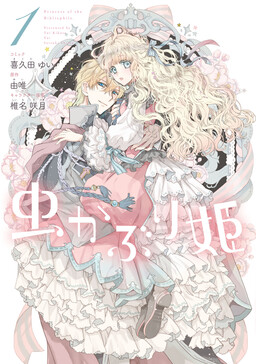
Yu's review of Bibliophile Princess — Lady Elianna Bernstein accepts a fake engagement to Crown Prince Christopher so she can read freely in the royal archive. Four years later she sees him with another woman and braces to be dumped — never once suspecting he has loved her since they were children.
Romance / Drama
Crazy Love Story
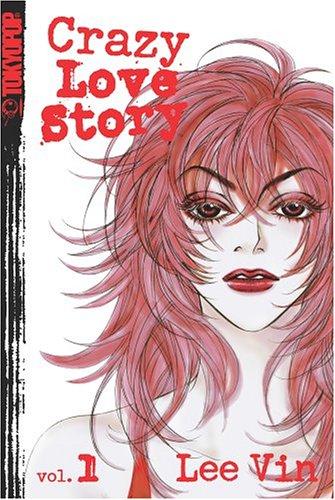
A review of Crazy Love Story, the dark Korean manhwa about intense, dangerous first love between a high school girl and a dangerous older man.
Written by
Yu
Manga Enthusiast from Japan
I grew up in Japan and manga literally saved me during a tough time in elementary school. My English isn't perfect, but my love for manga is real — and I want to share it with you.
Disclosure: This post contains affiliate links. As an Amazon Associate, I earn from qualifying purchases at no extra cost to you.