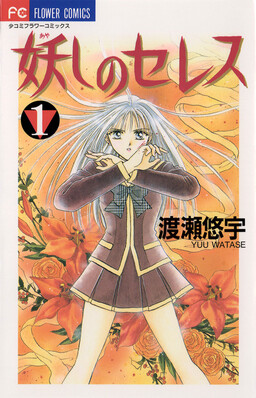
Ceres: Celestial Legend Review: The Birthday Where Her Own Family Decided to Kill Her
by Yuu Watase
Read the first volume. If it doesn't hook you, put it down. It'll hook you.
Buy Ceres: Celestial Legend on Amazon →*Affiliate link — I earn a small commission at no extra cost to you.
I read Fushigi Yugi first, like a lot of people my age did, and I went into Ceres expecting more of the same — a bright girl, a portal to somewhere magical, a couple of pretty boys arguing over her. The first chapter punished me for that. Aya is at her own sixteenth birthday party, her twin brother Aki right beside her, and within a few pages the people who raised her are deciding whether she should be allowed to live. I remember sitting very still after that scene. I had picked up a Yuu Watase book and gotten something that felt like a horror story wearing shojo clothes. I never trusted "happy birthday" the same way again.
Quick Take
- Yuu Watase (Fushigi Yugi) at her most adult and most cruel — Ceres takes the celestial-maiden myth and asks what kind of family would be built by the man who imprisoned her
- The romance is real, but it shares the page with attempted murder, possession, and the original violence done to Ceres herself — this is shojo that does not flinch
- 14 volumes, complete in English from VIZ Media, rated M (Mature) — sexual assault is part of both the backstory and the present-day plot, so this is firmly adult shojo
Story Overview
Aya Mikage turns sixteen at her grandfather's estate, and the celebration is a trap. The Mikage family tests every child on their sixteenth birthday, because some of them carry the "C-genome" — the blood of a tennyo, a celestial maiden — and the family kills any who manifest too much power. Aya manifests. She is the reincarnation of Ceres, the celestial maiden whose feathered robe, her hagoromo, was stolen centuries ago by the family's founder Shiso Mikagi so she could never return to heaven. Her twin brother Aki turns out to be the reincarnation of Mikagi himself. In one night Aya goes from ordinary teenager to the thing her whole bloodline has been trying to exterminate.
The turning point is what happens to Aki. He is gentle, the one person Aya trusts most, and he slowly becomes a vessel for Mikagi's vengeful spirit. As Mikagi takes him over, Aki pursues Aya not as a brother but as the man who once trapped Ceres — and the family's research arm, the C-Project led by their cousin Kagami, stops being a side plot and becomes the engine of everything: Kagami wants Ceres's power to engineer a perfect human race and put the Mikage at the top of the world. Aya, sheltered by the Aogiri family, has to recover the lost hagoromo before either Mikagi reclaims Ceres or Kagami harvests her.
The ending earns its darkness. Aki, fighting Mikagi from inside his own body, sacrifices himself to destroy the hateful spirit. Toya — the amnesiac man Aya falls in love with — turns out to be the "manna," an immortal being the celestial robe itself created to bring Ceres home. To save Aya and the child she is carrying, Toya gives up his manna and his immortality, choosing to live and die as a mortal. The book closes on the two of them waiting for their baby, the cosmic mythology finally quiet.
Characters
Aya Mikage — Her arc is survival turning into agency. She starts as a normal girl who gets no warning, no training, no choice; the supernatural lands on her as a death sentence handed down by her own relatives. What I respect is that the series never lets her become a passive victim. She has to learn to coexist with Ceres taking over her body when she's angry or frightened, and she has to decide what she'll do with that power instead of just enduring it.
Ceres — The celestial maiden inside Aya, and the most morally complicated figure in the book. Her rage is not irrational: Mikagi stole her robe, forced her into his family, and killed their child, and she killed him for it, leaving lacerations on his spirit that still show when he manifests in Aki. The series refuses to file her under "villain" or "victim." Both are true at once, and the descendants who hunt her have simply misread her grief as a threat.
Aki Mikage — Aya's twin and the quiet tragedy of the series. He is kind, and being kind is exactly what makes his slow possession by Mikagi unbearable to watch. His final act — resisting from within and dying to end Mikagi's spirit — is the cost the family pays for what their founder did.
Toya — Introduced as a memoryless young man in the family's employ, then revealed to be the manna made by Ceres's robe. His romance with Aya is the warm center the rest of the book orbits, and his choice to surrender immortality is the one redemptive trade the story allows.
Yuhi Aogiri — Aya's bodyguard and the boy who loves her without being chosen. Watase doesn't punish him for it. He accepts that Aya loves Toya and eventually grows toward Chidori, a fellow C-genomer, which is a kinder ending than most second-leads get.
What I Love About It
What I love is how the very first volume detonates the genre's safety. The birthday party isn't a prologue to the adventure — it is the inciting horror. Aya is laughing, surrounded by family, and the same scene where Ceres wakes inside her is the scene where her relatives draw the line between "one of us" and "must be destroyed." I have read a lot of shojo openings that ease you in with a transfer student or a chance meeting. This one looks you in the eye and tells you that the people closest to Aya are the threat, and it never takes that back.
The reason it hit me so hard is the inversion. In Fushigi Yugi the family Miaka leaves behind is the safe, ordinary world she can return to. Here the family is the source of the nightmare, and it's not a single evil relative — it's a system, a tradition of testing children and killing them quietly that has run for generations and dressed itself up as protection. Watase makes the home the haunted house. As someone who grew up treating manga as the place I escaped to when the real world felt unsafe, that reversal stayed with me. Ceres doesn't let Aya escape into fantasy; the fantasy is what's hunting her, and the only safety she finds is the new, chosen family of the Aogiri household. That idea — that the family you choose can be safer than the one you're born into — is the warm thing buried under all the darkness, and it's why the book is more than just shock.
Memorable Scene ⚠️ Spoiler Warning
The scene I can't shake is Aki, possessed by Mikagi, attempting to assault Aya. It's the present-day echo of the original crime — Mikagi stole Ceres's robe and forced her, and now his spirit, wearing the body of Aya's beloved twin, tries to do it again. Watase doesn't blur it or wave it off as a misunderstanding. She shows it for what it is, and she makes the horror double: it's a sexual assault, and it's a brother who is no longer in control of himself being used as the weapon. The thing that finally ends the cycle is Aki clawing his way back to himself long enough to die destroying Mikagi's spirit from the inside. That image — the gentlest character in the book spending his life to break a violation that's been repeating for centuries — is the emotional core, and it's the moment that justifies the M rating completely.
Pros & Cons
Pros
- Watase's most ambitious and adult work — the family-horror premise is genuinely disturbing in a purposeful way
- The tennyo myth is used with full awareness of the violence the folk versions soften
- Aya and Ceres are both fully realized; neither is reduced to a simple role
- Toya's romance and Yuhi's graceful exit give the darkness real emotional payoff
Cons
- The M rating is earned — attempted rape appears in both the backstory and the present plot
- The sci-fi C-Project layer (genetic engineering, world domination) can clash tonally with the mythic, romantic core
- The relentlessness can be exhausting; this is heavy from page one and rarely lets up, which won't work for everyone
Is Ceres: Celestial Legend Worth Reading?
Yes — if you want Watase at her most serious. It pairs a sincere, moving romance with a horror premise about family, inheritance, and violence that most shojo wouldn't dare touch, and it pays both off in the ending. Just go in knowing it's rated M for good reason; this is not the comfort read Fushigi Yugi sometimes is.
Where to Buy
Read the first volume. If it doesn't hook you, put it down. It'll hook you.
This post contains affiliate links. If you purchase through these links, I may earn a small commission at no extra cost to you. As an Amazon Associate, I earn from qualifying purchases.
*Affiliate link — I earn a small commission at no extra cost to you.
More Manga You Might Like

Romance / Drama
Sand Chronicles
Yu's review of Sand Chronicles — Ann Uekusa moves from Tokyo to rural Shimane after her parents' separation; her mother's death by suicide shapes everything that follows; the series follows Ann from childhood through adulthood with unflinching attention to grief, depression, and the slow work of becoming a whole person.
Romance / Drama
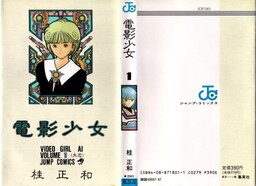
Video Girl Ai
Yu's review of Video Girl Ai — Yota Moteuchi is heartbroken after the girl he loves confesses her feelings to his best friend; he rents a video from a magical shop and the girl on the tape, Ai Amano, steps out of his television — damaged by his worn VCR, with a personality different from what was intended, and developing real feelings he wasn't supposed to create.

Romance / Drama
Stepping on Roses
Yu's review of Stepping on Roses — set in Meiji-era Japan, Sumi is a poor girl burdened with her brother's debts and siblings to care for; she agrees to marry a wealthy man, Soichiro Ashida, in a loveless contract marriage for the money; the marriage predictably becomes complicated.
Romance / Fantasy
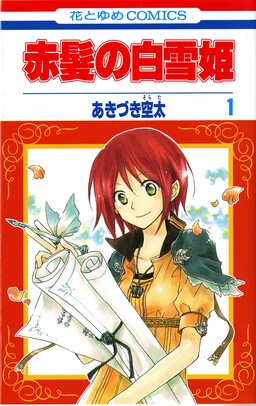
Snow White with the Red Hair
Yu's review of Snow White with the Red Hair — Shirayuki is an herbalist with distinctive red hair who flees her country when its prince demands her as his concubine; she crosses into the neighboring kingdom of Clarines and meets Prince Zen, who helps her without expecting anything in return; the series follows her life in Clarines as she trains to become a court herbalist while her relationship with Zen develops.

Romance
Dawn of the Arcana
Yu's review of Dawn of the Arcana — Princess Nakaba of Senan is married to Prince Caesar of the rival kingdom Belquat as a political settlement; Caesar despises her for her red hair, which marks her people as inferior; she possesses the Arcana of Time, a power that shows her moments of other people's lives; Rei Toma's fantasy romance about power and genuine connection across political enmity.

Romance
Spell of Desire
Yu's review of Spell of Desire — Kaoruko Mochizuki discovers she's a half-witch with uncontrolled magical powers; Kagari Sudo, a Knightguard Witch Hunter, is assigned to contain her powers; Tomu Ohmi's supernatural romance about a woman discovering her heritage and the complicated guardian assigned to her.
Written by
Yu
Manga Enthusiast from Japan
I grew up in Japan and manga literally saved me during a tough time in elementary school. My English isn't perfect, but my love for manga is real — and I want to share it with you.
Disclosure: This post contains affiliate links. As an Amazon Associate, I earn from qualifying purchases at no extra cost to you.