
Stepping on Roses Review: A Poor Girl's Marriage of Convenience Becomes Something She Didn't Plan For
by Rinko Ueda
Read the first volume. If it doesn't hook you, put it down. It'll hook you.
Buy Stepping on Roses on Amazon →*Affiliate link — I earn a small commission at no extra cost to you.
Quick Take
- Rinko Ueda (Tail of the Moon) in Meiji-era romance — the historical setting and class dynamics add texture to what would otherwise be a standard contract-marriage shojo
- Sumi's poverty and her actual economic desperation give the arranged marriage premise more grounding than most
- 9 volumes complete; solid historical romance shojo for readers who enjoy the period setting
Who Is This Manga For?
- Readers who enjoy historical romance with period-appropriate social dynamics
- Anyone who wants contract-marriage shojo with more economic reality than typical fantasy versions
- Fans of Rinko Ueda's Tail of the Moon who want her in a different setting
- Readers who want completed historical romance
Content Warnings & Age Rating
Age Rating: T (Teen) Content Warnings: Meiji-era class and gender dynamics are period-accurate; the contract marriage involves social performance requirements; some mature romantic content
The T rating is accurate.
Yu's Rating
| Category | Score |
|---|---|
| Story Depth | ★★★☆☆ |
| Art Style | ★★★★☆ |
| Character Development | ★★★★☆ |
| Accessibility for Non-Japanese Readers | ★★★★☆ |
| Reread Value | ★★★☆☆ |
Story Overview
Sumi is poor in a specific, practical way — not a fashion choice but the actual weight of a brother who accumulates debt and siblings who need food. When she is approached by Soichiro Ashida, a wealthy man who needs a wife for social reasons, the arrangement is transactional on both sides.
She must learn to behave as a woman of his class — how to dress, how to move, how to present herself in Meiji high society. He teaches her. The marriage exists for his convenience. The feelings that develop are not convenient.
The Meiji setting provides historical texture: the class mobility of the era, the specific social codes, the Western influence on Japanese aristocratic society. Sumi's background — she comes from the world that Meiji prosperity was supposed to lift but didn't — makes her perspective on Soichiro's world genuinely different.
Characters
Sumi — Her quality is the resourcefulness of someone who has genuinely had nothing and has learned to manage. She approaches the wealthy world practically rather than with awe or resentment. Her gradual development of real feelings for Soichiro is complicated by the awareness of what the arrangement was.
Soichiro Ashida — His specific quality is the particular coldness of someone with power who has learned to conceal everything he actually feels. His reasons for the marriage, which are revealed gradually, are more complicated than the initial impression suggests.
Art Style
Ueda's art handles the Meiji period beautifully — the Western-influenced fashion, the period architecture, the social settings of Meiji aristocratic life are rendered with evident research. The costumes in particular are the series' most distinctive visual element.
Cultural Context
Stepping on Roses engages with the Meiji period's specific social dynamics — the coexistence of traditional Japanese class hierarchy with Western-influenced modernization, the particular position of women in the transitional social order. Sumi's class journey reflects the era's actual social mobility patterns.
What I Love About It
The scene where Sumi, having learned enough of Soichiro's world's conventions to perform them correctly, does something that reveals her actual background rather than her training — and what Soichiro's reaction reveals about what he actually values. The series' best scenes are when the performance slips.
What English-Speaking Fans Say
Western readers who enjoy historical manga romance consistently recommend Stepping on Roses for its Meiji period rendering and Sumi's grounded economic situation. The class dynamics are noted as more realistically drawn than many similar series. Ueda's art is consistently praised for the period detail.
Memorable Scene ⚠️ Spoiler Warning
The confrontation near the series' midpoint where Sumi's origins become fully visible in the social world she has been performing for — and whether Soichiro stands with her or not in that moment — is the series' most critical character test.
Similar Manga
- Tail of the Moon — Ueda's historical romance in a different period
- From Far Away — Historical-adjacent romance with class dynamics
- Red River — Historical romance with strong female protagonist
- Fushigi Yugi — Historical-fantasy romance with period setting
Reading Order / Where to Start
Volume 1 — Sumi's situation, the marriage arrangement, and her entry into Soichiro's world.
Official English Translation Status
VIZ Media published all 9 volumes. Complete and available.
Pros & Cons
Pros
- The Meiji setting is rendered with genuine period detail
- Sumi's economic situation grounds the contract-marriage premise
- The class dynamics add historical texture to the romance
- Complete satisfying arc
Cons
- The romance arc follows familiar contract-marriage patterns despite the historical setting
- Some secondary characters are underdeveloped
- The conflict resolution in later volumes is more conventional than the setup
Format Comparison
| Format | Notes |
|---|---|
| Individual Volumes | VIZ Media; complete |
| Digital | Available |
Where to Buy
Read the first volume. If it doesn't hook you, put it down. It'll hook you.
This post contains affiliate links. If you purchase through these links, I may earn a small commission at no extra cost to you. As an Amazon Associate, I earn from qualifying purchases.
*Affiliate link — I earn a small commission at no extra cost to you.
More Manga You Might Like
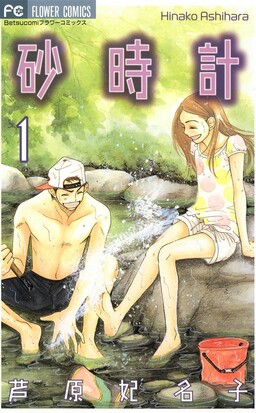
Romance / Drama
Sand Chronicles
Yu's review of Sand Chronicles — Ann Uekusa moves from Tokyo to rural Shimane after her parents' separation; her mother's death by suicide shapes everything that follows; the series follows Ann from childhood through adulthood with unflinching attention to grief, depression, and the slow work of becoming a whole person.
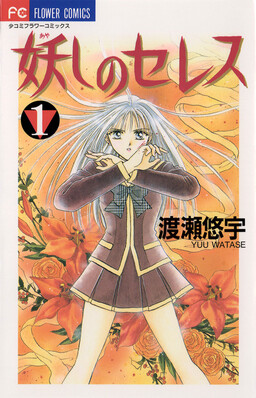
Romance / Fantasy
Ceres: Celestial Legend
Yu's review of Ceres: Celestial Legend — on her 16th birthday Aya Mikage learns she is the reincarnation of the celestial maiden Ceres, and that her own family tests and kills its children to stop Ceres's revenge. Yuu Watase's darkest, most adult shojo.
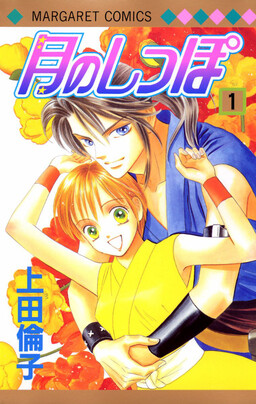
Romance
Tail of the Moon
Yu's review of Tail of the Moon — Usagi is the granddaughter of the leader of Iga and is supposed to be an elite kunoichi, but she keeps failing her ninja exams; she falls for the cold, competent Hanzo; Rinko Ueda's historical ninja romance about an underachieving heroine's determination to improve.

Romance / Drama
Orange
Yu's review of Orange — on the first day of high school, Naho receives a letter from herself ten years in the future, listing the regrets she has about a classmate named Kakeru, and warning her to save him before it's too late.

Romance / Drama
Fruits Basket
Yu's review of Fruits Basket — a girl who has lost everything moves in with a family cursed to transform into animals of the Chinese zodiac, and slowly melts the ice that generations of abuse built around their hearts.
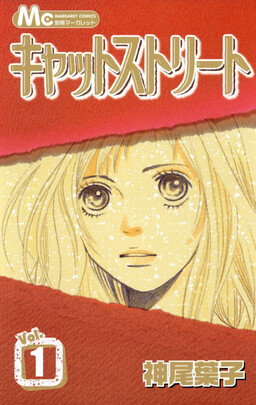
Romance / Drama
Cat Street
Yu's review of Cat Street by Yoko Kamio (Boys Over Flowers) — Keito Aoyama, a former child actress who froze on stage and shut herself away for years, enrolls in El Liston, a free school for kids who can't fit the normal one, and slowly learns how to be a person again.
Written by
Yu
Manga Enthusiast from Japan
I grew up in Japan and manga literally saved me during a tough time in elementary school. My English isn't perfect, but my love for manga is real — and I want to share it with you.
Disclosure: This post contains affiliate links. As an Amazon Associate, I earn from qualifying purchases at no extra cost to you.