
Blue Morning Review: The Butler Was Supposed to Outrank Him
by Shoko Hidaka
Read the first volume. If it doesn't hook you, put it down. It'll hook you.
Buy Blue Morning on Amazon →*Affiliate link — I earn a small commission at no extra cost to you.
When I was a kid, I used to imagine that the adults around me were secretly fighting battles I couldn't see. The teacher who never smiled, the relative everyone tiptoed around — I was convinced they were carrying something. I was almost always wrong. But Blue Morning is the manga that finally gave that childhood instinct a shape. Because here is a butler who bows perfectly, speaks softly, and runs an entire noble household — and behind every gesture is a man who was supposed to inherit it all himself.
I went into this expecting a pretty period BL with nice clothes. What I got was a ten-year quietly devastating story about power, the people who hold it, and the one person who chose to serve instead. I want to tell you about it carefully, because it deserves that.
Quick Take
- A Meiji-era romance between a boy who inherited a title and the butler who raises him — built entirely on a power imbalance the story never lets you forget.
- Shoko Hidaka treats class, politics, and inheritance as the actual engine of the plot, not decoration.
- Age rating: M (Mature) — adult BL content, including a non-consensual scene; for mature readers.
Story Overview
In late Meiji Japan, ten-year-old Akihito Kuze inherits the Kuze viscountship after his father's sudden death. He is far too young to understand what that means, so the household's composed, coldly beautiful head butler — Tomoyuki Katsuragi — takes over raising and tutoring him.
For years their bond looks like guardian and ward. But as Akihito grows into his teens, the feeling curdles into something harder to name: obsession, longing, a desperate need to earn the approval of a man who keeps him at arm's length on purpose. Akihito can't understand why Katsuragi stays so distant when he so clearly runs everything.
The turning point is the secret Akihito uncovers about Katsuragi's past — and from there the manga stops being a household drama and becomes a story about who really holds power in the Kuze house. The political intrigue, the maneuvering over the viscountship, the marriage and inheritance pressures of the aristocracy — all of it builds across eight volumes toward a single question: whether these two can choose each other when their entire world is structured to keep them apart. The series closes as Akihito prepares to leave for England, and the two of them finally decide what they are to each other.
Characters
Akihito Kuze — handed a title at ten that he never wanted and barely understands. He cares little for aristocracy and even less for the games of high society, which makes him both refreshing and dangerously naive. His arc is the move from a boy chasing Katsuragi's attention for validation, to a young man who finally grasps what his butler has actually been carrying — and what that devotion has cost.
Tomoyuki Katsuragi — the heart of the series, and its cruelest irony. He is a master of business and politics with no title to wield it through, so he channels everything into serving the Kuze house. The revelation that reframes him: Katsuragi was originally taken into the Kuze family as their intended heir before Akihito was born — and then quietly displaced from the inheritance that was almost his. The boy he raises is the boy who replaced him. Every bow carries that history.
The supporting cast — relatives, rivals, and political players orbiting the viscountship — exist to apply pressure: marriage arrangements, inheritance disputes, and the slow-motion threat that the Kuze house could lose everything. They keep the romance from ever being private; it always has stakes attached.
What I Love About It
What I love is that Blue Morning refuses to pretend the power gap isn't there. So many master-servant romances flatten the dynamic into fantasy — the devoted butler who simply adores his young lord. Hidaka does the opposite. She tells you that this butler was meant to be the master, that he was set aside the moment Akihito was born, and then she lets that fact sit underneath every quiet, deferential scene. Katsuragi's servitude isn't sweet. It's a choice he makes over and over, and it has a history of loss baked into it.
That single structural decision changes everything. When Katsuragi keeps Akihito at a distance, it's not just aloofness — it's a man managing his proximity to a life that was taken from him. When Akihito chases his approval, he's unknowingly begging for warmth from the person he displaced. The class system here isn't backdrop; it's the wound. I've read a lot of historical BL, and very few of them have the patience to make the hierarchy itself the source of the heartbreak. This one does, and it earns every slow chapter doing it.
Memorable Scene ⚠️ Spoiler Warning
The image that stays with me is the ending. After eight volumes of Katsuragi holding the line — proper, controlled, always the servant — it's Katsuragi who finally cracks. With Akihito about to leave for two years in England, the man who has spent the whole series maintaining his distance says the most exposed thing he can: that two years is too long.
And then Akihito's answer isn't a speech. He holds out a passport and asks if Katsuragi will come to England with him. After everything — the displaced inheritance, the years of careful distance, the politics that kept pulling them apart — the resolution is that small and that human: one man admitting he can't bear the separation, the other offering a way to not be separated at all. For a series this preoccupied with rank and duty, ending on a passport and a question instead of a grand declaration is exactly right. It's the moment the hierarchy finally loses.
Content Warnings & Age Rating
Age Rating: M (Mature) Content Warnings: Adult BL content, a non-consensual intimate scene, and a relationship rooted in a significant power imbalance.
This isn't a light, fluffy romance. The central relationship is psychologically heavy, and one of the early intimate scenes is non-consensual — the product of tension built to the point of desperation rather than a tidy romantic beat. Go in knowing that.
Yu's Rating
| Category | Score |
|---|---|
| Story Depth | ★★★★★ |
| Art Style | ★★★★☆ |
| Character Development | ★★★★★ |
| Accessibility for Non-Japanese Readers | ★★★★☆ |
| Reread Value | ★★★★☆ |
Overall: 4/5 — A historically intelligent, emotionally heavy BL that makes class the source of its heartbreak.
Art Style
Shoko Hidaka's linework fits the era. The period clothing, the Western-influenced furnishings of a Meiji noble house, the formality of posture — all rendered with care. But the real strength is restraint: she trusts faces and silence over dialogue, so a held expression or a slight break in Katsuragi's composure carries as much weight as a full page of text. It's an art style built for a story about people who can't say what they feel.
Who Is This Manga For?
- BL readers who want historical settings with genuine period weight, not just costumes
- Anyone drawn to romances where class and power are the actual conflict
- Readers who can sit with a slow burn that takes eight volumes to pay off
- People who like their romance tangled up with politics, inheritance, and intrigue
Pros & Cons
Pros:
- A complete eight-volume story with a genuinely satisfying ending
- The class/inheritance structure is the engine of the drama, not decoration
- Katsuragi is one of the more complex love interests in historical BL
Cons:
- The political plotting can feel dry and confusing before it clicks
- The power imbalance and non-consensual content won't sit well with every reader
- It's a slow burn — that's either the appeal or the dealbreaker depending on you.
Is Blue Morning Worth Reading?
Yes — if you want historical BL with real substance. It's a slow, politically dense, emotionally heavy series that uses a Meiji noble household to tell a story about power and the people set aside by it. If you need fast romance or can't handle the heavier content, it's not for you. But if you want a butler-and-master story that actually reckons with what that hierarchy means, few do it better.
Similar Manga
| Title | Its Approach | How Blue Morning Differs |
|---|---|---|
| Given by Natsuki Kizu | Contemporary BL built on grief and music | Blue Morning trades the modern band setting for Meiji-era class politics |
| Gorgeous Carat by You Higuri | Historical European BL with intrigue and aristocracy | Blue Morning is rooted in specifically Japanese Meiji hierarchy and inheritance |
| The Case Study of Vanitas by Jun Mochizuki | Lavish historical-period drama with hidden pasts | Blue Morning is intimate and romance-first rather than action-driven |
Official English Translation Status
Blue Morning is fully available in English. All 8 volumes have been released through SuBLime, VIZ Media's BL imprint. The series originally ran in Tokuma Shoten's Chara Selection magazine.
Where to Buy
Read the first volume. If it doesn't hook you, put it down. It'll hook you.
This post contains affiliate links. If you purchase through these links, I may earn a small commission at no extra cost to you. As an Amazon Associate, I earn from qualifying purchases.
*Affiliate link — I earn a small commission at no extra cost to you.
More Manga You Might Like
Romance
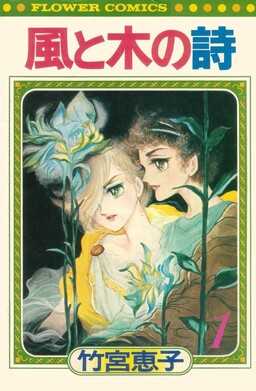
Kaze to Ki no Uta
Yu's review of Kaze to Ki no Uta — set in a 19th century French boarding school, the relationship between Serge, a half-Japanese student with a traumatic past, and Gilbert, a beautiful and sexually promiscuous boy whose behavior conceals something devastating; the manga that essentially created the Boys' Love genre, published between 1976 and 1984.

Romance / Drama
Stepping on Roses
Yu's review of Stepping on Roses — set in Meiji-era Japan, Sumi is a poor girl burdened with her brother's debts and siblings to care for; she agrees to marry a wealthy man, Soichiro Ashida, in a loveless contract marriage for the money; the marriage predictably becomes complicated.
Romance / Historical
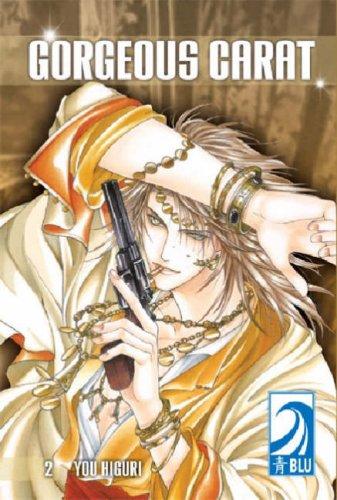
Gorgeous Carat
A review of Gorgeous Carat, the historical BL manga set in Belle Époque Paris about a noble's son sold to pay debts who ends up partnered with a dashing thief.

Romance / Music
Given
A review of Given, the BL music manga about a guitarist who falls for a beautiful boy with an extraordinary voice and a devastating past.
Romance / Historical
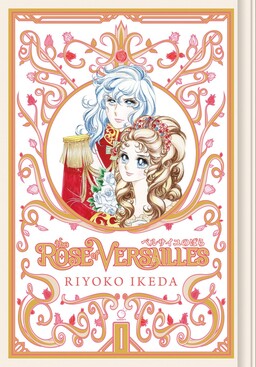
The Rose of Versailles
Yu's review of The Rose of Versailles — Oscar François de Jarjayes is raised by her father as a son and commander of the royal guard; she navigates the court of Louis XVI and Marie Antoinette, torn between duty to the aristocracy and growing awareness of what the common people suffer; as the French Revolution approaches, the world she has served is ending.
Romance / Slice of Life
Happy-Go-Lucky Days
A review of Happy-Go-Lucky Days by Wandering Son's Takako Shimura — a collection of short BL stories about love found in everyday moments.
Written by
Yu
Manga Enthusiast from Japan
I grew up in Japan and manga literally saved me during a tough time in elementary school. My English isn't perfect, but my love for manga is real — and I want to share it with you.
Disclosure: This post contains affiliate links. As an Amazon Associate, I earn from qualifying purchases at no extra cost to you.