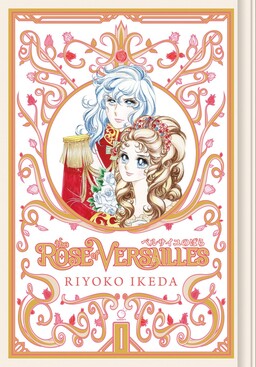
The Rose of Versailles Review: A Woman Raised as a Man Guards the Queen of France — as the Revolution Approaches
by Ryoko Ikeda
Read the first volume. If it doesn't hook you, put it down. It'll hook you.
Buy The Rose of Versailles on Amazon →*Affiliate link — I earn a small commission at no extra cost to you.
Quick Take
- One of the foundational works of shojo manga — the text that established many conventions the genre still uses, and which remains among the most emotionally complete manga ever published
- Oscar is one of manga's greatest characters: defined by duty, intelligence, and the question of what she is when the system she serves no longer deserves service
- 5 volumes complete; essential reading for anyone who wants to understand manga history and among the best historical fiction in the medium
Who Is This Manga For?
- Readers who want historical fiction with genuine emotional and political complexity
- Anyone interested in the foundational texts of shojo manga and manga history generally
- Fans of the French Revolution as a historical setting
- Readers who want completed manga with tragic weight and genuine literary ambition
Content Warnings & Age Rating
Age Rating: T (Teen) Content Warnings: The French Revolution's violence — including execution — is depicted; Oscar's position as a woman raised as a man involves genuine gender identity questions that the series handles with care for its era; romantic tragedy; class themes are central to the political content
The historical violence and tragedy are serious. This is emotionally demanding reading.
Yu's Rating
| Category | Score |
|---|---|
| Story Depth | ★★★★★ |
| Art Style | ★★★★★ |
| Character Development | ★★★★★ |
| Accessibility for Non-Japanese Readers | ★★★★☆ |
| Reread Value | ★★★★★ |
Story Overview
General de Jarjayes had no son. He raised his youngest daughter Oscar as one — taught her fencing, military strategy, and the bearing of command. When he presents her to Versailles, she is given command of the royal guard.
Oscar serves Marie Antoinette — the Austrian princess who arrives in France as a girl and will become its most famous queen. Watching Marie Antoinette from proximity, Oscar sees what the queen is: a person caught in a role she did not choose, human beneath the spectacle, making the mistakes of someone who was never allowed to understand the country she would rule.
The French Revolution approaches. Oscar watches the gap between the court's excess and the people's starvation grow. Her position — loyal to the queen, aware of the injustice the monarchy represents — becomes untenable. She must choose a side.
The series follows Oscar across the years from Marie Antoinette's arrival to the Revolution's culmination, interweaving the political history with the specific human cost of living through a moment when the world's order breaks.
Characters
Oscar François de Jarjayes — She is defined by a contradiction the series never resolves: she was raised to serve a system she comes to understand is unjust, and she is too honest to pretend otherwise and too loyal to simply abandon it. This contradiction — her specific nobility and her specific tragedy — is why she remains one of manga's greatest characters.
Marie Antoinette — Ikeda's Marie Antoinette is one of the most compassionate portrayals of the queen in any medium — human, flawed, capable of genuine affection, and trapped in a role that required her to be something she wasn't.
André Grandier — Oscar's childhood companion and the series' romantic thread. His love for Oscar — patient, clear-eyed, accepting of what she is — is one of manga's most affecting depictions of devotion.
Art Style
Ikeda's art established the visual language of elegant shojo — flowing lines, detailed period costuming, expressive faces that carry historical drama. The Versailles court is rendered with genuine visual grandeur. The period clothing is researched with care. Across five decades, the art has not aged out of its power.
Cultural Context
The Rose of Versailles (Versailles no Bara) ran in Weekly Margaret from 1972 to 1973 and immediately became a cultural phenomenon in Japan. The Takarazuka Revue — Japan's all-female musical theater — adapted it and has been performing it for fifty years. It established conventions of shojo manga that persist: the bishonen aesthetic, the historically-set tragic romance, the female protagonist defined by intelligence and principle rather than romantic passivity. Understanding Japanese manga history requires knowing this work.
What I Love About It
Oscar during the Revolution — the specific chapters where she has chosen her side and the consequences begin arriving. She is not surprised by what her choice costs. She knew what it would cost. The series is honest that knowing the cost and paying it are different things, and Oscar does both.
What English-Speaking Fans Say
Western readers encountering Rose of Versailles through Udon's English edition describe it as the manga that makes every subsequent shojo manga more legible — the source text for so many things that appeared to come from nowhere. Oscar is cited as among the most complete female protagonists in manga history. The emotional weight of the final volumes is consistently described as affecting even for readers who know the history.
Memorable Scene ⚠️ Spoiler Warning
André's specific declaration — what he says, when he says it, having waited so long — and Oscar's response, which is the response of someone who has finally stopped protecting herself from what she already knew, is among the most emotionally resonant moments in manga.
Reading Order / Where to Start
Volume 1 — Oscar's introduction and Marie Antoinette's arrival at Versailles establish the historical setting and the characters' positions.
Official English Translation Status
Udon Entertainment published the complete English edition. All volumes available.
Pros & Cons
Pros
- One of the foundational texts of manga history
- Oscar is among manga's greatest characters
- The historical setting is rendered with care and genuine research
- Emotionally complete and affecting after five decades
Cons
- Some period attitudes in the art and storytelling reflect the early 1970s
- The historical tragedy means this is not comfortable reading
- Knowledge of French Revolutionary history enriches but is not required
Format Comparison
| Format | Notes |
|---|---|
| Individual Volumes | Udon Entertainment; 5 volumes |
| Digital | Available |
Where to Buy
Read the first volume. If it doesn't hook you, put it down. It'll hook you.
This post contains affiliate links. If you purchase through these links, I may earn a small commission at no extra cost to you. As an Amazon Associate, I earn from qualifying purchases.
*Affiliate link — I earn a small commission at no extra cost to you.
More Manga You Might Like
Romance
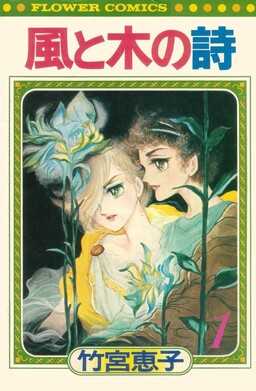
Kaze to Ki no Uta
Yu's review of Kaze to Ki no Uta — set in a 19th century French boarding school, the relationship between Serge, a half-Japanese student with a traumatic past, and Gilbert, a beautiful and sexually promiscuous boy whose behavior conceals something devastating; the manga that essentially created the Boys' Love genre, published between 1976 and 1984.
Romance / Historical
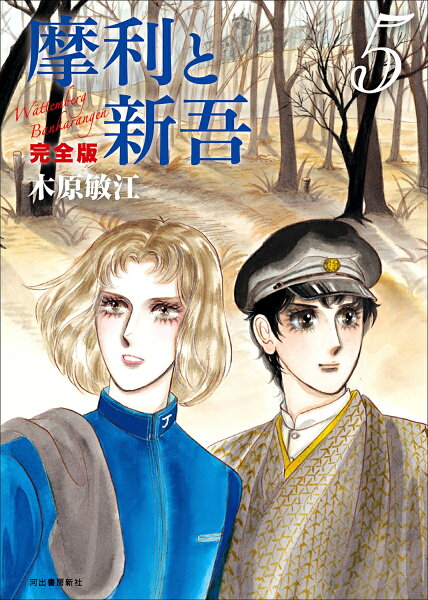
Mari to Shingo
Mari to Shingo follows two young men at an elite Taisho-era Japanese school — the aristocratic Mari and the street-smart Shingo — whose complicated bond defines the series and refuses to be categorized by the vocabulary available to either character.
Romance / Drama
Short Program
Short Program collects Mitsuru Adachi's short story manga — brief, precise studies of the moment when two people almost connect, or do connect, or miss each other by a margin that changes everything.

Romance / Drama
Your Lie in April
Yu's review of Your Lie in April — a piano prodigy who lost his ability to hear his own music after his mother's death meets a violinist who plays like she is throwing everything she has at the sky.
Romance / Comedy
Urusei Yatsura
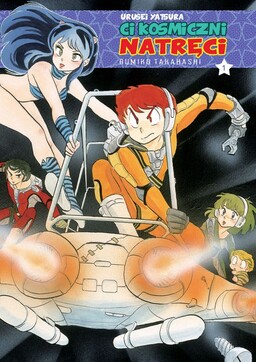
Yu's review of Urusei Yatsura — Earth is invaded by aliens; a random lottery selects Ataru Moroboshi to compete against the alien princess Lum in a game of tag; he wins by grabbing her horns; his victory declaration is mistaken for a marriage proposal; Lum moves into his house; Ataru continues to chase every other girl he sees while Lum insists on being his wife.
Romance / Comedy
Toradora!
Yu's review of Toradora! — a delinquent-looking boy and a tiny, terrifying girl make a deal to help each other confess to the other's best friend, and discover they had the wrong target all along.
Written by
Yu
Manga Enthusiast from Japan
I grew up in Japan and manga literally saved me during a tough time in elementary school. My English isn't perfect, but my love for manga is real — and I want to share it with you.
Disclosure: This post contains affiliate links. As an Amazon Associate, I earn from qualifying purchases at no extra cost to you.