Angel Sanctuary Review: A Boy Who Is the Reincarnation of a Fallen Angel Loves His Sister and Triggers Heaven's War
by Kaori Yuki
Read the first volume. If it doesn't hook you, put it down. It'll hook you.
Buy Angel Sanctuary on Amazon →*Affiliate link — I earn a small commission at no extra cost to you.
Kaori Yuki's longest and most ambitious manga is a 20-volume work about a boy who loves his sister, is the reincarnation of the most powerful rebel angel, and has to fight his way through a war in Heaven to reach a conclusion. It means every word of that. Nothing is softened.
That commitment is both why Angel Sanctuary remains remarkable and why it requires specific reader preparation.
Quick Take
- Kaori Yuki's most ambitious work — a constructed Heaven-Hell mythology of genuine complexity, with the gothic aesthetics deployed by an artist at her absolute peak
- The series fully commits to its premises; the content warnings are not decorative
- Rated M (Mature); 20 volumes complete in English, published by VIZ Media
Who Is This Manga For?
- Readers who want gothic fantasy with genuinely ambitious mythological construction
- Fans of Kaori Yuki's aesthetic from God Child or Cain Saga who want her most complete work
- Readers who can engage with very dark content handled with genuine artistic seriousness
- Anyone drawn to transgressive romance in a cosmological fantasy context
Content Warnings & Age Rating
Age Rating: M (Mature) Content Warnings: The central relationship is between siblings — this is the premise, not a peripheral element; extreme violence and significant character death throughout; heavily modified Christian mythology used as fantasy framework; mature romantic and sexual content; dark themes are consistent throughout all 20 volumes
M rating. All content warnings should be taken seriously. The series means what it says.
Yu's Rating
| Category | Score |
|---|---|
| Story Depth | ★★★★☆ |
| Art Style | ★★★★★ |
| Character Development | ★★★★☆ |
| Accessibility for Non-Japanese Readers | ★★★☆☆ |
| Reread Value | ★★★★☆ |
Story Overview
Setsuna Mudou is sixteen, frequently in fights, and in love with his sister Sara in a way he knows is wrong and cannot stop feeling. His life was already complicated before his angel nature emerged.
Alexiel was Heaven's most powerful angel — an Organic Angel who witnessed the slaughter of demons she cared about and led a rebellion against God. She was sealed as punishment: her soul endlessly reincarnated into broken human lives, each life suffering. Setsuna is her current vessel.
When his angel nature begins to emerge, Setsuna is drawn into the conflict between Heaven's ruling forces — who want Alexiel's soul destroyed — and the rebel angels who want her, him, to lead them again. The war involves the full cosmology Yuki has constructed: Heaven's internal politics, the demon ruler Lucifer's history with Alexiel, and the Tower of Etenamenki where the story's climactic sequence occurs.
Sara's safety and the possibility of being with her is Setsuna's reason to survive the celestial conflict. Whatever the cosmological scale of the war, his motivation stays human and specific. The series holds that tension — cosmic ambition and intimate personal stakes — across 20 volumes without losing either.
The ending is a resolution rather than a tragedy: Setsuna and Sara are reunited after a complex sequence involving time, reincarnation, and the deconstruction of Heaven's authority.
Characters
Setsuna Mudou — A protagonist whose most consistent character note is refusal. He refuses to be the heroic reincarnation of Alexiel. He refuses to fight for Heaven's politics. He insists on being himself — a specific, human person with specific human feelings — even when the cosmological machinery around him demands something more archetypal.
Alexiel — The fallen angel whose past gives the series its mythology and whose relationship with Lucifer grounds the cosmological stakes. The interplay between Setsuna and his own soul's history is the series' most interesting philosophical element.
Rosiel — Alexiel's twin, the Inorganic Angel, whose obsessive relationship with his sealed sister drives much of Heaven's internal politics. His arc is one of the series' most intense character studies.
Kira — Setsuna's friend whose own nature and relationship to the conflict has layers the series reveals carefully across many volumes. His role becomes clearer as the mythology unfolds.
Sara — Setsuna's sister and his motivation. The series depicts her as a person with her own desires and agency, not simply as an object of his feeling. Her own arc involves the discovery that she is the reincarnation of the angel Jibriel.
Art Style
Angel Sanctuary represents Kaori Yuki's visual peak — detailed character designs with gothic elaborateness, wing imagery used with genuine mastery, battle sequences with real scale and emotional weight. The angel and demon character designs are extraordinary. This is manga art from someone who loves what she is drawing and has the technical skill to make love visible on the page.
The 20-volume run maintains consistent visual quality. Yuki's work in this series is the standard against which other gothic fantasy manga art is measured.
Cultural Context
Angel Sanctuary ran in Hana to Yume from 1994 to 2000 — one of the longest-running serializations in that magazine. Yuki's use of Christian mythology is more elaborate than the usual manga borrowing of angelic imagery: she constructs a cosmology with its own internal rules about what angels are, what Heaven's structure means, and why the rebellion happened. The transgressive elements — the incest, the rebellion against divine authority — are thematically consistent rather than decorative.
What I Love About It
The scale of the mythology and the intimacy of the central motivation held together simultaneously. Setsuna is inside a war between Heaven and Hell. His reason for being there is one specific person. The series maintains both the cosmological scope and the human specificity across 20 volumes — which is the structural achievement that most ambitious fantasy manga fail to manage. When the mythology expands, Setsuna remains specific. When the series focuses on personal stakes, the mythology doesn't disappear.
Memorable Scene ⚠️ Spoiler Warning
The sequence at the Tower of Etenamenki — described in the mythology as the place where God rests, and where the story's climactic confrontation with Heaven's authority occurs — is the series' most complete use of its cosmological ambition. What is revealed about the nature of Heaven's authority and what it means for the rebellion Alexiel led changes the mythology's meaning retroactively. The darkness of the revelation is earned by 15+ volumes of careful setup.
Similar Manga
| Title | Its Approach | How Angel Sanctuary Differs |
|---|---|---|
| God Child / Cain Saga | Kaori Yuki, gothic romance in different setting | God Child is shorter and more accessible; Angel Sanctuary is her largest vision |
| Tokyo Babylon / X/1999 | CLAMP, gothic supernatural with ambitious scale | Both are excellent; X/1999 is unfinished; Angel Sanctuary is complete |
| Descendants of Darkness | Gothic supernatural with angel mythology | More accessible; Angel Sanctuary has more mythological density |
Reading Order / Where to Start
Volume 1 — Setsuna's situation and the emergence of his angel nature are established immediately. No prior Kaori Yuki knowledge needed.
Official English Translation Status
VIZ Media has published the complete 20-volume English series. All volumes available.
Pros & Cons
Pros
- Kaori Yuki's art at its peak — visually exceptional throughout
- Angel mythology constructed with genuine ambition and internal consistency
- Complete in 20 volumes with real resolution
- Setsuna's human motivation grounds the cosmic scale
Cons
- M rating content is consistent and real — the warnings are not exaggerations
- Dense constructed mythology requires reader engagement
- Some volumes prioritize lore over character momentum
- The incest premise is not peripheral — it is the foundation
Is Angel Sanctuary Worth Reading?
For readers who can engage with its M-rated content seriously and want gothic fantasy with real cosmological ambition: yes. It is one of the most complete visions in gothic manga. For readers who cannot engage with the incest premise: this is not a series where it can be set aside.
Where to Buy
Read the first volume. If it doesn't hook you, put it down. It'll hook you.
This post contains affiliate links. If you purchase through these links, I may earn a small commission at no extra cost to you. As an Amazon Associate, I earn from qualifying purchases.
*Affiliate link — I earn a small commission at no extra cost to you.
More Manga You Might Like
Fantasy / Romance
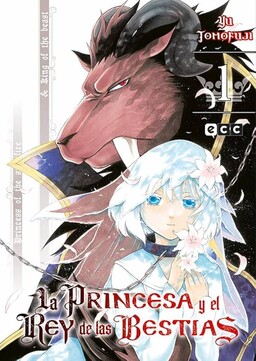
Sacrificial Princess and the King of Beasts
Yu's review of Sacrificial Princess and the King of Beasts — Sariphi is a human girl offered as a sacrifice to the Beast King Leonhart, who is expected to devour her; instead of pleading for her life, she asks to spend the remaining time as his companion; Leonhart, bewildered by her response, agrees.
Fantasy / Romance
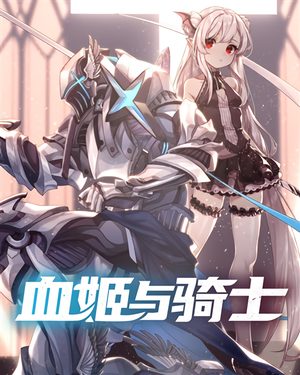
Vampire Knight
Yu's review of Vampire Knight — Cross Academy has a Day Class of humans and a Night Class of vampires; Yuki Cross, who guards the secret, was rescued from a vampire attack as a child by Kaname Kuran, a pureblood who she has idolized since.
Fantasy / Romance
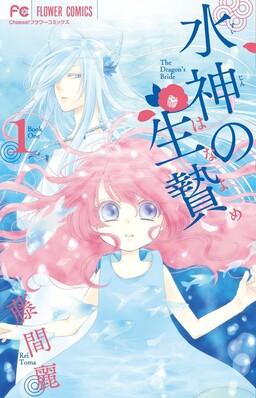
The Water Dragon's Bride
Yu's review of The Water Dragon's Bride — Asahi falls into a well as a child and emerges in an ancient world where a water god takes her as his bride offering; the god is powerful and cold, viewing her as a necessary sacrifice; what develops across years of her life in this world is the series' central transformation.
Fantasy / Romance
Fushigi Yugi: Genbu Kaiden
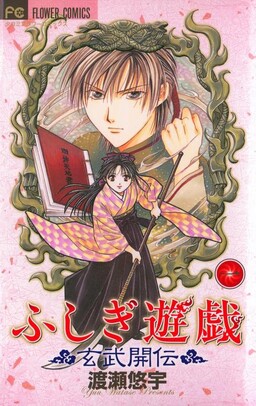
Yu's review of Fushigi Yugi: Genbu Kaiden — Takiko Okuda is pulled into The Universe of the Four Gods, the same book that later claimed Miaka in the original series; she becomes the Priestess of Genbu, must gather seven Celestial Warriors, and fulfill her wish — knowing from the book's frame story that this story ends in tragedy.
Fantasy / Romance
Tales of Wedding Rings
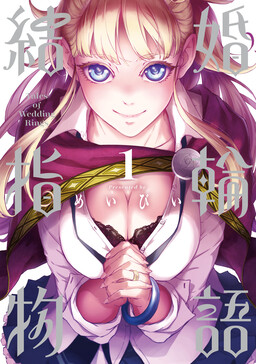
Yu's review of Tales of Wedding Rings — Satou's childhood friend Hime disappears into another world to marry a prince; he follows, discovers she is the Ring Princess who must collect Ring Rulers by marrying them, and ends up as the one she marries, beginning a quest to collect four more Ring Rulers who become his additional wives.
Fantasy / Romance
Kakuriyo: Bed & Breakfast for Spirits
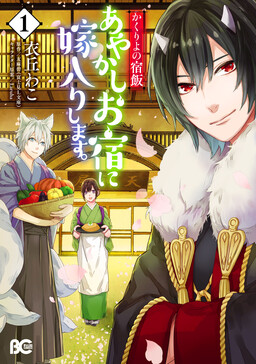
Yu's review of Kakuriyo: Bed & Breakfast for Spirits — Aoi Tsubaki, who can see spirits, discovers her late grandfather left a debt to Ōdanna, master of a spirit inn in the hidden realm; Ōdanna intends for Aoi to marry him to settle the debt; Aoi refuses and instead offers to work off the debt by cooking at the inn.
Written by
Yu
Manga Enthusiast from Japan
I grew up in Japan and manga literally saved me during a tough time in elementary school. My English isn't perfect, but my love for manga is real — and I want to share it with you.
Disclosure: This post contains affiliate links. As an Amazon Associate, I earn from qualifying purchases at no extra cost to you.