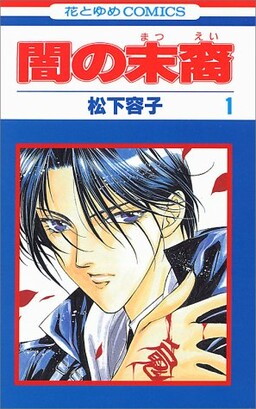
Descendants of Darkness Review: A Death God Who Wants to Stop Existing
by Yoko Matsushita
Read the first volume. If it doesn't hook you, put it down. It'll hook you.
Buy Descendants of Darkness on Amazon →*Affiliate link — I earn a small commission at no extra cost to you.
I read this one in a stretch of years when I did not like myself very much. I was an adult by then, but the kid who ate lunch alone was still living somewhere inside me, and most days I just wanted to be smaller, quieter, gone. Then I met Tsuzuki Asato — a grinning shinigami who eats too many sweets and tells everyone he is fine — and somewhere around the Kyoto arc I realized this cheerful man wanted to stop existing too. I did not expect a gothic horror manga about death gods to look at me that directly. It did. I have never quite forgiven it for that, and I have never stopped being grateful.
Quick Take
- Gothic supernatural mystery from Hana to Yume, where the case-of-the-week horror is really a delivery system for one of manga's saddest protagonists.
- Dr. Kazutaka Muraki is the antagonist who makes the whole thing unsafe: elegant, smiling, and personally obsessed with both leads in ways the story never lets you relax about.
- Rated T (Teen) — disturbing themes (murder, child abuse in backstory, suicidal feeling) handled with atmosphere rather than gore.
Story Overview
Tsuzuki Asato is a Guardian of Death in the Summons Division of the Ministry of Hades (Meifu). He has been doing this job for over seventy years. He cannot age, cannot eat himself sick, and as the series quietly reveals, cannot die in any way that sticks. The early volumes work as supernatural casework: in the Nagasaki "vampire" murders, victims turn up drained of blood, and Tsuzuki is paired with a new partner — Hisoka Kurosaki, a cold sixteen-year-old empath who reads emotions he never asked to feel. That case is also where they first meet Dr. Kazutaka Muraki, a beautiful, soft-spoken physician who turns out to be the rot at the center of everything.
The turning point is learning what Hisoka actually is: not a partner who happens to be young, but a boy Muraki murdered. As a child Hisoka witnessed Muraki kill someone, and was cursed for it — red marks bloom across his body whenever Muraki is near — a curse that took three years to finish killing him. The episodic arcs (the cursed Devil's Trill violin, the life-stealing Queen Camellia cruise, the genetics lab horror) keep circling back to the same gravity: Muraki, and the past Tsuzuki will not talk about.
It all comes to a head in the Kyoto arc, the series' emotional climax, where Muraki lures Tsuzuki home to confront who and what he really is. The manga went on hiatus in Japan in 2003 (volume 13 territory) and never reached a tidy conclusion — but Kyoto is where the story pays off everything it has been hiding.
Characters
Tsuzuki Asato — Born in 1900, dead at 26, a shinigami ever since, and the only one who can command twelve shikigami. The smile is the performance. Underneath is a man who hates his own existence, who suspects he is not entirely human, and who has been carrying that for seventy years while pretending to be the comic relief. His arc is the slow, agonizing exposure of that gap.
Hisoka Kurosaki — The empath partner whose coldness is armor. He can feel everyone's emotions, including the ones aimed at him, and Muraki's curse killing him over three years left him with very little reason to trust warmth. His arc is learning to stand next to Tsuzuki — and eventually to reach for him.
Kazutaka Muraki — The doctor. Charming, brilliant, a mechanical eye behind the right lens, a brother named Saki he wants to resurrect just to murder properly. He killed Hisoka, and he wants Tsuzuki's body "carnally and scientifically." He calls himself a Descendant of Darkness, like Tsuzuki. He is the rare villain whose politeness makes him scarier.
Yutaka Watari — The Ministry's blond scientist, forever trying to invent a sex-change potion, owner of an owl named 003. He's the comic exhale between the heavy beats, but he's also the one who keeps quietly digging into Muraki's movements when the others are too close to see straight.
What I Love About It
The thing I love is how long Matsushita hides Tsuzuki's real face, and how she finally shows it. For most of the series his cheerfulness reads as simple shonen-style brightness — he whines for cake, he flails, he is everyone's favorite goofball. And then you start noticing the cracks: he survived eight years without food, water, or sleep; wounds that should kill him do not; he was apparently a murder suspect before he died. The brightness was never personality. It was a man keeping a lid on something he is terrified of.
What got me is that the manga never has Tsuzuki announce this. There is no monologue where he explains his pain neatly. Instead it leaks out, scene by scene, until you understand that the cheerful death god has been quietly wishing he could stop existing for decades — and that Muraki figured this out long before Hisoka did, which is exactly why Muraki is so dangerous to him. As someone who spent a long time smiling so people would not ask questions, I felt seen by a comedy character in a horror manga, which is not a thing I went in expecting. That is the trick of the whole series: the horror is not the vampires or the cursed violins. The horror is how easy it is to want to disappear, and how good a person can get at hiding it.
Memorable Scene ⚠️ Spoiler Warning
The end of the Kyoto arc. Muraki has dragged Tsuzuki all the way back to the source of his self-loathing, and Tsuzuki finally stops running from it — by deciding to end himself. In the burning Shion University laboratory, he summons Touda, the most destructive of his twelve shikigami, and turns the flames on himself and Muraki both. He wants it over. He wants to take the monster with him and disappear in the same fire.
The page is pure inferno — black flame, the building coming down, everything dissolving into heat and noise — and in the middle of it Hisoka throws his arms around Tsuzuki and refuses to let go. They are both crying. Hisoka, the boy who could never bear to feel anyone, is the one who reaches into the fire to pull Tsuzuki back, telling him he is not allowed to vanish, that someone wants him to stay. Tsuzuki, after seventy years, finally lets himself be held instead of being the one holding everything together. (Muraki, of course, survives — that man always does.) I have read a lot of dramatic climaxes. Very few of them are about a suicidal person being talked out of the fire by the one friend who needs them alive. That image — two people sobbing inside a collapsing building because one of them chose to live — has stayed with me for years.
Pros & Cons
Pros
- Tsuzuki is one of the most quietly devastating protagonists in supernatural manga.
- Muraki is a genuinely unsettling, personal antagonist instead of a generic monster.
- Matsushita's gothic Hana to Yume art gives every case real atmosphere.
- The Kyoto arc delivers an emotional payoff most monster-of-the-week series never earn.
Cons
- It went on hiatus and never got a real ending — the English run stops at volume 11.
- Some early cases are noticeably weaker than the back half.
- It leans hard on dark themes (suicide, abuse, predatory obsession) wrapped in shojo gloss and BL subtext — that combination won't sit right with everyone, and that's okay.
Is Descendants of Darkness Worth Reading?
Yes — if you understand what you're getting. On the surface it's a gothic shinigami case-file series; underneath it's a character study about a man who wants to stop existing and the boy who won't let him. The lack of a true ending stings, but the Kyoto arc alone is worth the read. If you want supernatural horror that's actually about grief and self-worth, this one cuts deep.
Content Warnings & Age Rating
Age Rating: T (Teen) Content Warnings: Murder and death investigation, suicidal feelings and a self-immolation attempt, child abuse and cursed-death backstory (Hisoka), a predatory antagonist who is sexually fixated on the leads, BL subtext.
Nothing is graphically depicted, but the emotional content is heavier than the T rating might suggest.
Similar Manga
| Title | Its Approach | How Descendants of Darkness Differs |
|---|---|---|
| Natsume's Book of Friends | Gentle supernatural casework about loneliness and connection | Darker, with a true human villain and a suicidal lead instead of a healing tone |
| Black Butler | Gothic style, a death-adjacent protagonist, ongoing intrigue | Less plot machinery, more interior pain; the horror is psychological |
| Mushishi | Episodic supernatural mysteries with a melancholy wanderer | Builds a continuous personal antagonist and a single character's spiral, not pure vignettes |
Where to Buy
Read the first volume. If it doesn't hook you, put it down. It'll hook you.
This post contains affiliate links. If you purchase through these links, I may earn a small commission at no extra cost to you. As an Amazon Associate, I earn from qualifying purchases.
*Affiliate link — I earn a small commission at no extra cost to you.
Reading Guides
More Manga You Might Like
Horror / Mystery
Godchild
Yu's review of Godchild — Cain Hargreaves, the young Earl of Hargreaves, possesses knowledge of poisons and an aristocratic curse that draws murder and tragedy to him; set in Victorian England, he and his devoted manservant Riff investigate dark cases while the shadow of his sinister father looms over everything.
Horror / Mystery
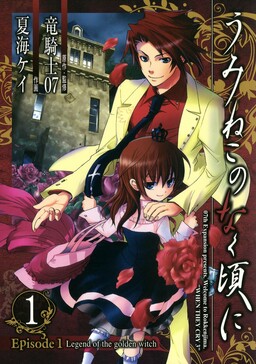
Umineko: When They Cry
On the private island of Rokkenjima in 1986, the Ushiromiya family gathers for an annual meeting. A typhoon traps them. The murders begin. Then they repeat. A golden witch named Beatrice claims responsibility — and the manga spends 53 volumes across 8 Episodes arguing about whether magic exists. Adapted from Ryukishi07's visual novel.
Horror / Mystery
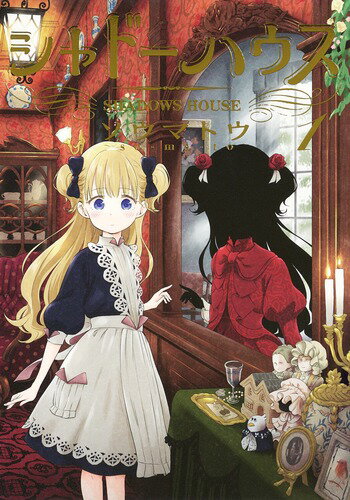
Shadows' House
Yu's review of Shadows' House — Kate is a shadow noble whose face is obscured by soot; Emilico is her 'Living Doll' — a human servant who functions as Kate's face and emotional expression; together they navigate the mysterious house and begin to understand what it truly is.
Horror / Psychological
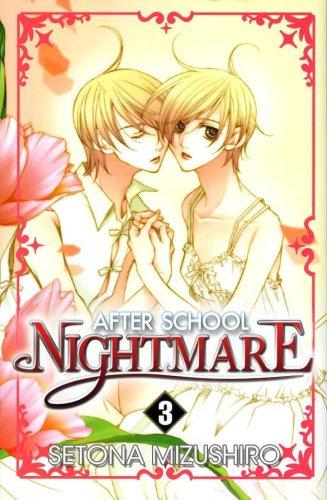
After School Nightmare
Yu's review of After School Nightmare — a psychological horror manga where students enter a shared nightmare to graduate, and the monsters they fight are made of their own deepest secrets. Mashiro Ichijo, raised as a boy but physically both, is forced to confront what he actually is.

Horror / Mystery
Another
Yu's review of Another — a horror mystery adapted from Yukito Ayatsuji's novel, about a transfer student who joins a class haunted by a decades-old curse: every year an extra person who is secretly already dead joins Class 3-3, and people start dying gruesomely.
Horror / Sci-Fi
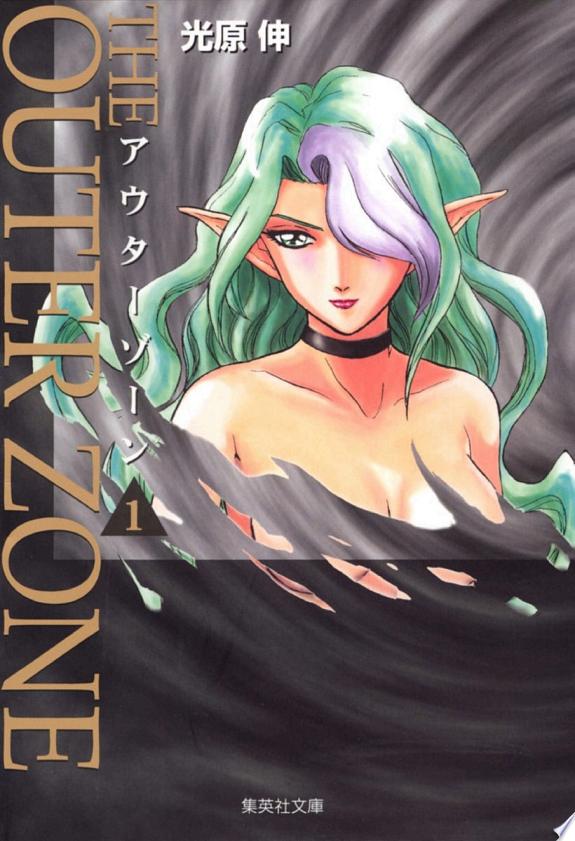
Outer Zone
A review of Outer Zone, the Japanese anthology horror manga hosted by a mysterious woman named Mephisto that collects stories of the uncanny, the twisted, and the terrifying.
Written by
Yu
Manga Enthusiast from Japan
I grew up in Japan and manga literally saved me during a tough time in elementary school. My English isn't perfect, but my love for manga is real — and I want to share it with you.
Disclosure: This post contains affiliate links. As an Amazon Associate, I earn from qualifying purchases at no extra cost to you.