Alichino Review: Beautiful Beings Who Grant Wishes at the Cost of Your Soul
by Kouyu Shurei
Read the first volume. If it doesn't hook you, put it down. It'll hook you.
Buy Alichino on Amazon →*Affiliate link — I earn a small commission at no extra cost to you.
There are manga that exist primarily as art. Alichino is one of them. The story is incomplete — the magazine closed before Kouyu Shurei could finish it — and yet the three collected volumes remain worth reading because the visual logic of what Shurei is doing is extraordinary and complete even when the plot is not.
That is a specific kind of recommendation, and it requires honesty about what you are getting.
Quick Take
- Beautifully drawn gothic fantasy with an exceptional aesthetic — Shurei's art is immediately striking and the Faustian soul-exchange concept has dark elegance
- The story is unfinished: the magazine ceased publication in 2001 before the narrative concluded
- Rated T (Teen); 3 volumes complete in English — all published material available, but not all the story
Who Is This Manga For?
- Readers who want gothic fantasy with exceptional art as the primary experience
- Anyone interested in the soul-exchange wish-granting concept in manga form
- Fans of beautiful supernatural beings with dark intentions and genuinely complicated relationships
- Readers who can accept an unfinished narrative in exchange for three volumes of extraordinary visual work
Content Warnings & Age Rating
Age Rating: T (Teen) Content Warnings: Soul-exchange concept where wishes are granted at literal soul cost; gothic fantasy violence; dark fantasy themes; the series ends without resolution — this should be disclosed before reading
T rating — dark fantasy content within teen standards.
Yu's Rating
| Category | Score |
|---|---|
| Story Depth | ★★★☆☆ |
| Art Style | ★★★★★ |
| Character Development | ★★★☆☆ |
| Accessibility for Non-Japanese Readers | ★★★★☆ |
| Reread Value | ★★★★☆ |
Story Overview
Alichino are supernatural beings of extraordinary beauty who grant human wishes. The price is the wisher's soul. This is not metaphorical.
Tsugiri is a kusabi — a being who exists to destroy Alichino — with a specific quality that the Alichino find irresistible: an unusually pure soul that makes him, paradoxically, the most attractive target in existence. He is not simply prey. He is the prize. Most Alichino want to consume him; some want to possess him.
His guardian Enju raised him after his village was destroyed, and Enju's kidnapping by a powerful Alichino named Matsulika becomes the event that drives Tsugiri into active conflict with the Alichino world. Ryoko, the figure who rescued Tsugiri as a child, has a history with Matsulika that complicates everything.
Myobi is the exception among Alichino: white-haired, red-eyed, and inexplicably protective of Tsugiri despite her nature as a wish-granter and soul-consumer. What makes Myobi different from other Alichino, and what exactly Myobi's interest in Tsugiri means, was never fully answered before the magazine closed.
The three collected volumes contain everything Shurei completed. The story stops, not ends.
Characters
Tsugiri — A protagonist defined by his specific quality rather than his choices: the pure soul that makes him both powerful and hunted. His response to being the most wanted being in the Alichino world is more curious than afraid, which the series uses for character development rather than simple bravado.
Myobi — An Alichino who protects rather than consumes. The relationship between Myobi and Tsugiri is the series' emotional center, and the fact that it was never completed is the series' greatest loss.
Enju — Tsugiri's selfless guardian, whose kidnapping sets the main conflict in motion. She represents what Tsugiri is protecting when he enters the Alichino world.
Ryoko — The figure who rescued Tsugiri as a child and has a dark history with Matsulika. His role in the larger conflict was unfolding when the magazine ended.
Art Style
Shurei's art is the series' most important quality — and it is exceptional. The Alichino designs are beautiful in the specifically unsettling way the concept requires: beings that are attractive enough that the soul-exchange transaction is tempting even knowing the price. Every page functions as an aesthetic object. This is manga art from someone who draws as much for visual impact as for narrative purpose.
The character designs — particularly Myobi's white hair and red eyes, Tsugiri's silver coloring — are immediately distinctive. The visual grammar of the gothic fantasy world is consistent and internally logical.
Cultural Context
Alichino ran in Monthly Comic magazine from 1998 to 2001, when the publication ceased. The Faustian soul-exchange concept filtered through beautiful supernatural beings is part of a tradition in Japanese fantasy that uses Western Gothic aesthetics with Japanese sensibility. The same Monthly Comic Zero Sum was home to other supernatural manga with visual ambition.
The wish-at-soul-cost mechanic has a specific elegance: it makes the Alichino beings whose beauty is functional. They need to be attractive enough to make the transaction tempting. Shurei's art is the mechanism by which this logic operates.
What I Love About It
The visual logic. The Alichino are drawn as things whose beauty makes sense within the system they inhabit. They are supernatural beings who trade in wishes, so they are beautiful enough to make wishes worth trading. Shurei's character designs are not decorative — they are the argument the series is making.
That the story is unfinished makes this love more melancholy than satisfied. But three volumes of this art is three volumes more than if it had never been published.
Memorable Scene ⚠️ Spoiler Warning
The scenes where an Alichino grants a wish — the specific visual moment of the transaction, the beauty of the being alongside the cost to the wisher — are the series' most complete statements about its own concept. Shurei draws these exchanges with genuine artistry: the wish-granting is depicted as something that looks like grace and is something else entirely. The Alichino's face in these moments is the series' central image.
Similar Manga
| Title | Its Approach | How Alichino Differs |
|---|---|---|
| Angel Sanctuary | Gothic fantasy with similarly ambitious visual work | Angel Sanctuary is complete with 20 volumes; Alichino is unfinished but shorter |
| Pandora Hearts | Gothic fantasy with elaborate visual approach | Pandora Hearts is a mystery with a complete narrative; Alichino is pure aesthetic |
| Tokyo Babylon | Gothic supernatural with exceptional CLAMP art | Tokyo Babylon has a complete narrative; Alichino prioritizes visual over story |
Reading Order / Where to Start
Volume 1 — Tsugiri's situation and his first encounter with Myobi. Know before starting that the story does not conclude.
Official English Translation Status
Tokyopop published all 3 volumes in English. All available material is translated. The series is not complete narratively. Note: Tokyopop is defunct; used copies may be the primary option.
Pros & Cons
Pros
- Shurei's art is immediately exceptional
- Gothic fantasy concept with elegant visual logic
- Each page has real visual impact
- Short investment — 3 volumes
Cons
- The story is unfinished and ends without resolution
- Art is the primary attraction — narrative depth is limited by the truncation
- Character development cut short by the magazine's closure
- Some world-building left permanently unexplored
Is Alichino Worth Reading?
With full awareness that the story doesn't end: yes, for readers who respond primarily to exceptional art and gothic aesthetics. For readers who need narrative completion, this will frustrate.
Where to Buy
Read the first volume. If it doesn't hook you, put it down. It'll hook you.
This post contains affiliate links. If you purchase through these links, I may earn a small commission at no extra cost to you. As an Amazon Associate, I earn from qualifying purchases.
*Affiliate link — I earn a small commission at no extra cost to you.
More Manga You Might Like
Fantasy / Supernatural
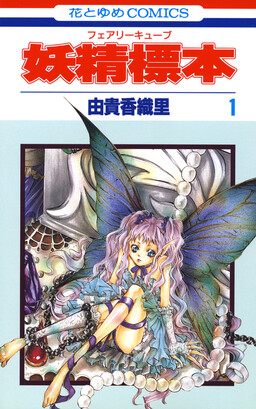
Fairy Cube
Yu's review of Fairy Cube — Ian Hasumi can see fairies; his shadow Tokage also sees them and has his own agenda; when Tokage takes possession of Ian's body, Ian must navigate the fairy world as a spirit while Tokage inhabits his life — including his relationship with Rin, who loves Ian but cannot tell the difference.
Fantasy / Romance
Angel Sanctuary
Yu's review of Angel Sanctuary — Setsuna Mudou is a sixteen-year-old in love with his sister Sara; he is also the reincarnation of Alexiel, the most powerful angel who was sealed for rebelling against God; when his angel nature awakens, he is drawn into the war between Heaven and the rebel angels that his original self began.
Fantasy / Romance
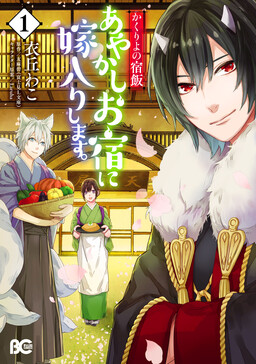
Kakuriyo: Bed & Breakfast for Spirits
Yu's review of Kakuriyo: Bed & Breakfast for Spirits — Aoi Tsubaki, who can see spirits, discovers her late grandfather left a debt to Ōdanna, master of a spirit inn in the hidden realm; Ōdanna intends for Aoi to marry him to settle the debt; Aoi refuses and instead offers to work off the debt by cooking at the inn.
Fantasy / Isekai
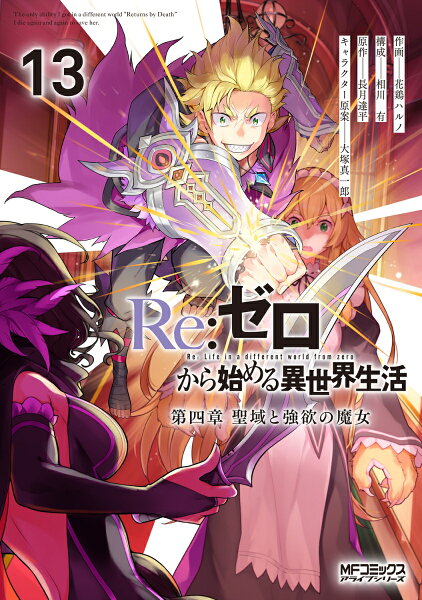
Re:Zero - Starting Life in Another World
Subaru Natsuki is a NEET in Tokyo. He buys snacks at a convenience store and walks out into a fantasy world. He has no special abilities, no useful skills, and no idea where he is. He dies within hours. Then he wakes up at the convenience store. Tappei Nagatsuki's massively popular dark isekai light novel has spawned a long-running manga adaptation across multiple arc-specific series. Yen Press publishes the English manga.
Fantasy / Supernatural
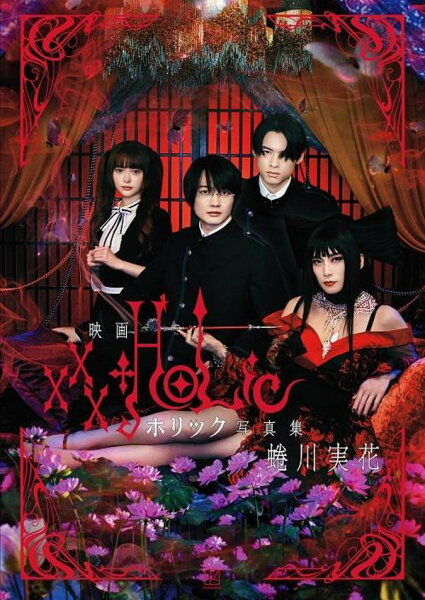
xxxHOLiC
Yu's review of xxxHOLiC — a high school student cursed with the ability to see spirits finds a mysterious shop run by the dimension witch Yūko, who agrees to remove his power in exchange for becoming her shop worker.
Fantasy / Action
X/1999
Yu's review of X/1999 — Kamui Shirô returns to Tokyo after years away, destined to decide the fate of the Earth; two groups of seven — the Dragons of Heaven who would save humanity and the Dragons of Earth who would let the planet destroy it — await his choice; the series is an apocalyptic tragedy where the question is not whether loss will happen but who will carry it.
Written by
Yu
Manga Enthusiast from Japan
I grew up in Japan and manga literally saved me during a tough time in elementary school. My English isn't perfect, but my love for manga is real — and I want to share it with you.
Disclosure: This post contains affiliate links. As an Amazon Associate, I earn from qualifying purchases at no extra cost to you.