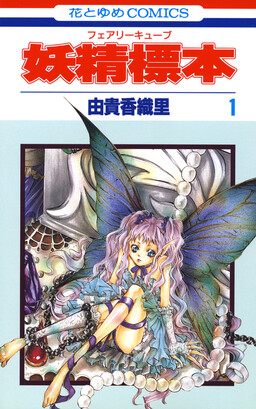
Fairy Cube Review: A Boy Who Can See Fairies Is Possessed by His Own Shadow
by Kaori Yuki
Read the first volume. If it doesn't hook you, put it down. It'll hook you.
Buy Fairy Cube on Amazon →*Affiliate link — I earn a small commission at no extra cost to you.
Quick Take
- Kaori Yuki's fairy mythology with the dark aesthetic that defines her work — possession, fractured identity, and fairy world horror compressed into 3 volumes
- The shadow-possessing-the-body concept creates immediate horror stakes within a fantasy frame
- 3 volumes complete; dense dark fantasy from the creator of Angel Sanctuary
Who Is This Manga For?
- Readers who want fairy mythology manga with genuine darkness rather than whimsy
- Anyone interested in Kaori Yuki's art outside her longer works
- Fans of possession and identity horror in fantasy settings
- Readers looking for very short complete dark fantasy
Content Warnings & Age Rating
Age Rating: T (Teen) Content Warnings: Supernatural possession; fairy world violence; dark themes including identity and body; some body horror elements
T rating — dark fantasy content within teen standards.
Yu's Rating
| Category | Score |
|---|---|
| Story Depth | ★★★☆☆ |
| Art Style | ★★★★★ |
| Character Development | ★★★☆☆ |
| Accessibility for Non-Japanese Readers | ★★★★☆ |
| Reread Value | ★★★☆☆ |
Story Overview
Ian Hasumi has always been able to see fairies — small supernatural beings invisible to normal people. His shadow Tokage can see them too, and Tokage has different ideas about what to do with that ability.
When Tokage takes possession of Ian's body, Ian finds himself inhabiting the space between — present in the world but unable to claim his own life. Tokage moves through Ian's relationships, including with Rin, who loves Ian but cannot detect the difference between him and his shadow.
The series runs through the fairy world's darker mechanics — the politics and violence of beings older than human civilization — while Ian attempts to reclaim his body and understand what Tokage actually is. The three-volume structure means the story moves quickly with minimal digression.
Characters
Ian Hasumi — A protagonist whose primary struggle is existence — asserting that he is the real Ian against a shadow that wears his face.
Tokage — The shadow-antagonist whose motivations are not simply evil; the series develops why Tokage exists and what he wants beyond possession.
Rin — A female lead whose love for Ian is complicated by being unable to tell him from his shadow; she is the relationship the possession stakes.
Art Style
Kaori Yuki's art is the series' most important quality — the same elaborate gothic fantasy detail visible in Angel Sanctuary applied to a smaller canvas. The fairy designs are beautiful and unsettling simultaneously, the way Yuki's supernatural beings always are. Each page prioritizes visual impact.
Cultural Context
Fairy Cube ran in Sho-Comi in 2005–2006. Yuki draws from Celtic and Western fairy mythology — fairies as ancient, dangerous, and alien rather than the diminutive whimsical beings of popular imagination. This tradition of fairy-as-horror rather than fairy-as-cute is the conceptual foundation.
What I Love About It
The possession horror is personal — it's not about being replaced by a monster, it's about being replaced by something that looks exactly like you and might understand you better than you understand yourself. Tokage is a distorted mirror, and the series uses that.
What English-Speaking Fans Say
Western readers describe Fairy Cube as essential for Kaori Yuki fans — specifically noted for the fairy mythology being genuinely dark, for the three-volume format being dense rather than incomplete, and for Yuki's art being as exceptional as in her longer works. Recommended for dark fantasy fans who know Yuki's aesthetic.
Memorable Scene ⚠️ Spoiler Warning
The revelation of what Tokage is and why he specifically possesses Ian — the moment when the possession becomes meaningful rather than simply threatening — is the series' most complete moment.
Similar Manga
- Angel Sanctuary — Yuki's longer dark gothic fantasy
- Godchild — Victorian gothic with similar aesthetic
- Alichino — Short gothic fantasy with exceptional art
- Ceres, Celestial Legend — Supernatural possession with mythology roots
Reading Order / Where to Start
Volume 1 — Ian's ability, Tokage's existence, and the possession establish the fairy world and the horror premise immediately.
Official English Translation Status
VIZ Media published the complete English series. All 3 volumes available.
Pros & Cons
Pros
- Kaori Yuki's art at full gothic fantasy quality
- Possession concept used with genuine emotional stakes
- Complete in 3 volumes — maximum accessibility
- Dark fairy mythology distinct from typical fairy fantasy
Cons
- 3 volumes limits character development
- Some fairy world mechanics underexplained
- Readers unfamiliar with Yuki's style may find the darkness abrupt
Format Comparison
| Format | Notes |
|---|---|
| Individual Volumes | VIZ Media; complete in 3 volumes |
| Digital | Available |
Where to Buy
Read the first volume. If it doesn't hook you, put it down. It'll hook you.
This post contains affiliate links. If you purchase through these links, I may earn a small commission at no extra cost to you. As an Amazon Associate, I earn from qualifying purchases.
*Affiliate link — I earn a small commission at no extra cost to you.
More Manga You Might Like

Fantasy / Romance
Kakuriyo: Bed & Breakfast for Spirits
Yu's review of Kakuriyo: Bed & Breakfast for Spirits — Aoi Tsubaki, who can see spirits, discovers her late grandfather left a debt to Ōdanna, master of a spirit inn in the hidden realm; Ōdanna intends for Aoi to marry him to settle the debt; Aoi refuses and instead offers to work off the debt by cooking at the inn.

Fantasy / Supernatural
Tokyo Babylon
Yu's review of Tokyo Babylon — Subaru Sumeragi is the 13th head of Japan's most powerful onmyoji clan, sixteen years old and gentle, who uses his spiritual ability to take on cases involving Tokyo's supernatural problems; his twin sister Hokuto accompanies him, as does Seishirou Sakurazuka, who claims to be his friend.
Fantasy / Romance
Sacrificial Princess and the King of Beasts
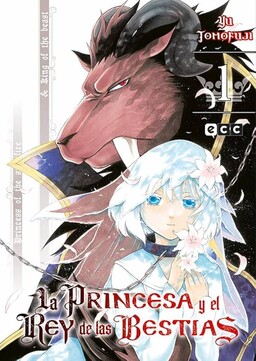
Yu's review of Sacrificial Princess and the King of Beasts — Sariphi is a human girl offered as a sacrifice to the Beast King Leonhart, who is expected to devour her; instead of pleading for her life, she asks to spend the remaining time as his companion; Leonhart, bewildered by her response, agrees.

Fantasy / Romance
The Water Dragon's Bride
Yu's review of The Water Dragon's Bride — Asahi falls into a well as a child and emerges in an ancient world where a water god takes her as his bride offering; the god is powerful and cold, viewing her as a necessary sacrifice; what develops across years of her life in this world is the series' central transformation.

Fantasy
Red Data Girl
Yu's review of Red Data Girl — Izumiko Suzuhara has grown up at a mountain shrine; she destroys electronic devices by touch; she's an endangered shrine maiden (yorishiro) for a powerful deity; she enters a school that serves as a hub for supernatural politics; manga adaptation of Noriko Ogiwara's light novel.

Fantasy / Romance
Oh My Goddess!
Yu's review of Oh My Goddess! — Keiichi Morisato misdials a goddess helpline and Belldandy appears in his dorm room; she grants him one wish and he wishes for her to stay with him; she does, and the series follows their life together as other goddesses and demons complicate their quiet romance.
Written by
Yu
Manga Enthusiast from Japan
I grew up in Japan and manga literally saved me during a tough time in elementary school. My English isn't perfect, but my love for manga is real — and I want to share it with you.
Disclosure: This post contains affiliate links. As an Amazon Associate, I earn from qualifying purchases at no extra cost to you.