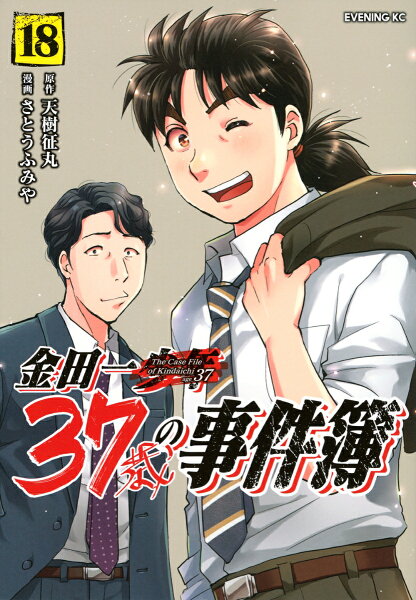
Kindaichi 37-sai no Jikenbo Review: Japan's Greatest Teen Detective, Twenty Years Later
by Seimaru Amagi (story) / Fumiya Sato (art)
Read the first volume. If it doesn't hook you, put it down. It'll hook you.
Buy Kindaichi 37-sai no Jikenbo on Amazon →*Affiliate link — I earn a small commission at no extra cost to you.
Hajime Kindaichi solved his first locked-room murder as a seventeen-year-old high school student. He kept solving murders through school, through graduation, through whatever his twenties looked like off-panel. By the time Kindaichi 37-sai no Jikenbo begins, he is a 37-year-old mid-level office worker with a boring job, a developing gut, and an unbroken record of stumbling into bizarre homicides wherever he goes.
I'm Yu. The premise sounds like a comedy and it isn't. The adult Kindaichi is genuinely different from the teenage one, and the series knows it.
Quick Take
- Seimaru Amagi and Fumiya Sato's Kindaichi 37-sai no Jikenbo (金田一37歳の事件簿) ran in Kodansha's Evening from January 2018, moved to Comic Days in April 2023, and concluded November 27, 2024 — 18 tankōbon volumes.
- No official English translation exists; the series is unlicensed outside Japan.
- Rated T (Teen) — murder mystery, crime, violence within the fair-play detective genre.
Story Overview
The original Kindaichi Case Files established the formula: Hajime Kindaichi, high school student, grandson of legendary detective Kosuke Kindaichi, arrives at a resort or event or scenic location, someone dies in an elaborately impossible way, and Kindaichi solves it. The series ran on this formula for decades and the formula works.
Kindaichi 37-sai does not break the formula. It uses it on a man who has twenty years of solved murders behind him, is visibly aging, works at a job that does not use any of his abilities, and keeps finding himself at the scene of elaborate homicides despite no longer being a teenage prodigy.
The cases maintain the original series' commitment to fair-play mystery — the reader has access to all the information necessary to solve the case before Kindaichi's solution. The locked-room constructions are as intricate as anything in the original run. What is different is the space around the cases: Kindaichi's adult life, his ongoing relationship with Miyuki Nanase (his partner from the original series), his self-awareness about what kind of person he has become, and the series' mild willingness to let a 37-year-old detective feel like a 37-year-old.
Characters
Hajime Kindaichi — Older, heavier, employed at a company that finds no use for his particular intelligence. The series makes something specific of the gap between his abilities and his circumstances — he is not tragic about it, but the incongruity is visible. His detection is exactly what it was at seventeen; the person who does it has changed.
Miyuki Nanase — His longtime partner from the original series. The relationship between them has the specific texture of two people who have known each other through the formative years of their lives and are still figuring out what that means.
The murder victims and suspects — Constructed with the same care as the original series. Each case creates a closed circle of characters with interconnected secrets; the solution emerges from those specific secrets rather than from a generic twist.
What I Love About It
What I love about Kindaichi 37-sai is what the adult setting allows the series to say about Kindaichi's gift.
At seventeen, being brilliant at solving murders was exciting. It was identity. The original series never questioned whether his talent was a good thing to have — it was the premise, and the premise was good. At thirty-seven, the same talent produces a different question: what does it mean to have spent your entire life walking into other people's tragedies and solving them? What does it cost?
The series doesn't answer this heavily. It's a mystery manga, not a psychological study. But it keeps the question present in the background of every case, and the presence of that question gives the adult Kindaichi a depth the teenage one didn't have.
The fair-play mysteries are also genuinely excellent. Amagi and Sato never let the emotional content substitute for the puzzle — the locked rooms are locked, the solutions are elegant, the reader can solve them. The series respects both sides of what it is.
Memorable Scene ⚠️ Spoiler Warning
A case in the middle of the run — I won't name the specific arc — where the victim of a murder turns out to be someone Kindaichi solved a case involving years earlier, during his high school years. The connection forces him to confront the limits of what solving a case actually accomplishes. He stopped the killer. The ripples from the original crime kept moving for two decades.
The scene is handled briefly, in a few pages, in the way that this kind of manga handles things that don't fit neatly into the detective formula. Kindaichi doesn't break down. He keeps working. The moment is given exactly the space it deserves and then the investigation continues.
Pros & Cons
Pros:
- Fair-play mysteries constructed with the same rigor as the original series.
- The adult setting adds genuine new dimensions without replacing what the series was.
- Complete at 18 volumes — a committed but finite read.
- Fumiya Sato's art maintains the series' visual identity across a very long run.
Cons:
- The series rewards prior familiarity with the original Kindaichi Case Files — not required, but the adult context means more if you know the teenage version.
- No English translation; readable only in Japanese without fan translation.
- Some cases feel more procedural than others; the series is uneven mid-run.
Is Kindaichi 37 Worth Reading?
Yes, if you have read the original Kindaichi Case Files and want to see what Amagi and Sato do with an adult protagonist in the same formula. It is a serious, well-constructed mystery manga that earns its emotional weight. Skip if you want to start fresh with the character — read the original series first.
Who Is This Manga For?
- Readers who grew up with the original Kindaichi Case Files and want to see the protagonist again.
- Japanese detective manga fans who want fair-play mysteries with intricate construction.
- Readers interested in how a long-running manga formula handles the aging of its protagonist.
- Detective Conan readers looking for the other major Japanese school detective series and its sequel.
Official English Translation Status
Kindaichi 37-sai no Jikenbo has no official English translation. The series is unlicensed outside Japan as of 2026. (The original Kindaichi Case Files has English editions from Tokyopop; the Returns/R series was published by Kodansha USA.)
Where to Buy
The series is available in Japanese from Kodansha. All 18 volumes are in print.
Browse Kindaichi 37 on Amazon Japan →
This post contains affiliate links. If you purchase through these links, I may earn a small commission at no extra cost to you.
*Affiliate link — I earn a small commission at no extra cost to you.
More Manga You Might Like
Action / Mystery
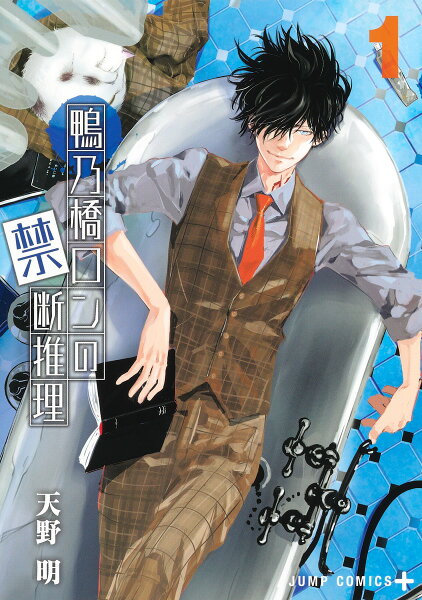
Ron Kamonohashi: Deranged Detective
Ron Kamonohashi is a brilliant detective whose deductions cause murderers to take their own lives. He can only work through Totomaru Isshiki, a young Tokyo detective whose physical intervention stops the deaths Ron's deductions set in motion. Akira Amano (Katekyo Hitman Reborn!) brings her eccentric character energy to mystery manga.
Action / Mystery
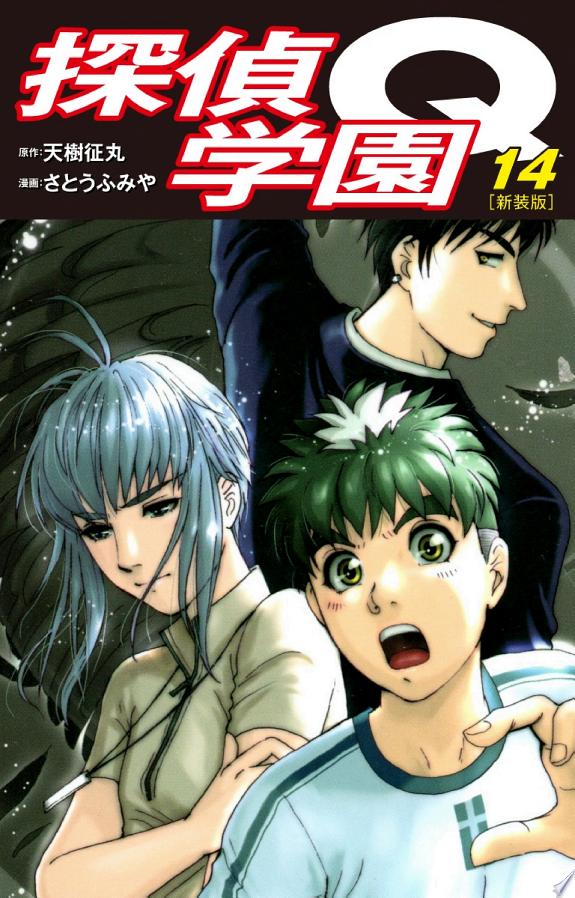
Detective School Q
Detective School Q follows Kyu Renjou, a boy with extraordinary observational instincts, as he enrolls in the legendary Dan Detective School — and alongside four classmates with extraordinary individual skills, works to become the school's first Q Class.
Mystery / Action
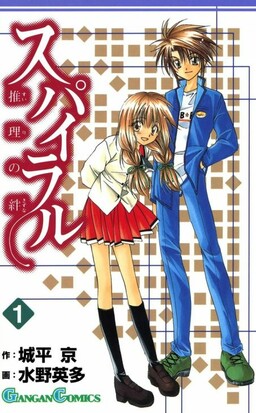
Spiral: Bonds of Reasoning
Yu's review of Spiral: Bonds of Reasoning — Ayumu Narumi's brother Kiyotaka, a genius detective, disappeared two years ago leaving only the words 'Blade Children'; Ayumu, a high school student with exceptional deductive ability, begins encountering the Blade Children — cursed individuals with exceptional abilities — and the mystery his brother left behind.
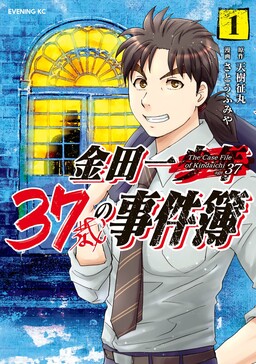
Mystery / Action
The Kindaichi Case Files
Yu's review of The Kindaichi Case Files — Hajime Kindaichi is a lazy underachiever who is also a genius detective when murder presents itself; his grandmother's rival's grandson pursues him; the series follows his investigations through elaborate locked-room mysteries and impossible crime scenarios.
Action / Drama
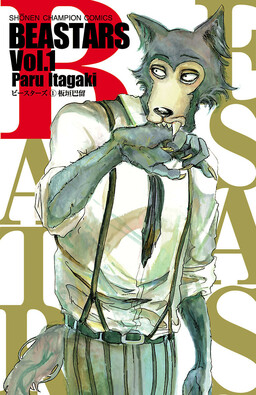
Beastars
Yu's review of Beastars — In a society of anthropomorphic animals where carnivores and herbivores live side by side, Legoshi is a gray wolf who is afraid of what he is. After a classmate is killed and eaten, he is pulled toward Haru, a tiny dwarf rabbit, and has to decide what kind of animal he wants to become.
Mystery / Detective
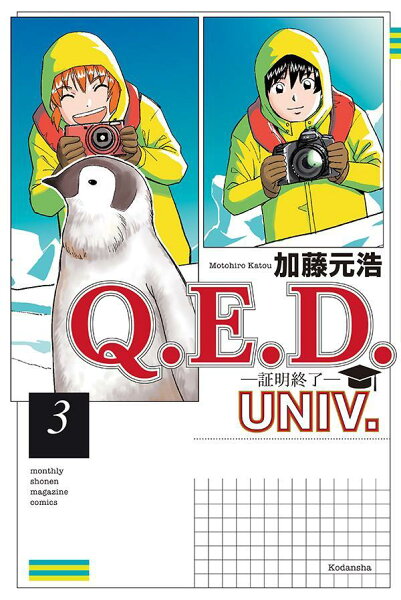
Q.E.D.
Touma Sou graduated from MIT at fifteen and came home to attend a normal Japanese high school. The high school turns out to be full of murders, locked rooms, and impossible crimes. His classmate Kana Mizuhara keeps dragging him into them. Motohiro Katou's 50-volume honkaku mystery manga is one of the most intellectually rigorous in the genre. Only 2 volumes were released in English by Del Rey (2005–2006).
Written by
Yu
Manga Enthusiast from Japan
I grew up in Japan and manga literally saved me during a tough time in elementary school. My English isn't perfect, but my love for manga is real — and I want to share it with you.
Disclosure: This post contains affiliate links. As an Amazon Associate, I earn from qualifying purchases at no extra cost to you.