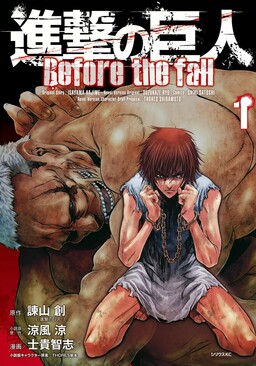
Attack on Titan: Before the Fall Review: The Boy Born From a Titan and the Weapon That Made Fighting Back Possible
by Satoshi Shiki (art), Ryo Suzukaze (original novel), Hajime Isayama (original concept)
Read the first volume. If it doesn't hook you, put it down. It'll hook you.
Buy Attack on Titan: Before the Fall on Amazon →*Affiliate link — I earn a small commission at no extra cost to you.
When I finished the main Attack on Titan, I wasn't ready to leave the walls. I went looking for spinoffs the way you go back to a house you used to live in, just to stand in the rooms again. Most of the side stories felt like leftovers. Then I picked up Before the Fall, and the first volume hit me with an image I genuinely could not shake: two young Survey Corps members standing over a half-digested corpse a Titan had thrown up, realizing the baby inside it is still alive. That's how the hero of this story is born. Not heroically. Out of a monster's stomach.
I grew up feeling like I didn't belong anywhere — the kid nobody sat next to. So a protagonist who is hated from the second he draws breath, called "the Titan's son" by everyone who looks at him, got under my skin fast. This isn't a story about a chosen one. It's about a boy who has to prove he's even human, and a generation of people inventing the one tool that lets humanity stop running. I read all seventeen volumes. Here's why it's the spinoff worth your time.
Quick Take
- A prequel set roughly seventy years before Eren, back when no human had ever killed a Titan and the vertical maneuvering equipment didn't exist yet
- Two threads that braid together: Kuklo's fight to prove he's not a monster, and the bloody, failure-soaked invention of "the Device" that becomes ODM gear
- 17 volumes, complete in English from Kodansha; rated T+ (Older Teen) — body horror, gore, and child abuse, same intensity as the parent series
Story Overview
Decades before Shiganshina falls in the main series, humanity lives behind the walls in total complacency. A Titan-worshipping cult cracks open one of the gates, and a single Titan gets in and devours them. When the rampage ends, two Survey Corps members find a pregnant woman's corpse the Titan vomited up — and her baby, alive inside it. That baby is Kuklo.
He's sold as a curiosity, kept caged, beaten, and displayed as "the Titan's son" by the noble Inocencio family. Their son Xavi abuses him for sport. But the daughter, Sharle, sneaks down to study him, expecting a monster and finding a boy. She teaches him words, history, how the world inside the walls works — and eventually frees him.
From there the story opens outward. Kuklo escapes, gets thrown in with another prisoner named Cardina Baumeister, and the two of them are scooped up by Jorge Pikale — the only man who ever killed a Titan and lived. Jorge takes them to the Industrial City, where Kuklo learns about the fabled Device, a gas-powered grappling weapon that might actually reach a Titan's nape. The series then runs parallel: the older history of how that weapon was born in grief and sacrifice, and Kuklo's drive to master it and shed the name "Titan's son" for good.
Characters
Kuklo — Born from a Titan's stomach, raised as a caged exhibit, marked by a scar across his eye from the abuse. His entire arc is the refusal to be what everyone insists he is. He doesn't even hold a grudge against Xavi, the boy who tortured him — he just wants out, wants beyond the walls, wants to kill the things that made his life a curse. His unusual origin seems to have left him physically stronger and faster than ordinary people, which is exactly what mastering the Device demands.
Sharle Inocencio — The nobleman's daughter who frees Kuklo. She starts as the sheltered girl who descends into the cellar out of curiosity and becomes the person who gives Kuklo language and a sense of self. She walks away from her arranged engagement and her family's wealth, learns the workings of the gear technology herself, and refuses to be a passive love interest waiting in a workshop.
Cardina Baumeister — A noble who was meant to be Sharle's betrothed, introduced as a fellow prisoner during Kuklo's escape. He's the comic-relief charmer who turns into Kuklo's most loyal partner, using his cleverness and machinery know-how to keep them both alive. Notably, he's generous about Kuklo and Sharle's growing feelings rather than jealous.
Angel Aaltonen & Sorum Humé — These two anchor the earlier historical thread: the actual invention of the Device. Angel is the craftsman driven to build a weapon after loss; Sorum is the Survey Corps soldier whose sacrifice proves a Titan can be killed at all. Their story is the foundation everything Kuklo does is standing on.
What I Love About It
The Device. The whole emotional engine of this prequel is that the gear Levi and Mikasa swing through cities with — the thing the main series treats as ordinary furniture — was paid for in blood by people whose names history forgot. Before the Fall shows you the failures, the prototypes that don't work, the soldiers who die testing the idea that a human can reach a Titan's nape. When you go back to the main series afterward, every grapple-hook fires differently. It carries weight now.
What gets me is the framing of an entire era where killing one Titan was considered impossible. In the main series, the Survey Corps loses people constantly but the goal is assumed to be achievable. Here, it isn't. Hope itself has to be invented, and someone has to die to prove it's real before anyone will believe it. That's a sharper, lonelier kind of courage than the main cast ever needs, and the manga sits in that despair long enough to make the breakthrough land. Satoshi Shiki's art, by the way, is at its best in the human-versus-human fights — the prison break and chase scenes have terrific speed lines and dynamic angles — even if some readers find the early Titan encounters less polished than Isayama's.
Memorable Scene ⚠️ Spoiler Warning
The first time a human kills a Titan. In the historical thread, Sorum Humé faces the Titan called Mammon with no real weapon capable of the job. So he improvises the unthinkable: he takes a bomb into his mouth, rolls himself off his horse directly into the Titan's path, says the name "Maria" one last time, and bites down — detonating it and killing them both.
That moment is the seed of everything. It's the proof Angel needs that a Titan can die, the spark that drives him to build a weapon so no one ever has to make that trade again. It reframes the entire franchise: the ODM gear isn't a cool gadget, it's the answer to a man who had to blow himself apart to kill one giant. Every time I think about how casually the main series uses that gear, I think about Sorum with a bomb in his teeth, and the casualness curdles into something heavier.
Pros & Cons
Pros
- The invention of the Device gives the prequel a genuine reason to exist
- Kuklo's "prove I'm human" arc is more personal than the main series' larger-than-life stakes
- Complete at 17 volumes with a clean Kodansha English release
- Reframes the ODM gear so the main series reads differently afterward
Cons
- It rewards readers already attached to the main series — newcomers will feel they're missing context
- The art's Titan work doesn't match Isayama's; the human action is the stronger draw
- Seventeen volumes is a real commitment for spinoff content — that's either a deal-breaker or a feature depending on how much you love this world
Is Attack on Titan: Before the Fall Worth Reading?
Yes — if you loved the main series and want to understand where the gear, the despair, and the first sliver of hope came from. It's the best-justified spinoff in the franchise because it answers a question the main story never bothered to: how did anyone ever believe Titans could be beaten? If you've never read the parent series, start there first; this won't mean much without it.
Similar Manga
| Title | Its Approach | How Before the Fall Differs |
|---|---|---|
| Attack on Titan | The main saga; mystery-box plot at full scale | This zooms in on one boy and the origin of the gear, decades earlier |
| Attack on Titan: No Regrets | Levi's backstory in the Underground | No Regrets is character study; this is a full origin-of-the-weapon epic |
| Vinland Saga | Historical action built on revenge and growth | Shares the grim historical tone but trades Titans for Viking-era realism |
Reading Order / Where to Start
Read the main Attack on Titan first. Before the Fall is most rewarding once you already know the world the Device will eventually save — and what it costs the people inventing it.
Where to Buy
Read the first volume. If it doesn't hook you, put it down. It'll hook you.
This post contains affiliate links. If you purchase through these links, I may earn a small commission at no extra cost to you. As an Amazon Associate, I earn from qualifying purchases.
*Affiliate link — I earn a small commission at no extra cost to you.
More Manga You Might Like
Action
Attack on Titan: No Regrets
A review of Attack on Titan: No Regrets — 2 volumes, the origin story of Levi Ackermann from underground criminal to Survey Corps soldier. Gun Snark story, Hikaru Suruga art. Kodansha USA's English edition is complete.

Action
Attack on Titan: Lost Girls
Yu's review of Attack on Titan: Lost Girls — Ryosuke Fuji's two-volume manga of Hiroshi Seko's spin-off novel. Annie's detective story 'Wall Sina, Goodbye' and Mikasa's alternate-world dream 'Lost in the Cruel World,' two girls lost in different ways.
Fantasy / Action
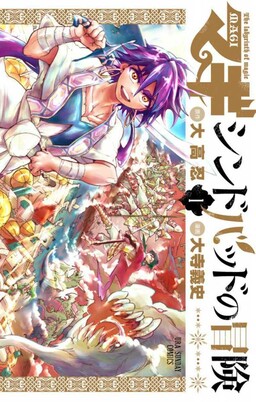
Magi: Adventure of Sinbad
Yu's review of Magi: Adventure of Sinbad — a prequel to the main Magi series following Sinbad at sixteen, before he became King of Sindria; Sinbad is the first person to ever conquer a dungeon, and this story follows how he went from a poor boy in a dying village to the most powerful king in the world.
Action
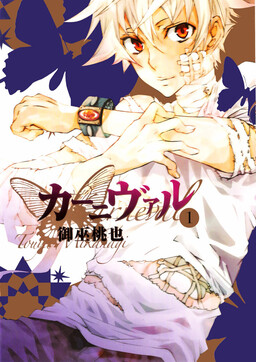
Karneval
Yu's review of Karneval — Nai is searching for someone who left him only a bracelet; Gareki is a thief who gets caught up in Nai's search; together they encounter Circus, the government's elite agency tasked with combating the criminal organization Kafka, and their lives change completely.
Action / Fantasy
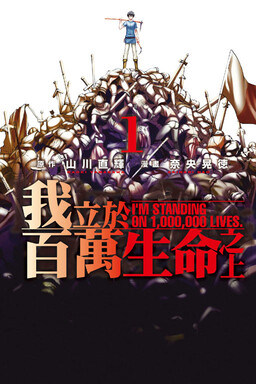
I'm Standing on a Million Lives
Yu's review of I'm Standing on a Million Lives — Yusuke Yotsuya and a group of classmates are transported to a fantasy world by a mysterious Game Master and given quests to complete; failure means death; Yotsuya is an antisocial protagonist who approaches the situation with cold analysis rather than heroism.
Action
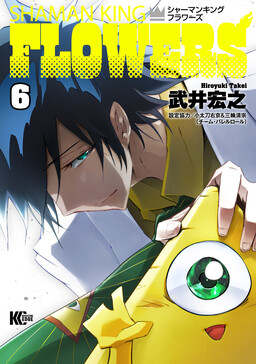
Shaman King: Flowers
Yu's review of Shaman King: Flowers — Hana Asakura, son of Yoh and Anna, is the protagonist of this sequel set in 2020; the shaman world has changed but the fights continue; Hiroyuki Takei's continuation of the Shaman King world through the next generation.
Written by
Yu
Manga Enthusiast from Japan
I grew up in Japan and manga literally saved me during a tough time in elementary school. My English isn't perfect, but my love for manga is real — and I want to share it with you.
Disclosure: This post contains affiliate links. As an Amazon Associate, I earn from qualifying purchases at no extra cost to you.