
Attack on Titan: Lost Girls Review: The Day Annie Spent Looking for a Missing Girl Instead of Catching Eren
by Hiroshi Seko (original novel), Ryosuke Fuji (art), Hajime Isayama (creator)
Read the first volume. If it doesn't hook you, put it down. It'll hook you.
Buy Attack on Titan: Lost Girls on Amazon →*Affiliate link — I earn a small commission at no extra cost to you.
I came to Attack on Titan for the giants eating people. I stayed because of Annie Leonhart. There's a moment in the main series where she gives herself up, crystallizes inside her own Female Titan, and goes to sleep for years rather than say a single word about why she did what she did. That silence haunted me. The series never lets you inside her head, and I think that's deliberate — she's the wall you can't climb.
So when I learned there was a spin-off that spent an entire story following Annie around on an ordinary day — not fighting titans, but solving a missing-persons case — I read it immediately. Lost Girls is a small thing. Two volumes, one detective story, one strange dream. But it gave me one full day inside a head I'd spent the whole main series locked out of, and that turned out to be worth more to me than another battle.
Quick Take
- Two short stories: Annie's grounded detective case "Wall Sina, Goodbye," and Mikasa's surreal alternate-world dream "Lost in the Cruel World"
- Hiroshi Seko wrote the original novel; Ryosuke Fuji draws the manga, keeping Isayama's world recognizable
- Complete at 2 volumes — and rated T+ (Older Teen), assuming you've read the main series, because it spoils it
Who Is This Manga For?
- Attack on Titan readers who specifically want more of Annie and Mikasa as people, not just combatants
- Fans of a quiet detective mystery set inside the walls, with no titans for most of it
- Readers curious what Annie was doing in the days right before the 57th Expedition
- Anyone who likes "what if" alternate-timeline stories told as a fever dream
Content Warnings & Age Rating
Age Rating: T+ (Older Teen) Content Warnings: Titan violence (brief), an illegal-drug trafficking subplot, kidnapping and murder, and heavy spoilers for the main series through the Female Titan arc.
This is not a starting point. Annie's story takes place on the eve of the 57th Expedition, so it assumes you already know who she is and what she's about to do.
Story Overview
Lost Girls collects two unrelated stories, and the smartest thing it does is keep them tonally opposite.
Wall Sina, Goodbye — Annie's Story: It's Annie's day off, the day before the Survey Corps' 57th Expedition Outside the Walls. Her fellow Military Police member Hitch dumps a job on her: find Carly Stratmann, the missing daughter of a wealthy merchant in the Stohess District. Annie, who has exactly one mission burning in her — seize Eren Yeager — takes the case grudgingly and starts walking the city. What she uncovers is uglier than a runaway girl. The trail leads to a tavern, the Pit Lidors, and to the coderoin drug trade. Carly turns out to be the one producing the drug; her own father runs the operation, and a dealer named Kemper, who'd promised to run away with her, betrayed and kidnapped her for ransom instead. The story's turning point is when Annie stops being a detective and becomes an accomplice — she helps Carly slip through into Wall Rose on a forged permit, conspires with the man Elliot to make Kemper's body disappear, files a false report, and walks back to the barracks. Then she lies down and steels herself for the only thing that ever mattered to her.
Lost in the Cruel World — Mikasa's Story: A complete swerve. Mikasa dreams — or is shown — a world where the titans never came, where her parents were never murdered by kidnappers. In this gentler reality she meets a boy named Eren who dreams of seeing the outside world. But the dream curdles: a deranged masked figure keeps appearing to taunt her, insisting she cannot save Eren no matter what world she's in. The story builds to Eren's plan to escape over the wall by hot air balloon — and to Mikasa arriving to find he's died anyway. The conclusion is brutal in a quiet way: even in the kindest possible version of her life, Mikasa's fate is to lose Eren and choose to stay beside him regardless.
Characters
Annie Leonhart — This is her book. The main series shows you Annie from the outside: cold, efficient, unreadable. Here you walk a whole day in her shoes and discover the unreadable surface is work — she's constantly calculating, measuring people, deciding what they're worth to her mission. Her arc across "Wall Sina, Goodbye" is the realization that she's capable of a small, pointless mercy — getting Carly out — even while she's preparing to do something monstrous the next morning. That contradiction is the whole character in miniature.
Mikasa Ackerman — In her story she's stripped of everything that defines her in the main series and rebuilt inside a dream. The alternate Mikasa still gravitates to Eren, still organizes her entire being around protecting him. The story's argument is that this isn't trauma talking — it's just her. Take away the murder, the scarf, the cruel world, and she'd still choose him and still lose him.
Carly Stratmann — The "lost girl" of Annie's title, and far from a passive victim. She built the coderoin operation, tried to walk away from it, and got betrayed for the attempt. She's the mirror Annie doesn't acknowledge: a young woman trapped by a scheme bigger than herself, trying to escape across a wall.
Art Style
Ryosuke Fuji isn't Isayama, and he doesn't pretend to be. But he keeps the world legible — the uniforms, the cramped stone districts, the ODM gear all read as the Attack on Titan you know. His real strength is faces in quiet scenes, which matters here because most of "Wall Sina, Goodbye" is conversation and observation, not combat. He draws Annie's stillness well.
What I Love About It
It's the detective-story frame around Annie. Attack on Titan is a series of enormous escalations — walls falling, the truth about the world, the rumbling. Lost Girls zooms all the way in and asks: what was Annie doing the day before she threw her life away to capture Eren? And the answer is heartbreakingly mundane. She was looking for someone's missing daughter. She was annoyed about it. She was being a normal Military Police officer doing normal paperwork-and-legwork.
What got me is the dramatic irony stitched into every page. You, the reader, know Annie is about to transform inside Stohess, fight Eren, get crystallized, and vanish from the story. She knows it too — she's planning it. And the manga makes you watch her perform ordinary competence and even quiet kindness, getting Carly out and covering it up, all while carrying that secret. It reframes her crystallization in the main series. That wasn't a cold monster shutting down. That was a person who'd already said her own private goodbyes.
Memorable Scene ⚠️ Spoiler Warning
The end of Annie's story stays with me more than any titan fight in the spin-off. After everything unravels — the drug trade exposed, Kemper dead, Carly smuggled out through Wall Rose on a forged permit — Annie helps dispose of the body with Elliot, walks back to the Military Police barracks, and files a deliberately false report on the case. Then she lies down. The whole adventure she just lived, the small mercy she extended to a stranger, gets buried under a lie, because tomorrow is the 57th Expedition and her real mission begins.
It's the title made literal. "Wall Sina, Goodbye" — she is saying goodbye to the walls, to the closest thing she had to a normal life inside them, to the version of herself that spent a day being a detective instead of a traitor. Knowing what she does the next day, that quiet last night reads like a held breath. The brief moment her Titan power surfaces during the case is the spin-off flexing its connection to the main series — but it's the false report and the lying-down that I remember.
What English-Speaking Fans Say
English-language readers tend to single out Annie's half as the keeper — a rare, grounded look at a character the main series keeps at arm's length, and a genuine little mystery in its own right. Mikasa's story is more divisive: some love its dreamlike strangeness and the gut-punch of an alternate world that still ends in loss, while others find it too abstract and note that Annie's brief Titan transformation creates a small continuity wrinkle with the main timeline. The two-volume length is generally seen as right-sized for what it is.
Pros & Cons
Pros
- Annie's detective story gives real interior access to an intentionally opaque character
- A grounded, titan-light mystery that's a genuine change of pace for the franchise
- Carly is a strong supporting character, not a damsel
- Complete and tight at 2 volumes
Cons
- Requires solid main-series knowledge and spoils it heavily
- Mikasa's story is abstract and may frustrate readers wanting plot
- Fuji's art is competent but lacks Isayama's raw intensity
- It's slow and small — that's either a feature or a flaw depending on what you came for.
Is Attack on Titan: Lost Girls Worth Reading?
If you love Annie or Mikasa as characters and want a quiet, grounded detour from the main series' apocalypse, yes — Annie's detective story alone justifies the two volumes. If you want titan action and forward plot, this isn't that; it's a character piece that assumes you've already finished the main story.
Similar Manga
| Title | Its Approach | How Lost Girls Differs |
|---|---|---|
| Attack on Titan: No Regrets | Levi's prequel spin-off in the underground city | Lost Girls is a quieter detective/dream pair, not an origin tragedy |
| Attack on Titan: Before the Fall | Action-heavy prequel about early ODM gear and titan science | Lost Girls is nearly titan-free and intensely character-focused |
| Attack on Titan | The main series; required context | Lost Girls is the small, personal day-in-the-life the main series never slows down for |
Reading Order / Where to Start
Read the main series at least through the Female Titan arc (Annie's reveal in Stohess) before opening this. Annie's story takes place on the eve of those events and assumes you know exactly who she is and what she's about to do.
Official English Translation Status
Kodansha Comics published the complete English manga in two volumes — Volume 1 in August 2016 and Volume 2 in February 2017. Both are available in print and digital, translated from Ryosuke Fuji's adaptation of Hiroshi Seko's original novel.
Format Comparison
| Format | Notes |
|---|---|
| Individual Volumes | Kodansha Comics; complete 2-volume series |
| Digital | Available |
Where to Buy
Read the first volume. If it doesn't hook you, put it down. It'll hook you.
This post contains affiliate links. If you purchase through these links, I may earn a small commission at no extra cost to you. As an Amazon Associate, I earn from qualifying purchases.
*Affiliate link — I earn a small commission at no extra cost to you.
More Manga You Might Like
Action
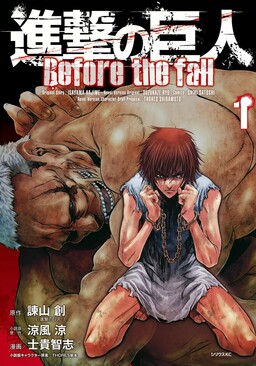
Attack on Titan: Before the Fall
Yu's review of Attack on Titan: Before the Fall — set seventy years before the main series, this prequel follows Kuklo, a boy born from a Titan's stomach, and the invention of the vertical maneuvering equipment in an era when killing even one Titan was thought impossible.
Action
Attack on Titan: No Regrets
A review of Attack on Titan: No Regrets — 2 volumes, the origin story of Levi Ackermann from underground criminal to Survey Corps soldier. Gun Snark story, Hikaru Suruga art. Kodansha USA's English edition is complete.
Action
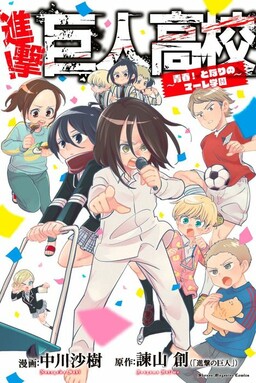
Attack on Titan: Junior High
Yu's review of Attack on Titan: Junior High — Saki Nakagawa's official comedy spin-off where Eren, Mikasa, and the Scouts are middle schoolers who share a campus with the Titans. Eren's lost cheeseburger replaces his lost mother, Levi rules a secret club with a paper fan, and every dark beat of the main series gets rebuilt as a school-life gag.
Action / Comedy
The Fable
Yu's review of The Fable — Akira (codename 'The Fable') is considered the deadliest assassin in Japan; his boss orders him to take a year off and live as an ordinary person without killing anyone; the comedy of an extraordinarily dangerous man trying and mostly succeeding at being normal while the criminal world swirls around him.
Action
Wild Adapter
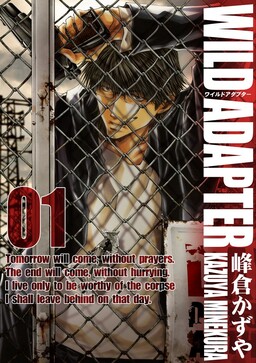
Yu's review of Wild Adapter — Makoto Kubota is a Yakuza boy genius who gets drawn into investigating Wild Adapter, a drug that turns users into monsters; he finds Tokito, a boy with no memory and a monster's hand, and takes him home; Kazuya Minekura's crime manga about an unlikely pair and the mystery of a transforming drug.
Action / Supernatural
UQ Holder!: Magister Negi Magi! 2
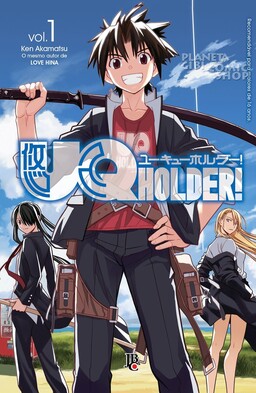
Yu's review of UQ Holder! — a sequel to Mahou Sensei Negima!, set in a future where Touta Konoe is a young immortal who joins UQ Holder, an organization of immortal beings; the series continues the Negima universe while establishing its own identity.
Written by
Yu
Manga Enthusiast from Japan
I grew up in Japan and manga literally saved me during a tough time in elementary school. My English isn't perfect, but my love for manga is real — and I want to share it with you.
Disclosure: This post contains affiliate links. As an Amazon Associate, I earn from qualifying purchases at no extra cost to you.