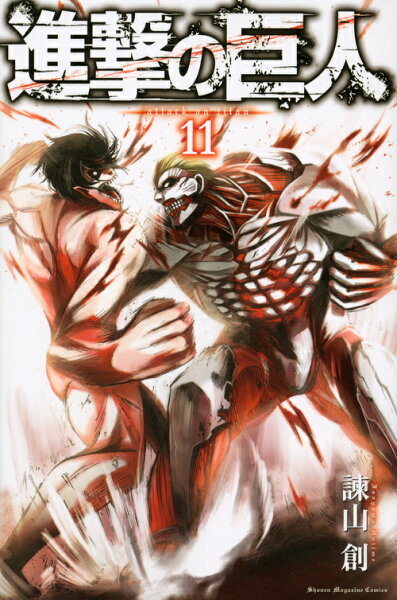
Attack on Titan Review: The Monster Was Never the Titan
by Hajime Isayama
Read the first volume. If it doesn't hook you, put it down. It'll hook you.
Buy Attack on Titan on Amazon →*Affiliate link — I earn a small commission at no extra cost to you.
I started Attack on Titan during a stretch when I wasn't sleeping much. I'd read a few chapters before bed and end up staring at the ceiling. The early volumes are simple in a way that feels almost cruel: there are walls, there are giants that eat people, and there is a boy who watches one of them eat his mother. I thought I knew what kind of story I was holding. A revenge story. A fight-the-monsters story. Something where the line between the people inside the walls and the things outside them was clear.
I was wrong about almost all of it. The thing I remember most about reading this manga is the slow, sick realization — somewhere around the time the basement gets opened — that the story had quietly stopped being about monsters and started being about people. People who hate each other for reasons their grandparents handed them. By the final volume the question wasn't "how do we kill the Titans." It was "what do you do when the person you love is trying to flatten the world, and you understand exactly why."
This is the only manga I've finished and then sat with in silence for an hour.
Quick Take
- Starts as survival horror about giant man-eating monsters; ends as one of the most morally tangled stories in manga, about inherited hatred and genocide
- 34 complete volumes by Hajime Isayama, all available in English from Kodansha
- Rated M (Mature) — graphic violence, gore, body horror, and serious themes of ethnic persecution and mass killing; not for younger readers
Who Is This Manga For?
Attack on Titan is for you if:
- You want a story that yanks the floor out from under you and makes you sit in the discomfort instead of resolving it cleanly
- You love political and moral narratives where there is no clean "good side"
- You're okay with major characters dying and with the story repeatedly turning your sympathies against themselves
- You've outgrown pure good-vs-evil and want a shonen-magazine series that treats you like an adult
Content Warnings & Age Rating
Age Rating: M (Mature) Content Warnings: Extreme violence and gore, Titans devouring humans, body horror, genocide and mass killing (the Rumbling), war crimes, ethnic persecution, psychological trauma, death of beloved characters
This is not a manga for younger readers. The violence is graphic and the camera does not look away. The thematic weight — inherited ethnic hatred, cycles of revenge, and the deliberate slaughter of most of the world's population — is handled seriously, not for shock. It is one of the most mature mainstream manga ever serialized in a shonen magazine.
Yu's Rating
| Category | Score |
|---|---|
| Story Depth | ★★★★★ |
| Art Style | ★★★☆☆ |
| Character Development | ★★★★★ |
| Accessibility for Non-Japanese Readers | ★★★☆☆ |
| Reread Value | ★★★★★ |
Story Overview
Humanity lives behind three enormous concentric walls — Maria, Rose, and Sina — hiding from the Titans, towering humanoid creatures that eat people for no reason anyone alive can explain. No one knows where the Titans came from. No one knows what lies outside. Asking has become almost taboo.
Eren Yeager is a boy in Shiganshina when the outermost wall, Wall Maria, is breached — the Colossal Titan kicks a hole in it, and an Armored Titan smashes the inner gate. In the chaos, Eren watches a Titan pull his mother from the rubble and eat her. He enlists with the Survey Corps, the soldiers who go outside the walls, swearing to kill every Titan in the world.
For roughly the first third of the series, that's the story: brutal expeditions, soldiers dying in droves, and the discovery that Eren himself can transform into a Titan. Then it cracks open. Two of Eren's own comrades, Reiner and Bertolt, turn out to be the Armored and Colossal Titans — enemy infiltrators who breached the wall years earlier. And in the basement of Eren's old home, his father's journals reveal the truth the walls were built to hide: the people of Paradis Island are Eldians, a persecuted race, and the wider world — led by the nation of Marley — has spent generations hating and caging them. There are nine Titan powers passed down between holders. The "monsters" were people all along, and Paradis is not the last of humanity. It's a quarantined island of an enemy race.
From there the story leaves the island entirely (the Marley arc) and shows us the war from the other side — child soldiers, refugee camps, the children of the people Eren grew up fearing. The final movement is the Rumbling: Eren seizes the Founding Titan's power and unleashes the millions of colossal Titans buried inside the walls to march across the world and trample everyone outside Paradis, his own friends included. His comrades — alongside former enemies like Reiner — unite to stop him. In the end, Mikasa kills Eren. The death of the Titans' source frees every Eldian from the curse, and the power that began with Ymir Fritz two thousand years earlier finally ends. The manga closes years later with Mikasa at Eren's grave beneath a tree, the world saved at a cost the story refuses to call clean.
Characters
Eren Yeager — One of the most argued-over protagonists in all of manga. He starts as a furious, simple boy who wants to kill every Titan. By the end he is the architect of a planned genocide — and the story makes you understand him without ever letting you forgive him. His final conversation with Armin, where it turns out the angry kid screaming about freedom was also a frightened boy who didn't want the girl he loved to ever move on from him, is one of the most uncomfortable character reveals I've read.
Mikasa Ackerman — Adopted into Eren's family after he saved her as a child; the red scarf he gave her becomes the emotional thread of the whole series. She is the strongest fighter among the recruits and spends the entire story orbiting Eren — and then, at the very end, she is the one who has to decapitate him to stop the Rumbling, and kiss him goodbye. Her choosing to kill the person she loves, out of love rather than hate, is literally what breaks the two-thousand-year curse.
Armin Arlert — The frail, strategic one of the trio. He inherits the Colossal Titan's power and survives to become the negotiator who tries to build a peace out of the ashes. His belief in understanding over slaughter is the closest thing the series has to hope, and the story keeps testing whether that belief can survive contact with the real world.
Levi Ackerman — Humanity's strongest soldier and the series' most beloved character worldwide. His arc is built on the people he fails to save. He carries Erwin's death and the deaths of his entire squad, and in the endgame he finally kills Zeke, the Beast Titan he'd sworn to destroy — at a cost that leaves him broken-bodied but unbent.
Erwin Smith — Commander of the Survey Corps, a man who sends people to die toward a truth he's not sure he'll live to see. His leadership is magnetic and terrifying. The series' central question — is it worth sacrificing the living for the dead, or the dead for the living — lives and dies in his decisions.
Reiner Braun — The Armored Titan, sent to Paradis as a teenage soldier and then forced to live for years among the people he was sent to destroy, eating with them, training with them, coming to care about them. His arc is the series' clearest argument that there is no clean enemy. By the end he's fighting alongside the people who once hunted him, because the cycle has finally exhausted everyone in it.
Art Style
I'll be honest the way the manga is honest about itself: Isayama's early art is rough. Faces wobble, proportions go strange, and some action panels are genuinely hard to parse. This is the most common complaint people have, and it's fair.
But it improves enormously, and even at its roughest it does two things brilliantly. First, the Titans are wrong in exactly the right way — vacant smiles, mismatched limbs, the Colossal Titan's exposed muscle and the Beast Titan's long arms are images that lodge in your brain. Second, Isayama draws fear and grief better than almost anyone. Even when the linework is crude, you always know precisely what a character is feeling, and that emotional legibility carries the early volumes until the craft catches up.
What I Love About It
The serum bowl in the Battle of Shiganshina.
By that point the Survey Corps has almost nothing left, and they have exactly one vial of Titan serum — one chance to turn one dying person into a Titan and save them. Two people are dying: Commander Erwin, the only man who might understand the secrets in the basement, and Armin, a frail teenager who happens to be Eren's best friend. Levi has to choose which one to inject. Eren and Mikasa are screaming at him to save Armin. The officer Floch argues, coldly and correctly, that humanity needs Erwin more — that you save the leader, not the boy.
What I love is that the manga refuses to make this a clean call. Both choices are defensible. Both are also monstrous in their own way. Levi ultimately chooses Armin — and tells the unconscious Erwin he's released him from the hell of duty, that he's allowed to rest now. It's a decision based on a personal vow as much as on logic, and the series never pretends it was obviously right. That's the whole manga in one scene: impossible choices, no clean answer, and the survivors carrying the weight forever. I reread that sequence more than any other.
Memorable Scene ⚠️ Spoiler Warning
Erwin's last charge.
Cornered by Zeke's Beast Titan raining boulders down on them, Erwin realizes the only way to give Levi a clean shot is to charge the Beast Titan head-on, in the open, as a distraction — a charge that everyone leading it, including him, will not survive. Levi is the one who frees him from it: he tells Erwin to give up his dream of seeing the basement, to lie down and die with the recruits, while Levi handles the rest. And Erwin, the man who spent his whole life choosing the mission over the men, looks almost relieved.
Then he turns to a handful of terrified teenage recruits and gives the speech. The dead can give their lives meaning only if the living fight on. Smoke goes up as cover. He tells them to let their blood boil, and they charge. Every one of them dies. Erwin takes a stone to the body near the front and falls from his horse. But it works — Levi gets through.
What makes it unforgettable isn't triumph. It's that Isayama cuts between the hopeful momentum of the charge and the reality of children being torn apart by rocks. The sacrifice succeeds, and it is still horrifying. That's the tone the entire back half of the series is built on.
What English-Speaking Fans Say
Attack on Titan has a huge, fiercely engaged Western fanbase — and it is genuinely split on the ending. The final arc and last chapter set off some of the most heated discussion any manga has produced, over whether Isayama's choices paid off the foreshadowing or undercut Eren's character.
r/ShingekiNoKyojin remains one of the most active manga communities on Reddit, and the theory-crafting from the serialization years is impressive — readers were catching foreshadowing planted dozens of volumes earlier, like the implications of the Attack Titan seeing the future. Whatever side people land on about the finale, the consensus I keep seeing is the same: agree or not, the journey is extraordinary.
I'm in the camp that thinks the ending is brave. It insists the cycle of hatred doesn't end with a clean victory, only with someone choosing, finally, to stop — and that's a harder and more honest thing to dramatize than a triumphant last battle.
Cultural Context
Attack on Titan is dense with real-world resonance that readers and critics have unpacked at length.
The walls as isolation — A walled island society told it is the last of humanity, terrified of what lies beyond, is hard not to read against the anxieties of an island nation with its own long history of seclusion.
Inherited hatred — Once the Marley reveal lands, the story becomes openly about ethnic persecution passed down across generations, each side convinced of its own righteousness. The Eldians made to wear armbands and live in internment zones is among its most pointed imagery.
Institutions and sacrifice — The Survey Corps, Military Police, and Garrison embody different bargains between power, duty, and self-interest. Isayama is plainly fascinated by what institutions ask of the people inside them, and what those people become.
Pros & Cons
Pros
- One of the most ambitious narratives in manga — earns its comparisons to serious literary fiction
- Characters change in ways that feel earned, real, and frequently unsettling
- Rewards rereading enormously; the foreshadowing is remarkable
- Complete at 34 volumes, fully available in English
Cons
- Early art is rough and turns some readers off before it improves
- Extremely heavy content — not for younger readers or anyone sensitive to gore and genocide themes
- The ending divided the fanbase, hard
- The later political plotting is dense and demands real attention
- This won't work for everyone — the bleakness is the point, and if you want a hopeful adventure, this isn't it
Is Attack on Titan Worth Reading?
Yes — if you can handle the content. It begins as gripping monster-horror and grows into one of the smartest, most devastating stories the medium has produced, with character arcs that turn on you in the best way. The art is rough early and the ending is divisive, but the journey is unmatched. If you want comfort, look elsewhere; if you want a story that earns every gut-punch, start Volume 1.
Similar Manga
| Title | Its Approach | How Attack on Titan Differs |
|---|---|---|
| Vinland Saga | Historical epic that interrogates what strength and revenge are worth | Frames the same questions through a fantasy apocalypse and a global political conflict |
| Berserk | Slower, bleaker dark-fantasy about one man against a cursed world | Trades the personal curse for a war between nations and inherited ethnic hatred |
| Fullmetal Alchemist | Inherited sin and the price of power, in a far more hopeful key | Offers no comparable hope — the cost here is paid in genocide and stays unpaid |
Reading Order / Where to Start
Start from Volume 1. This is a series where everything matters — early panels plant seeds that bloom 25 volumes later, so there's no shortcut and no "skip the slow part."
Caution: Volume 1 is brutal from its opening pages. If you can get through it, you can handle the series.
Official English Translation Status
Status: Complete English Volumes: 34 (all volumes available) Publisher: Kodansha Comics USA (serialized June 2012 – October 2021) Translation Quality: Strong and widely praised
The complete series is available in English, including omnibus editions that collect three volumes each.
Format Comparison
| Format | Volumes | Price per vol. (approx.) | Best for |
|---|---|---|---|
| Paperback (individual) | 34 vols | ~$10–12 | Collecting |
| Kindle | 34 vols | ~$7–9 | Most convenient |
| Omnibus (3-in-1) | ~12 vols | ~$18–20 | Best physical value |
Recommendation: Omnibus editions are excellent value and save shelf space. For digital, Kindle is the easiest way to get through all 34 volumes.
Where to Buy
Read the first volume. If it doesn't hook you, put it down. It'll hook you.
This post contains affiliate links. If you purchase through these links, I may earn a small commission at no extra cost to you. As an Amazon Associate, I earn from qualifying purchases.
*Affiliate link — I earn a small commission at no extra cost to you.
More Manga You Might Like
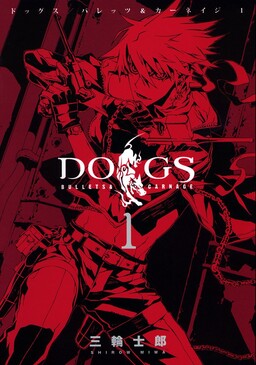
Action
Dogs: Bullets & Carnage
Yu's review of Dogs: Bullets & Carnage — four individuals with violent pasts navigate an underground city built on human experimentation; Heine is a modified human who heals from anything; Badou is a chain-smoking information broker; their paths converge in the depths below the city; Shirow Miwa's action manga about the price of survival.
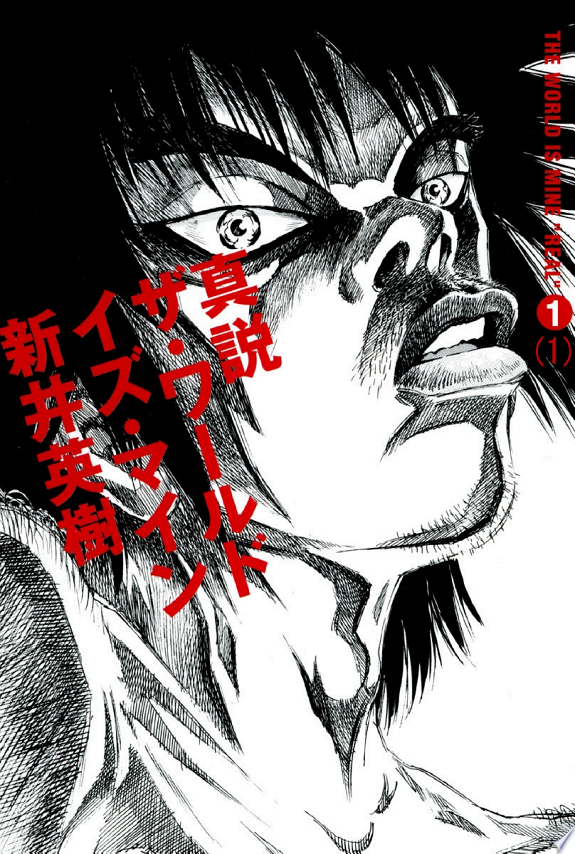
Action / Crime
The World Is Mine
The World Is Mine follows two criminal partners — the unpredictable Mon and the calculating Toshi — on a violent crime spree across Japan, alongside a separate thread about a mysterious monster emerging in the wilderness.
Action / Comedy
The Fable
Yu's review of The Fable — Akira (codename 'The Fable') is considered the deadliest assassin in Japan; his boss orders him to take a year off and live as an ordinary person without killing anyone; the comedy of an extraordinarily dangerous man trying and mostly succeeding at being normal while the criminal world swirls around him.
Action / Romance
Call of the Night
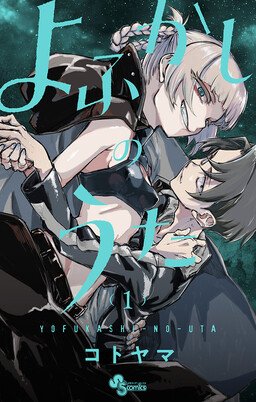
Yu's review of Call of the Night — Ko Yamori cannot sleep; unable to feel anything during the day, he starts sneaking out at night and discovers that he actually belongs in the night; when he meets Nazuna, a vampire who drinks blood from sleeping humans, he asks her to turn him into a vampire — but the only way to become one is to fall in love.
Action / Drama
Beastars
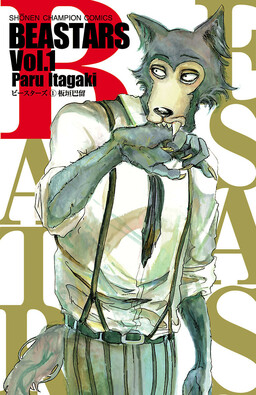
Yu's review of Beastars — In a society of anthropomorphic animals where carnivores and herbivores live side by side, Legoshi is a gray wolf who is afraid of what he is. After a classmate is killed and eaten, he is pulled toward Haru, a tiny dwarf rabbit, and has to decide what kind of animal he wants to become.
Action / Sci-Fi
Zetman
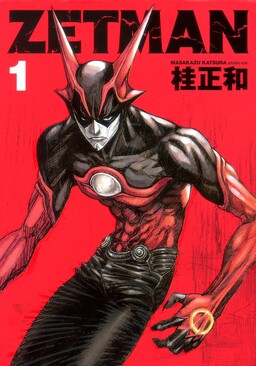
Yu's review of Zetman — Jin Kanzaki is a boy who can transform into ZET, a living weapon created by a corporation's experiment; his story is intertwined with Kouga Amagi, heir to a company that creates its own superhero armor — two different ideas of what a hero means, in conflict and occasional partnership.
Written by
Yu
Manga Enthusiast from Japan
I grew up in Japan and manga literally saved me during a tough time in elementary school. My English isn't perfect, but my love for manga is real — and I want to share it with you.
Disclosure: This post contains affiliate links. As an Amazon Associate, I earn from qualifying purchases at no extra cost to you.