
Downfall Review: The Manga Asano Drew About Hating His Own Manga
by Inio Asano
Read the first volume. If it doesn't hook you, put it down. It'll hook you.
Buy Downfall on Amazon →*Affiliate link — I earn a small commission at no extra cost to you.
I finished a piece of work once that I was proud of, and the day after, I felt nothing. Not relief, not pride. Just an empty Tuesday and the question of what I was supposed to do now. It is a stupid, small feeling compared to what the man in this book goes through, but it is the door that let me into Downfall. This is a manga by Inio Asano about a successful manga artist who finishes his big series and then quietly, methodically, takes his own life apart. It is one volume. It is not a comfortable book. I keep coming back to it anyway.
Quick Take
- A mangaka finishes his hit and discovers the work was the only thing holding him together
- Inio Asano writing about manga, money, and self-loathing — pointed straight at himself
- Rated M (Mature) — sexual content, sex work, depression, and self-destructive behavior throughout
Story Overview
The protagonist is Kaoru Fukazawa, a manga artist who has just wrapped up Bye Bye Sun, the series that made his name. On paper he has made it. In practice, the moment the work is finished, everything underneath it gives way.
His new serialization is losing readers. His marriage to his editor wife is not so much breaking as evaporating — they don't fight, they just stop being a couple while continuing to share an apartment. And his feelings about manga itself curdle. He starts to see his readers as consumers of garbage, decides the only honest goal left is money, and sets out to write something deliberately cynical and "idiot-proof."
To feel anything at all, he starts visiting sex workers, and the back half of the book follows those encounters as he chases connection, projection, and escape. The story does not build to a clean redemption. By the end Fukazawa has arrived at a kind of stability, but it is the stability of a man who has decided to sell out and keep going — and the last pages drag his old self back to remind you exactly what that cost.
Characters
Kaoru Fukazawa — The center of the whole thing. A clearly Asano-adjacent mangaka whose identity was built entirely on his work, so when the work stops meaning anything, there is nothing left holding the person up. His arc is not growth in the usual sense. It is a man rationalizing his own collapse and calling it maturity.
Nozomi Machida — Fukazawa's wife, an editor at a major publisher. Their marriage was partly one of convenience, two careers agreeing not to get in each other's way, and it dissolves without a single dramatic scene. She is the quiet measure of how far gone he is — someone who knew him before, watching him become someone else.
The sex workers — Fukazawa cycles through several encounters that the book treats as distinct emotional stages rather than throwaway scenes. One girl resembles an ex and pulls him into a dangerous fantasy of starting a family with her; another becomes a kind of compromise he can actually live with. They are filtered entirely through his projection, which is the point — he is not seeing them, he is using them as mirrors.
What I Love About It
There is a scene at a release event for his new manga where a fan — a young woman who found him through Twitter — tells Fukazawa, sincerely, that both Bye Bye Sun and his new series moved her deeply. And it destroys him. Because he wrote the new one cynically, on purpose, as emotional manipulation he didn't believe in. Her genuine reaction to his fake work is, to him, proof that his contempt for readers was right all along — they'll cry at anything. But it is also proof that he is wrong, that something real reached her regardless of what he intended.
That contradiction is the whole book in one moment, and it is why I love it. Asano refuses to let Fukazawa — or me — settle into either comfort. You can't decide the readers are idiots, because look, she felt something true. You can't decide the art was honest, because he knows he faked it. The scene leaves you standing exactly where Fukazawa is standing: unable to win the argument with yourself. I have rarely seen a single conversation carry that much weight. It is the part of the book I think about most, because it is the part that refuses to let anyone off the hook, least of all the author.
Memorable Scene ⚠️ Spoiler Warning
Spoiler Warning. The ending stays with me. After Fukazawa has reached his uneasy new normal — accepting that he will write commercial work he doesn't respect for the rest of his career — the book closes by reaching back into his past and letting a former partner call him "a monster." It is not a triumphant ending or a tragic one. It is worse than both: it suggests nothing has actually changed inside him. The self-destruction, the using of people, the contempt — all of it is still there, just wearing the costume of someone who has "made peace." Asano gives you the shape of a recovery arc and then quietly tells you it was never real. The page lands like a door closing on a man who thinks he just opened one.
Pros & Cons
Pros:
- One of the most honest things I have read about losing connection to your own work
- Complete and self-contained in a single volume
- Asano's art is gorgeous even while depicting ugliness — the color pages are stunning
- The fan-at-the-signing scene alone justifies the read
Cons:
- The sexual content and sex-work material are explicit and central, not incidental
- It is bleak by design — there is no warm payoff waiting at the end
- This is a sour, self-lacerating book with no heroes. If you want catharsis or likeable characters, it won't work for everyone.
Is Downfall Worth Reading?
Yes, if you want one of Asano's most personal and unsparing works in a single sitting, and you can handle explicit, depressing content with no redemption arc. The art is extraordinary, the central scenes are unforgettable, and it is short. Skip it if you need a character to root for or an ending that makes you feel better.
Content Warnings & Age Rating
Age Rating: M (Mature) Content Warnings: sexual content, sex work, depression, self-destructive behavior, divorce
This is an adult book about an adult coming apart. Take the warnings seriously.
Yu's Rating
| Category | Score |
|---|---|
| Story Depth | ★★★★★ |
| Art Style | ★★★★★ |
| Character Development | ★★★★☆ |
| Accessibility for Non-Japanese Readers | ★★★☆☆ |
| Reread Value | ★★★★☆ |
Similar Manga
| Title | Its Approach | How Downfall Differs |
|---|---|---|
| Goodnight Punpun | Asano's epic, years-long descent into despair across many volumes | Downfall hits the same nerve in one volume, and it's aimed at the author himself |
| Solanin | Asano on young adults and the death of creative dreams, but tender | Downfall is older, harsher, and has no warmth left to offer |
| Dead Dead Demon's Dededede Destruction | Asano blending the everyday with the apocalyptic | Downfall stays small and interior — the apocalypse is one man's career |
Where to Buy
Read the first volume. If it doesn't hook you, put it down. It'll hook you.
This post contains affiliate links. If you purchase through these links, I may earn a small commission at no extra cost to you. As an Amazon Associate, I earn from qualifying purchases.
*Affiliate link — I earn a small commission at no extra cost to you.
More Manga You Might Like
Slice of Life / Drama
Umimachi Diary
Umimachi Diary follows three adult sisters in Kamakura who invite their half-sister — whom they barely know — to live with them after their estranged father's death, and the slow process of becoming a family.
Slice of Life / Drama
March Comes in Like a Lion
Yu's review of March Comes in Like a Lion — Rei Kiriyama is a 17-year-old professional shogi player drowning in isolation and depression, until three sisters in a small riverside house slowly pull him back toward being able to live.
Slice of Life
Three Days of Happiness
Yu's review of Three Days of Happiness — in a world where you can sell your remaining lifespan for money, Kusunoki sells most of his and discovers he has only three months left; manga adaptation of Sugaru Miaki's novel about what matters when time is finite.
Slice of Life
Sunny
Yu's review of Sunny — at a group home for children whose families cannot take care of them, a broken-down old car called Sunny becomes a private space where the children go to be alone; Taiyo Matsumoto's meditation on childhood longing, on what it means to be left, and on how children find ways to survive what adults do to them.
Slice of Life
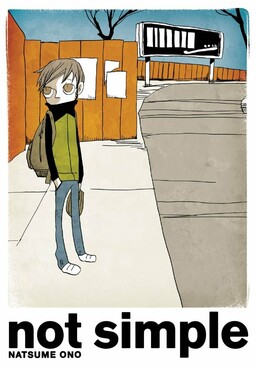
not simple
Yu's review of not simple — Ian is an English young man whose life has been defined by loss, abuse, neglect, and a desperate search for his sister; the manga tells his story in non-linear fragments, assembled by a journalist writing a novel about Ian's life, asking what it means to witness someone's suffering and what fiction can do with it.
Slice of Life / Drama
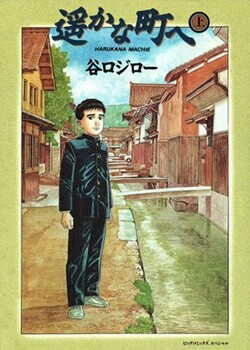
A Distant Neighborhood
Yu's review of A Distant Neighborhood — Jiro Taniguchi's quietly devastating story of a middle-aged man who falls asleep on a train and wakes up in his 14-year-old body, in his hometown, months before his father will disappear forever.
Written by
Yu
Manga Enthusiast from Japan
I grew up in Japan and manga literally saved me during a tough time in elementary school. My English isn't perfect, but my love for manga is real — and I want to share it with you.
Disclosure: This post contains affiliate links. As an Amazon Associate, I earn from qualifying purchases at no extra cost to you.