Bring It On! Review: The Tomboy Who Knocks Out Her Love Interest in Chapter One
by Baek Hye-Kyung
Read the first volume. If it doesn't hook you, put it down. It'll hook you.
Buy Bring It On! on Amazon →*Affiliate link — I earn a small commission at no extra cost to you.
I grew up small and quiet, the kid who got pushed around and didn't push back. So I have a soft spot — maybe an embarrassing one — for characters who are everything I wasn't. Mi-Ha, the heroine of Bring It On!, is one of those characters. She is loud, she is fearless, and when a strange boy wakes up in the wrong place and calls her a pervert, she knocks him out cold in a single punch and stuffs him into a taxi. I read that scene and laughed out loud on the train. Then I felt a small, quiet envy. I would have apologized. She broke his ego instead.
I came to this one expecting a forgettable early-2000s romance. What I got was a comedy with a genuinely strange engine: a girl who was built, on purpose, to scare boys away — and the one boy too stubborn to be scared.
Quick Take
- A Korean romantic comedy where the "meet-cute" is the heroine literally beating up the male lead and dumping him in a cab.
- Mi-Ha is the rare shoujo-style heroine whose default setting is "intimidating," not "clumsy and cute."
- Age rating: T (Teen) — comedic violence, school bullying, and later references to past abuse, but nothing graphic.
Story Overview
Mi-Ha is a fiercely competitive tomboy. Her older brother Yang-Ha spent six years training her in a pseudo-military style, the explicit goal being to make her tough enough that boys would leave her alone. It worked. By the time the story opens, most of the male students at her school are genuinely afraid of her.
The plot's first domino falls when Mi-Ha finds a beautiful boy passed out on the floor of the girls' locker room after her morning run. He wakes, sees her half-changed, and accuses her of doing something perverted to him. She responds by knocking him unconscious, then — not knowing what else to do with the body — stuffs him into a taxi and sends him off, sticking him with the fare. That unpaid taxi fare becomes a recurring grudge.
The turn comes that same day: the boy is Seung-Suh, a new transfer student, and he's now in her class. He uses the locker-room incident and the cab fare as leverage to needle her relentlessly. Their relationship runs on spats and bickering — including an accident in which Mi-Ha breaks his arm and is guilted into running his errands and cooking his meals while he plays the demanding invalid. Around this antagonistic core, the manhwa widens out: Seung-Suh's gangster-tinged reputation, Mi-Ha's loyal friends, and the darker thread of her cousin Yun-Jin, whose cruelty toward Mi-Ha turns out to be rooted in a traumatic past. Over five volumes the bickering slowly, predictably, curdles into something warmer.
Characters
Mi-Ha is the reason the book works. She's athletic, blunt, and loyal, and she was deliberately raised to repel romance — which makes her a heroine who solves problems with her fists before her feelings. She also works part-time at her mother's salon, a small detail that keeps her grounded in something ordinary. Her arc is the slow, grudging discovery that being un-scareable isn't the same as being un-reachable.
Seung-Suh (sometimes romanized Sung-Suh) is the bishonen transfer student with a dangerous, gangster-ish aura. He's introduced as a victim — the boy she knocks out — but quickly flips into the aggressor, weaponizing the taxi incident to push into her life. His real arc is the gap between the threatening front he projects and the feelings for Mi-Ha he keeps developing underneath it.
Yun-Jin, Mi-Ha's cousin, is the book's most serious figure. She treats Mi-Ha like a servant and carries a traumatic, abusive past that the later volumes gradually unveil. She's the element that keeps Bring It On! from being pure slapstick.
Ki-Ri is Mi-Ha's best friend, a girl with a former gang background, while Mu-Jin serves as Seung-Suh's calmer best friend and counterweight. Yang-Ha, the brother who engineered Mi-Ha into a one-girl wrecking crew, hovers over the whole premise as its origin and its joke.
What I Love About It
What I love is the inversion baked into the very first chapter. In the standard version of this genre, the heroine is small and flustered and the boy is the strong one who rescues her. Here it's reversed and played for comedy: Mi-Ha is the physical threat, and Seung-Suh — the pretty, intimidating transfer student — is the one who literally wakes up on the floor having been beaten unconscious. The romance has to grow out of that, which means it can't run on damsel-in-distress beats. It has to run on two stubborn people refusing to lose to each other.
The broken-arm stretch is where that pays off best. Mi-Ha injures Seung-Suh and gets roped into caretaking — cooking, errands, waiting on a "pushy invalid" who milks the situation for everything it's worth. It's a forced-proximity setup, but the manhwa keeps it sharp by never letting either of them go soft too fast. He's insufferable; she's furious; and somewhere in the daily friction you can feel the thing turning, without a single sincere speech being needed. That restraint is what kept me reading.
Memorable Scene ⚠️ Spoiler Warning
The scene I can't shake is the very first one — the locker room. Mi-Ha comes back sweaty from her run and finds a gorgeous stranger unconscious on the floor of the girls' changing area. For a beat she genuinely hesitates: is this a pervert, or someone who needs help? She wakes him to find out. He opens his eyes, registers a half-dressed girl standing over him, and immediately accuses her. And her answer to a false accusation isn't tears or stammering — it's one clean punch that puts him back on the floor, followed by the absurd logistical problem of what to do with an unconscious boy, solved by folding him into a passing taxi and sending him into the streets without paying the fare.
It works because of how complete and unbothered it is. Most heroines would freeze. Mi-Ha treats it as a chore. The page sells her total lack of hesitation, and the joke keeps paying dividends because that unpaid cab fare follows them into the classroom and becomes the wedge Seung-Suh uses to wedge himself into her life. A meet-cute that's also a hit-and-run — I'd never seen the genre open that way.
Pros & Cons
Pros:
- A heroine whose first instinct is force, not fluster — a real twist on the genre's defaults.
- The comedy is sharp and self-aware; it never takes itself too seriously.
- The Yun-Jin subplot adds a genuine emotional undertow beneath the slapstick.
Cons:
- Once the premise is established, the central romance develops along very predictable enemies-to-lovers lines.
- At five volumes, some of the supporting threads (especially Yun-Jin's) feel compressed.
- The early-2000s manhwa humor leans hard on chibi gags and bickering — that's either your comfort food or your dealbreaker depending on you.
Is Bring It On! Worth Reading?
Yes, if you want a short, funny enemies-to-lovers romance with a heroine who hits first and apologizes never. It's light and the romance arc holds few surprises, but Mi-Ha's refusal to play the damsel — and that unforgettable locker-room opening — make it stand out from the pack of early-2000s licensed manhwa.
Who Is This Manga For?
- Readers who want a romance heroine who competes and fights rather than waits to be rescued.
- Fans of enemies-to-lovers comedy built on bickering and forced proximity.
- People nostalgic for the ICE Kunion / early Yen Press manhwa wave.
- Anyone who liked Girl Got Game and wants another tough-tomboy comedy.
Similar Manga
| Title | Its Approach | How Bring It On! Differs |
|---|---|---|
| Girl Got Game | A girl disguised as a boy joins a basketball team; sports drive the plot | Bring It On! drops the sports framing entirely and runs on pure tomboy-vs-pretty-boy comedy |
| Goong (Palace Story) | Lavish Korean palace romance with heavy drama | Bring It On! is lighter, scrappier, and built around slapstick rather than court intrigue |
| Maid-Sama! | Tough, capable heroine softened by a perceptive male lead | Bring It On!'s heroine is physically dominant from page one, not hiding a soft side behind a strict mask |
Official English Translation Status
Bring It On! was fully released in English by Yen Press under the ICE Kunion imprint. All five volumes are available, so the English edition is complete with no waiting.
Where to Buy
Read the first volume. If it doesn't hook you, put it down. It'll hook you.
This post contains affiliate links. If you purchase through these links, I may earn a small commission at no extra cost to you. As an Amazon Associate, I earn from qualifying purchases.
*Affiliate link — I earn a small commission at no extra cost to you.
More Manga You Might Like

Romance
Season of Blossom
A review of Season of Blossom — the Korean romance manhwa about high school students navigating first love against the backdrop of a friend's death and the grief that follows.

Romance / Comedy
Tomo-chan Is a Girl!
Yu's review of Tomo-chan Is a Girl! — Tomo Aizawa confesses to her childhood best friend Junichirou Kubota; he congratulates her and keeps being her best friend because he has never thought of her as a girl; the comedy of her trying to be seen as a woman to the person who has always seen her as a buddy is the entire series.
Romance / Comedy
Chocolat
A review of Chocolat — the eight-volume Korean manhwa by Ji-Sang Shin and Geo about a girl who infiltrates the wrong idol fan club to chase her favorite band, gets blackmailed by one of the boys she was using, and slowly falls into the world she pretended not to care about.
Romance / Comedy
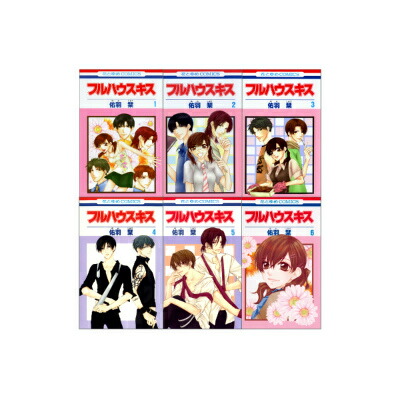
Full House Kiss
A review of Full House Kiss — Seung-Hee Son's two-volume Korean manhwa about a girl who loses her house to a stranger in a bet and has to move in with him under a fake marriage contract.
Romance / Comedy
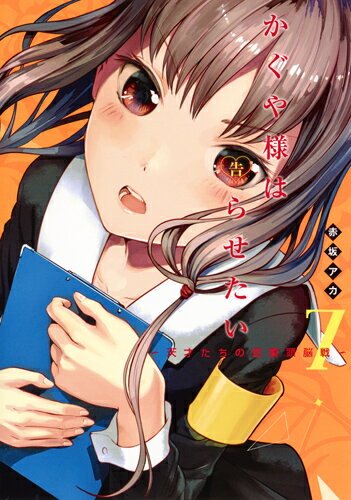
Kaguya-sama: Love Is War
Aka Akasaka's 28-volume romantic comedy (2015–2022) about Miyuki Shirogane and Kaguya Shinomiya, two student council officers at Japan's most elite high school who are both in love and both certain that whoever confesses first loses. Complete in English from VIZ Media.
Romance / Comedy
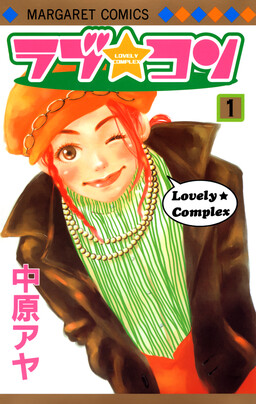
Love★Com
Love★Com follows tall girl Risa and short boy Otani, always mistaken for a comedy duo, as they help each other with their love lives and slowly realize their feelings for each other.
Written by
Yu
Manga Enthusiast from Japan
I grew up in Japan and manga literally saved me during a tough time in elementary school. My English isn't perfect, but my love for manga is real — and I want to share it with you.
Disclosure: This post contains affiliate links. As an Amazon Associate, I earn from qualifying purchases at no extra cost to you.