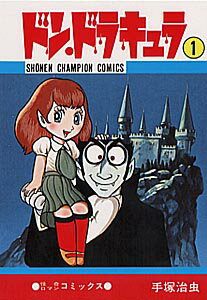
Don Dracula Review: The Vampire King in a Tokyo That Doesn't Believe in Him
by Osamu Tezuka
Read the first volume. If it doesn't hook you, put it down. It'll hook you.
Buy Don Dracula on Amazon →*Affiliate link — I earn a small commission at no extra cost to you.
I grew up thinking of Osamu Tezuka as the serious one. Black Jack, Phoenix, Buddha — the works people put on lists of "manga as art." So the first time I flipped through Don Dracula, I honestly thought I had picked up the wrong book. Here was the same hand that drew those heavy stories, and he was using it to draw the King of Vampires getting kicked out of his own coffin and complaining that nobody in Japan even believes in him anymore. I laughed out loud on a quiet train, the bad kind of laugh where you have to pretend you coughed.
What got me was realizing this was Tezuka on purpose being dumb. He drew this right after Black Jack, and from what I read he wanted to make something completely different — something silly that he just enjoyed drawing. You can feel that. It's short, it's a little crude, and it has none of the weight his famous works carry. But there's something honest in watching a master let go and just goof off.
Quick Take
- Late-period Tezuka in pure slapstick mode — a proud Dracula failing to be scary in modern Tokyo.
- A vampire sitcom from 1979, decades before "monster tries to live a normal life" became a whole genre.
- Rated T (Teen): comedic violence and some crude bathroom humor, but nothing graphic.
Story Overview
The setup is simple and great. Castle Dracula gets transported from Transylvania all the way to Nerima Ward in Tokyo, and Count Dracula moves in with his daughter Chocola and his servant Igor. Every night Dracula prowls Shinjuku and Shibuya hunting for the blood of beautiful young women — and every night the gap between an old-world vampire and a city that flatly does not believe in vampires turns into a disaster.
The turning point of the whole premise is that Dracula is basically harmless here. The first woman he manages to bite after arriving in Japan is Blonda, who then becomes obsessed with him and chases him everywhere — and since Blonda is drawn as loud and unattractive, Dracula spends the rest of the series running away from his own victim. Meanwhile his old nemesis Professor Rip van Helsing follows him from the Netherlands all the way to Tokyo, takes a teaching job, and keeps failing to kill him.
There's no grand ending arc — it ran in Weekly Shonen Champion from May to December 1979 and stayed mostly episodic across its three volumes. The "resolution" is really just the running joke landing over and over: the most feared vampire in the world cannot get a single thing to go his way in modern Japan.
Characters
Count Dracula is the proud, pompous heart of the comedy. He still carries himself like the legendary lord of the night, but in Tokyo he's a foreigner who can't read the room, can't find clean blood, and can't escape an ugly stalker. The joke is always the distance between how grand he thinks he is and how pathetic his actual nights turn out.
Chocola is his daughter, and honestly she's the most capable member of the household. She's half-vampire, half-werewolf — she can survive water but still crumbles to dust in sunlight. She goes to night classes at Matsutani Junior High, joins the school's sci-fi club, and even falls for a human classmate named Nobuhiko. She quietly decides her classmates are off-limits as food. She's more adjusted to Japan than her father will ever be.
Igor is the family's loyal servant who drives the carriage and runs the household. He looks fierce but has a soft heart — and a famous weakness where he completely falls apart at the sight of a naked woman, which the manga uses for gags constantly.
Professor Rip van Helsing is the Dutch vampire hunter who chases Dracula to Tokyo and becomes a teacher at Matsutani Junior High to stay close. He should be the deadly threat. Instead his defining trait is a brutal case of hemorrhoids that ruins his timing at the worst possible moments.
What I Love About It
What I love is how completely Tezuka commits to making his monsters small. Dracula is supposed to be the apex predator of horror, the figure that scared centuries of readers, and Tezuka spends three volumes letting the air out of him. The Count isn't defeated by a hero or a stake — he's defeated by traffic, by skepticism, by an ugly woman who won't stop calling his name, by the simple grinding reality of trying to exist in 1979 Tokyo. That's a very Japanese kind of joke, the proud outsider humbled by ordinary daily life, and Tezuka clearly delighted in it.
The other thing I love is Chocola. In a comedy where the adults are all ridiculous — the strutting father, the hemorrhoid-cursed hunter, the servant who faints at bare skin — she's the one with her feet on the ground. She goes to school, joins a club, likes a boy, and quietly handles the moral lines her dad never thinks about, like deciding she won't feed on her own classmates. There's a real tenderness in how Tezuka draws this teenage girl just trying to have a normal student life inside an absurd monster family. The fact that this warmth survives inside such a goofy book is exactly why it stuck with me.
Memorable Scene ⚠️ Spoiler Warning
The single scene everyone remembers — and it shows up in both the manga and the anime — is Helsing's hemorrhoid disaster inside Dracula's castle. He's sneaking around, snooping for a way to destroy the Count, when his hemorrhoids flare up. He's in a panic, there's no bathroom anywhere in this old castle, and the only thing he can find is Dracula's unattended coffin. So he uses the coffin. He ends up spending the rest of the sequence frantically cleaning out his enemy's casket, right under the Count's nose.
It's crude, yes. But it's also a perfect distillation of the entire series. The legendary vampire hunter, the man who is supposed to be the noble counterweight to evil, is reduced to scrubbing a coffin he soiled because his own body betrayed him at the worst moment. Tezuka takes the most iconic horror confrontation — Dracula versus Van Helsing — and replaces the dramatic stake-through-the-heart with a bathroom emergency. I remember thinking that only someone with total command of the form could make a joke this stupid feel this deliberate.
Pros & Cons
Pros:
- Short, breezy, and genuinely funny — you can read all three volumes fast.
- A rare look at the legendary "serious" Tezuka just cutting loose and being silly on purpose.
- Chocola gives the goofiness a warm, grounded center.
Cons:
- It's minor Tezuka — there's no deeper theme or emotional payoff underneath the gags.
- The humor is dated and sometimes crude (bathroom jokes, gags about women's looks) in a very 1979 way.
- There's no official English manga edition, so reading it legally in English isn't currently possible — which on top of the dated humor means this one won't work for everyone.
Is Don Dracula Worth Reading?
If you love Tezuka and want to see a side of him that almost never shows up on the "great works" lists, yes — it's a short, charming, weirdly affectionate goof of a comic. If you're coming in expecting the depth of Black Jack or Phoenix, no — this is Tezuka on vacation, and that's the whole point. Go in wanting silliness, not substance.
Where to Buy
No English release yet. That just means you find it before everyone else does.
If you read Japanese, the original three-volume series is available from Akita Shoten.
Search for ドン・ドラキュラ on Amazon.co.jp →
This post contains affiliate links. If you purchase through these links, I may earn a small commission at no extra cost to you. As an Amazon Associate, I earn from qualifying purchases.
*Affiliate link — I earn a small commission at no extra cost to you.
Reading Guides
More Manga You Might Like
Horror / Comedy
Voynich Hotel
Yu's review of Voynich Hotel — Taizou Kuzuki, a man with a shady past, arrives at a remote island hotel staffed by witch maids and surrounded by assassins, ghosts, and other supernatural complications; Douman Seiman's dark comedy-horror is compact, strange, and genuinely funny in ways that shouldn't work.
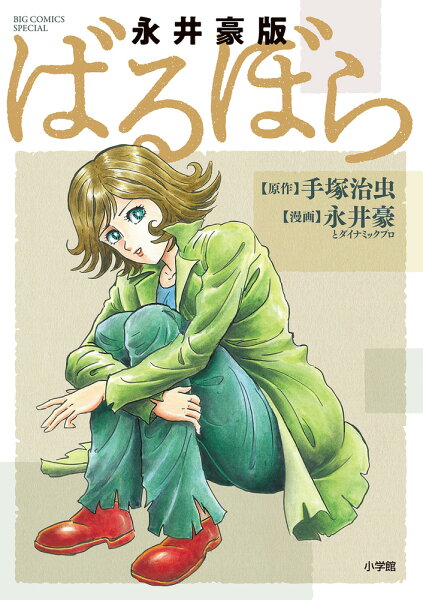
Horror / Drama
Barbara
Yu's review of Barbara — Osamu Tezuka's adult psychological horror about Yosuke Mikura, a celebrated novelist who takes in a filthy, drunken muse named Barbara and descends through black masses, perversion, and madness as he loses the ability to tell art from destruction.
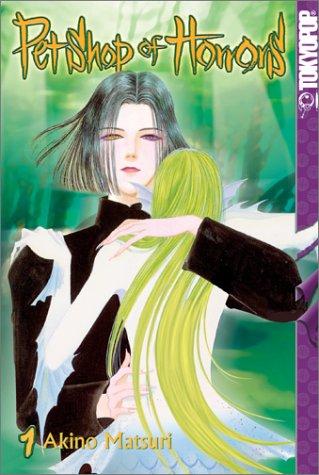
Horror / Supernatural
Petshop of Horrors
Count D sells exotic pets in Chinatown — each one perfect, each one with a contract that the buyer always breaks.
Horror / Action
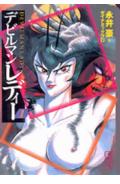
Devilman Lady
Devilman's apocalypse retold through Jun Fudo, a P.E. teacher who turns demon — Go Nagai going even darker than the original.
Horror / Action
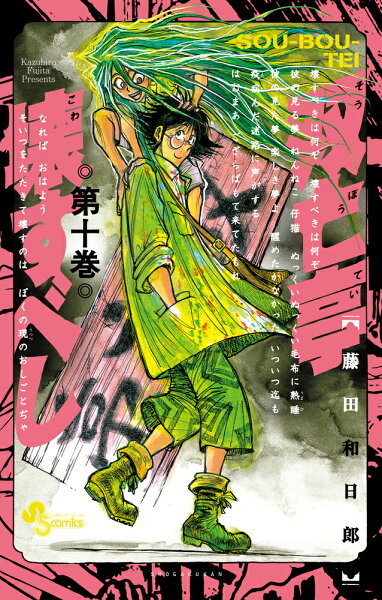
Souboutei Kowasu Beshi
Ushio and Tora's creator returns with his bleakest, most ambitious horror — a haunted mansion that swallows everyone who enters.
Horror / Supernatural
Venus in the Blind Spot
A comprehensive review of Venus in the Blind Spot — plot, characters, art style, and whether it's worth reading.
Written by
Yu
Manga Enthusiast from Japan
I grew up in Japan and manga literally saved me during a tough time in elementary school. My English isn't perfect, but my love for manga is real — and I want to share it with you.
Disclosure: This post contains affiliate links. As an Amazon Associate, I earn from qualifying purchases at no extra cost to you.