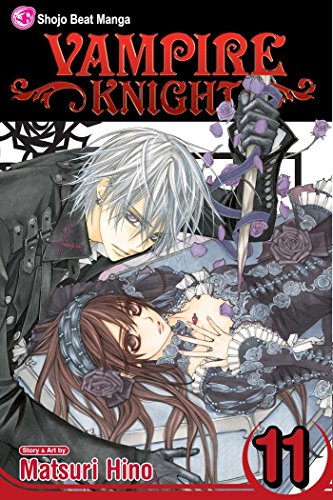
Arata: The Legend Review — The Shonen That Wins by Refusing to Hate Back
by Yuu Watase
Read the first volume. If it doesn't hook you, put it down. It'll hook you.
Buy Arata: The Legend on Amazon →*Affiliate link — I earn a small commission at no extra cost to you.
I got pushed around a lot as a kid. Nothing cinematic — just the slow kind, the kind where the people you thought were your friends quietly decide you're the easy target. The part that stayed with me wasn't the bullying. It was the betrayal. One day someone I trusted joined the people hurting me, and I remember standing there thinking I would never be that stupid again. I would never trust anyone that fully again.
That is exactly where Arata Hinohara starts this story. And the reason I love Arata: The Legend — the reason I forgive its messy middle and its abrupt English ending — is that it took that scared, shut-down boy and gave him a power that only works if he opens back up. In most shonen, the hero gets stronger by hitting harder. Hinohara gets stronger by trusting people who have every reason to betray him. I didn't expect Yuu Watase, the woman who wrote Fushigi Yugi, to be the one to put that idea into a sword-fighting action manga. But she did, and it stuck with me.
Quick Take
- A body-swap isekai where a bullied modern teen and a falsely accused boy from a mythic Japan trade worlds — and both have to grow up fast
- From Yuu Watase (Fushigi Yugi, Ceres), so the emotional bonds hit harder than the average shonen
- Rated T (Teen) — sword violence, bullying and betrayal themes, but nothing graphic
Story Overview
In the mystic land of Amawakuni, the throne passes only to a maiden of the Hime Clan. With no girl available, a boy named Arata is dressed up to stand in for the role at the succession ceremony. During the rite, the Twelve Shinsho — elite warriors who wield divine swords called Hayagami — betray the ruling Princess Kikuri, strike her down, and frame Arata for the assassination. He runs into the Kando Forest to escape execution.
At the same moment in modern Japan, a high schooler named Arata Hinohara has hit rock bottom. His old track-club teammate Kadowaki turned on him — the bullying started after Hinohara let him win a race, an act of kindness Kadowaki read as pity and contempt. Then Hinohara learns his friend Suguru sided with the bullies and helped glue his desk shut. Furious and gutted, he walks into an alley and crosses into Amawakuni, switching places with the fleeing Arata.
Trapped in a world that wants him dead for a crime he didn't commit, Hinohara picks up a rusted blade that turns out to be the Hayagami Tsukuyo, the god of light — and becomes a Sho. The dying Kikuri reaches him through a charm and asks him to restore peace. From there the manga becomes a journey across Amawakuni in which Hinohara confronts the rebel Shinsho one by one. His central power is the "submission" mechanic: when he defeats a Sho, instead of killing them, he can make them submit — pledge their loyalty and their Hayagami to him. But submission only sticks when the defeated truly chooses to trust him. Meanwhile Kadowaki crosses over too, claims the dark Hayagami Orochi, and becomes Hinohara's mirror image — a wounded boy who answers pain with more pain.
The back half escalates toward the Six Sho, ancient wielders pulled from Earth's history, each broken by a real-world trauma, who want to rule both worlds. Watase planned the series toward this climax; the Japanese run weathered long hiatuses (tied to her health) before finally concluding in 2023 across 24 collected volumes plus a Remaster edition. The English VIZ edition covers all 24 of those volumes.
Characters
Arata Hinohara — The heart of the series. He arrives in Amawakuni convinced that trusting anyone is "pathetic" because betrayal is inevitable. His arc is learning that the Hayagami's submission power is really a test of his own capacity to believe in people. He earns the title Emperor of Hinowa not by being the strongest swordsman, but by being the one person willing to extend trust to former enemies.
Kotoha — A girl of the Uneme healing clan and the original Arata's childhood friend. She follows Hinohara at first thinking he's the amnesiac Arata, then chooses to stay even after learning he's a stranger. She's the first person to believe in him without conditions, and she falls in love with him. She's also the one who keeps him human when his power starts to consume him.
Kannagi — One of the Twelve Shinsho and the architect of the coup against Kikuri, driven by grief over a lost woman named Emisu. He starts as an enemy hunting Hinohara, but his real wound is his history with Akachi, a former friend who stole his Hayagami. Once Kannagi recovers his sword, he joins Hinohara's side — his loyalty hard-won, never cheap.
Kadowaki — Hinohara's dark twin. Same age, same school, same crossing into Amawakuni, opposite answer. Where Hinohara learns to trust, Kadowaki wields Orochi and absorbs the power of those he defeats, becoming a hoarder of strength and resentment. Their unresolved relationship is the emotional engine of the whole series.
Princess Kikuri, the Six Sho, and Harunawa — Kikuri, ruler for sixty years, is the betrayed authority whose survival anchors the quest. The Six Sho are antagonists with genuinely tragic origins — Kikutsune was a Roman musician whose eardrums were destroyed by jealous rivals; others were branded witches or escaped slavery. Harunawa, coldest of them, slaughtered the Hime Clan's women fifteen years before the story, forcing the heir Imina Oribe into hiding on Earth.
What I Love About It
The "submission" mechanic is the smartest idea in this manga, and it's the reason the whole thing works. On paper it sounds like a Pokémon-style power — beat an enemy, recruit them. But Watase builds it as a trust mechanic. A defeated Sho can only truly submit their Hayagami if they choose to believe in the person who beat them. Hinohara, the boy who swore he'd never trust anyone again, has been handed a power that is literally useless to him unless he learns to trust and be trusted. That's not a fighting gimmick. That's his trauma reformatted into the core game of the story.
What gets me is how directly this answers the opening. Hinohara crosses into Amawakuni at his lowest — friend turned traitor, faith in people gone. And the world hands him the exact lesson he's been refusing: you cannot win here by walling yourself off. Every ally he gains is a former enemy he chose to believe in. When Kotoha reminds him of Suguru — the friend who betrayed him — it's not nostalgia, it's the manga forcing him to look at the wound and decide whether to keep it open or grow past it. For someone who spent years deciding it was safer to trust no one, watching a shonen hero get strong by doing the opposite hit me harder than any power-up scream ever has.
Memorable Scene ⚠️ Spoiler Warning
Spoiler Warning: This involves Hinohara and Kotoha mid-series.
The scene that won't leave me is the one where Hinohara loses control. His power over Tsukuyo grows, but it feeds on his rage — and at one point his fury corrupts the blade. Tsukuyo turns into a Demon, the light-god twisting dark, and in that state Hinohara lashes out and hurts Kotoha, the one person who never doubted him.
It's Kotoha who calms him down, reaching the boy underneath the rampage. And when he comes back to himself, the horror lands on his face: he didn't just lose control of his sword, he wounded the person who trusted him most. For a series whose whole thesis is "trust makes you stronger," this is the necessary dark mirror — the moment that says trust also makes you dangerous, because the people who let you close are the ones you can hurt worst. It refuses to let Hinohara's growth be a clean upward line. He's not safe just because he's the hero. That honesty is why the scene stuck.
Pros & Cons
Pros:
- The trust-based "submission" power turns the hero's trauma into the literal rules of the story
- Watase's character bonds carry real emotional weight, rare for action shonen
- Hinohara and Kadowaki are a genuinely strong protagonist/antagonist mirror
- Distinct, expressive art with clear, dynamic action
Cons:
- The middle arcs sag and repeat as new Sho keep appearing
- The English VIZ release ends at volume 24, before the Japanese run's full 2023 conclusion — so English readers don't get the final stretch
- The hiatus-scarred pacing shows; this is a long, uneven journey, and that's either a dealbreaker or part of the texture depending on your patience
Is Arata: The Legend Worth Reading?
Yes, if you want a shonen with an actual idea under the sword fights — a hero who grows by trusting instead of hating, with Yuu Watase's gift for emotional bonds raising it above the genre average. Go in knowing the middle drags and the English edition stops at volume 24, and you'll find a story that rewards the patience.
Similar Manga
| Title | Its Approach | How Arata: The Legend Differs |
|---|---|---|
| Fushigi Yugi | Watase's signature romantic fantasy isekai, girl pulled into a story-world | Arata flips it to a male-led shonen action frame while keeping her emotional bonds |
| InuYasha | Modern teen crosses into a mythic feudal Japan of demons and sacred relics | Arata's hero conquers through trust and submission, not by sealing or slaying foes |
| The Vision of Escaflowne | Isekai with mecha-scale action and intertwined romance and destiny | Arata trades the mecha spectacle for a swordsman's intimate trust-and-betrayal drama |
Where to Buy
Read the first volume. If it doesn't hook you, put it down. It'll hook you.
This post contains affiliate links. If you purchase through these links, I may earn a small commission at no extra cost to you. As an Amazon Associate, I earn from qualifying purchases.
*Affiliate link — I earn a small commission at no extra cost to you.
More Manga You Might Like
Action / Fantasy
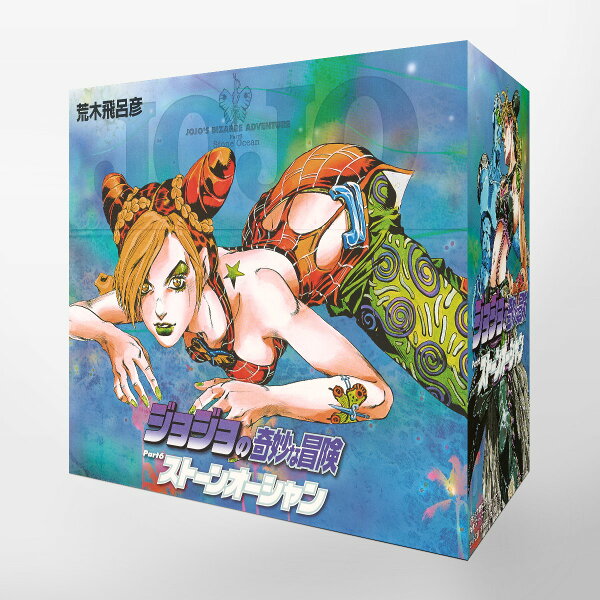
JoJo's Bizarre Adventure
Yu's review of JoJo's Bizarre Adventure — a generational saga following the Joestar bloodline across centuries and continents, each story featuring a new JoJo facing supernatural evil with increasingly creative and bizarre combat abilities.
Action / Fantasy
Fullmetal Alchemist
A review of Fullmetal Alchemist — 27 volumes in Monthly Shonen Gangan. Edward and Alphonse Elric commit the taboo of human transmutation trying to revive their mother; what follows is 27 volumes with zero wasted chapters about two brothers trying to fix a terrible mistake — widely considered the best-written manga ever made. VIZ Media's English edition is complete.
Action / Fantasy
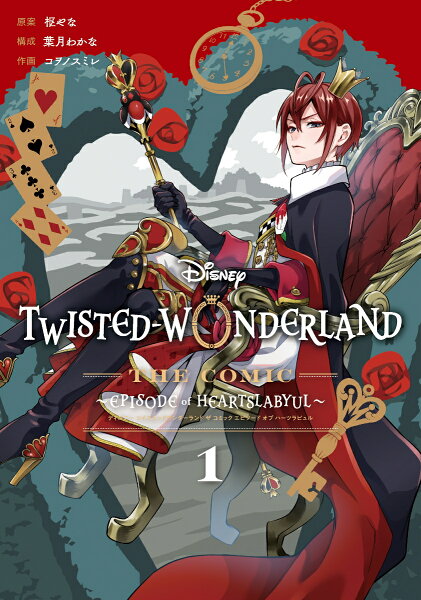
Yakuza Reincarnation
A comprehensive review of Yakuza Reincarnation — plot, characters, art style, and whether it's worth reading.
Action / Fantasy
Soul Eater
Yu's review of Soul Eater — a manga set in a school where students are weapon-wielders, and the weapons are people. Gothic, funny, and visually unlike anything else in manga. One of the best completed action series of its era.
Action / Game
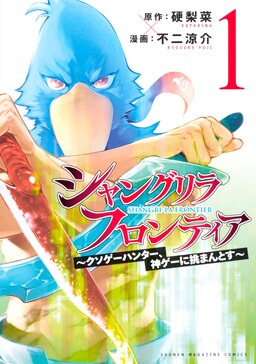
Shangri-La Frontier
Yu's review of Shangri-La Frontier — Rakuro Hizutome's hobby is playing terrible, broken games; when he tries Shangri-La Frontier, the world's most popular and technically perfect VR RPG, his experience with game-breaking strategies makes him approach it in ways no other player would.
Action / Fantasy
Shaman King
Yu's review of Shaman King — a laid-back shaman who communes with spirits enters the Shaman Fight, a tournament held every 500 years to determine who becomes the Shaman King and reshapes the world.
Written by
Yu
Manga Enthusiast from Japan
I grew up in Japan and manga literally saved me during a tough time in elementary school. My English isn't perfect, but my love for manga is real — and I want to share it with you.
Disclosure: This post contains affiliate links. As an Amazon Associate, I earn from qualifying purchases at no extra cost to you.