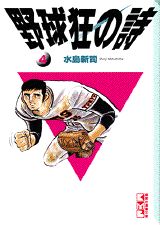
Yakyuukyo no Uta Review: The Baseball Manga That Gave the Diamond to a Woman Who Was Never Supposed to Be There
by Shinji Mizushima
Read the first volume. If it doesn't hook you, put it down. It'll hook you.
Buy Yakyuukyo no Uta on Amazon →*Affiliate link — I earn a small commission at no extra cost to you.
What if the person who didn't belong was the only one who could save the team?
Quick Take
- Shinji Mizushima's 28-volume baseball anthology — the aging pitcher at the center connects a series of stories about the game's margins
- Best known for Yuki Mikami, Japan's first female professional baseball player in manga — a creation that changed what the sport could imagine
- Warm, human baseball storytelling that covers everything from grassroots passion to the edge of the professional game
Who Is This Manga For?
- Baseball fans who want the emotional core of the sport rather than just its mechanics
- Readers of Mizushima's work who want to see how his baseball universe evolved
- Anyone interested in how manga handled gender in sports contexts in the 1970s
- Long-form sports manga fans who want a sprawling, human portrait of baseball life
Content Warnings & Age Rating
Age Rating: T (Teen) Content Warnings: Sports competition, themes of aging and decline. Nothing graphic.
Suitable for most readers.
Yu's Rating
| Category | Score |
|---|---|
| Story Depth | ★★★★☆ |
| Art Style | ★★★★☆ |
| Character Development | ★★★★☆ |
| Accessibility for Non-Japanese Readers | ★★★☆☆ |
| Reread Value | ★★★☆☆ |
Story Overview
The series centers on the Tokyo Mets — a fictional professional team — and specifically on Yukinojo Ichiharada, an aging pitcher whose career is in its twilight. The central tension is familiar: how long can a player extend what he loves before his body makes the decision for him?
But Yakyuukyo no Uta expands beyond Ichiharada into an anthology structure, giving volume after volume to different players, different stories, different ways baseball touches a life. Some chapters are triumphant. Others are genuinely sad. The game doesn't favor anyone's narrative.
The character who defines the series' legacy is Yuki Mikami — a young woman who pitches her way into professional baseball not through special ability alone but through a knuckleball that nobody taught her and a determination that nobody anticipated. Her arc predates any real-world discussion of women in professional baseball by decades. Mizushima simply imagined her and let her play.
Characters
Yukinojo Ichiharada: An aging pitcher whose love for the game outlasts his body's willingness to cooperate — the emotional anchor of the anthology.
Yuki Mikami: A female pitcher who enters professional baseball with a devastating knuckleball — her presence redefines what the series is and what the sport can imagine.
The supporting cast: A rotating gallery of players, coaches, and fans whose individual stories make the baseball world feel genuinely populated.
Art Style
Mizushima's art has the kinetic clarity of his best baseball work — pitching motion captured in a single panel, the geometry of the field used to generate tension, character designs that communicate personality through posture and expression.
Cultural Context
Yakyuukyo no Uta ran in Weekly Shonen Magazine from 1972 to 1982. Baseball was Japan's dominant sport, and Mizushima had already established himself with Dokaben. This series took a different approach — less tournament structure, more life — and reached a different kind of reader.
Yuki Mikami became iconic enough to inspire multiple anime adaptations. Her existence in this series is the most significant thing the series contributed to Japanese sports culture: the image of a woman on a professional baseball mound, in a manga, in 1972.
What I Love About It
I love that Yuki Mikami is treated as a baseball problem, not a gender problem.
The players who face her aren't worried about whether a woman belongs on the mound. They are worried about the knuckleball — because the knuckleball is genuinely difficult to hit, and she throws it genuinely well. The gender question is handled by simply making her too good to ignore. The sport has to respond to her on its own terms.
What English-Speaking Fans Say
Not widely known outside Japan. Among baseball manga historians and readers of Mizushima's complete work, Yakyuukyo no Uta is recognized as the series that expanded what baseball manga could contain — and as the home of one of the medium's most quietly radical character creations.
Memorable Scene ⚠️ Spoiler Warning
Yuki Mikami's first professional appearance — the opposing players expecting an easy at-bat, the knuckleball arriving somewhere none of them predicted, the dugout going silent. The silence is the scene. The sport has to reckon with what just happened, and it does not have comfortable language for it.
Similar Manga
| Title | Its Approach | How Yakyuukyo no Uta Differs |
|---|---|---|
| Dokaben | Tournament-focused school baseball | Anthology of professional baseball life |
| Absan | Single protagonist's long career | Multiple characters across a team's world |
| Kyojin no Hoshi | Generational athletic obsession | Quieter, more human relationship with the game |
Reading Order / Where to Start
Volume 1. The Ichiharada arc establishes the emotional register. The Yuki Mikami material arrives as the series develops.
Official English Translation Status
Yakyuukyo no Uta has no official English translation.
Pros & Cons
Pros
- Yuki Mikami is a genuinely radical creation for 1972
- Anthology structure produces varied emotional registers
- 28 volumes of baseball life that feels real
- Mizushima's clean, expressive art throughout
Cons
- No English translation
- Anthology structure means no single sustained narrative
- Baseball knowledge enhances appreciation significantly
- The cultural specificity of Japanese professional baseball may require context
Is Yakyuukyo no Uta Worth Reading?
For baseball fans and readers of serious sports manga, yes — Yuki Mikami alone justifies the series, and the surrounding material is solid Mizushima throughout. For readers who want tournament structure or a single driving narrative, this isn't that. But as a portrait of what baseball means to people who love it, it works.
Format Comparison
| Format | Notes |
|---|---|
| Physical | Japanese editions available |
| Digital | Available in Japanese |
| Omnibus | Selected collected editions available |
Where to Buy
No English release yet. That just means you find it before everyone else does.
*Affiliate link — I earn a small commission at no extra cost to you.
More Manga You Might Like
Sports
Dai Koshien
Dai Koshien is Shinji Mizushima's dream crossover — a sequel to Dokaben that pulls Yamada Taro and heroes from his other baseball manga into one summer Koshien tournament, climaxing in an 18-inning semifinal for the ages.
Sports / Slice of Life
Absan
Absan follows Yasutake Kageura, a sake-drinking slugger for the Nankai / Daiei / SoftBank Hawks who entered as an undrafted pinch-hitter and retired 37 years later at 61, a 107-volume baseball manga by Shinji Mizushima that ran for over four decades.
Sports / Drama
Dokaben Super Stars
Dokaben Super Stars-hen is Shinji Mizushima's professional-baseball continuation of Dokaben, sending Yamada Taro and his generation of free agents into two brand-new Pacific League expansion teams in 2004 — and pulling characters from across Mizushima's whole baseball universe onto the same diamond.
Sports
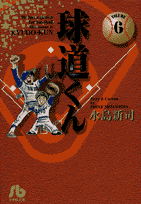
Kyudo-kun
Kyudo-kun follows Kyudo Narao, a young pitcher from Osaka with natural talent and a deep connection to the game through his father — a baseball story about inheritance, pressure, and what it means to throw yourself completely into what you love.
Sports
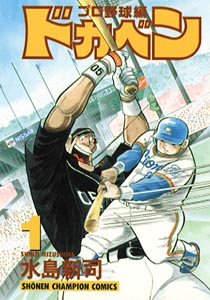
Dokaben Pro Yakyuhen
Dokaben Pro Yakyuhen takes Yamada Taro and his old high school rivals into the real NPB — Seibu, the Hawks, Orix, Lotte, the Giants — and famously got Shinji Mizushima sued by an actual pro pitcher over one panel.
Sports / Drama
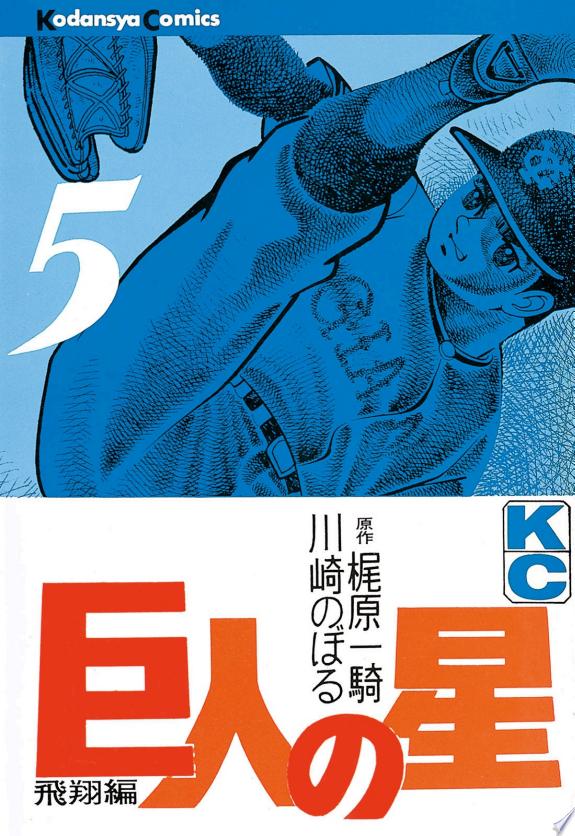
Kyojin no Hoshi
Kyojin no Hoshi follows Hyuma Hoshi, whose father — a former baseball player who never achieved his dream — has raised him from childhood to be a star pitcher for the Yomiuri Giants, through training that borders on abuse and produces a player who may be the greatest — at tremendous personal cost.
Written by
Yu
Manga Enthusiast from Japan
I grew up in Japan and manga literally saved me during a tough time in elementary school. My English isn't perfect, but my love for manga is real — and I want to share it with you.