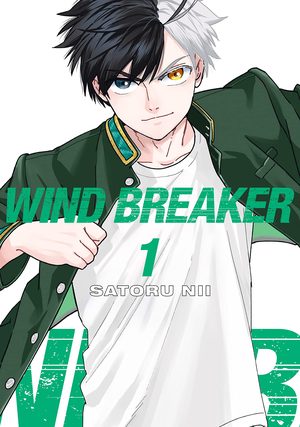
Wind Breaker Review: A Loner Who Moved to Town for Its Toughest School Discovers the School Protects the Town
by Satoru Nii
Read the first volume. If it doesn't hook you, put it down. It'll hook you.
Buy Wind Breaker on Amazon →*Affiliate link — I earn a small commission at no extra cost to you.
Quick Take
- A delinquent school story that inverts the formula: Furin High's students are feared because they protect, not because they terrorize
- Wind Breaker's fights are team-based and oriented around defending something real
- Ongoing and building momentum; one of the stronger recent shonen launches
Who Is This Manga For?
- Readers who want delinquent/fighting manga with a different moral framework
- Fans of team-based combat and friendship-driven shonen
- Anyone who liked the early arcs of older delinquent manga but wanted something less toxic
- Readers looking for a strong ongoing shonen series
Content Warnings & Age Rating
Age Rating: T (Teen) Content Warnings: Fighting and delinquent culture depicted; some violence
Appropriate for teen readers. The violence is present but not extreme.
Yu's Rating
| Category | Score |
|---|---|
| Story Depth | ★★★★☆ |
| Art Style | ★★★★★ |
| Character Development | ★★★★☆ |
| Accessibility for Non-Japanese Readers | ★★★★★ |
| Reread Value | ★★★★☆ |
Story Overview
Haruka Sakura has been alone his entire life. He is strong and he knows it — strength, to him, means not needing anyone. He transfers to Furin High School because its reputation as the toughest school in the area offers him opponents worth fighting.
What he finds: Furin's students, called Bofurin, are not thugs. They are protectors. The town they live in is their responsibility, and they take that seriously. When outside threats come — rival gangs, organized violence from elsewhere — Bofurin stands between them and the people they care about.
Sakura's arc is the discovery that strength used for others is a different thing than strength used to prove something to yourself.
Characters
Haruka Sakura — A protagonist type that is common in shonen but executed unusually well here: the loner who has decided not to need anyone, discovering what he's been missing. His specific reason for isolation — not trauma, but a genuine belief that connection is weakness — makes his development feel earned rather than predictable.
Umemiya Hajime — The Bofurin leader whose philosophy about strength and protection is the series' thesis statement; his easy leadership style is a direct foil to Sakura's isolation.
Nirei Toma — The first friend Sakura makes, whose enthusiasm for having Sakura's attention is both comedic and genuinely affecting.
Art Style
Nii's art is the series' strongest technical element — the fight sequences are kinetically clear with individual character styles visually distinguishable. The character designs are varied and the Bofurin members' different physical builds reflect their different fighting approaches. The town setting is rendered with genuine affection.
Cultural Context
Wind Breaker engages with the Japanese delinquent (yankee) manga tradition while inverting its usual moral framework. Traditional delinquent manga celebrated strength as dominance; Wind Breaker asks what strength is for. The protection element draws on a real community policing tradition in Japanese neighborhood organizations.
What I Love About It
The chapter where Sakura fights alongside people for the first time — not because he asked for help, but because they came — and his face during the fight. He does not know what to do with being in a team. The series knows exactly what to do with him not knowing.
What English-Speaking Fans Say
Wind Breaker has built a strong Western readership as an ongoing series. The art quality is specifically praised as among the best in Weekly Shonen Magazine. The inversion of the delinquent genre's usual moral framework is cited as what distinguishes it from similar series.
Memorable Scene ⚠️ Spoiler Warning
The first time Sakura consciously acts to protect someone — not himself, not because it was necessary for a fight, but because he does not want something to happen to them — marks the series' central character turn.
Similar Manga
- Slam Dunk — Delinquent protagonist, team-based development
- Tokyo Revengers — Delinquent culture, redemption
- Haikyu!! — Finding a team, learning that strength has context
- Kengan Ashura — Fighting, character development through combat
Reading Order / Where to Start
Volume 1 — Sakura's arrival and discovery of what Furin actually is establishes in the first few chapters.
Official English Translation Status
Kodansha Comics is publishing the ongoing English release.
Pros & Cons
Pros
- The art is exceptional — among the best in current shonen
- The moral inversion of the delinquent genre is executed effectively
- Sakura's character development is genuinely earned
- Strong ongoing series with sustained quality
Cons
- Ongoing — no complete arc yet in English
- The team-protection premise takes a few volumes to fully establish
- Some delinquent genre conventions remain despite the inversion
Format Comparison
| Format | Notes |
|---|---|
| Individual Volumes | Kodansha Comics; standard |
| Digital | Available |
Where to Buy
Read the first volume. If it doesn't hook you, put it down. It'll hook you.
This post contains affiliate links. If you purchase through these links, I may earn a small commission at no extra cost to you. As an Amazon Associate, I earn from qualifying purchases.
*Affiliate link — I earn a small commission at no extra cost to you.
More Manga You Might Like
Sports
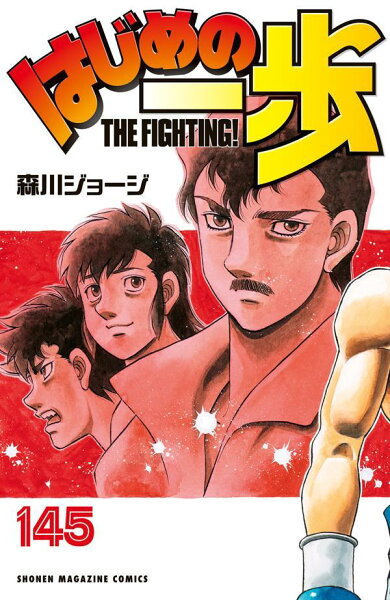
Hajime no Ippo
Yu's review of Hajime no Ippo — a bullied high school boy is saved by a professional boxer, discovers he has a natural gift for the sport, and begins the long road to becoming a champion.
Sports
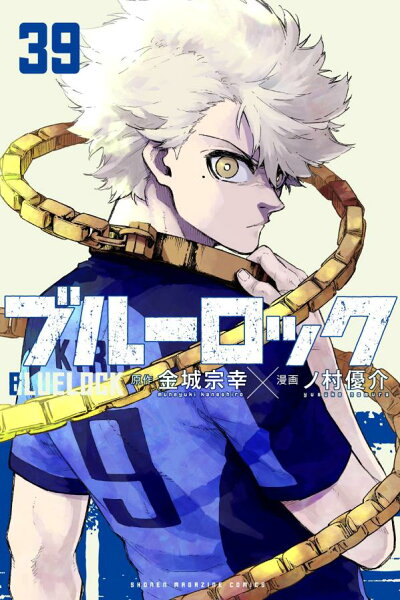
Blue Lock
Yu's review of Blue Lock — after Japan's World Cup failure, a strange coach locks 300 high school strikers in a facility and tries to grow the world's most selfish striker. Only one walks out as Japan's best.
Sports / Action
Ring ni Kakero
Ring ni Kakero follows Ryuji Takane and his sister Kiku through a boxing journey that begins in realism and evolves into one of manga's most spectacular supernatural combat series — the bridge between sports manga and the battle shonen that followed.
Sports / Drama
Mix
Yu's review of Mix — set in the same world as Touch, following the Tachibana brothers (stepsiblings by a blended family) as they pursue Koshien at the same high school where the legendary Uesugi brothers once played; Adachi's most recent long-form baseball manga.
Sports / Action
Baki the Grappler
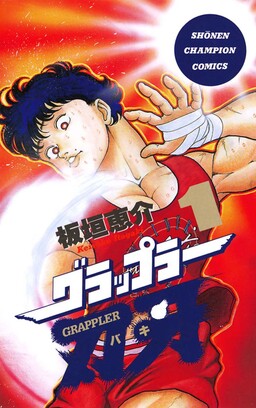
Yu's review of Baki the Grappler — Baki Hanma trains obsessively to defeat his father Yujiro, the Strongest Creature on Earth, through the Maximum Tournament and the Most Evil Death Row Convicts arc. A fighting manga that pushes martial arts past physics into pure operatic excess.
Sports / Drama
Aoashi
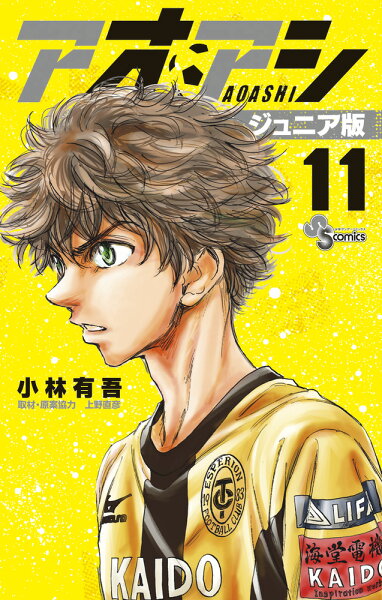
A review of Yuugo Kobayashi's Aoashi — ongoing in Weekly Big Comic Spirits. Ashito Aoi, a rough soccer talent from rural Ehime, is scouted into Tokyo's FC Tokyo youth academy. The series is about learning what modern soccer actually is — through a boy who sees the entire field and has to be taught how to use what he sees. Titan Comics' English edition is ongoing.
Written by
Yu
Manga Enthusiast from Japan
I grew up in Japan and manga literally saved me during a tough time in elementary school. My English isn't perfect, but my love for manga is real — and I want to share it with you.
Disclosure: This post contains affiliate links. As an Amazon Associate, I earn from qualifying purchases at no extra cost to you.