
Welcome to the Ballroom Review: A Directionless Boy Discovers the Total Commitment That Competitive Dance Demands
by Tomo Takeuchi
Read the first volume. If it doesn't hook you, put it down. It'll hook you.
Buy Welcome to the Ballroom on Amazon →*Affiliate link — I earn a small commission at no extra cost to you.
Quick Take
- Ballroom competitive dance drawn with the visual intensity of fighting manga — the technique detail is exceptional, the competitive drama is real
- Tatara starts with nothing and the series earns every step of his development
- The art is among the most technically accomplished in sports manga
Who Is This Manga For?
- Readers who want sports manga about non-traditional disciplines
- Fans of intense competitive drama in unexpected settings
- Anyone curious about ballroom dance and how it actually works as a competitive sport
- Readers who appreciate exceptional manga art
Content Warnings & Age Rating
Age Rating: T (Teen) Content Warnings: Competitive pressure; physical exhaustion from training depicted; minor injuries
Very appropriate for teen readers and above.
Yu's Rating
| Category | Score |
|---|---|
| Story Depth | ★★★★☆ |
| Art Style | ★★★★★ |
| Character Development | ★★★★☆ |
| Accessibility for Non-Japanese Readers | ★★★★★ |
| Reread Value | ★★★★☆ |
Story Overview
Tatara Fujita is in middle school with no ambitions and no particular abilities. He is saved from a confrontation by Kaname Sengoku, a professional ballroom dancer who invites him to his studio. Tatara watches dancers practice and something happens to him — not inspiration exactly, but recognition. He has found the thing that will make him work.
He cannot afford lessons. He practices by watching and memorizing. He enters his first competition with almost no formal training. He loses. He continues.
The series follows his development across competitions of increasing difficulty, partnerships that push him in different directions, and rivals who show him what the discipline actually demands at its highest level.
Characters
Tatara Fujita — His natural gift is imitation and observation — he can watch another dancer and reproduce their movement more accurately than people who have trained for years. This gift has a ceiling the series explores carefully.
Shizuku Hanaoka — The first partner he dances with seriously; her technical precision and her own frustrated ambitions provide the series' first major competitive drama.
Chinatsu Hiyama — A later partner whose combative approach to dance and to partnership generates the series' most interesting competitive dynamic.
Kaname Sengoku — The professional who started Tatara on this path; his own relationship with competition runs underneath the main story.
Art Style
Takeuchi's art is the series' most celebrated element. The dancer bodies during competition — the lines, the extension, the specific technical positions — are drawn with the accuracy of someone who has studied the discipline seriously. The competition sequences use dynamic panel layouts that convey movement in ways that static images should not be able to achieve.
Cultural Context
Competitive ballroom dance (Dancesport) has a specific position in Japanese sports culture — it is a serious competitive discipline with a formal ranking system, and the series reflects the actual competitive structure accurately. The partnership dynamic — where two dancers must merge their individual styles into something unified under competition pressure — is the series' central metaphor as much as its sports premise.
What I Love About It
The competition sequences where Tatara watches another dancer and the page shows his mind processing what he sees — breaking the movement into components, finding what is happening in each part of the body — as if sports manga and technical diagram had been combined. The series shows how mastery actually works.
What English-Speaking Fans Say
Western readers consistently cite the art as among the finest in sports manga. The Chinatsu partnership arc is identified as the series' peak — the conflict between two people who bring incompatible things to the dance floor, and what they eventually create together, generates consistent reader response.
Memorable Scene ⚠️ Spoiler Warning
Tatara's first competition result that exceeds expectations — not victory, but the specific acknowledgment from a superior dancer that something real happened on the floor — establishes what the series will be working toward for the rest of its run.
Similar Manga
- Chihayafuru — Traditional competitive art, individual development within partnership
- Haikyu!! — Finding a passion, competitive development, team dynamics
- Ping Pong — Competitive sports philosophy, individual style vs. technique
- Scorching Ping Pong Girls — Non-traditional sports, female competitors
Reading Order / Where to Start
Volume 1 — Tatara's introduction to dance happens immediately and efficiently.
Official English Translation Status
Kodansha Comics is publishing the ongoing English release.
Pros & Cons
Pros
- The art is genuinely exceptional
- Ballroom dance as competitive sport is depicted with real accuracy
- Character development is sustained and earned
- The competition sequences rank among sports manga's finest
Cons
- Ongoing English release — series not yet complete in English
- The art style can be intense/abstract during competition sequences
- Slower between competition arcs
Format Comparison
| Format | Notes |
|---|---|
| Individual Volumes | Kodansha Comics; standard |
| Digital | Available |
Where to Buy
Read the first volume. If it doesn't hook you, put it down. It'll hook you.
This post contains affiliate links. If you purchase through these links, I may earn a small commission at no extra cost to you. As an Amazon Associate, I earn from qualifying purchases.
*Affiliate link — I earn a small commission at no extra cost to you.
More Manga You Might Like
Sports
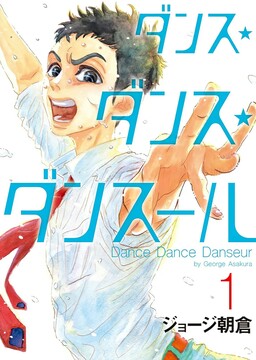
Dance Dance Danseur
Yu's review of Dance Dance Danseur — Junpei Murao buried his love of ballet after his father died because boys are supposed to be tough. Then a girl named Miyako and a strange, brilliant dancer named Luou pull it back out of him. George Asakura's seinen about what it costs a teenage boy to dance.
Sports
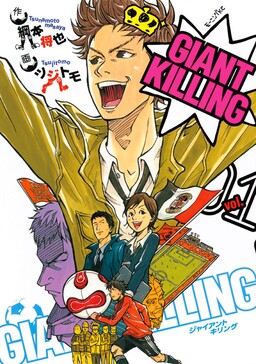
Giant Killing
Yu's review of Giant Killing — Takeshi Tatsumi, a player who disappeared from Japanese professional soccer and became a legend coaching a small English team, is hired to rescue East Tokyo United from the bottom of the J-League; a soccer management drama that treats the tactical and human sides of sports organization with equal seriousness.

Sports / Drama
Tsurune
Yu's review of Tsurune — Minato Narumiya was an archer until target panic (a release disorder) ended his ability to compete; in high school, he joins the kyudo club and works through his anxiety with a new coach and teammates, trying to find the clean release again.

Sports / Game
Saki
Yu's review of Saki — a high school girl named Saki Miyanaga has an uncanny ability to always score exactly zero in mahjong, and when a mahjong club recruits her, the national high school mahjong tournament becomes the backdrop for increasingly supernatural competitive drama.
Sports
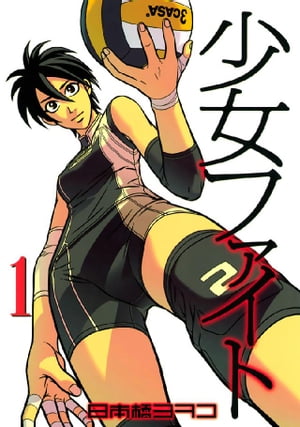
Shojo Fight
Shojo Fight follows Neri Oishi, a girl with exceptional volleyball ability who carries the shadow of her older sister — a psychologically complex sports manga that ran in Young Magazine and refused the conventional shonen sports template.
Sports / Psychological
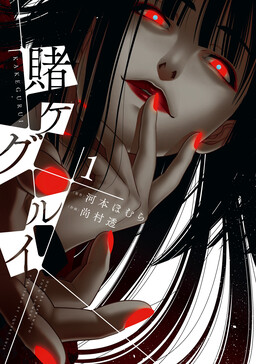
Kakegurui
Yu's review of Kakegurui — Hyakkaou Private Academy determines student hierarchy through gambling; transfer student Yumeko Jabami arrives and reveals she is not playing for money or status but for the pure pleasure of risking everything, which systematically dismantles everyone who thought they were in control.
Written by
Yu
Manga Enthusiast from Japan
I grew up in Japan and manga literally saved me during a tough time in elementary school. My English isn't perfect, but my love for manga is real — and I want to share it with you.
Disclosure: This post contains affiliate links. As an Amazon Associate, I earn from qualifying purchases at no extra cost to you.