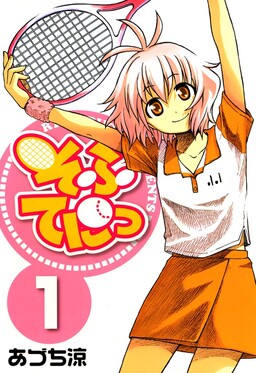
Softenni Review: Soft Tennis Comedy That Goes Completely Off the Rails in the Best Way
by Co Moroboshi
Read the first volume. If it doesn't hook you, put it down. It'll hook you.
Buy Softenni on Amazon →*Affiliate link — I earn a small commission at no extra cost to you.
Quick Take
- A soft tennis club comedy that prioritizes the comedy — the tennis is real and played seriously when it appears, but the series spends most of its time on the character dynamics between five very different girls
- Honest about what it is: sports manga framing for a character-driven comedy with fanservice
- 7 volumes complete; a light read that delivers what it promises without overstaying its welcome
Who Is This Manga For?
- Readers who want sports-adjacent comedy manga with a complete, short run
- Anyone who enjoyed K-On! or similar "cute girls doing club activities" manga
- Fans of ensemble comedy where each character has a distinct comedic personality
- Readers who want a quick, light read in the 7-volume range
Content Warnings & Age Rating
Age Rating: T+ (Older Teen) Content Warnings: Fanservice throughout; adult humor; mild ecchi content in some chapters
The T+ rating is accurate. The fanservice is consistent but not extreme.
Yu's Rating
| Category | Score |
|---|---|
| Story Depth | ★★☆☆☆ |
| Art Style | ★★★☆☆ |
| Character Development | ★★★☆☆ |
| Accessibility for Non-Japanese Readers | ★★★★☆ |
| Reread Value | ★★☆☆☆ |
Story Overview
Asuna Harukaze joins her school's soft tennis club with serious competitive ambitions. The club she finds consists of four other members, none of whom share her level of focus: Chitose (competitive but prone to bizarre focus breaks), Kotone (aggressive and unpredictable), Kurusu (cautious and anxious), and Elizaveta (foreign exchange student with her own interpretation of Japanese club culture).
The series is primarily a comedy about these five personalities navigating training, tournaments, and daily club life. When tournaments appear, they are played straight — the series does not mock competitive soft tennis — but the path to the tournament and the team dynamics around it are played for maximum comedy.
Characters
Asuna Harukaze — The protagonist, whose genuine competitive drive is constantly derailed by her teammates' collective chaos. Her reactions to the absurdity around her are the series' primary comedic engine.
Chitose — The most technically skilled player on the team, whose mind wanders at critical moments in ways that somehow resolve correctly.
The team — Each member has a specific comedic role that generates distinct situations across seven volumes.
Art Style
Co Moroboshi's art is clean and expressive — character expressions carry the comedy effectively, and the tennis sequences when they appear are drawn with enough technical accuracy to feel credible. Character designs are distinct.
Cultural Context
Soft tennis is a Japanese variant of tennis played with a soft, rubber ball rather than a hard ball, using a different stroke technique. It is predominantly played in East Asian countries and is a standard school sport in Japan. Western readers will find the rules intuitive — it is recognizably tennis — but the cultural specificity of soft tennis as a school sport adds local flavor.
What I Love About It
The series knows its limits. Seven volumes of a comedy ensemble that never tries to be more than it is — no dramatic revelations, no season-ending stakes — is more satisfying than twelve volumes of a comedy that forgets what it's good at. Softenni ends before it runs out of ideas.
What English-Speaking Fans Say
Western readers describe Softenni as a reliable light comedy — not the best in its genre but solidly executed for what it is. The complete seven-volume run is praised; readers who want this kind of content get exactly what they need without a long-term commitment.
Memorable Scene ⚠️ Spoiler Warning
The tournament match where the team finally plays as a unit — when all the chaotic personalities align for exactly long enough to accomplish something — is the series' most satisfying competitive moment. It earns the result through character rather than training montage.
Similar Manga
- Scorching Ping-Pong Girls — Sports comedy with female cast, similar structure
- Bamboo Blade — Kendo club comedy-sports, more earnest
- Harukana Receive — Beach volleyball, more serious competition
- K-On! — Club activities comedy, music instead of sports
Reading Order / Where to Start
Volume 1 — The ensemble is established quickly and the series is best read in order.
Official English Translation Status
Seven Seas Entertainment published all 7 volumes. Complete and available.
Pros & Cons
Pros
- Complete 7-volume run — no waiting, no dropped series
- Comedy ensemble is well-differentiated
- Tennis sequences are handled seriously when they appear
- Short enough to read in an afternoon
Cons
- Fanservice is consistent throughout
- Story depth is minimal by design
- The comedy may not land for all readers
Format Comparison
| Format | Notes |
|---|---|
| Individual Volumes | Seven Seas; complete |
| Digital | Available |
Where to Buy
Read the first volume. If it doesn't hook you, put it down. It'll hook you.
This post contains affiliate links. If you purchase through these links, I may earn a small commission at no extra cost to you. As an Amazon Associate, I earn from qualifying purchases.
*Affiliate link — I earn a small commission at no extra cost to you.
More Manga You Might Like

Sports / Comedy
Mitsudomoe
Yu's review of Mitsudomoe — Yabe Satoshi is a new teacher at an elementary school; his class contains the Marui triplets: Mitsuba, who is manipulative and vain; Futaba, who is incredibly strong and fixated on the physical; and Hitoha, who is terrifying to everyone around her for reasons she doesn't fully understand; the series follows his attempts to manage a classroom that manages him instead.
Sports / Comedy
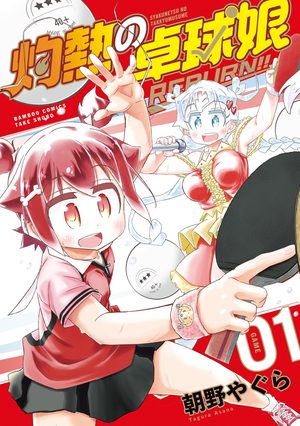
Shakunetsu no Takkyuu Musume (Scorching Ping Pong Girls)
Yu's review of Scorching Ping Pong Girls — Agari Kamiya is the best player at her middle school ping pong club until Tsumujikaze Koyori transfers in and shows her what it looks like when someone plays with pure, overwhelming love for the sport.
Sports / Comedy
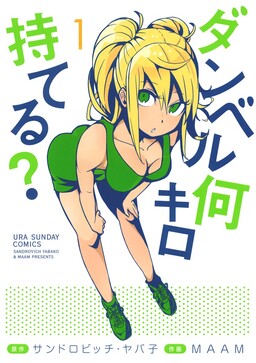
How Heavy Are the Dumbbells You Lift?
Yu's review of How Heavy Are the Dumbbells You Lift? — Hibiki Sakura, a high school gyaru worried about weight gain, joins a gym with the intention of losing some pounds; she finds the gym populated by muscle-obsessed regulars, a personal trainer with suspiciously good looks and suspicious enthusiasm, and a fellow student who turns out to be a serious competitive bodybuilder; the series is structured around actual exercise instruction embedded in comedy.
Sports
Happy!
Yu's review of Happy! — Umino Miyuki had no interest in tennis until her brother Yuuichi's gambling debt threatened the entire family; to pay it off she must reach the top of the professional tennis circuit; Naoki Urasawa's tennis manga about a woman who becomes a professional athlete not out of passion but out of necessity.
Sports / Shojo
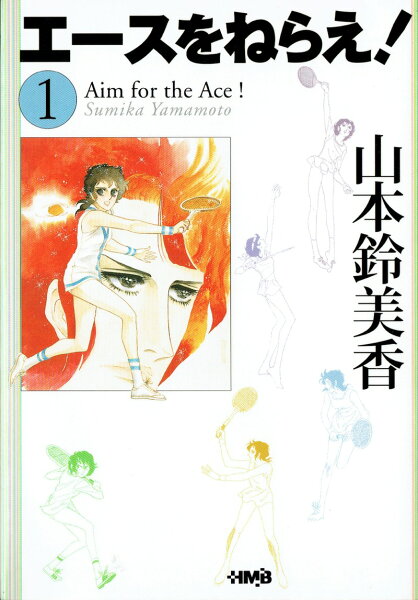
Ace wo Nerae!
Ace wo Nerae! follows Hiromi Oka, an ordinary first-year who falls in love with tennis and gets pulled into the brutal, devoted coaching of Jin Munakata — a 1970s shojo classic about a coach who is dying, a player he refuses to let stay ordinary, and what it costs to be the one person someone believes in.
Sports / Comedy
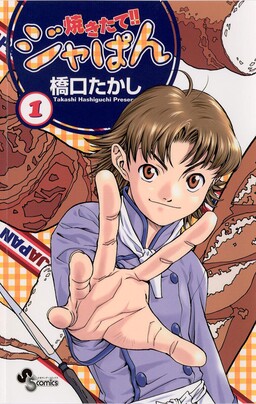
Yakitate!! Japan
Yu's review of Yakitate!! Japan — Kazuma Azuma has supernatural hands warm enough to activate yeast perfectly, and his dream is to create a national bread for Japan; the series applies shonen battle manga structure to competitive bread-baking with completely committed absurdist comedy.
Written by
Yu
Manga Enthusiast from Japan
I grew up in Japan and manga literally saved me during a tough time in elementary school. My English isn't perfect, but my love for manga is real — and I want to share it with you.
Disclosure: This post contains affiliate links. As an Amazon Associate, I earn from qualifying purchases at no extra cost to you.