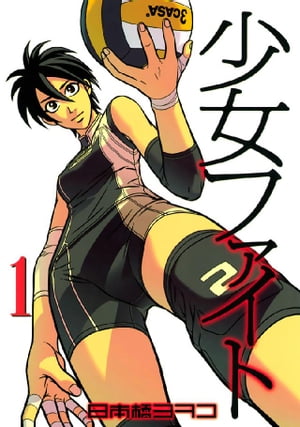
Shojo Fight Review: The Volleyball Manga That Refused to Make Its Protagonist Likeable Right Away
by Nihonbashi Yoko
Read the first volume. If it doesn't hook you, put it down. It'll hook you.
Buy Shojo Fight on Amazon →*Affiliate link — I earn a small commission at no extra cost to you.
Her sister was better. That's where it starts — and it never stops being what it's about.
Quick Take
- Nihonbashi Yoko's Young Magazine volleyball manga — Neri Oishi, extraordinary athlete, living in her more beloved sister's shadow
- A sports manga that takes psychological complexity seriously rather than using it as backstory to overcome
- Different from shonen sports in its refusal to make the protagonist immediately sympathetic — and stronger for it
Who Is This Manga For?
- Volleyball fans who want the sport depicted with genuine technical depth
- Sports manga readers who want psychological complexity rather than pure athletic narrative
- Readers who find protagonists more interesting when they're difficult — Neri is not easy to root for, then is
- Anyone who has been compared unfavorably to someone they loved and knows how that changes you
Content Warnings & Age Rating
Age Rating: T (Teen) Content Warnings: Sports competition, family trauma, psychological themes, sibling comparison. Nothing graphic.
Suitable for most readers.
Yu's Rating
| Category | Score |
|---|---|
| Story Depth | ★★★★★ |
| Art Style | ★★★★☆ |
| Character Development | ★★★★★ |
| Accessibility for Non-Japanese Readers | ★★★☆☆ |
| Reread Value | ★★★★☆ |
Story Overview
Neri Oishi is a volleyball player of exceptional natural ability who has grown up in the shadow of her older sister Naka — more beloved, more warmly received, more everything. When Naka dies, Neri is left with her sister's absence and the volleyball talent that was always hers alone.
The series refuses the conventional sports manga setup. Neri is not immediately sympathetic — she's prickly, she keeps people at distance, she uses her talent in ways that sometimes hurt her teams. The series takes the time to explain why she is this way before asking the reader to care about who she could become. That investment takes time and is completely worth it.
The volleyball is technically serious — Nihonbashi clearly knows the sport, and the match sequences have genuine tactical content. But Shojo Fight's distinction is its psychological honesty: athletes are formed by their histories, and Neri's history is specific and difficult.
Characters
Neri Oishi: A protagonist who is difficult before she is sympathetic — her talent is real, her damage is real, and the series traces the gap between what she can do and what she's willing to let herself feel.
The team: Each player is given enough depth that the team feels like a social ecosystem rather than supporting cast.
Naka's absence: The dead sister functions as a presence throughout — what Neri measures herself against, what she's lost, what she's trying to understand.
Art Style
Nihonbashi's art captures volleyball movement with exceptional clarity — the sport's geometry, the physical requirements of the positions, the moment of a successful spike or block. Character expressions carry the psychological weight the story requires.
Cultural Context
Shojo Fight has run in Weekly Young Magazine since 2006 — a volleyball manga in a seinen magazine, which positions it differently from sports manga aimed at younger readers. Young Magazine's readership allows the psychological complexity the series requires; a shonen sports venue would have pushed toward simpler triumph.
The series' title is deliberately doubled — "shojo" meaning girl/young woman, and the familiar "fight" of sports encouragement, but also the fight that Neri has been in since before the first panel.
What I Love About It
I love that she's hard to like at first.
Sports manga protagonists are almost universally sympathetic from page one — their enthusiasm, their effort, their obvious heart make the reader root for them before anything has happened. Neri doesn't offer that. She's the talent without the warmth, at first. Understanding why she is this way, and watching the warmth become possible, is a different kind of reading experience. It's more honest about what damage looks like.
What English-Speaking Fans Say
Known among dedicated sports manga readers who have searched beyond the mainstream. Recognized as one of the more psychologically serious volleyball manga, and praised for the protagonist's difficult-then-earned arc. Often recommended alongside Haikyuu!! as a different register for the same sport.
Memorable Scene ⚠️ Spoiler Warning
Neri's first moment of genuine connection with a teammate — not the competence she's always had, but actual connection — arriving later than it would in a conventional sports manga and landing harder for the wait. The scene is the first time she lets someone see what the sport means to her rather than just seeing what she can do.
Similar Manga
| Title | Its Approach | How Shojo Fight Differs |
|---|---|---|
| Haikyuu!! | Volleyball manga with enthusiastic protagonist and generous opponent treatment | Psychologically complex protagonist who earns sympathy slowly — darker starting point |
| Ace of Diamond | Baseball manga with protagonist whose talent creates social friction | Volleyball and female athlete focus — the social friction comes from internal damage rather than external abrasiveness |
| Chihayafuru | Sport manga with female protagonist and psychological depth | Volleyball rather than karuta — the psychological focus is on damage rather than passion |
Reading Order / Where to Start
Volume 1. The early volumes are the foundation for everything — skipping them means missing why Neri is who she is, which means missing the series.
Official English Translation Status
Shojo Fight has no official English translation.
Pros & Cons
Pros
- One of the most psychologically honest sports manga available
- The protagonist's difficult arc is handled with genuine care
- Technically serious volleyball
- The sibling shadow as ongoing presence rather than just backstory is genuinely distinctive
Cons
- No English translation
- The slow-burn protagonist sympathy may test readers expecting conventional sports manga warmth
- Ongoing — no guaranteed endpoint
- The psychological complexity requires engagement that pure sports manga readers may not want
Is Shojo Fight Worth Reading?
For readers who want sports manga with psychological depth and are willing to work for a protagonist who earns rather than receives sympathy, yes — this is among the best. For readers who want the uncomplicated enthusiasm of conventional sports manga, the starting point here will feel slow. But for what it's trying to do — honest sports narrative about a damaged athlete — it's exceptional.
Format Comparison
| Format | Notes |
|---|---|
| Physical | Japanese editions available |
| Digital | Available in Japanese |
| Omnibus | Collected editions available |
Where to Buy
No English release yet. That just means you find it before everyone else does.
*Affiliate link — I earn a small commission at no extra cost to you.
More Manga You Might Like
Sports
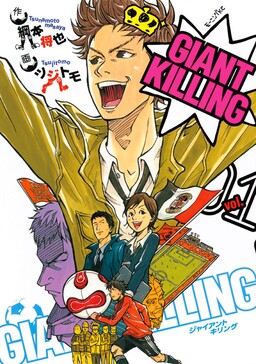
Giant Killing
Yu's review of Giant Killing — Takeshi Tatsumi, a player who disappeared from Japanese professional soccer and became a legend coaching a small English team, is hired to rescue East Tokyo United from the bottom of the J-League; a soccer management drama that treats the tactical and human sides of sports organization with equal seriousness.
Sports
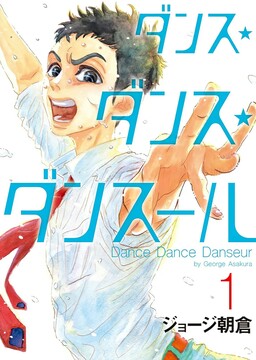
Dance Dance Danseur
Yu's review of Dance Dance Danseur — Junpei Murao buried his love of ballet after his father died because boys are supposed to be tough. Then a girl named Miyako and a strange, brilliant dancer named Luou pull it back out of him. George Asakura's seinen about what it costs a teenage boy to dance.

Sports / Drama
Welcome to the Ballroom
Yu's review of Welcome to the Ballroom — Tatara Fujita has no goals and no passions until he stumbles into a ballroom dance studio, sees what competitive dance actually looks like, and decides this is the thing he has been missing.

Sports / Drama
Tsurune
Yu's review of Tsurune — Minato Narumiya was an archer until target panic (a release disorder) ended his ability to compete; in high school, he joins the kyudo club and works through his anxiety with a new coach and teammates, trying to find the clean release again.

Sports / Psychological
Kakegurui
Yu's review of Kakegurui — Hyakkaou Private Academy determines student hierarchy through gambling; transfer student Yumeko Jabami arrives and reveals she is not playing for money or status but for the pure pleasure of risking everything, which systematically dismantles everyone who thought they were in control.

Sports / Drama
Aoashi
A review of Yuugo Kobayashi's Aoashi — ongoing in Weekly Big Comic Spirits. Ashito Aoi, a rough soccer talent from rural Ehime, is scouted into Tokyo's FC Tokyo youth academy. The series is about learning what modern soccer actually is — through a boy who sees the entire field and has to be taught how to use what he sees. Titan Comics' English edition is ongoing.
Written by
Yu
Manga Enthusiast from Japan
I grew up in Japan and manga literally saved me during a tough time in elementary school. My English isn't perfect, but my love for manga is real — and I want to share it with you.