Saki Review: The Most Intense Mahjong Manga You Will Ever Read
by Ritz Kobayashi
Read the first volume. If it doesn't hook you, put it down. It'll hook you.
Buy Saki on Amazon →*Affiliate link — I earn a small commission at no extra cost to you.
Quick Take
- The sports manga treatment applied to competitive mahjong — teams, training arcs, tournament brackets, rivals with distinctive playing styles — generating an unexpectedly intense competitive experience
- Players in this series have supernatural mahjong abilities described in game terms, which makes the tile draws feel like superpower clashes even though the underlying game is real
- Ongoing since 2006 with 28+ Japanese volumes; Yen Press has published 12 volumes in English; the series continues
Who Is This Manga For?
- Readers who enjoy sports manga structure applied to unexpected activities
- Anyone interested in mahjong as a competitive game (the series teaches game awareness naturally)
- Fans of all-female cast ensemble manga with strong individual characterization
- Readers who enjoy tournament arcs with escalating stakes and memorable rivals
Content Warnings & Age Rating
Age Rating: T (Teen) Content Warnings: Mild fanservice in some character designs; competitive stress; no violence
The T rating is accurate. The content is appropriate for most teen readers.
Yu's Rating
| Category | Score |
|---|---|
| Story Depth | ★★★☆☆ |
| Art Style | ★★★☆☆ |
| Character Development | ★★★★☆ |
| Accessibility for Non-Japanese Readers | ★★★☆☆ |
| Reread Value | ★★★☆☆ |
Story Overview
Saki Miyanaga grew up playing mahjong with her family, and somewhere in that history she developed the ability to always score exactly zero — ending exactly where she started. Not winning, not losing, just breaking even. In a game of complex tile draws and opponent reading, this is either the worst or the most extraordinary ability imaginable.
When Nodoka Haramura, the online mahjong national champion, recruits Saki to the school's mahjong club, Saki begins discovering what her zero-scoring ability actually means when applied to competitive intent. The club enters the national high school mahjong tournament.
The structure is pure sports manga: regional tournaments, memorable opponents with distinctive playing styles, training arcs, team dynamics, and escalating stakes. The subject is mahjong. The combination shouldn't work as well as it does.
Characters
Saki Miyanaga — The protagonist whose zero-score ability becomes, once she chooses to actually play, something stranger and more powerful. Her development from passive participant to active competitor is the series' central arc.
Nodoka Haramura — The national online champion whose digital approach to mahjong contrasts with Saki's instinctive play. Their friendship is the series' emotional foundation.
The team — Each member has a distinctive playing style and character arc. The team ensemble is the series' strongest element.
Art Style
Ritz Kobayashi's art is functional rather than exceptional. Character designs are distinctive enough to keep the large cast readable. The mahjong table sequences communicate the game state through visual shorthand that becomes comprehensible over time even for readers unfamiliar with the game.
Cultural Context
Mahjong occupies a different cultural position in Japan than in the West — it is simultaneously a casual family game, a serious competitive sport, and a gambling activity. Saki sits firmly in the competitive sport category, treating the national high school tournament with the same earnestness as a baseball or volleyball tournament.
Understanding basic mahjong structure helps but is not required; the series communicates game states through character reactions and commentary.
What I Love About It
The supernatural ability system applied to a real card game creates a unique hybrid experience. Each opponent in the tournament has a "style" — a pattern of play that becomes almost a superpower in execution — and watching Saki develop the awareness to respond to these styles is the series' best ongoing content.
What English-Speaking Fans Say
Western readers often approach Saki skeptical that competitive mahjong can generate genuine excitement and leave convinced. The series is frequently cited alongside Hikaru no Go as proof that any game can become compelling drama when the characters care enough.
Memorable Scene ⚠️ Spoiler Warning
The reveal of what Saki's zero-scoring ability actually is — what she has been doing, unconsciously, with every tile she draws — recontextualizes the series' opening chapters and makes her ability genuinely fascinating rather than just odd.
Similar Manga
- Hikaru no Go — Strategy game manga with national tournament structure
- Kakegurui — High-stakes gambling competition, darker
- Akagi — Mahjong manga, more psychological, for adults
- Bamboo Blade — Sports tournament structure with female ensemble
Reading Order / Where to Start
Volume 1 — The series establishes its premise and characters quickly. The tournament structure begins in the first few volumes.
Official English Translation Status
Yen Press is publishing the series in English; 12 volumes available as of 2026. Ongoing.
Pros & Cons
Pros
- Sports manga structure generates genuine competitive excitement
- Team ensemble is well-developed individually
- The supernatural ability system is creative within the game's actual rules
- Teaches mahjong awareness naturally through competition
Cons
- Mahjong knowledge gap may require some external learning
- Ongoing series (English trail lags Japanese release)
- Art is functional rather than distinguished
Format Comparison
| Format | Notes |
|---|---|
| Individual Volumes | Yen Press; 12 volumes available |
| Digital | Available |
Where to Buy
Read the first volume. If it doesn't hook you, put it down. It'll hook you.
This post contains affiliate links. If you purchase through these links, I may earn a small commission at no extra cost to you. As an Amazon Associate, I earn from qualifying purchases.
*Affiliate link — I earn a small commission at no extra cost to you.
More Manga You Might Like
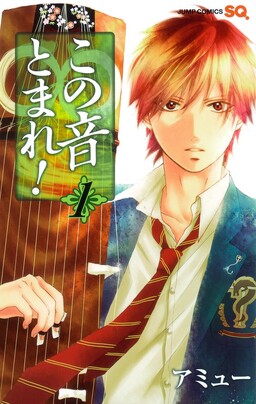
Sports / Music
Kono Oto Tomare! Sounds of Life
Yu's review of Kono Oto Tomare! — Chika Kudou joins the nearly-disbanded koto club to honor his grandfather's legacy; the club recruits unlikely members and works toward national competition; a music sports manga that treats competitive traditional instrument performance with the same structure as competitive athletics.
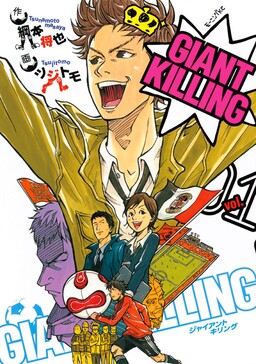
Sports
Giant Killing
Yu's review of Giant Killing — Takeshi Tatsumi, a player who disappeared from Japanese professional soccer and became a legend coaching a small English team, is hired to rescue East Tokyo United from the bottom of the J-League; a soccer management drama that treats the tactical and human sides of sports organization with equal seriousness.
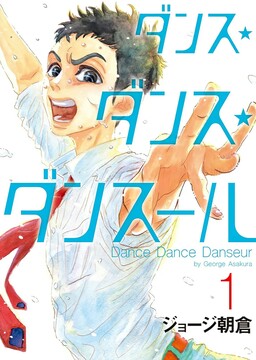
Sports
Dance Dance Danseur
Yu's review of Dance Dance Danseur — Junpei Murao buried his love of ballet after his father died because boys are supposed to be tough. Then a girl named Miyako and a strange, brilliant dancer named Luou pull it back out of him. George Asakura's seinen about what it costs a teenage boy to dance.

Sports / Drama
Welcome to the Ballroom
Yu's review of Welcome to the Ballroom — Tatara Fujita has no goals and no passions until he stumbles into a ballroom dance studio, sees what competitive dance actually looks like, and decides this is the thing he has been missing.
Sports
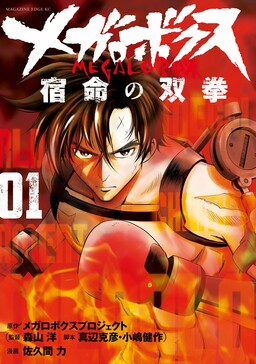
Megalo Box
Yu's review of Megalo Box — in a future where boxing is enhanced by mechanical exoskeletons, an undocumented fighter called Junk Dog challenges Megalonia, the world championship tournament; manga adaptation of the 50th anniversary Ashita no Joe project about a fighter with nothing to lose.
Sports
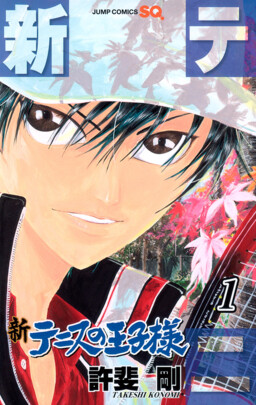
New Prince of Tennis
Yu's review of New Prince of Tennis — the sequel to The Prince of Tennis; Ryoma Echizen and Japan's top middle school tennis players are invited to a U-17 national training camp where the high school players are even more powerful and the tennis becomes increasingly divorced from physical reality; the sequel escalates the original's supernatural sports to maximum extremes.
Written by
Yu
Manga Enthusiast from Japan
I grew up in Japan and manga literally saved me during a tough time in elementary school. My English isn't perfect, but my love for manga is real — and I want to share it with you.
Disclosure: This post contains affiliate links. As an Amazon Associate, I earn from qualifying purchases at no extra cost to you.