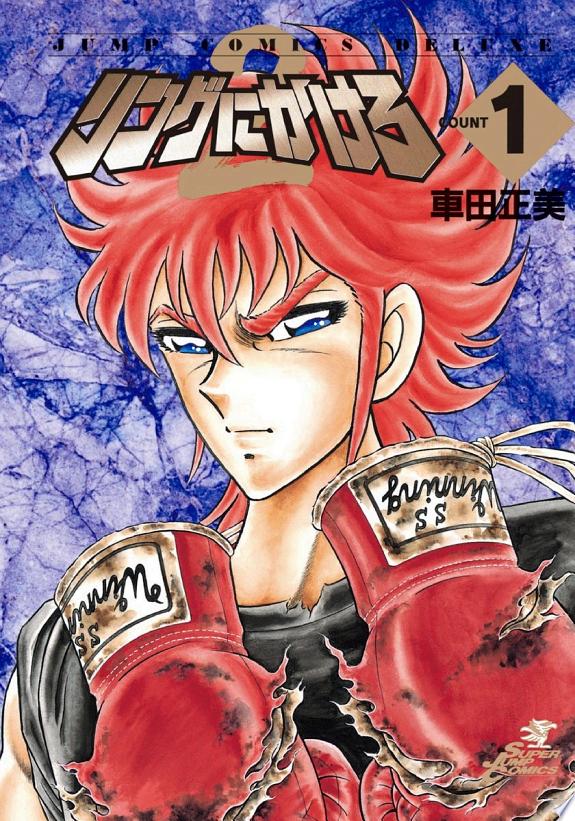
Ring ni Kakero 2 Review: The Boxing Sequel That Brought Hyper-Spectacle Back Without Pretending to Restraint
by Masami Kurumada
Read the first volume. If it doesn't hook you, put it down. It'll hook you.
Buy Ring ni Kakero 2 on Amazon →*Affiliate link — I earn a small commission at no extra cost to you.
The original boxing manga decided punches were spiritual events. The sequel kept the decision and pushed it further.
Quick Take
- Masami Kurumada's sequel to Ring ni Kakero — 26 volumes of Super Jump operatic boxing
- Maintains the original's hyper-stylized punch-as-cosmic-force register without apology
- The same author who created Saint Seiya, applying the same intensity to boxing
Who Is This Manga For?
- Original Ring ni Kakero readers who want the universe extended
- Kurumada fans who appreciate his commitment to operatic intensity
- Boxing manga readers who want spectacle over realism
- Anyone who has missed the era when punches were drawn like cosmic events
Content Warnings & Age Rating
Age Rating: T (Teen) Content Warnings: Boxing violence depicted with dramatic emphasis, occasional intense imagery.
Suitable for most readers familiar with the genre.
Yu's Rating
| Category | Score |
|---|---|
| Story Depth | ★★★☆☆ |
| Art Style | ★★★★★ |
| Character Development | ★★★★☆ |
| Accessibility for Non-Japanese Readers | ★★★☆☆ |
| Reread Value | ★★★★☆ |
Story Overview
Ring ni Kakero 2 picks up the boxing universe Kurumada established in the original, with a new generation of fighters who carry the legacy forward. The structure mirrors the original: tournament arcs, signature finishing moves with cosmic-scale visualizations, rivalries that operate at mythic register.
The sequel doesn't try to be the original. It tries to be the next chapter — newer protagonists, different rivalries, but the same fundamental commitment to making boxing operate as spectacle rather than as sport. Kurumada knows what his readers want from him, and he delivers it without compromise.
The 26-volume length allows full tournament treatment with the time the genre demands — preparation, opponents, signature techniques revealed at climactic moments, and the resolution of carrier-rivalries that span multiple arcs. The pacing is leisurely by modern standards but appropriate to the era and the magazine.
Characters
The new generation of fighters: Carrying forward the original's lineage, each defined by signature techniques and dramatic backstories.
Returning characters: Several from the original return in mentor or contextual roles, providing continuity for readers who tracked the previous series.
Art Style
Kurumada's signature visual style is the series' main draw — sharp angular features, dramatic lighting, signature techniques visualized with full operatic spectacle. The mature Kurumada has the same intensity as the younger one, with refined craft.
Cultural Context
Ring ni Kakero 2 ran from 2000 to 2008 in Super Jump, returning Kurumada to the boxing universe he originally created in 1977. The original Ring ni Kakero is foundational to Japanese boxing manga, and the sequel exists for readers who tracked that earlier work and wanted more.
Kurumada's catalog (Saint Seiya, Otokozaka, Fuma no Kojiro, Ring ni Kakero) consistently operates at the same operatic register — boxing, school fights, mythological warriors all share the same intensity. The sequel is part of that consistent project.
What I Love About It
I love that Kurumada didn't update.
A different sequel author might have tried to modernize — quicker pacing, less spectacle, more grounded action. Kurumada brought back exactly the same approach that defined the original. The choice signals confidence: my readers want what I've always given them, and modernizing would be betraying the relationship. The integrity of staying weird is the series' signature.
What English-Speaking Fans Say
Among Kurumada fans aware of the broader catalog, regarded as a faithful continuation of the original's spirit. Limited general awareness due to absence of translation, but fan recognition is high.
Memorable Scene ⚠️ Spoiler Warning
A signature finishing technique that visualizes as a cosmic event — Kurumada's specialty applied to a moment of climactic drama. The scene is what readers come to Kurumada for, delivered with the craft of his mature period.
Similar Manga
| Title | Its Approach | How Ring ni Kakero 2 Differs |
|---|---|---|
| Ring ni Kakero (original) | Foundational hyper-spectacle boxing | The sequel is contemporary continuation with the same approach |
| Saint Seiya | Kurumada's mythological warriors | Boxing setting rather than mythological warriors but same operatic register |
| Otokozaka | Kurumada's delinquent series | Same authorial signature applied to school fights instead of boxing |
Reading Order / Where to Start
Read the original Ring ni Kakero first. The sequel assumes familiarity with the established universe.
Official English Translation Status
Ring ni Kakero 2 has no official English translation.
Pros & Cons
Pros
- Maintains the original's distinctive operatic register
- Visual spectacle remains Kurumada's signature
- 26 volumes of full tournament treatment
- Mature craft applied to original-era intensity
Cons
- No English translation
- Requires familiarity with the original
- The spectacle approach won't satisfy readers wanting realism
- Sequel-extension may feel diminishing for some readers
Is Ring ni Kakero 2 Worth Reading?
For original-series fans and Kurumada enthusiasts, yes — the sequel is faithful to the universe and delivers what readers came for. For new readers, start with the original. As Kurumada continuation, it's exactly what it should be.
Format Comparison
| Format | Notes |
|---|---|
| Physical | Japanese editions available |
| Digital | Available in Japanese |
| Omnibus | Collected editions available |
Where to Buy
No English release yet. That just means you find it before everyone else does.
*Affiliate link — I earn a small commission at no extra cost to you.
More Manga You Might Like
Sports / Action
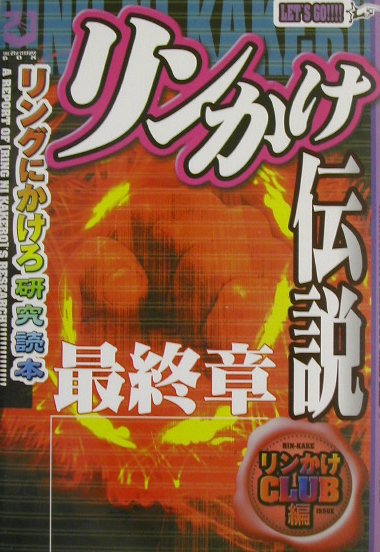
Ring ni Kakero
Ring ni Kakero follows Ryuji Takane and his sister Kiku through a boxing journey that begins in realism and evolves into one of manga's most spectacular supernatural combat series — the bridge between sports manga and the battle shonen that followed.
Sports
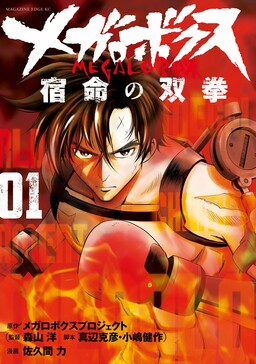
Megalo Box
Yu's review of Megalo Box — in a future where boxing is enhanced by mechanical exoskeletons, an undocumented fighter called Junk Dog challenges Megalonia, the world championship tournament; manga adaptation of the 50th anniversary Ashita no Joe project about a fighter with nothing to lose.
Sports / Action
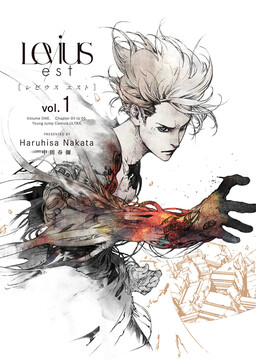
Levius/est
Yu's review of Levius/est — the sequel to Levius; Levius Cromwell continues competing in Mechanical Martial Arts as the sport's underground and political dimensions become unavoidable; Nakata expands the world-building and deepens the character work while maintaining the exceptional European-influenced art style.
Sports / Drama
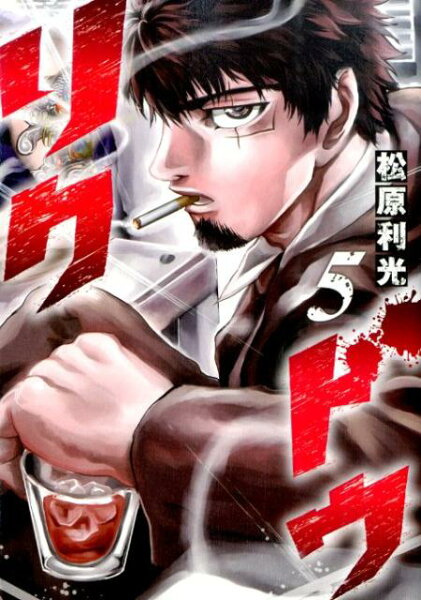
Rikudo
Rikudo follows Riku Akama, a boy whose abusive father destroyed his body and life — until boxing becomes the unlikely path through which he tries to reclaim something. A 22-volume Young Jump series whose darkness exceeded almost all boxing manga before it.
Sports / Drama
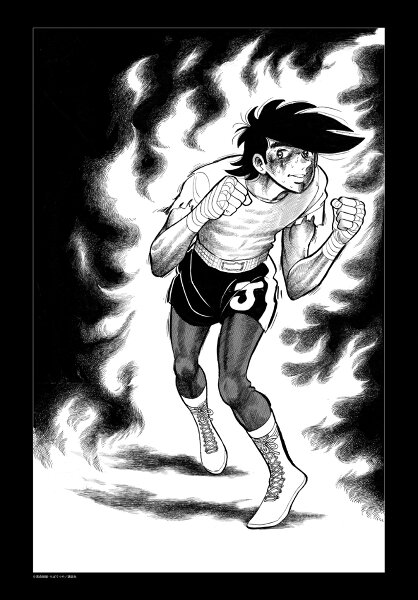
Ashita no Joe
Yu's review of Ashita no Joe — Joe Yabuki claws out of the postwar Tokyo slums, is found by a broken-down trainer, and turns boxing into a way to burn himself completely. From Rikiishi's fatal weight cut to the white-ash final scene, this is the manga that taught the whole genre what cost means.
Sports / Action
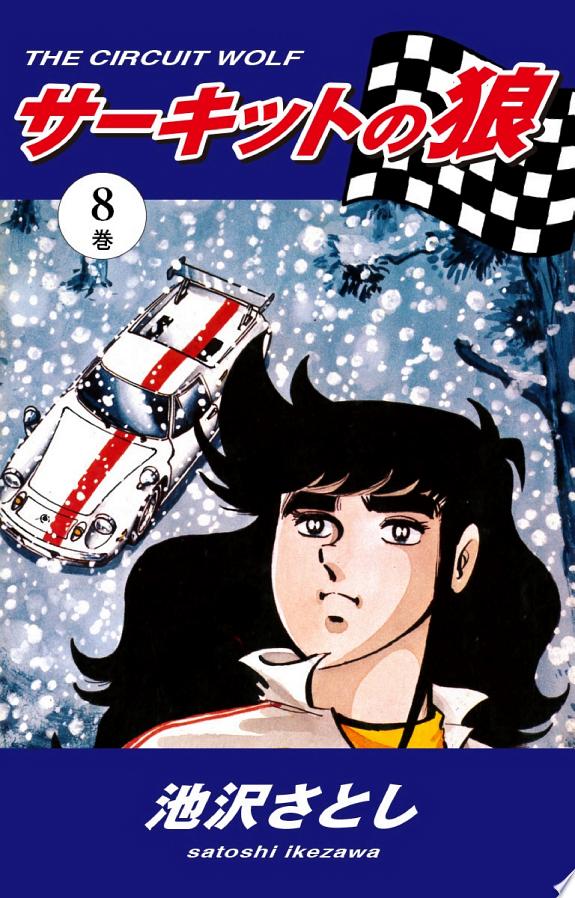
Circuit Wolf
Circuit Wolf follows Yuya Fubuki, a lone-wolf street racer in a white Lotus Europa who climbs from public-road duels all the way to Formula 1 — the 1970s Weekly Shonen Jump manga that personally lit the fuse on Japan's supercar boom.
Written by
Yu
Manga Enthusiast from Japan
I grew up in Japan and manga literally saved me during a tough time in elementary school. My English isn't perfect, but my love for manga is real — and I want to share it with you.