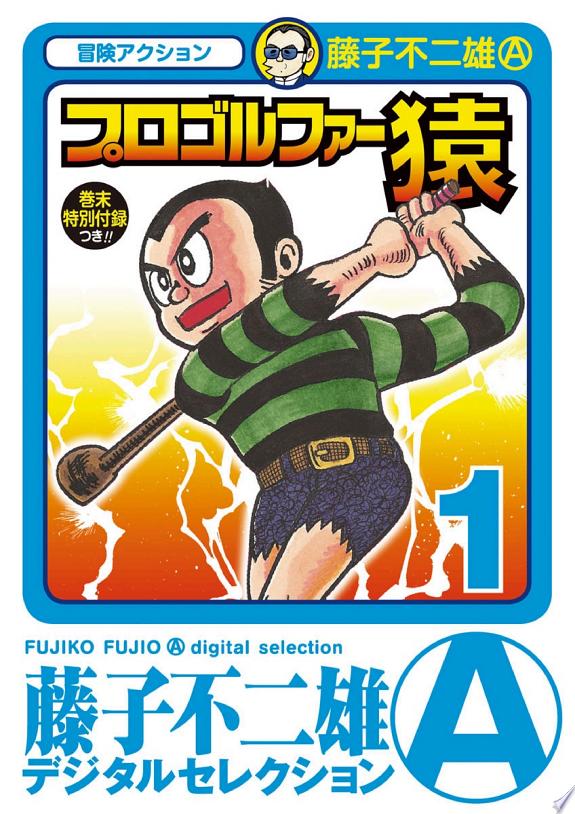
Pro Golfer Saru Review: The Boy Who Made Golf the Most Exciting Sport in Manga
by Fujiko Fujio A
Read the first volume. If it doesn't hook you, put it down. It'll hook you.
Buy Pro Golfer Saru on Amazon →*Affiliate link — I earn a small commission at no extra cost to you.
What if the best golfer in Japan had never heard of golf until last week?
Quick Take
- Fujiko Fujio A's sports classic — golf made genuinely exciting through a protagonist whose technique is completely self-invented
- Saru's shots don't follow golf logic because he didn't learn golf logic — he learned his own version, which produces results nobody can predict
- 22 volumes that made millions of Japanese readers interested in a sport they had never considered watching
Who Is This Manga For?
- Sports manga readers who want the genre's excitement applied to an unusual sport
- Fans of Fujiko Fujio A's other work (Laughing Salesman, Manga Michi) who want to see a different register
- Anyone curious about how 1970s manga handled sports before the genre became formalized
- Readers who like the "natural genius discovers civilization" story
Content Warnings & Age Rating
Age Rating: All Ages Content Warnings: Sports action with comedic elements. No concerning content.
Appropriate for all readers.
Yu's Rating
| Category | Score |
|---|---|
| Story Depth | ★★★☆☆ |
| Art Style | ★★★★☆ |
| Character Development | ★★★☆☆ |
| Accessibility for Non-Japanese Readers | ★★★★☆ |
| Reread Value | ★★★★☆ |
Story Overview
Sarugami Mitsuru grows up in the mountains, isolated from urban Japanese life. His physical development in that environment has given him extraordinary strength, reflexes, and spatial awareness. When he encounters golf — specifically, the challenge of hitting a small ball into a small hole — he applies these abilities without any knowledge of proper technique.
The results are spectacular. His shots don't curve the way trained golfers' shots curve. His approach to obstacles is unconventional in ways that conventional coaches can't counter because they can't anticipate them. He enters professional golf and immediately begins winning through approaches that make golf professionals question everything they know.
The series follows Saru's encounters with increasingly skilled opponents — each one representing a different mastery of golf's technical demands — and his consistent ability to defeat technique through something that isn't technique but works better than technique anyway.
Characters
Saru: A protagonist who is funny, warm, and never fully aware of how strange he is. His complete lack of golf convention is not presented as innocence but as genuine alternative expertise.
The opponents: Each tournament introduces a new golfer with a specific skill that Saru has to overcome — each one serving as a lesson in what golf is, which Saru then defeats by ignoring.
Art Style
Fujiko Fujio A's art has the clean expressiveness of classic Shogakukan manga — readable characters, clear action, and the specific visual timing that makes sports manga shots legible. The golf swings are drawn with enough technical detail to be plausible while the results are drawn with enough comic exaggeration to be exciting.
Cultural Context
Pro Golfer Saru ran in Weekly Shonen Sunday from 1974 to 1985. It appeared during a period when golf was becoming more widely played in Japan, and the manga's contribution was to make the sport's internal drama legible and exciting to readers who had never held a club.
The anime adaptation was broadcast from 1985 to 1988 and introduced the series to a much wider audience.
What I Love About It
I love the shot descriptions.
Each of Saru's unconventional shots is described by an announcer or opponent with genuine confusion — they explain what should be happening, and then the ball does something else. This gap between the golf world's technical vocabulary and Saru's outcomes is the comedy, and it works because Fujiko Fujio A clearly understood golf well enough to make the technical vocabulary accurate even as the outcomes are impossible.
What English-Speaking Fans Say
Not known in English-speaking markets. Among readers of classic sports manga, Pro Golfer Saru is recognized as an example of the genre's pre-formalization creativity — before sports manga had standard formulas, series like this invented their own.
Memorable Scene ⚠️ Spoiler Warning
A crucial tournament hole that all previous players have failed to navigate conventionally — Saru approaches it without knowing it's difficult, takes his shot without strategic calculation, and the ball finds the path that everyone else was trying to calculate. The scene is a thesis on the limits of expertise when faced with genuine originality.
Similar Manga
| Title | Its Approach | How Pro Golfer Saru Differs |
|---|---|---|
| Ashita no Joe | Naturalistic sports talent with emotional depth | Lighter, more comedic sports adventure |
| Captain Tsubasa | Football prodigy with supernatural technique | Golf, unconventional rather than superior technique |
| Slam Dunk | Basketball with psychological realism | Pure sports adventure without psychological complexity |
Reading Order / Where to Start
Volume 1. Saru's development builds from his first encounter with the sport.
Official English Translation Status
Pro Golfer Saru has no official English translation.
Pros & Cons
Pros
- Makes golf genuinely exciting — a significant achievement
- The unconventional protagonist produces consistently inventive situations
- Complete at 22 volumes
- Fujiko Fujio A demonstrating sports genre range
Cons
- No English translation
- The "natural genius" formula has limited variation
- Golf context helps — readers unfamiliar with the sport's basic rules may miss some jokes
- The format is episodic and doesn't build to emotional peaks
Is Pro Golfer Saru Worth Reading?
For classic sports manga fans, yes — this is the genre at its most inventive and unformulaic. For modern sports manga readers expecting psychological depth and emotional arcs, the lighter register may not satisfy. But as sports adventure, it's consistently fun.
Format Comparison
| Format | Notes |
|---|---|
| Physical | Japanese editions available |
| Digital | Available in Japanese |
| Omnibus | Collected editions available |
Where to Buy
No English release yet. That just means you find it before everyone else does.
*Affiliate link — I earn a small commission at no extra cost to you.
More Manga You Might Like
Sports / Comedy
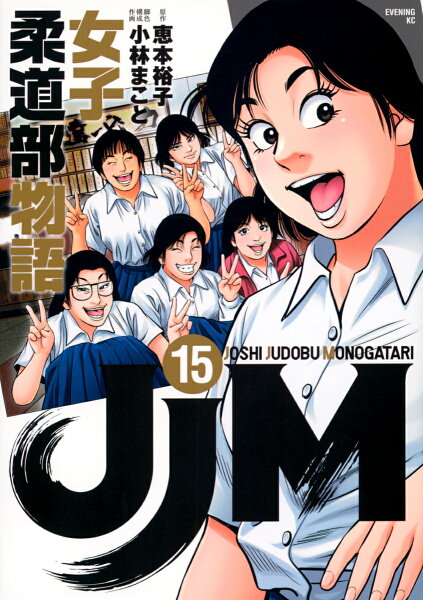
Judo Club Story
Judo Club Story follows Sanshiro Fujimaki, a high school freshman who joins the judo club by mistake and discovers — against his will and better judgment — that he is genuinely good at judo.

Sports / Drama
Kaze no Daichi
Kaze no Daichi follows Koichi Iino, a self-taught golfer working as a caddy who rises through professional golf — a manga that treats golf with more psychological seriousness than almost any other sports manga treats its subject.
Sports / Comedy
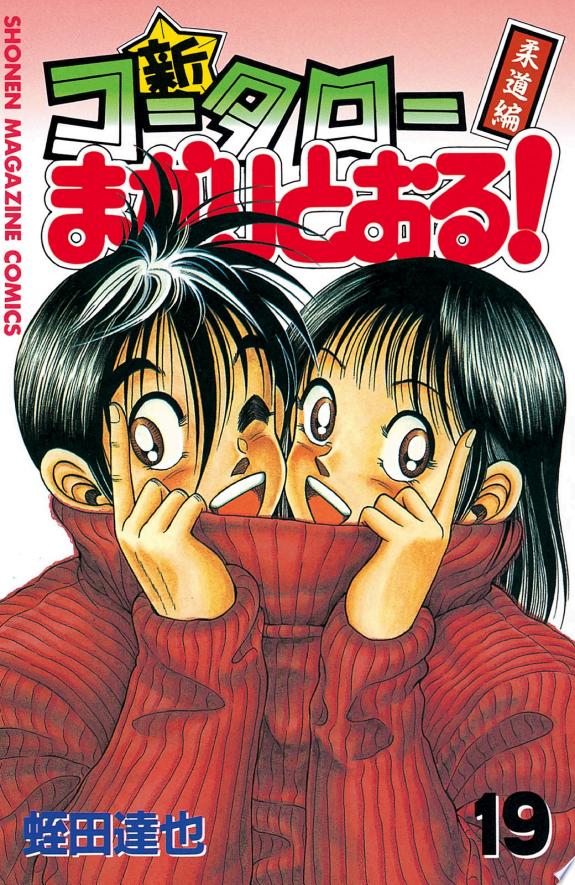
Kotaro Makaritoru
Kotaro Makaritoru follows Kotaro Shindo, a karate expert at a Japanese high school whose combination of martial prowess, persistent cheerfulness, and complete obliviousness to normal social rules makes every school day into an event.
Sports / Comedy
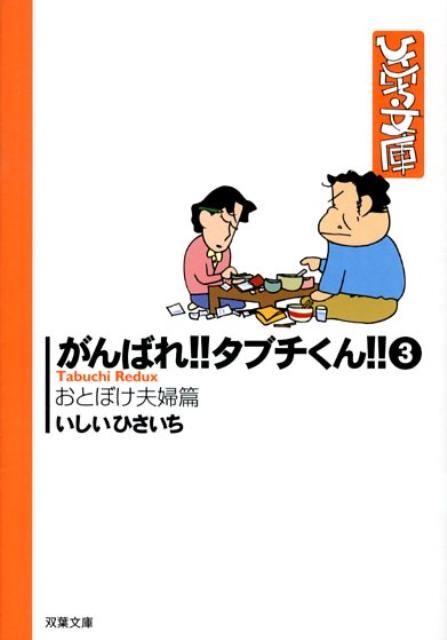
Ganbare!! Tabuchi-kun!!
Ganbare!! Tabuchi-kun!! is Hisaichi Ishii's newspaper 4-koma comedy featuring a parody version of real Seibu Lions player Koji Tabuchi — gentle, self-deprecating, perpetually optimistic baseball humor that ran for years and turned Tabuchi into a beloved cultural figure beyond his actual batting average.

Sports / Comedy
One Pound Gospel
Yu's review of One Pound Gospel — Kōsaku Hatanaka is a genuinely talented featherweight boxer with one catastrophic flaw: he can't stop eating, constantly missing weight for his fights; Sister Angela, a young nun, becomes his most unlikely source of encouragement; Rumiko Takahashi's compact boxing comedy with a warm central relationship.
Sports / Romance
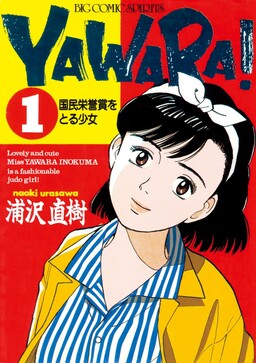
Yawara! A Fashionable Judo Girl
Yu's review of Yawara! — Yawara Inokuma is the granddaughter of a legendary judo master who has trained her since childhood to be a world champion; she has extraordinary talent and absolutely no desire to compete; what follows is her journey toward the Barcelona Olympics despite her own resistance.
Written by
Yu
Manga Enthusiast from Japan
I grew up in Japan and manga literally saved me during a tough time in elementary school. My English isn't perfect, but my love for manga is real — and I want to share it with you.