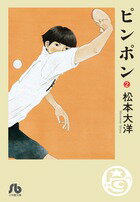
Ping Pong Review: Table Tennis as a Way of Asking What You Actually Want From Life
by Taiyou Matsumoto
Read the first volume. If it doesn't hook you, put it down. It'll hook you.
Buy Ping Pong on Amazon →*Affiliate link — I earn a small commission at no extra cost to you.
Quick Take
- Two high school table tennis players — Smile, a prodigy who holds back, and Peco, who loves the game completely — move toward a national tournament while the manga asks what it means to commit to something
- Not a conventional sports manga — the games matter, but the question underneath them is about identity and desire
- 5 volumes, complete, one of manga's great sports works
Who Is This Manga For?
- Readers who want sports manga that takes the philosophical dimensions of competition seriously
- Fans of character-driven drama who want sports as the frame rather than the content
- Anyone who wants a short, complete manga with genuine ambition
- Readers familiar with the Masaaki Yuasa anime adaptation who want the source
Content Warnings & Age Rating
Age Rating: T (Teen) Content Warnings: Competitive sports, themes of purpose and what you give yourself to
Accessible. The content is entirely about table tennis and the people who play it.
Yu's Rating
| Category | Score |
|---|---|
| Story Depth | ★★★★★ |
| Art Style | ★★★★★ |
| Character Development | ★★★★★ |
| Accessibility for Non-Japanese Readers | ★★★★★ |
| Reread Value | ★★★★★ |
Story Overview
Makoto Tsukimoto (Smile) is a table tennis prodigy who deliberately loses to avoid hurting the feelings of people he beats. Yutaka Hoshino (Peco) is his childhood friend who loves ping pong completely and talks about being a hero. They are on their high school table tennis team together.
The national tournament approach brings them into contact with rivals who are excellent for different reasons: a Chinese player in Japan who is the best in the world and finds no joy in it, a player from a rival school who trains as a discipline rather than a love, and others who each represent a different relationship to the thing they do.
The manga's question: what do you actually want? Not from ping pong — from the effort, from the devotion, from the thing you spend yourself on.
Characters
Smile — The most interesting sports manga protagonist I have encountered. His problem is not that he lacks ability but that he does not want badly enough — yet. His arc is the discovery of what wanting feels like.
Peco — Loves ping pong with his whole self. His problem is that loving something is not the same as being able to do it. His arc is learning what love actually requires.
Kong Wenge — The Chinese exchange student who is the world's best player and is miserable about it. His arc is the most affecting secondary story — what it costs to be the best at something you did not choose.
Dragon — Peco's rival from another school; his approach to training is militaristic rather than joyful, and his confrontation with Peco is the manga's central sporting conflict.
Art Style
Matsumoto's art is unlike any other sports manga — rough, energetic, expressionistic. The table tennis sequences are rendered not for clarity of technique but for the feeling of speed and the quality of attention. It is unmistakably Matsumoto and unmistakably right for this story.
What I Love About It
Smile's moment. There is a chapter — I will not specify it — where Smile stops holding back and plays as well as he can. Matsumoto renders it as something close to a religious experience. After volumes of watching someone not try, watching them try is overwhelming. That is the payoff Ping Pong earns across five volumes.
What English-Speaking Fans Say
Ping Pong has a devoted Western following, significantly expanded by Masaaki Yuasa's 2014 anime adaptation, which is considered one of the best sports anime and one of the best anime of its era. Western readers consistently describe the manga as achieving something rare — sports manga as a vehicle for genuine philosophical inquiry. Five volumes is a weekend commitment for one of the medium's finest works.
Memorable Scene ⚠️ Spoiler Warning
The semifinal match — specifically the moment when it becomes clear what Smile actually wants and what it takes for him to commit to wanting it — is the emotional peak of the manga and one of the finest sequences in sports manga.
Similar Manga
- Slam Dunk — Sports manga that prioritizes character over technique
- Haikyu!! — More conventional sports excitement, similar emotional investment
- Vagabond — Martial arts as philosophical inquiry, similar depth
- Real — Wheelchair basketball; Inoue exploring what sport means after injury
Reading Order / Where to Start
Volume 1. Five volumes — one reading experience.
Official English Translation Status
VIZ Media published the complete 5-volume series. All volumes available.
Pros & Cons
Pros
- Five volumes, complete, perfect ending
- One of manga's great sports works and one of its great character studies
- Matsumoto's art is a specific achievement
- Every secondary character is fully realized
Cons
- The non-conventional art style is an adjustment
- Not conventional sports manga — readers who want clear match progression may find it frustrating
- Five volumes leaves readers wanting more
Format Comparison
| Format | Notes |
|---|---|
| Individual Volumes | Standard VIZ release |
| Digital | Works well |
| Physical | Recommended — the art benefits from print |
Where to Buy
Read the first volume. If it doesn't hook you, put it down. It'll hook you.
This post contains affiliate links. If you purchase through these links, I may earn a small commission at no extra cost to you. As an Amazon Associate, I earn from qualifying purchases.
*Affiliate link — I earn a small commission at no extra cost to you.
More Manga You Might Like
Sports / Drama
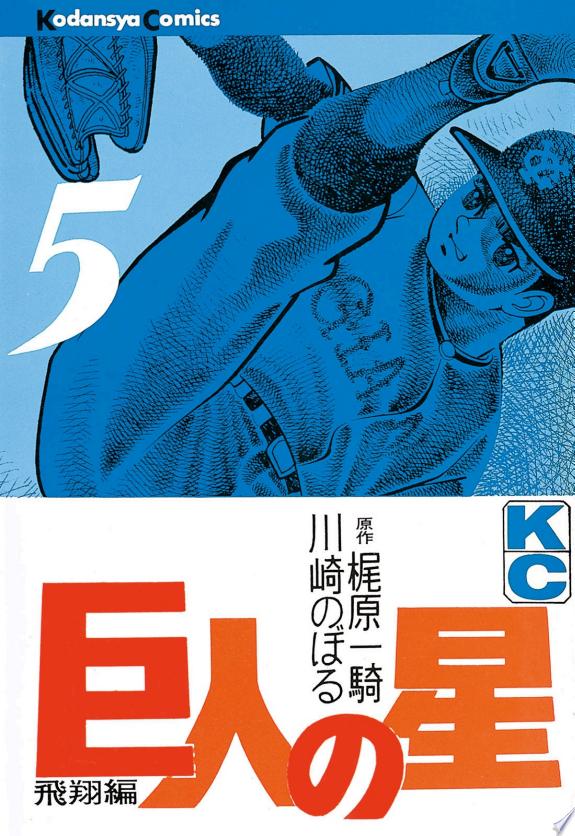
Kyojin no Hoshi
Kyojin no Hoshi follows Hyuma Hoshi, whose father — a former baseball player who never achieved his dream — has raised him from childhood to be a star pitcher for the Yomiuri Giants, through training that borders on abuse and produces a player who may be the greatest — at tremendous personal cost.
Sports / Drama
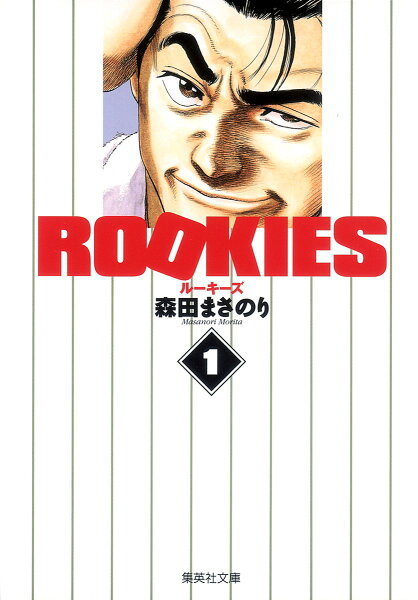
Rookies
Rookies follows Koichi Kawato, a young teacher transferred to Futakotamagawa High School who discovers a baseball club suspended after a violent incident — and decides, against all institutional advice, to coach them back to the Koshien.
Sports / Drama
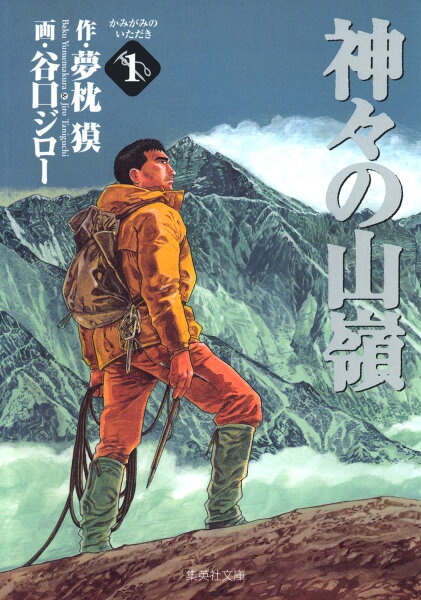
Kamigami no Itadaki
Kamigami no Itadaki is Jiro Taniguchi's 5-volume adaptation of Baku Yumemakura's mountaineering novel — Fukamachi, a journalist following the trail of a possibly-found camera that may prove George Mallory reached Everest's summit in 1924, with a Japanese alpinist's parallel obsession driving the story.
Sports / Drama
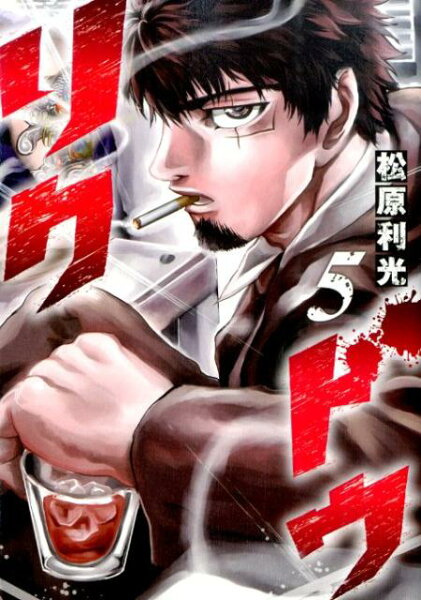
Rikudo
Rikudo follows Riku Akama, a boy whose abusive father destroyed his body and life — until boxing becomes the unlikely path through which he tries to reclaim something. A 22-volume Young Jump series whose darkness exceeded almost all boxing manga before it.
Sports / Drama
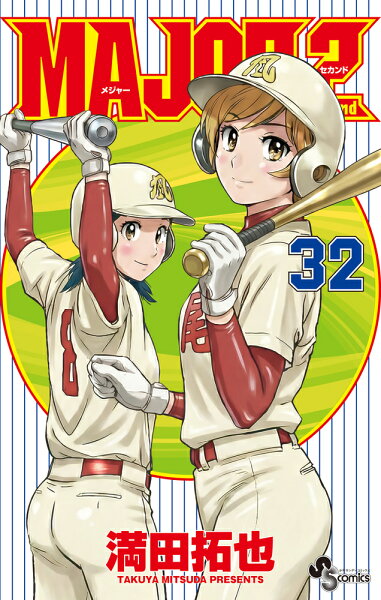
Major
Yu's review of Major — Goro Honda is the son of a professional baseball player; when loss defines his childhood, baseball becomes how he carries his father forward; the series follows Goro from little league through professional baseball across 78 volumes, one of the longest complete sports manga stories ever told.
Sports / Drama
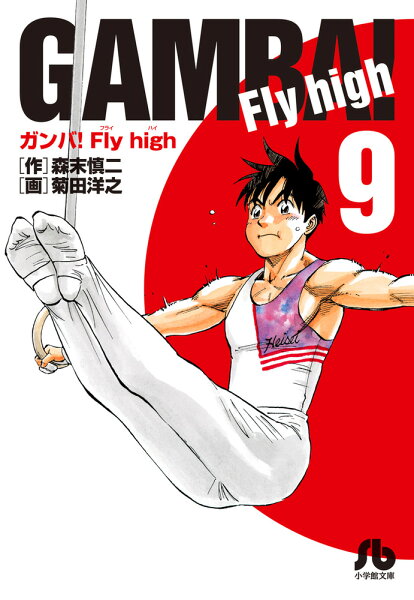
Gamba! Fly High
Gamba! Fly High follows Takeru Fujimaki, a boy with extraordinary natural talent who joins a gymnastics club and discovers that natural ability, without discipline and the right people around you, is not enough to reach the Olympics.
Written by
Yu
Manga Enthusiast from Japan
I grew up in Japan and manga literally saved me during a tough time in elementary school. My English isn't perfect, but my love for manga is real — and I want to share it with you.
Disclosure: This post contains affiliate links. As an Amazon Associate, I earn from qualifying purchases at no extra cost to you.