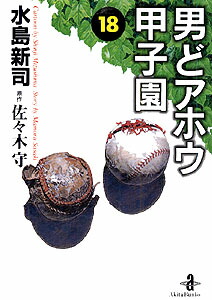
Otoko Doahou Koshien Review — A Boy Literally Named 'Koshien' Whose Only Pitch Is a Fastball
by Mamoru Sasaki (story) / Shinji Mizushima (art)
Read the first volume. If it doesn't hook you, put it down. It'll hook you.
Buy Otoko Doahou Koshien on Amazon →*Affiliate link — I earn a small commission at no extra cost to you.
My grandfather was a Hanshin Tigers fan from Osaka. He used to talk about manga from his era when I visited him as a kid. Otoko Doahou Koshien was one of the titles he mentioned — not as one he loved, exactly, but as one that everyone in his generation read. The protagonist's name is Koshien. The grandfather in the story named him after the stadium. My grandfather laughed every time he mentioned this. He had been the grandfather in his family who watched his grandkids' Little League games.
I read the manga as an adult, with my grandfather already gone. I understood, finally, why he had laughed.
Quick Take
- Co-created by Mamoru Sasaki (story) and Shinji Mizushima (art) — Mizushima's pre-Dokaben baseball masterwork
- Ran in Weekly Shonen Sunday 1970–1975, 28 volumes, won the 19th Shogakukan Manga Award
- Protagonist is Koshien Fujimura — yes, literally named after the stadium
- Age rating: All Ages — sports drama with some 1970s social conventions
What Is Otoko Doahou Koshien About?
Koshien Fujimura (藤村 甲子園) is a Japanese boy whose grandfather, Kyunoshin Fujimura (藤村 球之進) — an obsessive baseball fan — named him after Hanshin Koshien Stadium (the venue of the National High School Baseball Championship). The grandfather has raised Koshien from infancy with the explicit expectation that the boy will become a Koshien-tournament-bound pitcher. The naming is both the family's love language and the family's joke.
Koshien grows up living near the actual stadium. He plays catch with his grandfather. He throws a straight fastball — only the straight fastball, no other pitch — with growing velocity. By middle school he is a serious local prospect.
His plan: attend Meiwa High School (明和高校), the elite baseball academy. He fails the entrance exam — his grades are not strong enough. He has to go to Nanba High School (南波高校) instead, a public school whose baseball club is in disarray. There are not enough members. The team has not been to the prefectural tournament in years.
This is volume 1.
The next 27 volumes follow Koshien at Nanba:
- Rebuilding the baseball club from a near-empty roster
- Refusing to learn any pitch other than the straight fastball
- Refusing to adjust his strategy when opponents adapt to him (he just throws faster)
- Making the prefectural tournament, then losing, then trying again
- Building toward the literal goal his name has been pointing at since birth: pitching at Koshien Stadium in the national tournament
The series ends with the resolution of Koshien's high school baseball career. The character returns in Mizushima's later baseball manga as a senior figure — Otoko Doahou Koshien is part of Mizushima's larger baseball universe, which culminates in Dokaben and its sequels.
The Authors: Mamoru Sasaki and Shinji Mizushima
This is worth clarifying because the manga is sometimes incorrectly attributed only to Mizushima.
Mamoru Sasaki (佐々木 守) was the original story author — a respected Japanese screenwriter and manga writer who wrote for Otoko Doahou Koshien throughout its run. Sasaki's career included screenplays for the original Ultraman series and various other major Japanese TV productions.
Shinji Mizushima (水島 新司) was the artist — and would go on to become one of the most important baseball manga artists in Japanese history. His later solo works include Dokaben (1972–1981, the most famous baseball manga of its era), Abu-san (about a professional baseball player, ran for nearly 4 decades), and Daikoshien (a sequel within Mizushima's baseball universe).
Otoko Doahou Koshien is Mizushima's first major baseball series and the foundation of his career. Many of the conventions he would later refine in Dokaben — the Koshien tournament structure, the emotional architecture of high school baseball — were first established here.
Who Is This Manga For?
- Mizushima fans who want to understand the foundation of his baseball career
- Classic manga readers interested in 1970s shounen
- Baseball history enjoyers — the manga depicts a specific era of Japanese high school baseball
- Japanese-language readers: the manga is unlicensed in English
- Not for: readers wanting modern art style; readers wanting psychologically intricate characters
Content Warnings & Age Rating
Age Rating: All Ages Content Warnings: Sports drama; baseball injuries depicted realistically but not graphically; 1970s social attitudes appear in places; no graphic content
The manga is appropriate for all ages and is one of the cleaner classic baseball series.
Story Overview
Volumes 1–8 — Establishment. Koshien arrives at Nanba. The baseball club is rebuilt from almost nothing. The first prefectural tournament attempts. Koshien's pitching philosophy (the unchanging straight fastball) establishes.
Volumes 9–18 — Middle. Koshien faces increasingly competitive opponents. Rival schools and rival pitchers emerge. Mamoru Sasaki's writing introduces the recurring antagonist patterns that Mizushima would later refine in Dokaben.
Volumes 19–28 — Endgame. The path to Koshien itself. The actual tournament. The conclusion of Koshien Fujimura's high school career and Mizushima/Sasaki's first complete baseball arc.
Characters
Koshien Fujimura — The protagonist whose specific personality is built around immovability. He does not adapt to circumstances. He does not learn new pitches. He does not modulate his approach based on opponents. He has been Koshien Fujimura his entire life and he continues to be Koshien Fujimura under all conditions. The manga's argument is that conviction this complete is a form of strategy in itself.
Kyunoshin Fujimura (Koshien's grandfather) — The driving force behind Koshien's upbringing. Obsessive baseball fan. Names his grandson after a stadium. Loves the boy completely. One of the manga's emotional anchors.
The Nanba team — Various players who join the rebuilt club. Each gets development across the series.
Rival pitchers and teams — Various opponents that recur across the series. Each represents a different baseball philosophy that Koshien's stubbornness has to defeat.
Art Style
Mizushima's early-1970s art is the foundation of what he would later develop in Dokaben. Character designs are bolder and rougher than his mature style; action sequences are dynamic; baseball mechanics are drawn with accuracy.
The art has aged in specific ways that 1970s-Sunday manga generally has aged. Modern readers will need to adjust to the era's conventions. Once you settle into the rhythm, the art carries the story effectively.
Cultural Context
The manga ran in Weekly Shonen Sunday from 1970 to 1975. This was the era of foundational baseball manga: Otoko Doahou Koshien (1970), Kyojin no Hoshi (1966–1971), Dokaben (started 1972) all overlapped. The 1970s Japanese baseball manga genre was being established during exactly this period.
Otoko Doahou Koshien won the 19th Shogakukan Manga Award (1973) — at the time, one of the highest honors in Japanese manga.
The manga is part of Mizushima's larger baseball universe — characters from Otoko Doahou Koshien occasionally appear in his later works, particularly Dokaben and its sequels. The universe is comparable in scope to George R.R. Martin's Westeros or Stephen King's interconnected fictional world, but built across decades of baseball manga.
What I Love About It
The naming.
The premise — a grandfather names his grandson "Koshien" after the baseball stadium and raises him to pitch there — is initially absurd. Sasaki and Mizushima are aware of the absurdity. The manga's title itself, "Otoko Doahou Koshien" — roughly "Man, You Idiot, Koshien" — is a Kansai-dialect affectionate insult, framing the whole project as the grandfather indulgently complaining about his grandson while also being unable to be more proud of him.
What I love is how the manga earns the absurd premise. Koshien is not a tragic figure whose name forces him into baseball. He is not a comic figure whose name is a joke at his expense. He is a boy who happens to love what his name predestined him toward, who happens to be good at it, who happens to want what his family wanted for him. The absurdity dissolves over the volumes. By the time the manga ends, Koshien Fujimura is just a young man with an unusual name and a baseball career that earned the name.
That is the manga's whole thesis. We are all named by other people before we have any say. Some of us spend our lives chafing against the name. Some of us spend our lives growing into it. Koshien Fujimura grew into his.
My grandfather's name was Kazuo, which means "first man" or "harmony-man" depending on the kanji. He grew up to be a person who his family agreed was harmonious. I think about him when I read this manga. We do not get to choose our names. We get to choose what to do with them.
Memorable Scene ⚠️ Light Spoiler
Koshien's first pitch at Hanshin Koshien Stadium.
Without spoiling specifics: after many volumes of buildup, Koshien Fujimura finally makes it to the actual Koshien tournament. The first pitch of his first game at the actual stadium is the scene the manga has been building toward since chapter 1.
Sasaki and Mizushima draw the moment with restraint. There is no inspirational speech. There is no soundtrack-equivalent dramatic build. Koshien walks to the mound. He looks at the stands — at the family who named him, at the team that made it here with him. He throws the pitch.
The pitch is, of course, a straight fastball. The same pitch he has been throwing his entire life. The pitch his name had been pointing toward since his grandfather chose it.
The scene is the manga in concentrated form. Conviction across years. A name fulfilled. A grandfather's obsession finally realized by the grandson who happens to love it too.
Similar Manga
| Title | Its Approach | How Otoko Doahou Koshien Differs |
|---|---|---|
| Dokaben (Mizushima) | Same author's later, more famous baseball manga | Dokaben is more refined; Otoko Doahou Koshien is the foundation |
| Kyojin no Hoshi | Father-son baseball drama (pro level) | Kyojin no Hoshi is professional; Otoko Doahou Koshien is high school |
| Touch (Adachi) | Later high school baseball romance | Touch is romantic; Otoko Doahou Koshien is pure baseball |
| Major (Mitsuda) | Baseball across all career levels | Major is much longer; Otoko Doahou Koshien is contained |
Reading Order / Where to Start
Volume 1. The Mizushima baseball universe builds across his career — Otoko Doahou Koshien is the foundation, Dokaben is the masterwork.
For Mizushima newcomers: start with Otoko Doahou Koshien for historical context, then Dokaben for the refined version.
Official English Translation Status
Otoko Doahou Koshien has no official English release. Shogakukan has not licensed it. The Japanese editions (28 volumes original; Akita Shoten paperback reprints; other reprint formats) are available in Japan.
Pros & Cons
Pros
- Foundational baseball manga of the early 1970s
- Won the 19th Shogakukan Manga Award
- Foundation of Mizushima's career as Japan's most celebrated baseball manga artist
- Part of the larger Mizushima baseball universe
- Complete at 28 volumes
Cons
- No English translation
- 1970s art and pacing require adjustment for modern readers
- Less psychologically complex than Mizushima's later work
- The "stubbornness-as-strategy" premise is an acquired taste. It won't land for everyone, especially readers wanting more conventional sports manga character development.
Is Otoko Doahou Koshien Worth Reading?
For Mizushima fans or classic baseball manga historians: yes — this is where his career started.
For general readers: read Dokaben first (Mizushima's later, more famous, more refined baseball manga). If Dokaben works for you, come back for the predecessor.
For English-only readers: skip until/unless a license appears.
Format Comparison
| Format | Notes |
|---|---|
| Physical (Japanese) | All 28 volumes available in Japan; multiple paperback formats |
| Digital (Japanese) | Available via Japanese ebook services |
| English | None — unlicensed |
Where to Buy
No English release yet. That just means you find it before everyone else does.
*Affiliate link — I earn a small commission at no extra cost to you.
More Manga You Might Like
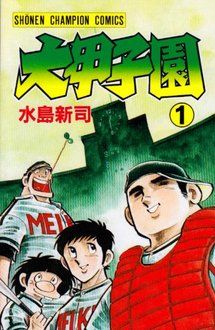
Sports
Dai Koshien
Dai Koshien is Shinji Mizushima's dream crossover — a sequel to Dokaben that pulls Yamada Taro and heroes from his other baseball manga into one summer Koshien tournament, climaxing in an 18-inning semifinal for the ages.
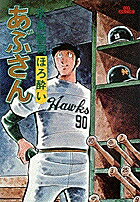
Sports / Slice of Life
Absan
Absan follows Yasutake Kageura, a sake-drinking slugger for the Nankai / Daiei / SoftBank Hawks who entered as an undrafted pinch-hitter and retired 37 years later at 61, a 107-volume baseball manga by Shinji Mizushima that ran for over four decades.
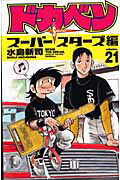
Sports / Drama
Dokaben Super Stars
Dokaben Super Stars-hen is Shinji Mizushima's professional-baseball continuation of Dokaben, sending Yamada Taro and his generation of free agents into two brand-new Pacific League expansion teams in 2004 — and pulling characters from across Mizushima's whole baseball universe onto the same diamond.
Sports
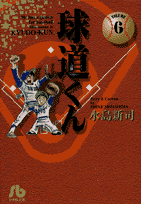
Kyudo-kun
Kyudo-kun follows Kyudo Narao, a young pitcher from Osaka with natural talent and a deep connection to the game through his father — a baseball story about inheritance, pressure, and what it means to throw yourself completely into what you love.
Sports
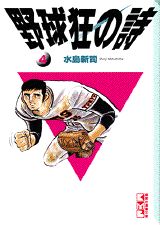
Yakyuukyo no Uta
Yakyuukyo no Uta follows an aging pitcher for a fictional Tokyo team as he fights to stay in the game, but the series is best remembered for introducing Yuki Mikami — Japan's first fictional female professional baseball pitcher — into a sport that had never imagined her.
Sports
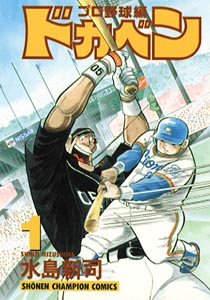
Dokaben Pro Yakyuhen
Dokaben Pro Yakyuhen takes Yamada Taro and his old high school rivals into the real NPB — Seibu, the Hawks, Orix, Lotte, the Giants — and famously got Shinji Mizushima sued by an actual pro pitcher over one panel.
Written by
Yu
Manga Enthusiast from Japan
I grew up in Japan and manga literally saved me during a tough time in elementary school. My English isn't perfect, but my love for manga is real — and I want to share it with you.