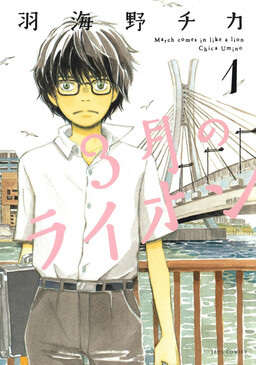
March Comes in Like a Lion Review: A Teenage Professional Shogi Player Lives Alone and Learns to Accept Help
by Chica Umino
*Affiliate link — I earn a small commission at no extra cost to you.
Quick Take
- The manga that uses shogi as a framework to examine depression, isolation, and the difficulty of accepting love — the sport is central but the series is primarily about emotional recovery
- Umino's art makes interior states visible in ways that text cannot — the sequences depicting Rei's depression use visual language that is both accurate and moving
- Ongoing masterwork; one of the most emotionally sophisticated manga currently in English
Who Is This Manga For?
- Readers who want manga that takes mental health seriously without reducing it to plot device
- Anyone interested in shogi as a backdrop for character study
- Fans of slice-of-life manga with genuine emotional depth and slow, earned development
- Readers who want ongoing manga by an established author (Honey and Clover)
Content Warnings & Age Rating
Age Rating: T (Teen) Content Warnings: Depression depicted with accuracy and detail; bullying sequences that are genuinely difficult to read; grief; Rei's family history involves significant dysfunction
The T rating understates the emotional weight. This series handles dark content with care.
Yu's Rating
| Category | Score |
|---|---|
| Story Depth | ★★★★★ |
| Art Style | ★★★★★ |
| Character Development | ★★★★★ |
| Accessibility for Non-Japanese Readers | ★★★★☆ |
| Reread Value | ★★★★★ |
Story Overview
Rei Kiriyama became a professional shogi player at middle school age — a rare achievement that separated him from normal adolescent life. He is seventeen, lives alone in a small apartment, and has almost no human connections. He is brilliant at shogi. He is not brilliant at being alive.
Through a chance encounter with three sisters — Akari, Hinata, and Momo — and their grandfather, Rei finds people who feed him, include him in their family dinners, and simply refuse to let him disappear. He does not know how to accept this. Learning to accept it is the series.
The shogi matches run parallel: Rei's professional career, the players he encounters, and what each match reveals about who he is becoming.
Characters
Rei Kiriyama — His quality is specific: he understands his own depression analytically but cannot escape it through understanding. He narrates his state with accuracy and helplessness simultaneously. His development is one of the most sustained in ongoing manga — small, genuine, and painful.
The Kawamoto sisters — Akari's warmth is practical and not sentimental; she simply does what needs doing and does not require acknowledgment. Hinata's kindness is fierce — her response to bullying targeting a friend is one of the series' most powerful sequences. Momo is a child and is rendered with the specific detail of a real child.
Souya Yasui — The current Meijin, the best shogi player in the world. His presence in the series represents what Rei might become if he reaches the highest level — and what the cost of that level looks like.
Art Style
Umino's art is recognizable from Honey and Clover — loose, warm lines, expressive without being schematic. The sequences depicting Rei's depression use visual metaphor with genuine skill: cold water, empty spaces, the specific weight of solitude made visible. The shogi boards are drawn with enough detail to be legible.
Cultural Context
Shogi is a traditional Japanese board game with professional competition roughly analogous to professional chess in prestige and cultural weight. March Comes in Like a Lion uses the professional shogi world as a social context — the traditions, the seniority structures, the way players develop relationships through matches — and grounds Rei's emotional isolation within that specific culture.
What I Love About It
The arc involving Hinata's defense of a bullied classmate — and what that situation costs her, and what Rei learns from watching someone who refuses to abandon another person — is the series' most complete statement of its themes. It made me cry in a way I did not expect.
What English-Speaking Fans Say
Western readers describe March Comes in Like a Lion as the manga they did not expect to affect them as much as it did. The depression content is consistently described as accurate in ways that feel personal — not as narrative convenience but as something the author understands from the inside. Umino's previous series (Honey and Clover) brings in readers who trust her with emotional material.
Memorable Scene ⚠️ Spoiler Warning
The sequence where Rei finally allows himself to cry in front of another person — after volumes of containing everything — is the moment the series has been building toward from its first pages.
Similar Manga
- Honey and Clover — Umino's previous work; similar emotional approach
- Hikaru no Go — Board game sport manga, different tone
- Shouwa Genroku Rakugo Shinjuu — Traditional art form as character study
- Chihayafuru — Competitive karuta, similar dedication
Reading Order / Where to Start
Volume 1 — Rei's solitary life and the first encounter with the Kawamoto household.
Official English Translation Status
Yen Press publishes the English edition. Ongoing; check current volume count.
Pros & Cons
Pros
- One of the most emotionally sophisticated manga in English
- Umino's art depicts interior states with unusual accuracy
- The shogi content is specific and interesting without requiring prior knowledge
- The character development is patient and genuine
Cons
- Ongoing — no complete ending
- The depression content is genuinely heavy
- Slow pacing by design — not for readers wanting plot momentum
Format Comparison
| Format | Notes |
|---|---|
| Individual Volumes | Yen Press; ongoing |
| Digital | Available |
Where to Buy
Get March Comes in Like a Lion Vol. 1 on Amazon →
This post contains affiliate links. If you purchase through these links, I may earn a small commission at no extra cost to you. As an Amazon Associate, I earn from qualifying purchases.
*Affiliate link — I earn a small commission at no extra cost to you.
Written by
Yu
Manga Enthusiast from Japan
I grew up in Japan and manga literally saved me during a tough time in elementary school. My English isn't perfect, but my love for manga is real — and I want to share it with you.
Disclosure: This post contains affiliate links. As an Amazon Associate, I earn from qualifying purchases at no extra cost to you.