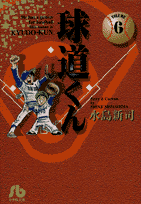
Kyudo-kun Review: The Pitcher from Osaka Who Threw Everything He Had at Every Ball
by Shinji Mizushima
Read the first volume. If it doesn't hook you, put it down. It'll hook you.
Buy Kyudo-kun on Amazon →*Affiliate link — I earn a small commission at no extra cost to you.
Some kids play baseball. Kyudo-kun was born inside it.
Quick Take
- Mizushima's early baseball manga — the Osaka pitcher whose talent comes with the weight of his father's baseball legacy
- More emotionally focused than Dokaben — the father-son dynamic carries the series as much as the sport
- 19 volumes of clean baseball storytelling with the emotional core Mizushima does best
Who Is This Manga For?
- Mizushima readers who want to trace his earlier work before the Dokaben era
- Baseball manga fans who want emotional depth alongside the sport
- Readers interested in father-son dynamics in sports storytelling
- Anyone who appreciates regional sports identity — Osaka's relationship with baseball runs through the whole series
Content Warnings & Age Rating
Age Rating: T (Teen) Content Warnings: Sports competition, family drama. Nothing graphic.
Suitable for most readers.
Yu's Rating
| Category | Score |
|---|---|
| Story Depth | ★★★★☆ |
| Art Style | ★★★★☆ |
| Character Development | ★★★★☆ |
| Accessibility for Non-Japanese Readers | ★★★☆☆ |
| Reread Value | ★★★☆☆ |
Story Overview
Kyudo Narao is an Osaka kid with a pitcher's arm and a father who played professional baseball. The sport is not something Kyudo discovered — it was handed to him before he could choose it, and the question the series asks is whether that inheritance becomes a burden or a foundation.
The baseball is Mizushima at his most technically engaged — pitching mechanics, the mental game between pitcher and batter, the physical education of an arm that can do things most arms cannot. But the series' real subject is the relationship between Kyudo and his father: the weight of expectation, the difficulty of playing the same game as someone who played it better, and the moment when a son steps out from under the shadow he was born into.
The Osaka setting gives the series a particular texture — the city's famous relationship with baseball (Osaka was home to some of Japan's most famous professional teams) shades the way people talk about the sport throughout.
Characters
Kyudo Narao: A pitcher who carries both natural talent and inherited expectation — his journey is to find out which one he's actually pitching for.
Kyudo's father: The shadow over the series — present even in absence, the standard against which Kyudo measures everything.
Art Style
Mizushima's early art shows the directness that became his signature — clear pitching mechanics, expressive faces, clean game panels that convey the physical reality of baseball.
Cultural Context
Kyudo-kun ran in Weekly Shonen Sunday from the early 1970s. It predates Mizushima's Dokaben era and shows the thematic preoccupations — technical baseball, emotional depth, regional identity — that would define his major works.
What I Love About It
I love that the father never becomes a villain.
Sports manga that use parental expectation as a theme often turn the parent into an antagonist. Mizushima doesn't. Kyudo's father is a man who loved baseball and passed that love to his son, with all the complicated weight that inheritance carries. The father isn't wrong. Neither is Kyudo. The series holds that tension without resolving it cheaply.
What English-Speaking Fans Say
Not known outside Japan. Among Mizushima completionists, Kyudo-kun is valued as an earlier, emotionally focused work — less architecturally complex than Dokaben but more emotionally direct.
Memorable Scene ⚠️ Spoiler Warning
The moment when Kyudo faces a batter who knew his father — an opponent who is playing against the memory as much as the pitcher. Kyudo has to perform in comparison to someone who cannot be present to defend himself. The scene is about what it means to inherit a reputation.
Similar Manga
| Title | Its Approach | How Kyudo-kun Differs |
|---|---|---|
| Dokaben | Ensemble school baseball with tournament structure | Single pitcher focus with father-son emotional core |
| Kyojin no Hoshi | Brutal paternal obsession driving a son's baseball career | Quieter, warmer take on inherited sporting identity |
| Yakyuukyo no Uta | Anthology of baseball life | Sustained single character with clear emotional arc |
Reading Order / Where to Start
Volume 1. The father-son context is established immediately and the series builds from it.
Official English Translation Status
Kyudo-kun has no official English translation.
Pros & Cons
Pros
- Father-son dynamic handled with genuine nuance
- Mizushima's early technical baseball is still excellent
- 19 volumes is well-proportioned for the story
- Osaka setting adds texture not found in most baseball manga
Cons
- No English translation
- Less well-known than Mizushima's major works
- The emotional register is quieter than tournament-focused readers may expect
- Baseball context helps significantly
Is Kyudo-kun Worth Reading?
For Mizushima readers and baseball manga fans who want emotional depth, yes — the father-son relationship elevates this above standard sports manga. For readers who want tournament excitement or ensemble casts, Dokaben serves that better. But as a character study wrapped in baseball, this delivers.
Format Comparison
| Format | Notes |
|---|---|
| Physical | Japanese editions available |
| Digital | Available in Japanese |
| Omnibus | Selected collected editions available |
Where to Buy
No English release yet. That just means you find it before everyone else does.
*Affiliate link — I earn a small commission at no extra cost to you.
More Manga You Might Like
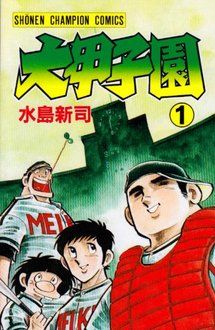
Sports
Dai Koshien
Dai Koshien is Shinji Mizushima's dream crossover — a sequel to Dokaben that pulls Yamada Taro and heroes from his other baseball manga into one summer Koshien tournament, climaxing in an 18-inning semifinal for the ages.
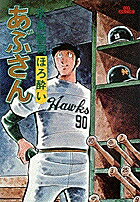
Sports / Slice of Life
Absan
Absan follows Yasutake Kageura, a sake-drinking slugger for the Nankai / Daiei / SoftBank Hawks who entered as an undrafted pinch-hitter and retired 37 years later at 61, a 107-volume baseball manga by Shinji Mizushima that ran for over four decades.
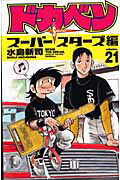
Sports / Drama
Dokaben Super Stars
Dokaben Super Stars-hen is Shinji Mizushima's professional-baseball continuation of Dokaben, sending Yamada Taro and his generation of free agents into two brand-new Pacific League expansion teams in 2004 — and pulling characters from across Mizushima's whole baseball universe onto the same diamond.
Sports
Yakyuukyo no Uta
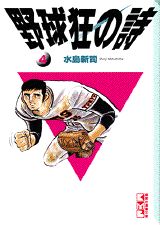
Yakyuukyo no Uta follows an aging pitcher for a fictional Tokyo team as he fights to stay in the game, but the series is best remembered for introducing Yuki Mikami — Japan's first fictional female professional baseball pitcher — into a sport that had never imagined her.
Sports
Dokaben Pro Yakyuhen
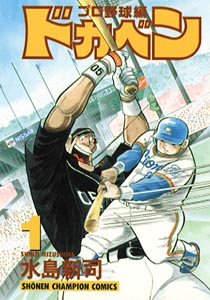
Dokaben Pro Yakyuhen takes Yamada Taro and his old high school rivals into the real NPB — Seibu, the Hawks, Orix, Lotte, the Giants — and famously got Shinji Mizushima sued by an actual pro pitcher over one panel.
Sports / Drama
Kyojin no Hoshi
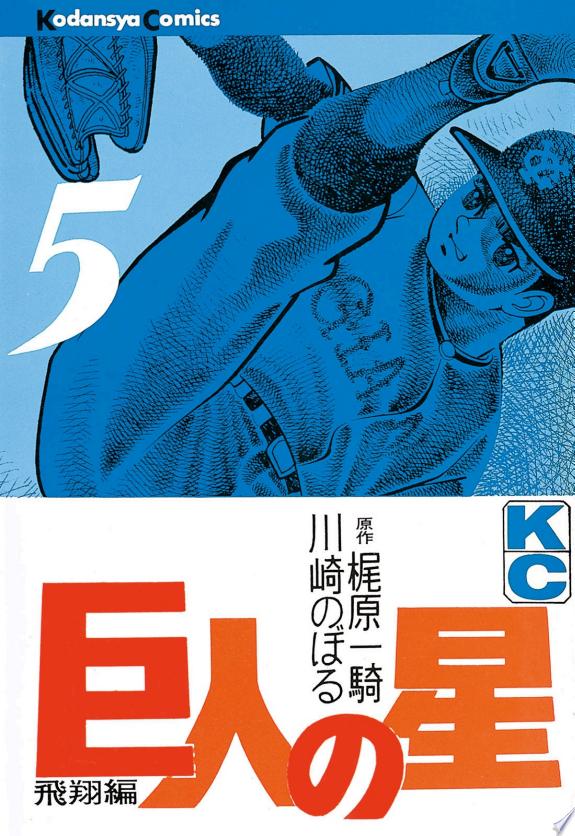
Kyojin no Hoshi follows Hyuma Hoshi, whose father — a former baseball player who never achieved his dream — has raised him from childhood to be a star pitcher for the Yomiuri Giants, through training that borders on abuse and produces a player who may be the greatest — at tremendous personal cost.
Written by
Yu
Manga Enthusiast from Japan
I grew up in Japan and manga literally saved me during a tough time in elementary school. My English isn't perfect, but my love for manga is real — and I want to share it with you.