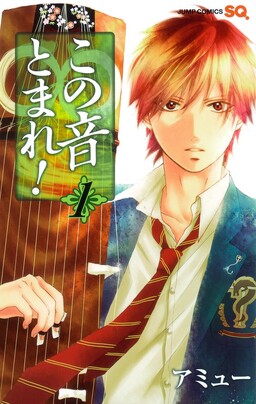
Kono Oto Tomare! Sounds of Life Review: A Koto Club Finds Its Voice and Competes for the National Stage
by Amyuu
Read the first volume. If it doesn't hook you, put it down. It'll hook you.
Buy Kono Oto Tomare! Sounds of Life on Amazon →*Affiliate link — I earn a small commission at no extra cost to you.
Quick Take
- The sports manga format applied to traditional Japanese music competition — regional qualifiers, rivals with distinctive playing philosophies, training arcs, and a national tournament that feels as high-stakes as any sports championship
- The koto (Japanese zither) is treated with genuine respect for its technique and musical depth; the series teaches readers to hear differences in performance that they couldn't hear before
- 24 Japanese volumes ongoing; VIZ has 17 volumes in English; the series continues
Who Is This Manga For?
- Readers who want competitive drama in an unusual setting — traditional music rather than athletics
- Anyone interested in Japanese traditional music as a subject explored with genuine depth
- Fans of ensemble sports manga where each team member has a distinct arc
- Readers who want manga that treats emotional themes seriously alongside competition
Content Warnings & Age Rating
Age Rating: T (Teen) Content Warnings: Mild language; emotional themes around loss, family, and belonging; competitive pressure and anxiety; no violence
The T rating is accurate. The emotional content is handled seriously and may resonate strongly.
Yu's Rating
| Category | Score |
|---|---|
| Story Depth | ★★★★★ |
| Art Style | ★★★★☆ |
| Character Development | ★★★★★ |
| Accessibility for Non-Japanese Readers | ★★★★☆ |
| Reread Value | ★★★★★ |
Story Overview
Chika Kudou's grandfather was a master koto craftsman and teacher. After his grandfather's death, Chika joins the nearly-dissolved koto club at his high school — not because he plays, but because the club's room is where his grandfather spent time, and Chika needs to be close to something of his.
The club's lone remaining member, Hozuki Kurata, is a prodigiously talented kotoiste who has decided she will play alone and win alone. She doesn't want or need club members. What she gets instead is Chika, and then, gradually, others: students with their own complicated histories with music, performance, and what it means to belong somewhere.
The competitive structure — regional contests, national qualifiers, championship performance — gives the series its spine. But the music and the characters give it its reason to exist.
Characters
Chika Kudou — His background (delinquent appearance, grandfather's legacy, raw koto talent discovered through necessity) is the series' starting engine. His growth from someone who performs from obligation into someone who plays because the music matters is one of the most complete sports manga protagonist arcs.
Hozuki Kurata — The technical genius who cannot perform when she plays alone because her playing was always for someone else. Her arc — learning to play with the club rather than despite them — is the series' most emotionally precise story.
The ensemble — Each club member has a distinct history with music and a distinct playing style. The series develops them individually while showing how they become something collectively.
Art Style
Amyuu's art is detailed and expressive — character emotion during performances is communicated visually with precision, and the koto's visual complexity (the bridges, the strings, the playing position) is depicted accurately and beautifully. The performance sequences use composition changes and sound metaphors effectively to communicate what is heard.
Cultural Context
The koto is one of Japan's most iconic traditional instruments, with a history stretching back over a thousand years. High school koto competitions are a real competitive tradition in Japan — this is not a fictional context invented for the manga. The techniques discussed, the competition structure, and the repertoire references are accurate.
Western readers will approach the instrument unfamiliar; the series provides sufficient context to follow the competitive stakes without requiring prior knowledge.
What I Love About It
The series understands what competition in music actually means — not who plays fastest or loudest, but who communicates something that the judges and audience feel. When a performance contest is decided by which team made the audience cry, the series is taking seriously what music competition is actually for.
And then it makes you cry too.
What English-Speaking Fans Say
Western readers describe Kono Oto Tomare! as one of the most emotionally satisfying sports manga in English — consistently listed alongside Haikyu!! and Fruits Basket for how completely it earns its emotional moments. The koto setting surprises readers who expected cultural barrier; the series makes the instrument feel essential rather than exotic.
Memorable Scene ⚠️ Spoiler Warning
The national championship performance — the sequence where everything the series has built across its volumes comes together in a single extended musical moment — is depicted with enough visual and emotional craft that readers report understanding, for the first time, what it would mean to hear this specific performance. It is the most technically accomplished single sequence in the series.
Similar Manga
- Chihayafuru — Competitive traditional Japanese culture, similar emotional depth
- Blue Giant — Jazz music manga with competitive drive, different structure
- Kids on the Slope — Music performance and connection, slice-of-life
- Your Lie in April — Music competition and emotional weight, more tragic
Reading Order / Where to Start
Volume 1 — The series establishes its characters and premise immediately and rewards reading in order.
Official English Translation Status
VIZ Media is publishing the series; 17 volumes available as of 2026. Ongoing.
Pros & Cons
Pros
- Emotional depth is exceptional even within the sports manga genre
- Koto music is treated with genuine technical respect
- Ensemble character development is comprehensive
- Competition structure generates consistent stakes
Cons
- Ongoing series (English lags Japanese release)
- The emotional content is intense — this is not a light read
- Koto's unfamiliarity to Western readers requires some adjustment
Format Comparison
| Format | Notes |
|---|---|
| Individual Volumes | VIZ Media; 17 volumes available |
| Digital | Available |
Where to Buy
Read the first volume. If it doesn't hook you, put it down. It'll hook you.
This post contains affiliate links. If you purchase through these links, I may earn a small commission at no extra cost to you. As an Amazon Associate, I earn from qualifying purchases.
*Affiliate link — I earn a small commission at no extra cost to you.
More Manga You Might Like

Sports
Giant Killing
Yu's review of Giant Killing — Takeshi Tatsumi, a player who disappeared from Japanese professional soccer and became a legend coaching a small English team, is hired to rescue East Tokyo United from the bottom of the J-League; a soccer management drama that treats the tactical and human sides of sports organization with equal seriousness.
Sports
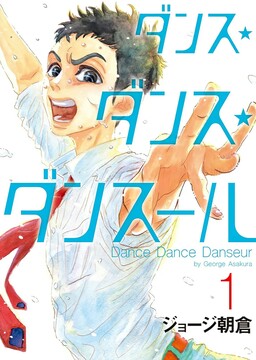
Dance Dance Danseur
Yu's review of Dance Dance Danseur — Junpei Murao buried his love of ballet after his father died because boys are supposed to be tough. Then a girl named Miyako and a strange, brilliant dancer named Luou pull it back out of him. George Asakura's seinen about what it costs a teenage boy to dance.
Sports / Comedy
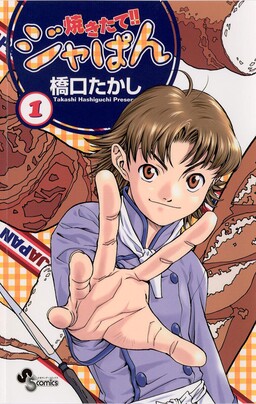
Yakitate!! Japan
Yu's review of Yakitate!! Japan — Kazuma Azuma has supernatural hands warm enough to activate yeast perfectly, and his dream is to create a national bread for Japan; the series applies shonen battle manga structure to competitive bread-baking with completely committed absurdist comedy.

Sports / Game
Saki
Yu's review of Saki — a high school girl named Saki Miyanaga has an uncanny ability to always score exactly zero in mahjong, and when a mahjong club recruits her, the national high school mahjong tournament becomes the backdrop for increasingly supernatural competitive drama.

Sports / Comedy
One Pound Gospel
Yu's review of One Pound Gospel — Kōsaku Hatanaka is a genuinely talented featherweight boxer with one catastrophic flaw: he can't stop eating, constantly missing weight for his fights; Sister Angela, a young nun, becomes his most unlikely source of encouragement; Rumiko Takahashi's compact boxing comedy with a warm central relationship.
Sports
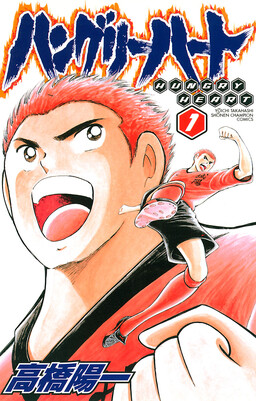
Hungry Heart Wild Striker
Yu's review of Hungry Heart Wild Striker — Kyōsuke Kanou is a soccer prodigy who quit the sport because of his older brother's overwhelming talent; when he joins a struggling team and meets a dedicated coach, he rediscovers his hunger for the game; a return to pure soccer manga from the Captain Tsubasa creator.
Written by
Yu
Manga Enthusiast from Japan
I grew up in Japan and manga literally saved me during a tough time in elementary school. My English isn't perfect, but my love for manga is real — and I want to share it with you.
Disclosure: This post contains affiliate links. As an Amazon Associate, I earn from qualifying purchases at no extra cost to you.