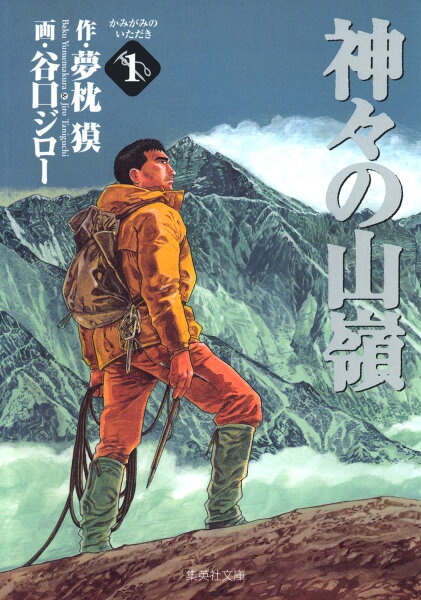
Kamigami no Itadaki Review: The Mountaineering Manga That Climbed the Way Mountains Demand
by Jiro Taniguchi
Read the first volume. If it doesn't hook you, put it down. It'll hook you.
Buy Kamigami no Itadaki on Amazon →*Affiliate link — I earn a small commission at no extra cost to you.
The mountain doesn't care if you reach the summit. The mountain doesn't care about you at all. That indifference is what climbers love.
Quick Take
- Jiro Taniguchi's masterful adaptation of Baku Yumemakura's mountaineering novel — 5 volumes about obsession, history, and Everest
- Adapts the search for a camera that might prove Mallory reached the summit decades before Hillary
- Among Taniguchi's most internationally recognized works, with full English translation available
Who Is This Manga For?
- Mountaineering enthusiasts who want one of the medium's defining works on the subject
- Taniguchi readers who want his collaboration with Yumemakura's source material
- Adventure literature fans who want serious mountain fiction adapted with dignity
- Anyone interested in what alpinism asks of the people who practice it
Content Warnings & Age Rating
Age Rating: T (Teen) Content Warnings: Mountaineering deaths, isolation, the genre's particular psychological weight.
Suitable for most readers comfortable with weighty material.
Yu's Rating
| Category | Score |
|---|---|
| Story Depth | ★★★★★ |
| Art Style | ★★★★★ |
| Character Development | ★★★★★ |
| Accessibility for Non-Japanese Readers | ★★★★★ |
| Reread Value | ★★★★☆ |
Story Overview
Fukamachi is a Japanese photojournalist working in Kathmandu when he encounters an old camera in a curio shop — a camera that, by its date and condition, could plausibly be Mallory's. If it is, and if film inside it could be developed, it might prove that Mallory reached Everest's summit in 1924, decades before the recognized first ascent. The historical implications would be enormous.
Fukamachi's investigation leads him to Habu Joji, a Japanese alpinist whose obsession with the mountain has consumed his life and possibly his sanity. The story braids together: Fukamachi's pursuit of the camera and the historical question, Habu's relationship to climbing and to Everest, and the question of what mountaineering takes from those who give themselves to it completely.
The series is a faithful adaptation of Baku Yumemakura's novel, with Taniguchi's art bringing the high-altitude landscapes to life with the dignity the subject demands. The pacing is patient; the work doesn't hurry to resolve its questions because the questions are not answerable through hurry.
Characters
Fukamachi: The journalist-protagonist whose investigation is the structural through-line — his perspective is the reader's entry into the mountain world.
Habu Joji: The alpinist whose obsession is the work's central character study — drawn with the complexity that the subject requires.
The mountains themselves: Treated as characters in the narrative — their indifference, their beauty, their actual weight as physical presence.
Art Style
Taniguchi's art is among the medium's finest — meticulous landscape rendering, character expressions communicating internal states with restraint, the visual scale that mountaineering subjects demand. The high-altitude scenes in particular capture both the beauty and the lethality of the environment.
Cultural Context
Kamigami no Itadaki adapted Yumemakura's 1994 novel and ran from 2000 to 2003 in Business Jump. The work has been translated into multiple languages including English (Fanfare/Ponent Mon and Jiro Taniguchi's catalog have been particularly internationally available).
The mountaineering literary tradition in Japan has cultural depth — Mt. Tanigawa and the Japan Alps have produced their own literary cultures, and Yumemakura's novel sits within that tradition.
What I Love About It
I love that the camera is a MacGuffin.
The hook is Mallory's camera — the historical question of whether he reached the summit. By the end of the series, the camera matters less than the question of what climbing has done to Habu and the parallel question of what climbing demands from anyone who takes it seriously. The hook gets you in; the actual subject is what you find when you arrive. Taniguchi understood this completely, and the adaptation reflects it.
What English-Speaking Fans Say
Internationally recognized as one of Taniguchi's finest works. The English translation has made it accessible to readers who otherwise couldn't engage, and recognition has been correspondingly broad. Mountaineering literary readers regard it among the medium's essential works.
Memorable Scene ⚠️ Spoiler Warning
A high-altitude moment where Habu's relationship to the mountain becomes visible to Fukamachi — and to the reader — in a way that reframes everything we've been told about why people climb. The scene is the work's clearest statement of its central question.
Similar Manga
| Title | Its Approach | How Kamigami no Itadaki Differs |
|---|---|---|
| Vagabond | Inoue's Musashi biography with samurai weight | Different subject but shared seinen-literary register |
| The Walking Man (Aruku Hito) | Taniguchi's quiet observational work | Mountaineering replaces walking; same authorial precision |
| A Distant Neighborhood | Taniguchi's time-travel drama | Same craft applied to different subject |
Reading Order / Where to Start
Volume 1. The 5 volumes are a complete arc.
Official English Translation Status
Kamigami no Itadaki has been published in English by Fanfare/Ponent Mon as "The Summit of the Gods."
Pros & Cons
Pros
- One of Taniguchi's masterworks
- Faithful adaptation of an outstanding source novel
- English translation makes it accessible
- Mountaineering treated with the dignity the subject demands
Cons
- The pace is patient — readers wanting urgency will struggle
- Mountaineering subject matter requires interest
- 5 volumes feels short for the depth of the questions
- Won't satisfy readers wanting traditional sports-manga arcs
Is Kamigami no Itadaki Worth Reading?
For mountaineering fans, Taniguchi readers, and anyone seeking serious adventure literature in manga form, yes — this is essential. For readers wanting fast pacing or unfamiliar with the subject, the patient register may be a barrier. As literary genre fiction, it's exceptional.
Format Comparison
| Format | Notes |
|---|---|
| Physical | English edition available from Fanfare/Ponent Mon |
| Digital | Various editions in Japanese |
| Omnibus | Collected editions available |
Where to Buy
Read the first volume. If it doesn't hook you, put it down. It'll hook you.
*Affiliate link — I earn a small commission at no extra cost to you.
More Manga You Might Like
Sports / Drama
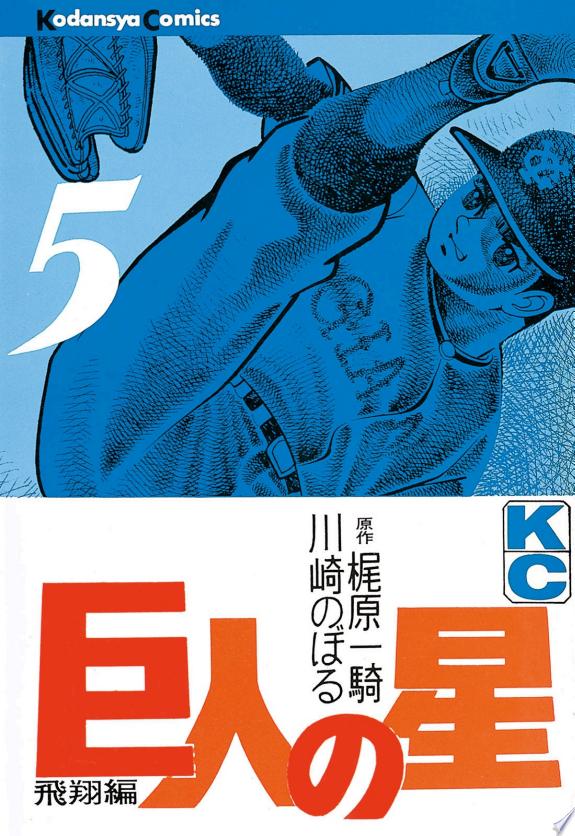
Kyojin no Hoshi
Kyojin no Hoshi follows Hyuma Hoshi, whose father — a former baseball player who never achieved his dream — has raised him from childhood to be a star pitcher for the Yomiuri Giants, through training that borders on abuse and produces a player who may be the greatest — at tremendous personal cost.

Sports / Drama
Rookies
Rookies follows Koichi Kawato, a young teacher transferred to Futakotamagawa High School who discovers a baseball club suspended after a violent incident — and decides, against all institutional advice, to coach them back to the Koshien.
Sports / Drama
Ping Pong
Yu's review of Ping Pong — two high school table tennis players, one a prodigy who loves the game and one who hates to lose, move toward a tournament while the manga asks what it means to devote yourself to something.
Sports / Drama
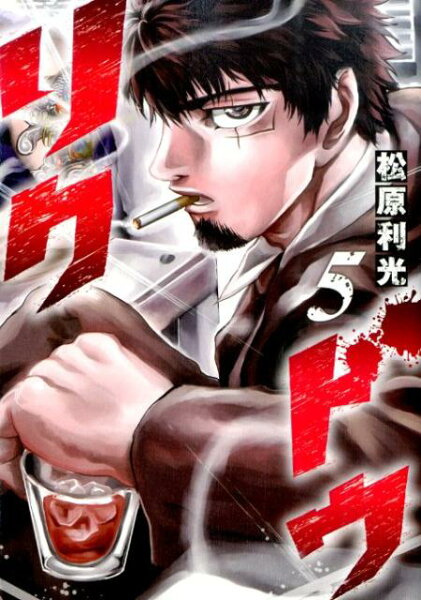
Rikudo
Rikudo follows Riku Akama, a boy whose abusive father destroyed his body and life — until boxing becomes the unlikely path through which he tries to reclaim something. A 22-volume Young Jump series whose darkness exceeded almost all boxing manga before it.
Sports / Drama
Major
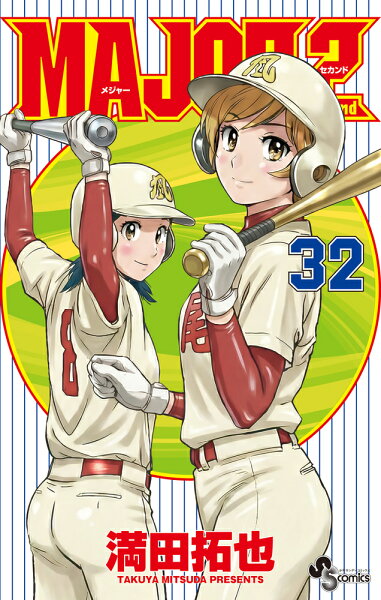
Yu's review of Major — Goro Honda is the son of a professional baseball player; when loss defines his childhood, baseball becomes how he carries his father forward; the series follows Goro from little league through professional baseball across 78 volumes, one of the longest complete sports manga stories ever told.
Sports / Drama
Gamba! Fly High
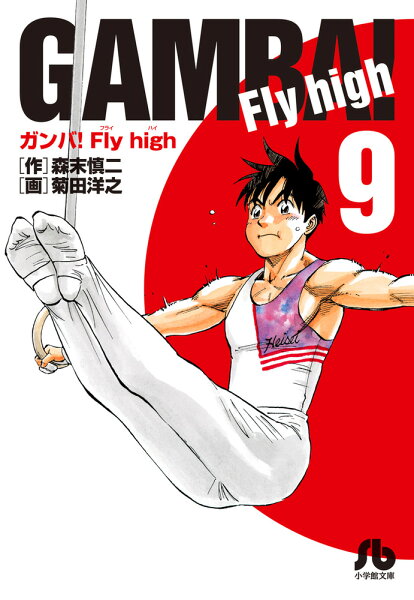
Gamba! Fly High follows Takeru Fujimaki, a boy with extraordinary natural talent who joins a gymnastics club and discovers that natural ability, without discipline and the right people around you, is not enough to reach the Olympics.
Written by
Yu
Manga Enthusiast from Japan
I grew up in Japan and manga literally saved me during a tough time in elementary school. My English isn't perfect, but my love for manga is real — and I want to share it with you.