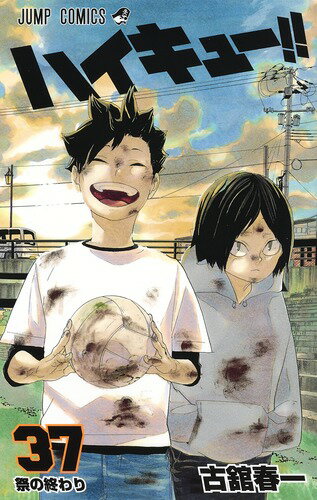
Haikyuu!! Review: The Volleyball Manga That Turned Every Match Into a Conversation About Who You Are
by Haruichi Furudate
Read the first volume. If it doesn't hook you, put it down. It'll hook you.
Buy Haikyuu!! on Amazon →*Affiliate link — I earn a small commission at no extra cost to you.
He was too short for the sport and didn't care even a little.
Quick Take
- Haruichi Furudate's 45-volume volleyball manga — one of the defining sports manga of the 2010s
- Hinata Shoyo's journey from tiny enthusiast to complete player, with Karasuno High becoming one of manga's great team portraits
- The opponents are as well-drawn as the protagonists — every team that Karasuno faces feels like a story the manga could have told about them
Who Is This Manga For?
- Sports manga fans who want the best the genre has produced recently
- Volleyball enthusiasts who want the sport depicted with technical understanding and genuine love
- Readers who want ensemble cast sports — this is as much about the team as any individual
- Anyone who was told they weren't suited for something and kept going anyway
Content Warnings & Age Rating
Age Rating: T (Teen) Content Warnings: Sports competition, team dynamics, intense match sequences. Nothing concerning.
Suitable for most readers.
Yu's Rating
| Category | Score |
|---|---|
| Story Depth | ★★★★★ |
| Art Style | ★★★★★ |
| Character Development | ★★★★★ |
| Accessibility for Non-Japanese Readers | ★★★★★ |
| Reread Value | ★★★★★ |
Story Overview
Hinata Shoyo, small enough that no one takes him seriously as a volleyball player, arrives at Karasuno High's volleyball club and encounters the player who crushed his first team in middle school: Kageyama Tobio, the genius setter who was removed from his previous team for being impossible to play with.
Their forced partnership — the spiker who can't be where he needs to be and the setter who can't work with other people — is the series' engine. What develops from that forced partnership is both a genuine athletic capability (the quick set that Kageyama delivers to Hinata's position based on timing alone) and a genuine relationship between two people who are better together than either could be alone.
Around them, Karasuno's full team assembles: the ace who carries everything on his shoulders, the libero who covers the court like a ghost, the upperclassmen who have been waiting for a team worth playing on. Each character is developed enough that the reader cares about all of them, not just the leads.
The opponents match this development. Every team Karasuno faces has its own story — its own history, its own dynamics, its own players whose perspective the manga occasionally inhabits. Some of the series' most powerful moments are about opponents who don't win.
Characters
Hinata Shoyo: A protagonist whose limitation is real (he is short; volleyball is a tall person's sport) and whose compensation for it is also real — not magical power, but speed, timing, and refusal to accept the ceiling others see.
Kageyama Tobio: The genius whose talent exceeded his ability to work with others — his arc is about learning that genius without partnership reaches a ceiling faster than partnership without genius.
The full Karasuno team: Individually distinct, collectively greater than their sum. The team dynamic is the series' most complete achievement.
Art Style
Furudate's art handles volleyball movement with exceptional clarity — the fast exchanges at the net, the dive-and-recover defensive sequences, the geometry of blocking and spiking rendered in ways that make the sport legible and exciting simultaneously. Character designs are distinct enough that the bench is always readable.
Cultural Context
Haikyuu!! ran in Weekly Shonen Jump from 2012 to 2020. It appeared during the period when volleyball's visibility in Japan was increasing — the sport had international success and the manga connected that success to grassroots enthusiasm.
The anime adaptation became one of the most-watched sports anime of its period, expanding the series' reach beyond Jump's readership and contributing to volleyball participation increases in Japan.
What I Love About It
I love the opponents.
Sports manga conventionally uses opponents as obstacles — they exist to be overcome and then move on. Furudate treats the opponents as characters with their own stories, their own reasons for playing, their own heartbreak when they lose. The Aoba Johsai vs. Karasuno matches hurt on both sides. So do the Spring High matches. The series understands that every team that Karasuno beats had something at stake, and it doesn't look away from that.
What English-Speaking Fans Say
Widely loved in English-speaking markets — the Viz translation is consistently praised, the anime has an enormous international fanbase, and the series regularly appears in reader favorites lists. Recognized as one of the finest sports manga of its generation. The character design and team dynamics are the most commonly cited strengths.
Memorable Scene ⚠️ Spoiler Warning
The scene in the Spring High tournament where Karasuno's ultimate opponent, watching Hinata play, recognizes something in him — not the limitation everyone sees, but the quality beneath it. The recognition comes from someone who has been on the other side of limitation and found something similar. The scene is the series' thesis statement, arrived at late and earned.
Similar Manga
| Title | Its Approach | How Haikyuu!! Differs |
|---|---|---|
| Slam Dunk | Basketball manga with iconic characters and emotional depth | Volleyball specificity and more detailed opponent characterization |
| Kuroko no Basuke | Fantasy basketball with supernatural abilities | Realistic volleyball within the sport's actual rules |
| Ahiru no Sora | Realistic basketball with character development emphasis | Haikyuu!! has stronger ensemble and more emotionally generous opponent treatment |
Reading Order / Where to Start
Volume 1. The series develops continuously and the early volumes establish everything that the later matches pay off.
Official English Translation Status
Haikyuu!! has a complete official English translation from VIZ Media. All 45 volumes are available.
Pros & Cons
Pros
- One of the finest sports manga ever written
- The opponent characterization is unmatched in the genre
- The team ensemble gives the series depth that protagonist-focused sports manga can't reach
- Complete at 45 volumes with a genuinely satisfying ending
Cons
- The timeskip in the final arc divides readers
- 45 volumes is a significant commitment even for a sports manga this good
- Readers who don't connect with volleyball as a sport may miss some of the technical pleasure
- The high quality sets expectations that nothing else will match
Is Haikyuu!! Worth Reading?
For sports manga readers, yes — this is the standard. For readers who have never tried sports manga, this is the entry point. For readers who have tried sports manga and found it lacking, this is the test case: if any sports manga will change your mind, it's this one. The complete English translation removes all barriers. Read it.
Format Comparison
| Format | Notes |
|---|---|
| Physical | All 45 volumes available in English |
| Digital | Available on Manga Plus and Viz platforms |
| Omnibus | Collected editions available |
Where to Buy
Read the first volume. If it doesn't hook you, put it down. It'll hook you.
*Affiliate link — I earn a small commission at no extra cost to you.
More Manga You Might Like
Sports / Drama
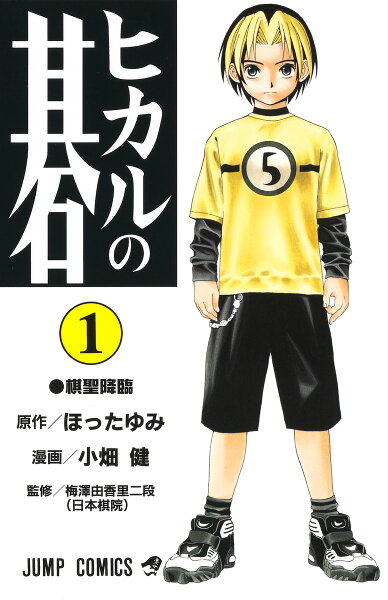
Hikaru no Go
Yu's review of Hikaru no Go — Hikaru Shindo discovers a haunted Go board inhabited by the spirit of a Heian-era master; the spirit possesses him during games; Hikaru gradually discovers his own passion for Go and his desire to surpass the ghost that started everything.
Sports
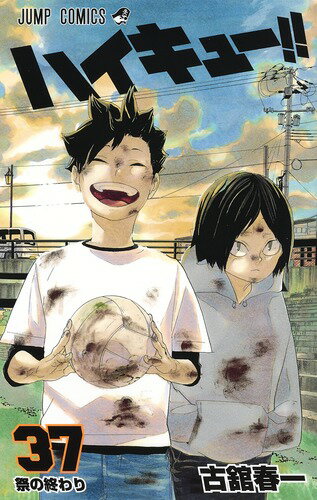
Haikyu!!
Haruichi Furudate's 45-volume volleyball manga (2012–2020) about Hinata Shoyo, Kageyama Tobio, and Karasuno High climbing from a forgotten prefectural team to the national stage — and then jumping forward years to find out what it means to keep playing after you stop being a high school student. Complete in English from VIZ Media.
Sports / Drama
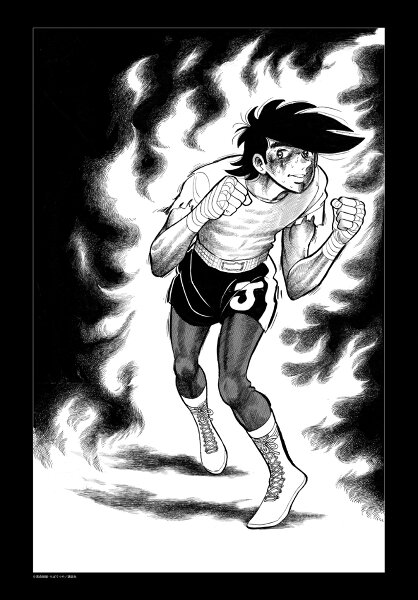
Ashita no Joe
Yu's review of Ashita no Joe — Joe Yabuki claws out of the postwar Tokyo slums, is found by a broken-down trainer, and turns boxing into a way to burn himself completely. From Rikiishi's fatal weight cut to the white-ash final scene, this is the manga that taught the whole genre what cost means.
Sports / Drama
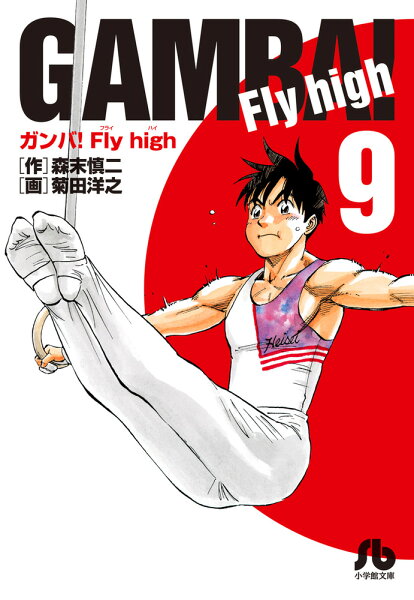
Gamba! Fly High
Gamba! Fly High follows Takeru Fujimaki, a boy with extraordinary natural talent who joins a gymnastics club and discovers that natural ability, without discipline and the right people around you, is not enough to reach the Olympics.
Sports / Drama
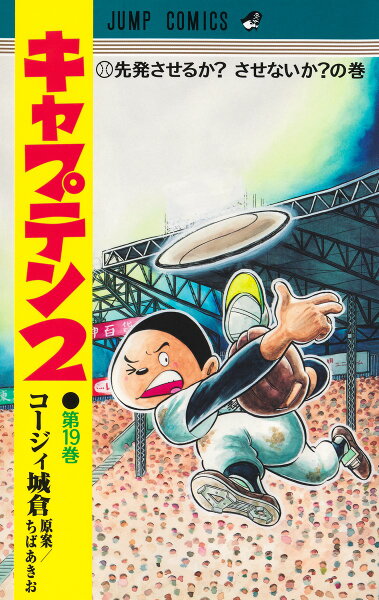
Captain
Captain follows four generations of captains at a weak downtown middle school baseball team — starting with Takao Taniguchi, a former bench player mistaken for a star, who trains himself half to death rather than admit the truth.
Sports / Drama
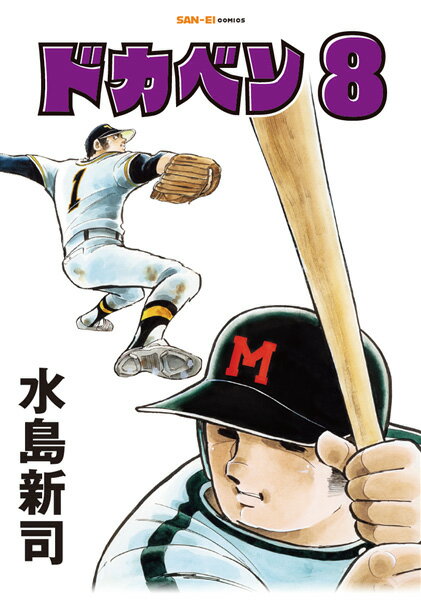
Dokaben
Dokaben follows Taro Yamada, a gentle giant who starts out in his middle school's judo club before becoming the catcher who carries Meikun High School to Koshien. Shinji Mizushima's classic ran in Weekly Shonen Champion from 1972 to 1981.
Written by
Yu
Manga Enthusiast from Japan
I grew up in Japan and manga literally saved me during a tough time in elementary school. My English isn't perfect, but my love for manga is real — and I want to share it with you.