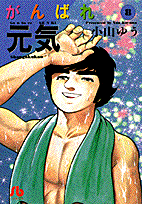
Ganbare Genki Review — A Boxing Manga About a Boy Whose Father Was Also a Boxer, and Who Could Not Watch Him Win
by Yuu Koyama
Read the first volume. If it doesn't hook you, put it down. It'll hook you.
Buy Ganbare Genki on Amazon →*Affiliate link — I earn a small commission at no extra cost to you.
My father loved boxing. Not as a fighter — he was small, near-sighted, and had two left feet — but as a viewer. He stayed up late to watch international title fights on Japanese TV. He saved old videotapes of fights from before I was born. When he died, I inherited his boxing tapes and a stack of old manga, and I started reading the boxing manga the way I would have wanted to watch fights with him.
Ganbare Genki is the manga I think he would have loved. It is also the manga that taught me what it means to inherit something you cannot watch your own father do.
Quick Take
- One of the great post-Ashita no Joe boxing manga. Yuu Koyama's 28-volume work from 1976–1981 follows Horiguchi Genki from age 6 to professional boxer
- The father-son theme is the manga's spine and what distinguishes it from peer boxing works
- Age rating: T (Teen) — boxing violence, themes of parental death, no graphic content
What Is Ganbare Genki About?
Horiguchi Genki is six years old when the manga begins. His father, Horiguchi Eiji — a former professional boxer — is raising Genki alone. Eiji's career as a fighter was promising but never reached the championship level; injuries and personal circumstances ended his run early. Now he runs a small boxing gym in Tokyo's working-class neighborhood. Genki has grown up in the gym, around boxers, watching his father train younger fighters.
Genki's mother is dead. The manga opens with the loss as background context.
Eiji is a complicated father. He drinks. He is alternately gentle and harsh with Genki. He has not figured out how to be the parent of a small boy alone. The early chapters show their daily life — the gym, the apartment above it, the meals they share, the moments of tenderness, the moments where Eiji's grief over his wife surfaces in ways Genki cannot fully understand.
Then Eiji dies.
The cause is gradual rather than sudden — health complications related to his boxing career and his drinking. Genki, now eight or nine, is taken in by his father's former trainer and the gym community. He grows up surrounded by men who knew his father and who treat the boy as a kind of collective inheritance.
The next 27 volumes follow Genki across approximately the next 12 years of his life:
- Childhood (volumes 1–6) — Genki growing up in the gym, beginning to train as a boxer himself, processing his father's death, navigating school and friendships
- Amateur career (volumes 7–13) — Genki's amateur boxing tournaments, his first significant rivalries, his developing sense of who he is as a fighter
- Turning pro (volumes 14–20) — The transition from amateur to professional, the specific challenges of the Japanese pro boxing structure, the first major opponents
- The professional climb (volumes 21–28) — Genki's path through the rankings, his title fight, the resolution of the long arc Koyama has been building since volume 1
The series ends with Genki as a young adult, having reached the endpoint his life has been building toward since he was a child. The ending is one of the most emotionally complete in classic sports manga.
Who Is This Manga For?
- Boxing manga fans who want post-Ashita no Joe quality
- Sports manga readers willing to read 28 volumes for a single character arc
- Coming-of-age fans — the childhood arc is some of the manga's best material
- Readers interested in 1970s–80s working-class Japan depicted with documentary care
- Japanese readers — the manga is unlicensed in English
Content Warnings & Age Rating
Age Rating: T (Teen) — 13+ Content Warnings: Boxing violence (honest but not gratuitous); parental death (depicted with weight); a child training in a contact sport; depictions of 1970s–80s Japanese working-class poverty; some scenes of alcohol use; light treatment of period-typical social attitudes
The manga is appropriate for teen readers. Younger readers (10+) can handle it with parental awareness.
Story Overview
The structure is strictly biographical — Genki ages in real time across the volumes. Each major arc is also a major life stage.
Volumes 1–6 (Childhood) — Genki's life with his father, his father's death, the immediate aftermath, Genki's first decision to take up boxing himself. The childhood arc is the manga's slowest section and also some of its most affecting material. Koyama refuses to rush past Genki's grief.
Volumes 7–13 (Amateur years) — Middle school and high school. Amateur tournaments. The development of Genki's specific boxing style — a counterpuncher who reads his opponents rather than overpowering them. Multiple rival fighters emerge. Genki's relationships with his father's former trainer (now his trainer) and with other gym members deepen.
Volumes 14–20 (Pro debut) — The turn to professional boxing in Genki's late teens. The Japanese professional boxing structure (rankings, eliminations, the World Boxing Council and World Boxing Association regional belts). Genki's first major opponents. The specific physical and psychological costs of professional fighting begin to surface.
Volumes 21–28 (Championship arc) — Genki's climb to the championship level. The long arc that has been building since the manga's first chapters reaches its endpoint. The fights become more elaborate; the stakes become both more physical and more emotional. The series ends with Genki making the decisions about who he wants to be as a professional fighter and as a person.
Characters
Horiguchi Genki — The protagonist whose specific character is built around inherited grief. Genki is fighting for someone he barely knew — his father died when he was a child, and Genki's understanding of who his father was comes from other people's memories, the boxing skills his father taught him before he died, and Genki's own boxing career as it develops. Koyama writes Genki with restraint; he is not a hot-blooded shonen protagonist. He is a quiet, careful, eventually formidable fighter whose strength is observation and patience rather than power.
Horiguchi Eiji (Genki's father) — Present in volumes 1–4, present in flashbacks throughout the rest. Eiji is the manga's emotional ghost — a man whose unfinished life shapes Genki's entire arc. Koyama writes him as complicated: a good father in some ways, a failing one in others, a fighter whose career did not match his potential. The manga refuses to make Eiji either a hero or a cautionary tale.
Aida-san (Eiji's former trainer, now Genki's) — The recurring senior figure across the entire series. Aida raises Genki after Eiji's death. He is the man who teaches Genki not just to fight but how to be a fighter — what the sport asks of you, what it gives back, when to walk away. Aida is one of the most carefully written trainer characters in Japanese sports manga.
Hayami — Genki's recurring rival from amateur boxing through professional. The Genki-Hayami arc spans most of the series; the two fighters meet at different points in their respective careers and their relationship deepens across years of competition.
The gym community — Various recurring boxers, ex-boxers, and gym members who become Genki's de facto family. The gym is the manga's primary setting and its emotional center.
Other rivals — Each professional opponent gets meaningful development. Koyama avoids cardboard antagonists; every major fight in the late volumes is between two characters with their own histories.
Art Style
Yuu Koyama's art is strong and clear. The boxing sequences are technically accurate — readers with boxing knowledge can follow the specific punches, the footwork, the defensive positions. The choreography is communicated through panel composition rather than speedlines. Koyama can show the weight of a punch landing without exaggerating it.
The non-boxing scenes are equally strong. Tokyo of the late 1970s is rendered with documentary specificity — the streets, the apartments, the gym, the small businesses, the bars. The manga is a visual record of a specific time and place that no longer exists.
Character designs are realistic and consistent. Genki's aging across the series (from 6 years old to early 20s) is handled with care — readers can recognize him at every age, but each age looks correctly like itself.
Cultural Context
Yuu Koyama (1948–) is a major Japanese sports manga artist whose career spans from the late 1960s to the present. His works include several boxing manga (Ganbare Genki is his best known) and other sports works. Koyama is part of the post-Ashita no Joe generation of sports manga creators who took the dramatic register Asao Takamori and Tetsuya Chiba had established and applied it to new sports and new narrative structures.
Boxing in 1970s–80s Japan had specific cultural status. Japanese boxers were achieving international success (Yoko Gushiken, Kuniaki Shibata, Hiroyuki Ebihara, others); the sport had working-class associations and was seen as a legitimate route to upward mobility for young men from poorer neighborhoods. Boxing manga participated in and reflected this cultural moment.
Ganbare Genki ran in Weekly Shonen Sunday from 1976 to 1981 — 28 volumes total. The series is well-regarded in Japan among classic manga enthusiasts but has never received the international recognition of Ashita no Joe (Takamori/Chiba, 1968–1973) or Rocky Joe-adjacent works. Koyama's quieter, more biographical approach is part of why; Ashita no Joe operates at higher dramatic pitch, while Ganbare Genki accepts a slower naturalism.
A 1980–1981 anime adaptation by Toei Animation ran 35 episodes. The anime is generally well-regarded but is not available in English.
What I Love About It
The scene in volume 4 where Genki realizes his father is going to die.
I won't spoil specifics. Somewhere in the early volumes, Eiji's health is deteriorating. Genki, at age seven or eight, has been watching his father get sicker without fully understanding what is happening. The adults in his life — Aida-san, the other gym members — have been protecting him from the full picture.
Then there is a scene where Genki, sitting in a hospital corridor, realizes.
Koyama draws this scene with absolute restraint. There is no dramatic music cue equivalent. No internal monologue explosion. Just a panel of Genki sitting in a chair that is too big for him, in a hallway, with the door to his father's room visible at the end of the corridor. He looks at the door. The reader sees his face. The reader understands what he has just understood. The next panel is Aida-san sitting down next to him and not saying anything.
What I love is the choice of silence. Koyama could have given Genki an inner monologue. He could have given Genki tears. He could have dramatized the moment. He doesn't. He just lets Genki sit in the hallway with the knowledge, and lets Aida-san sit beside him without trying to fix it, and lets the reader carry the weight that the characters cannot speak.
That panel is the manga's whole emotional thesis. Some losses cannot be made narratively neat. Some children have to figure out their fathers' deaths before they are old enough to have words for the discovery. The manga's job is not to explain what Genki feels. The manga's job is to sit with him in the hallway and witness him knowing.
I think about that panel when I think about my own father. He did not have a dramatic death. There was no clarifying moment. There was just, eventually, my realizing he was gone in a way that did not match any cinematic version of grief I had been prepared for. Ganbare Genki was the first manga that showed me grief in the shape I actually experienced it — quiet, displaced into objects (boxing tapes, in my case; boxing manga, in another), present underneath everything else without ever being directly named.
That is the gift Yuu Koyama gave me through Genki. Not a story about a boy who became a boxer. A story about a son who used boxing to keep his father in the room.
What English-Speaking Fans Say
Ganbare Genki has very limited English-language readership because it has never been licensed. The few English readers who have encountered it (typically via fan scanlation or Japanese editions) describe it as one of the finest classic boxing manga, often grouped with Ashita no Joe and earlier works as essential reading for fans of the genre.
The Japanese reception is uniformly strong. Ganbare Genki appears regularly on Japanese best-of lists for classic sports manga.
The most common comment from those who have read it: the childhood arc (volumes 1–6) is what elevates the series beyond standard boxing manga. The boxing is excellent. The grief is essential.
Memorable Scene ⚠️ Light Spoiler
The fight where Genki understands his father.
I won't say which volume. Somewhere in the professional climb, Genki is in a fight where he is being outmatched. The opponent is bigger, faster, more experienced. Genki is losing rounds. His corner is concerned. The fight has been going badly enough that the cornermen are considering throwing in the towel.
Genki has a moment in the corner between rounds. He is exhausted. He is being hit. He is wondering whether to continue.
In that corner, sitting on the stool, Koyama writes a small interior moment — a flashback to a conversation between Genki and his father from when Genki was six. The conversation has been referenced earlier in the manga but never depicted in full. Now Koyama gives us the full memory. Eiji is teaching Genki something specific about boxing. Genki has carried the lesson for years without fully understanding it.
He understands it now.
Genki goes back out for the next round. Koyama draws the round without dialogue. The boxing depicts Genki applying his father's lesson — not in some flashy way, but in the small specific adjustments of a fighter who finally knows what to do with his body in this specific situation. The opponent does not understand what changed. The reader understands.
The fight resolves. I won't say how. What matters is what Koyama has done with the scene. He has taken the boxing — the genre's surface — and used it to deliver an emotional moment that the genre rarely manages: a son finally getting a piece of his father back, in the specific medium that connected them, in the specific corner of his own career.
That is the gift Genki has been working toward across 25+ volumes. He has been training to hear what his father told him. The fight is where he hears it.
Similar Manga
| Title | Its Approach | How Ganbare Genki Differs |
|---|---|---|
| Ashita no Joe | Foundational boxing manga, more dramatic register | Joe is more operatic; Genki is more biographical and quieter |
| Ring ni Kakero (Masami Kurumada) | Shonen Jump boxing-shaped manga, more action-fantasy | Genki is more realistic |
| Hajime no Ippo | Modern long-form boxing manga | Ippo is more episodic and longer; Genki is tighter and more dramatic |
| Tomorrow's Joe (alt translation) | The Ashita no Joe English release | Same comparison; Genki is the unsung sibling |
| Rocky Joe / The Otoko series | Boxing-manga era contemporaries | Same period; Genki has more emotional weight |
Reading Order / Where to Start
Volume 1. The childhood arc is essential context for the rest of the series.
For Japanese readers or fan-translation readers: read straight through. The 28-volume commitment is real but rewarding.
Official English Translation Status
Ganbare Genki has no official English release. Shogakukan has not licensed the manga to any English publisher. The series is available in Japanese physical editions (in print in Japan) and Japanese digital (via Japanese ebook services). The 1980 anime adaptation is also Japanese-only.
For English readers wanting access: Japanese editions, fan scanlation, or wait for a possible future license.
Pros & Cons
Pros
- One of the great classic boxing manga
- The father-son emotional core is the manga's distinguishing feature
- 28-volume biographical arc is patient and satisfying
- Technical boxing accuracy is strong
- The childhood arc (volumes 1–6) is some of the best material in the genre
Cons
- No English translation
- 28-volume commitment is meaningful
- The childhood arc is slower than boxing-focused readers may want
- 1970s manga conventions take adjustment
- The patient biographical pace is an acquired taste. It won't land for everyone, especially readers used to more dramatic sports manga pacing.
Is Ganbare Genki Worth Reading?
If you can access it (Japanese ability or fan translation): yes, unconditionally. One of the great works of classic sports manga.
If you need an English license: not yet. The series remains one of the unjustly untranslated classics. Possibly future licensing could change this.
Format Comparison
| Format | Notes |
|---|---|
| Physical (Japanese) | All 28 volumes available in Japan |
| Digital (Japanese) | Available via Japanese ebook services |
| English | None — unlicensed |
| Anime (1980, Toei) | 35 episodes; Japanese-only |
Where to Buy
No English release yet. That just means you find it before everyone else does.
*Affiliate link — I earn a small commission at no extra cost to you.
More Manga You Might Like
Sports / Drama
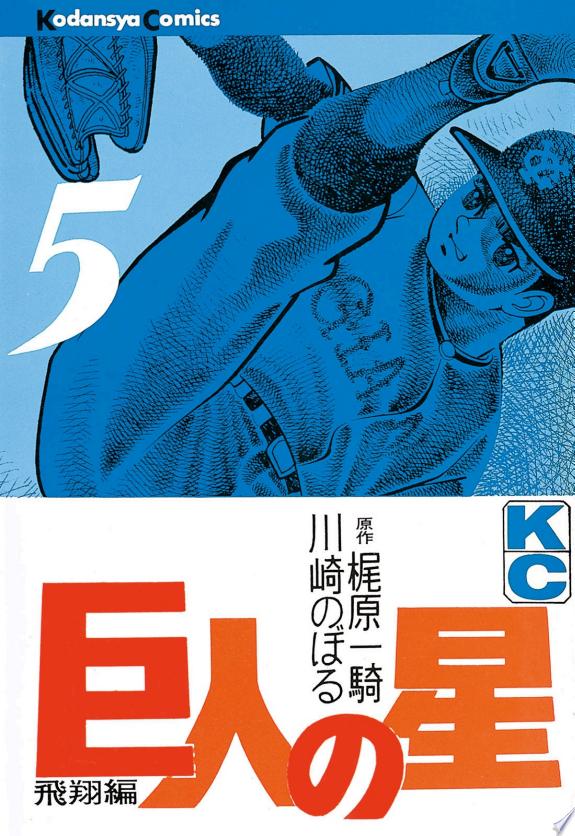
Kyojin no Hoshi
Kyojin no Hoshi follows Hyuma Hoshi, whose father — a former baseball player who never achieved his dream — has raised him from childhood to be a star pitcher for the Yomiuri Giants, through training that borders on abuse and produces a player who may be the greatest — at tremendous personal cost.
Sports / Drama
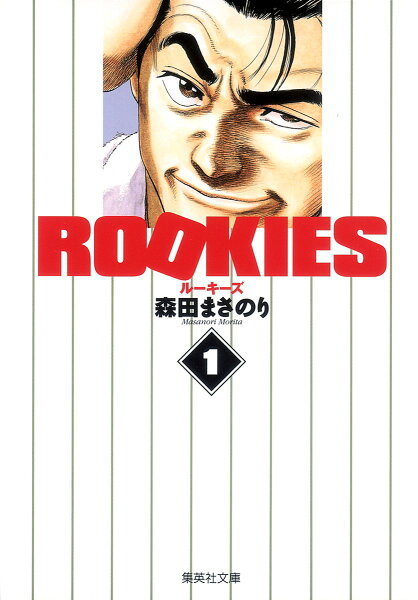
Rookies
Rookies follows Koichi Kawato, a young teacher transferred to Futakotamagawa High School who discovers a baseball club suspended after a violent incident — and decides, against all institutional advice, to coach them back to the Koshien.
Sports / Drama
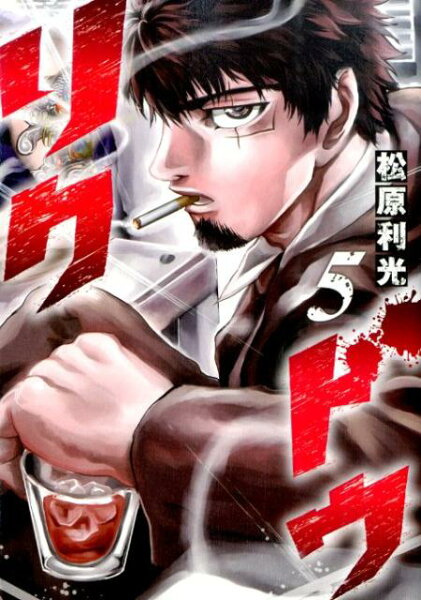
Rikudo
Rikudo follows Riku Akama, a boy whose abusive father destroyed his body and life — until boxing becomes the unlikely path through which he tries to reclaim something. A 22-volume Young Jump series whose darkness exceeded almost all boxing manga before it.
Sports
Hajime no Ippo
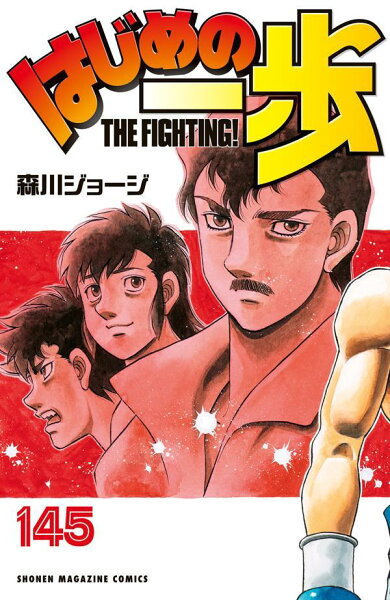
Yu's review of Hajime no Ippo — a bullied high school boy is saved by a professional boxer, discovers he has a natural gift for the sport, and begins the long road to becoming a champion.
Sports / Drama
Ashita no Joe
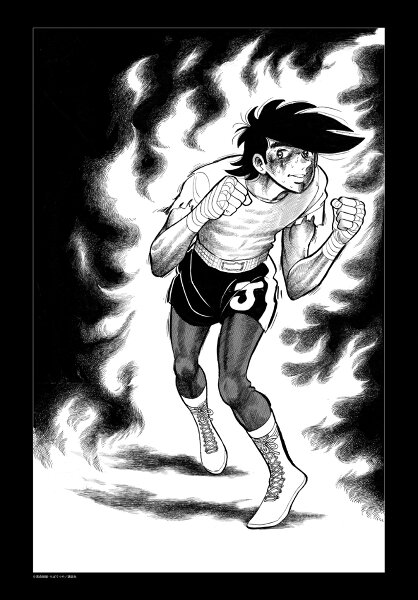
Yu's review of Ashita no Joe — Joe Yabuki claws out of the postwar Tokyo slums, is found by a broken-down trainer, and turns boxing into a way to burn himself completely. From Rikiishi's fatal weight cut to the white-ash final scene, this is the manga that taught the whole genre what cost means.

Drama / Sports
Swan
A girl from Hokkaido fights to become a world-class ballerina in the manga that defined ballet shojo.
Written by
Yu
Manga Enthusiast from Japan
I grew up in Japan and manga literally saved me during a tough time in elementary school. My English isn't perfect, but my love for manga is real — and I want to share it with you.